Meaning
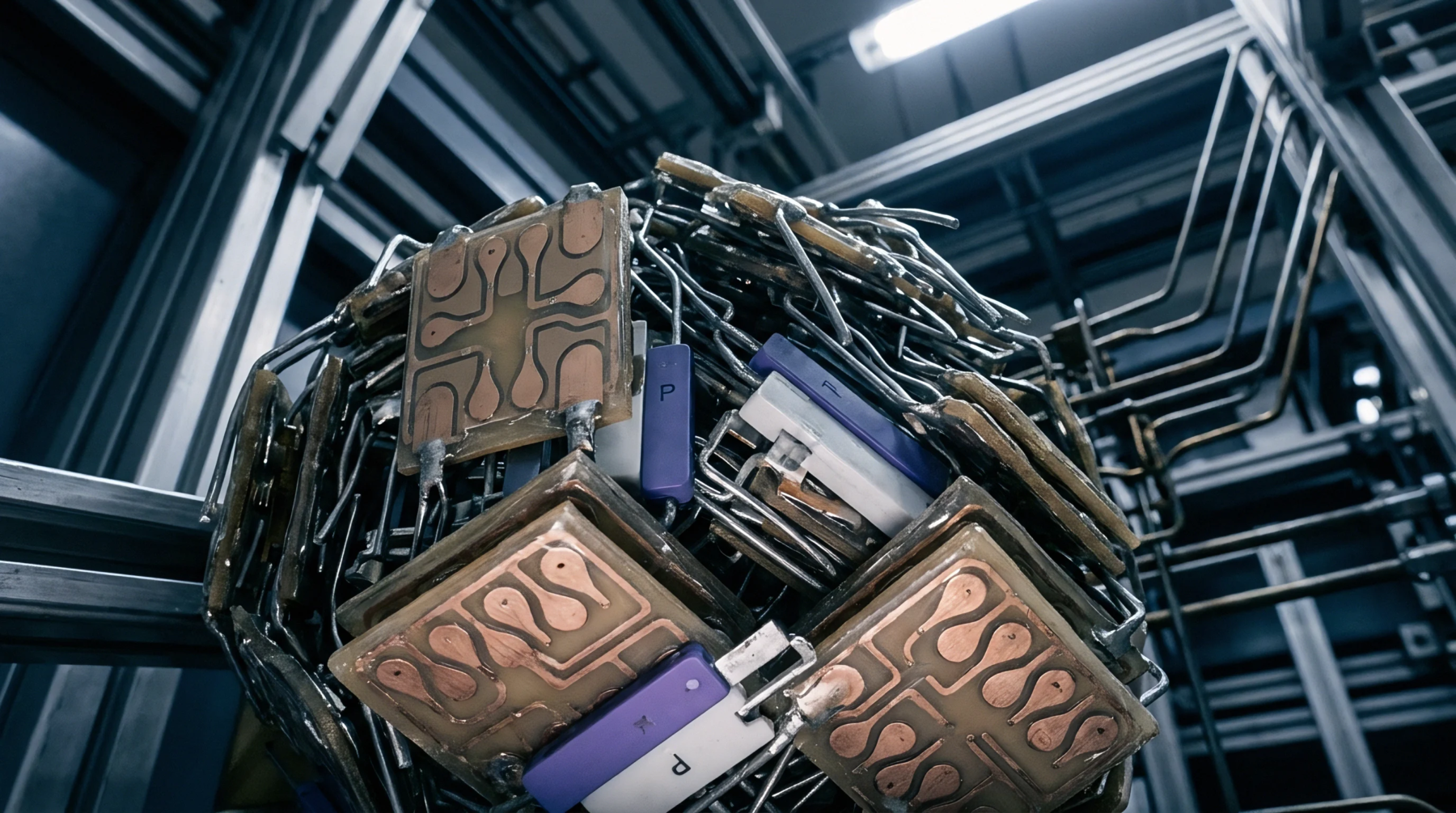
Articulated robotic positioning apparatuses fitted with miniature isotropic electric-field sensors measure radio frequency energy absorbed by phantom liquid simulating human biological mass. Equipment of this configuration, catalogued under the dasy robotic probe product family, scans high-frequency near-field emissions inside compliant human head and body shells to calculate localized specific absorption rate distributions. The apparatus employs orthogonal dipole sensors covered by protective encapsulation shells to assess total field magnitudes independently of probe orientation.
The measurement scope covers near-field evaluations across cellular, wireless local area network and millimeter-wave consumer electronics. It ceases to supply valid data if operated beyond its calibrated frequency range, outside valid ambient liquid temperatures, or closer to phantom walls than probe tip geometric limits permit.
Positioning Mechanics
Precision multi-axis industrial robots guide the sensor tip along preprogrammed spatial contours matching phantom geometries. Encoders track spatial coordinates within sub-millimeter tolerances to avoid spatial distortion during automated surface detection routines. The dasy robotic probe executes initial coarse area scans over the phantom cross-section to identify primary electromagnetic deposition areas before running high-resolution zoom scans over regional peaks.
Sensor drift corrections eliminate thermal variations across long automated measurement cycles. Dynamic range spans several orders of magnitude, allowing the device to register micro-watt levels as cleanly as multi-watt field concentrations.
Calibration Boundary
Traceable metrology facilities calibrate the sensitive measurement head in specialized wave-guide cells or transfer standards to establish sensor conversion factors across targeted radio bands. The probe head carries three tiny dipoles and resistive lines terminating in surface-mount detector diodes that avoid parasitic field perturbation. Calibrated conversion factors, termed CF numbers, feed directly into laboratory software to convert raw voltage readings into milliwatts per gram.
Recalibration intervals expire annually or whenever physical impacts compromise mechanical tip concentricity.
Regulatory Verification
Compliance laboratories record coordinate scan maps generated by the probe as the evidentiary basis for consumer radio approvals. Test reports submitted to authorities contain the robot’s physical step size settings alongside extrapolation algorithms used to evaluate field concentrations at phantom boundaries. The dasy robotic probe verifies peak spatial SAR against statutory limits such as the Federal Communications Commission threshold of 1.6 watts per kilogram averaged over one gram of tissue.
Uncalibrated probe dynamics invalidate test runs, requiring complete re-scans of the radio hardware under evaluation.