Meaning
Balanced circuit topologies suppress even-order harmonic distortion and common-mode interference through phase inversion across symmetrical signal pathways. When two identical amplifying devices operate with inputs driven one hundred eighty degrees out of phase, push-pull cancellation combines their outputs in a differential summing network where even harmonics cancel out while fundamental signals sum constructively. Transmitter power stages and balanced mixer architectures use this destructive interference to eliminate second harmonic spurs, eliminating the need for large low-pass filtering components.
Cancellation breaks down when amplitude imbalances or phase skew between complementary active devices degrade differential symmetry.
Symmetry Operation
Input baluns split single-ended signals into two equal-amplitude paths separated by an exact half-cycle phase shift. Each active device amplifies its respective half-cycle in parallel, generating fundamental signals and harmonic products across its output junction. When an output balun recombines these opposing currents, out-of-phase fundamental signals add together while in-phase second harmonic currents oppose each other across the center-tapped transformer winding.
Absolute phase balance remains essential for complete cancellation.
Harmonic Suppression
Mathematical squaring of the balanced differential transfer function demonstrates that all even polynomial terms share identical polarities in both branches, making them disappear at the output load. Odd-order intermodulation products retain opposing signs and pass through to the output alongside the fundamental signal. Transmitters achieve twenty to thirty decibels of inherent second harmonic rejection directly at the transistor drains through this operational phenomenon.
Unequal bias currents between active channels disrupt this algebraic balance, generating unsuppressed second-order distortion products.
Circuit Realization
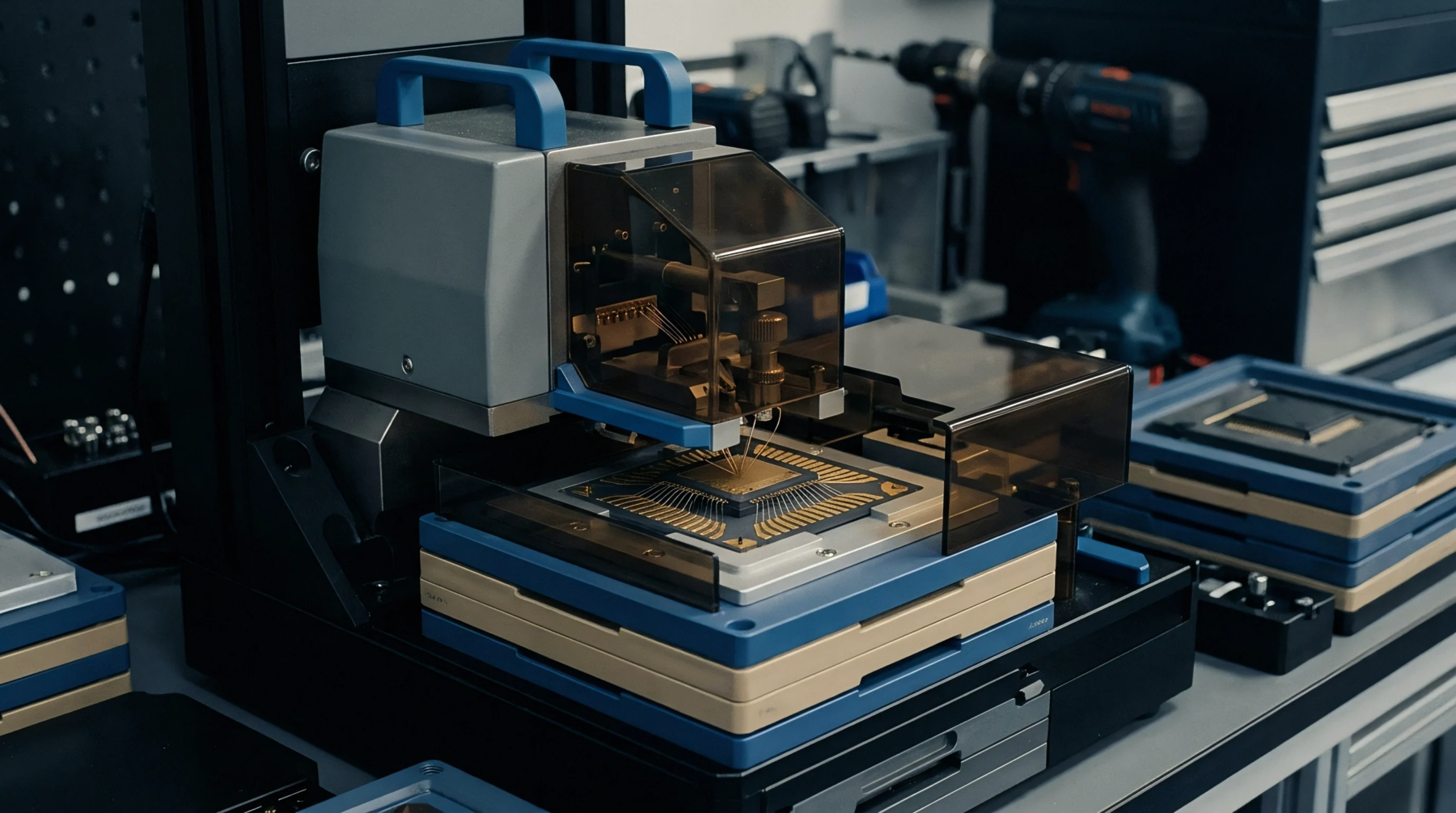
Printed circuit board layout demands mirror-image trace geometry and tightly matched dielectric characteristics across both branches to preserve phase equality into upper microwave frequencies. Transistor dies packaged in dual-transistor push-pull configurations share common ceramic headers to minimize thermal variance between silicon channels. Production verification involves two-tone intermodulation distortion testing on automated RF benches, where microstrip stubs undergo trim adjustments to optimize even-harmonic nulls.
Assembly travelers record second harmonic attenuation figures alongside device drain current balance, certifying that amplitude mismatch stays below acceptable limits prior to power module installation in final chassis enclosures. Inspection criteria mandate strict geometric symmetry audits on automated optical inspection stations before board soldering proceeds to downstream assembly.