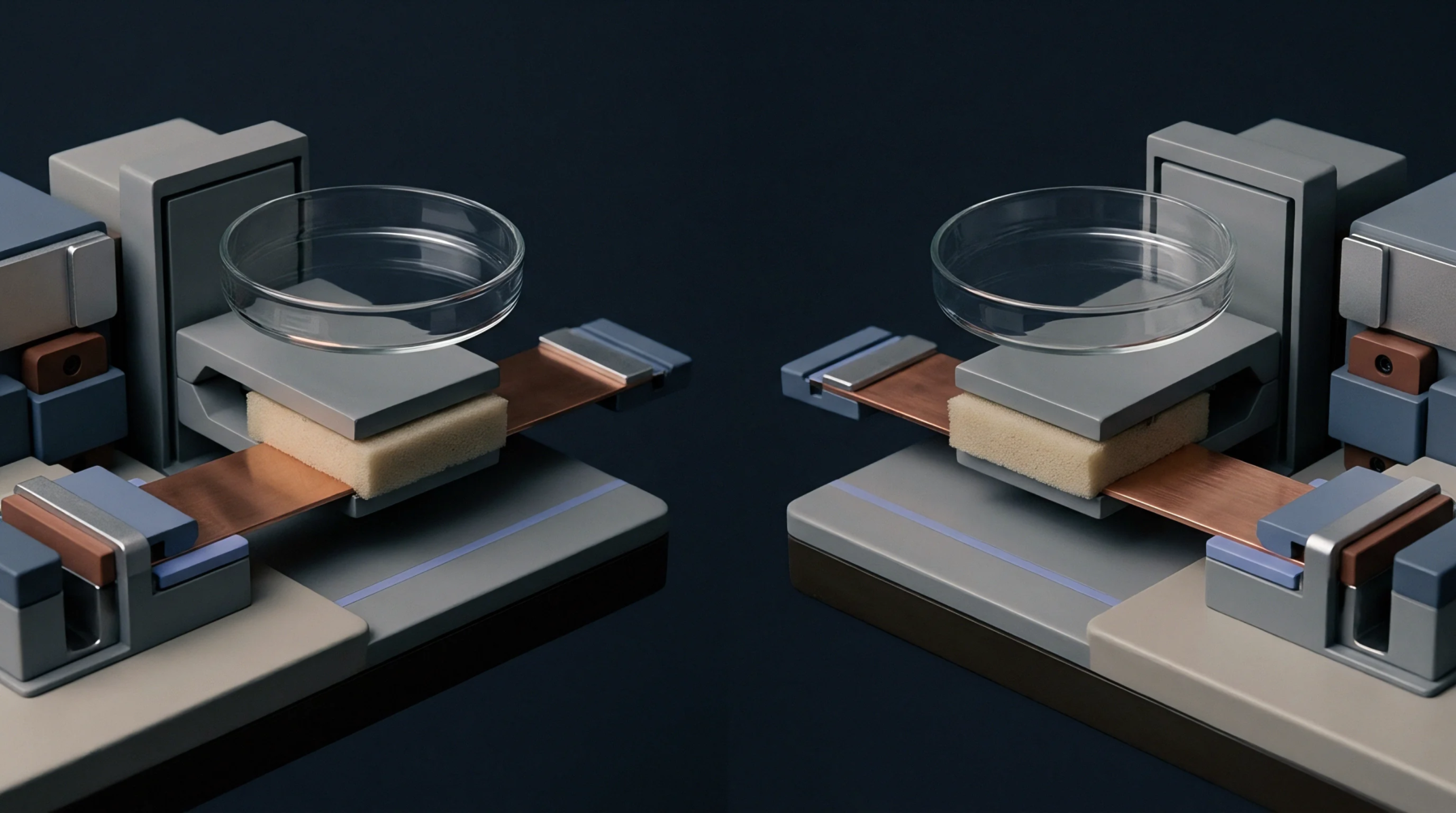
Polymer Degradation Mechanics in Glass-Filled Injection Tooling Cavities
Glass fiber erosion and shear scission alter gate dimensions and matrix integrity, requiring modular PM steel inserts and strict vent land depth maintenance.
Surface wear occurs when two distinct solids slide against each other under an applied load, leading to the direct physical removal of material from one or both interfaces through friction and impact. Most systems define two-body abrasion by the interaction of simple asperities on a tool surface moving across the skin of a softer part or another hard mechanical guide without the presence of free moving particles between them. This mechanism depends heavily on the relative hardness of the two contacting materials and the geometric finish of the points of contact.
In connectivity production, this interaction usually appears at the alignment interfaces or along the slider paths where tight clearances force the two masses into intimate contact. If the pressure exceeds the shear strength of the boundary layer, the resulting damage compromises the smooth functioning of the assembly and introduces loose debris into the internal space.
Physical engagement of the peaks on the surfaces leads to micro cutting or ploughing during each movement of the mechanical device. Two-body abrasion is distinct from environmental wear because the energy for the damage comes entirely from the internal forces of the system itself. As the two items rub, the higher peaks are sheared off, forming a smoother face but generating small metallic or plastic flakes.
This specific engagement is more predictable than wear involving hidden grit, as it tracks directly with the number of operational cycles performed. If the metal types are poorly matched, the abrasion initiates quickly and leads to galling where material moves from one side to the other in clumps. Keeping these forces within the calculation limits of the grease or dry film provides a stable window for operations.
Modification of the boundary properties helps shift the wear regime into a safer and slower sequence over thousands of iterations. Reducing the impact of two-body abrasion requires creating a substantial hardness gap between the two moving surfaces through nitriding or applying ceramic finishes. When one side is significantly harder than the other, the engagement remains shallow and the overall loss of material stays low.
If both sides are equal in hardness, the damage tends to escalate as the friction creates localized heat that softens the surface. Modern integration teams choose combinations of materials where the static member is tough and the moving member is slick and resilient. This strategy ensures that the functional clearances stay wide enough to permit movement while keeping internal friction under control.
Progression from simple rubbing to significant dimensional failure marks the end of the functional life for the precision interface. Two-body abrasion expands the clearance between guides, which eventually leads to vibrations or the misalignment of the internal logic boards and pins. These gaps allow for further secondary failures because the parts can now move in directions not intended by the original design files.
When the play becomes too great, the system may jam entirely or fail the mechanical force test required for certification of the module. Frequent lubrication can delay the onset of this sequence, but eventually, the repetitive mechanical load breaks through the oil film and restarts the metal on metal contact. Success stops where the material loss makes the part too loose to hold its primary location accurately inside the assembly frame.
Glass fiber erosion and shear scission alter gate dimensions and matrix integrity, requiring modular PM steel inserts and strict vent land depth maintenance.
Expertise is a utility, not a secret. sentiention™ publishes its working knowledge as open reference: intelligence layer covering the materials it sources, the markets it enters, and the reference that serves both.