Meaning
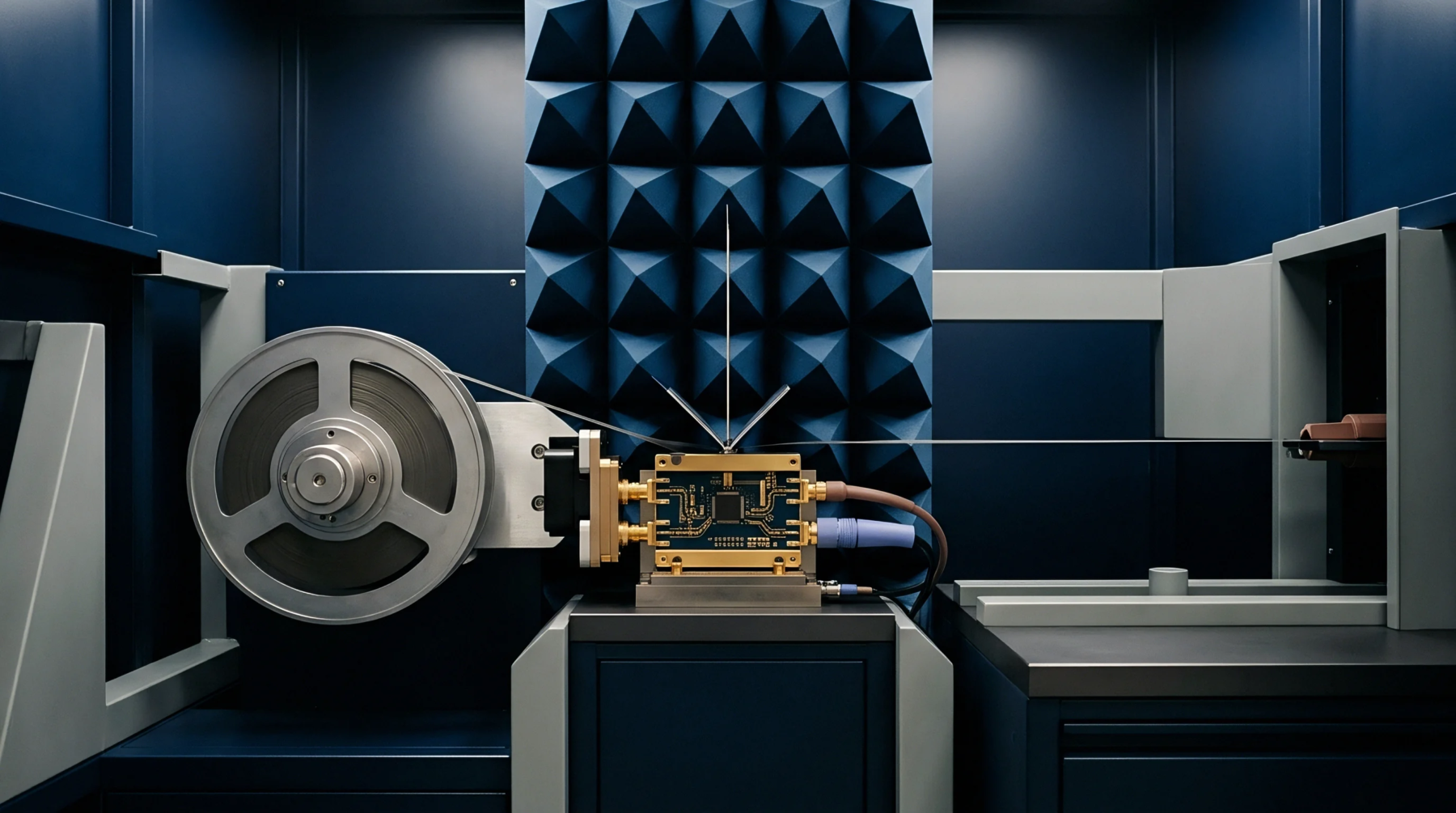
Electromagnetic energy attenuation is the defining function of specialised materials used to line the interior surfaces of anechoic chambers. Within this context, absorber reflectivity quantifies the ratio of reflected electromagnetic power to incident power, expressed in decibels. This value depends heavily on the geometry and material composition of the absorber, such as carbon impregnated foam pyramids or ferrite tiles.
The rating determines the lowest possible signal floor that a chamber can achieve during high frequency wireless device characterisation.
Performance Characterisation
Incident angle variations and operating frequency limits govern the efficacy of any attenuating surface. Numerical simulations and coaxial airline measurements of absorber reflectivity verify the performance of these materials across the entire frequency range. High reflectivity values at oblique angles can introduce unwanted multi-path signals into the test zone.
Chamber Integration
Pyramidal foam tips require precise mechanical placement to avoid localized reflections near the test zone. When integrating these materials, absorber reflectivity dictates the necessary thickness of the treatment and the physical clearance required around the device under test. Standard practice requires the use of higher performance absorbers in areas of specular reflection.
Measurement Impact
Calibrated horn antennas measure the quiet zone quietness to validate the theoretical performance of the chamber. This process isolates the contribution of absorber reflectivity from other sources of measurement error. Proper maintenance of the foam tips ensures that the reflectivity performance does not degrade over years of continuous operation.