Meaning
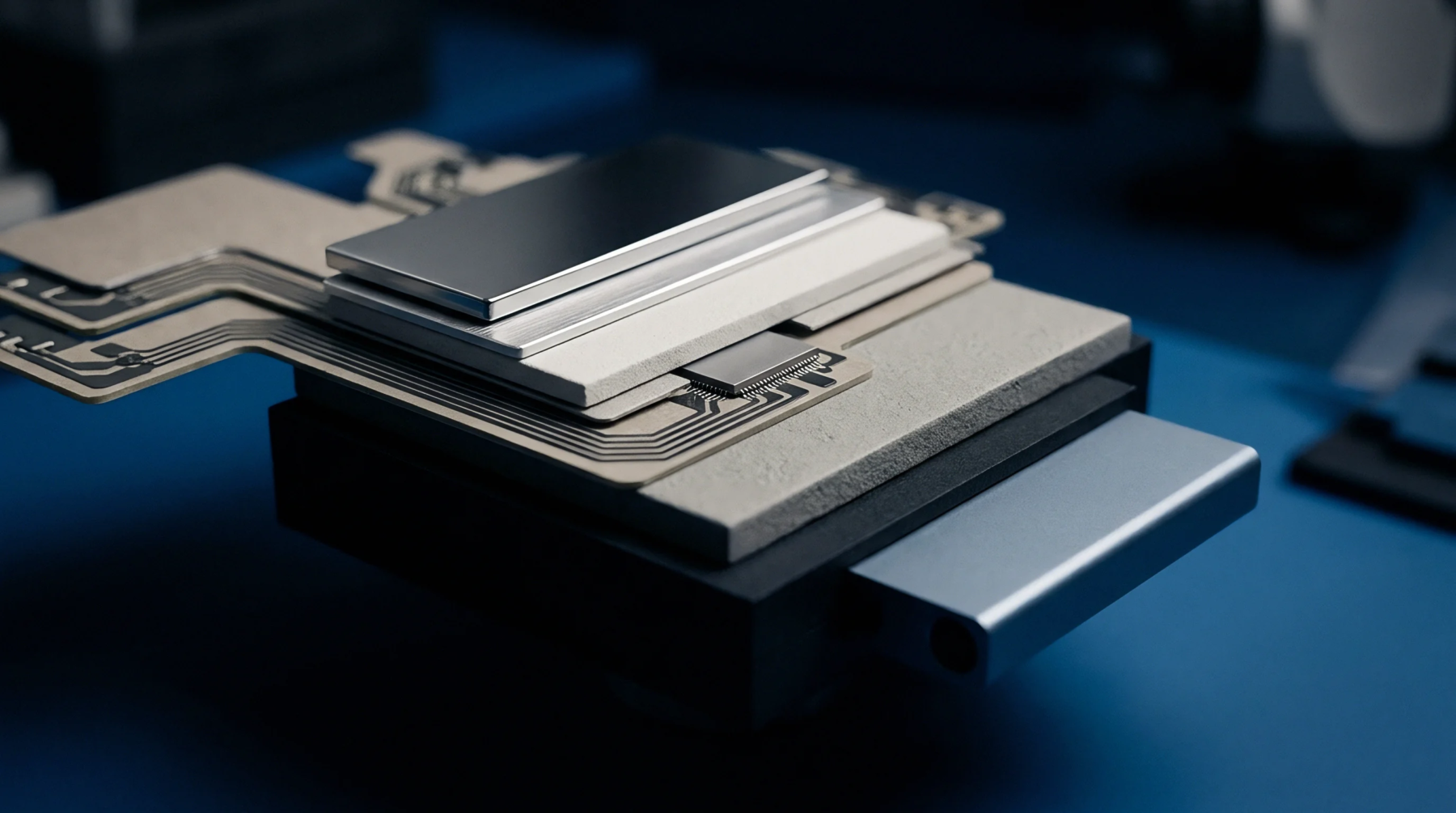
Thermoset polymer composite laminates formulated with ceramic particulate loading provide stable dielectric constants and low dissipation factors for high-frequency radio frequency printed circuit boards. A ceramic filled hydrocarbon substrate pairs a crosslinked hydrocarbon matrix with micro-dispersed inorganic fillers to balance processing compatibility against microwave electrical performance. The material class stops applying to unreinforced thermoplastic fluoropolymer sheets or standard brominated epoxy glass fabrics that lack high-density particulate ceramic modification.
Qualification against IPC-4103 governs baseline laminate specifications for these radio frequency materials.
Polymer Rheology
Thermosetting resin backbones resist the cold-flow deformation common to unreinforced soft substrates under sustained clamping pressure. Incorporating microscopic ceramic particles into this matrix curbs the coefficient of thermal expansion across all orthogonal axes, matching copper foil expansion rates closely along planar dimensions. Z-axis expansion remains restrained across standard assembly reflow profiles, preventing early plated through-hole barrel stress.
Processing parallels standard multilayer FR-4 manufacturing steps without requiring specialized chemical surface treatments for via preparation. Drill bits encounter accelerated mechanical wear from the abrasive inorganic particles, necessitating tighter tool life monitoring during panel routing.
Interface Qualification
Fabricators establish batch consistency by tracking relative permittivity and dielectric loss tangents across target operating frequencies. A supplier certificate of conformance records laminate dielectric properties measured according to IPC-TM-650 stripline resonator methods. System builders verify copper peel strength after multiple lead-free solder exposures up to 260 degrees Celsius to ensure trace integrity beneath surface-mount radio frequency components.
Moisture absorption values under 0.1 percent prevent permittivity drift in humid field deployments.
Thermal Dissipation
Inorganic particle loading raises bulk thermal conductivity above the levels seen in standard epoxy or unfilled fluoropolymer boards. Heat generated within power amplifier footprints conducts directly through the substrate core toward heat sinks or grounded metal chassis enclosures. The resulting thermal path stabilizes junction temperatures during high-power continuous wave transmission.
Operating lifecycles improve when baseboard dielectric constants remain stable across varying thermal dissipation levels.