Meaning
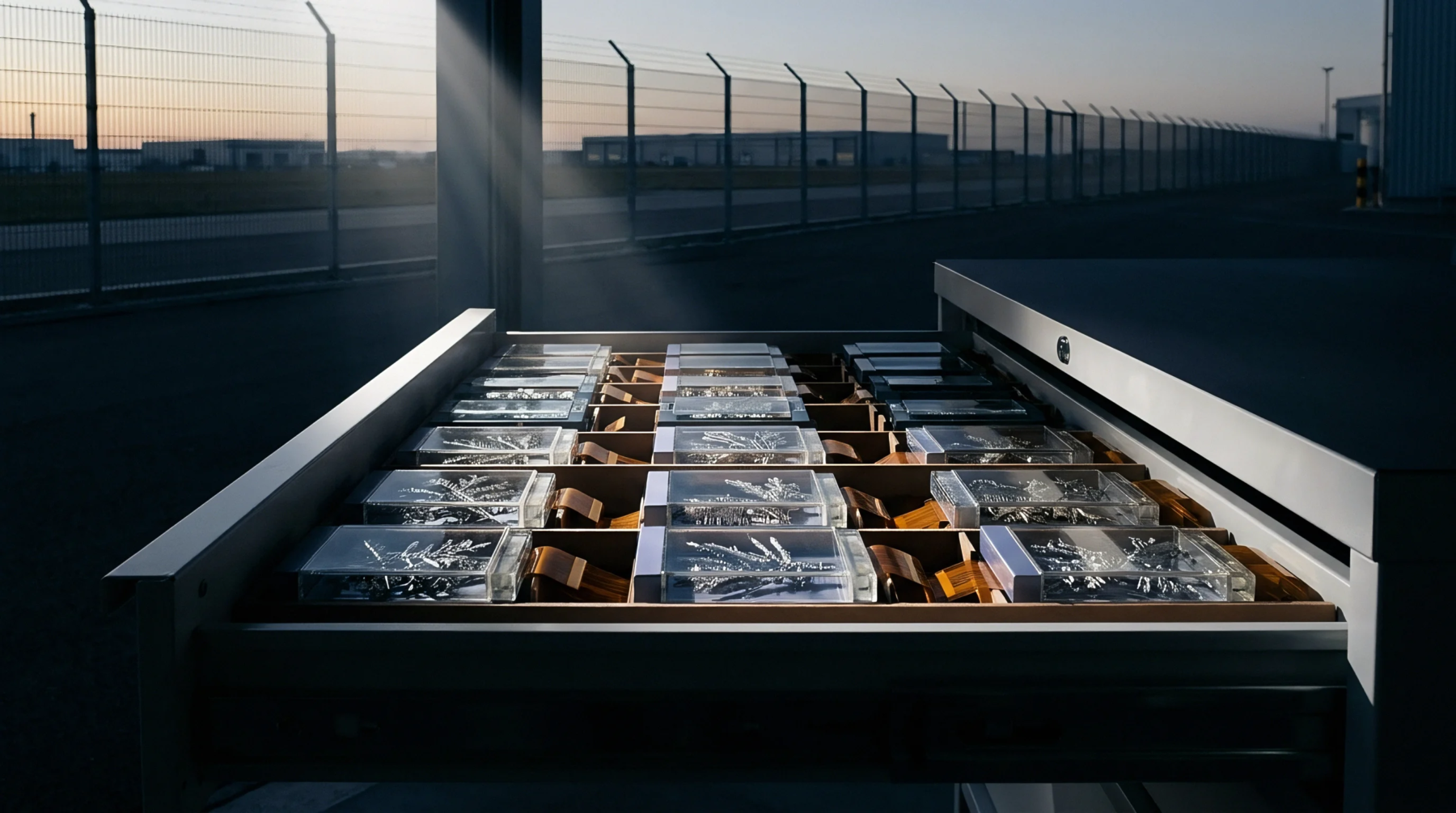
Passive radio frequency components built from high-permittivity dielectric materials provide frequency selectivity by trapping and resonating electromagnetic fields within compact physical volumes. A ceramic filter attenuates out-of-band emissions and rejects adjacent-channel interference within the front-end circuitry of wireless hardware. Utilization of ceramic formulations with high dielectric constants allows the physical dimensions of resonant cavities or coaxial poles to shrink significantly compared to air-dielectric equivalents.
This component category stops applying when power levels exceed the thermal dissipation limits of the ceramic material or when operating frequencies demand surface acoustic wave or thin-film bulk acoustic resonator architectures.
Resonance Mechanics
High-permittivity titanate ceramics shorten electromagnetic wavelengths inside the bulk substrate, facilitating compact quarter-wave or half-wave resonant geometries. In a multi-pole ceramic filter, coupling between adjacent resonant poles occurs through inductive apertures or capacitive probe structures metallized directly onto the ceramic body. Plated silver metallization guides the electromagnetic energy while minimizing conduction loss across the surface.
Dielectric loss characteristics set the unloaded quality factor of the assembly, which dictates passband insertion loss and out-of-band rejection steepness. Solder reflow processing subjects these metallized surfaces to thermal stresses that must not delaminate the conductive film or crack the brittle ceramic substrate.
Board Layout
Component pad layout and ground plane continuity govern the suppression of stray electromagnetic coupling around the package. A ceramic filter mounted without adequate ground stitching suffers from stray capacitive bridging that bypasses the resonant elements, collapsing out-of-band attenuation floors. Dedicated ground vias placed around the periphery isolate the input terminal from the output port.
Soldering profiles must balance peak temperature against preheat duration to prevent internal cracking of the ceramic block during manufacturing reflow cycles. Thermal expansion mismatches between the ceramic body and standard copper-clad laminate boards demand compliant solder alloy selection to ensure long-term joint integrity.
Passband Certification
Production verification validates insertion loss, passband ripple, return loss and group delay variance against system transceiver link requirements. Vector network analyzers measure forward transmission across environmental temperature ranges to confirm that the temperature coefficient of resonant frequency stays within contractual specifications. Excessive frequency drift shifts passband skirts directly into adjacent licensed channels, causing transmitter emissions non-compliance or receiver desensitization.
Completed inspection logs record center frequency stability alongside mechanical co-planarity checks before reel packaging releases the parts to automated surface-mount assembly lines. Production pass rates depend on tight ceramic composition control during raw powder sintering.