Meaning
Unwanted high-frequency electrical signals flowing in phase along multiple conductors or return paths toward a shared reference plane generate electromagnetic interference across integrated electronics. Common-mode ground currents arise primarily from parasitic capacitance, asymmetric circuit layouts, or fast switching transients across power converter stages and cellular transceivers. The phenomenon ceases to apply where currents travel in opposing directions with equal magnitude along balanced conductors, which constitutes normal differential-mode transmission.
Interface Decoupling
Differential traces convert electrical signals across microstrip lines, yet structural asymmetries deflect stray RF energy into local system chassis grounds. These common-mode ground currents traverse enclosure seams and shield braids, turning external cable assemblies into unintended monopole antennas. Placing common-mode chokes alongside low-impedance decoupling capacitor arrays at physical connector boundaries forces high-frequency noise back into local loop paths.
Suppression succeeds when return paths exhibit minimal loop inductance across target operational bands.
Thermal Enclosure
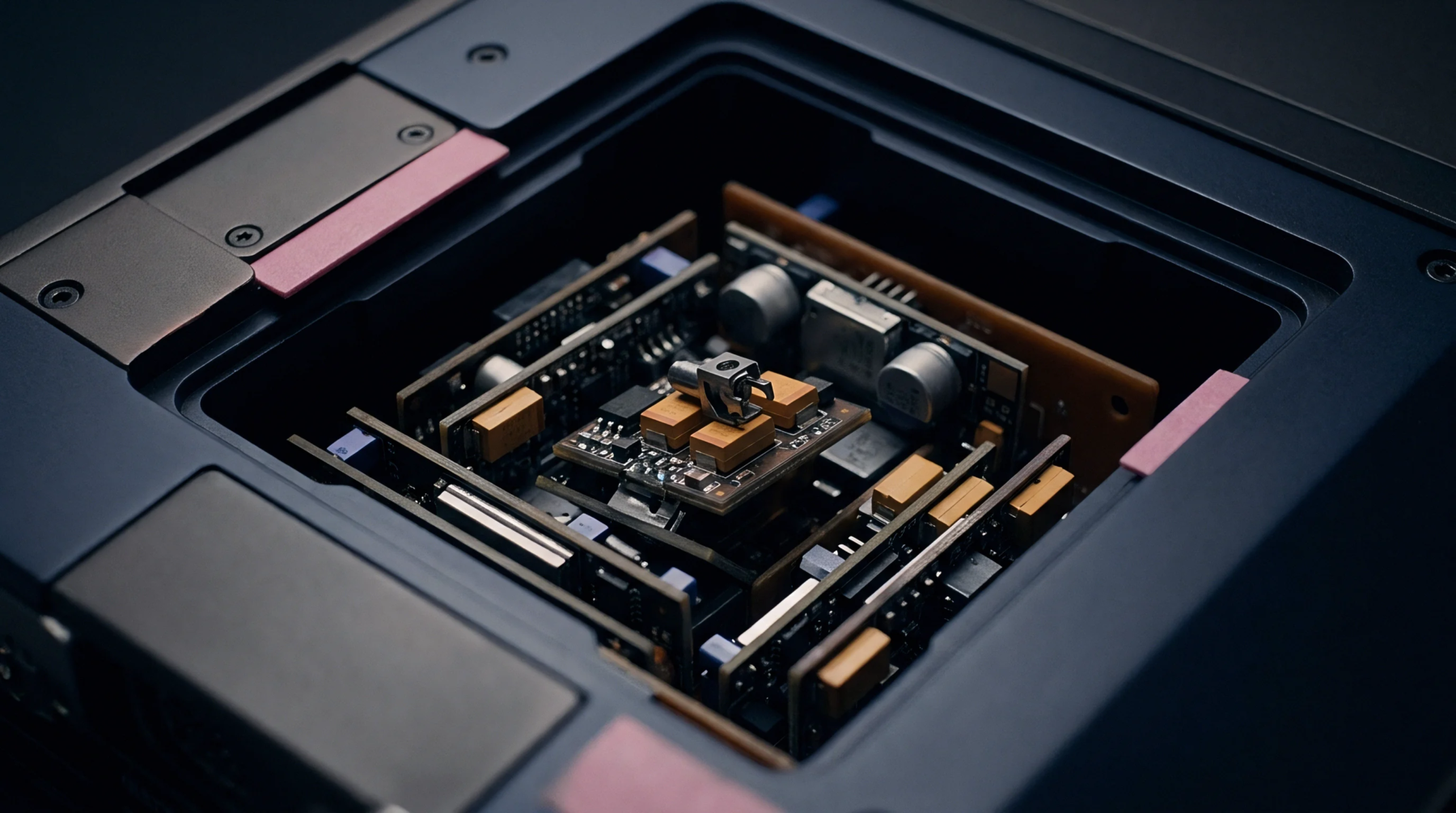
Metallic housings serve simultaneously as thermal heat sinks and electromagnetic shields, linking power converter grounds directly to mechanical casework. Fast switching transitions generated by pulse-width modulation drivers induce noise voltages across structural mounting bosses. Ground currents then spread across conductive gaskets and thermal interface materials, producing radiated emissions that degrade adjacent receiver sensitivity.
Effective dissipation balances mechanical thermal contact with distributed grounding screws positioned at quarter-wavelength intervals of the operating carrier frequency.
Radiated Measurement
Compliance testing within anechoic chambers records chassis emissions against strict regulatory limits during full-power module transmissions. Test technicians monitor current probe clamps placed around external cabling harnesses to detect uncontained common-mode return flows. Unresolved common-mode leakage manifests as baseline receiver desensitization, lowering carrier-to-interference ratios across internal Bluetooth or satellite radios.
Passing electromagnetic compatibility scans confirms that structural grounding paths contain internal switching transients without relying on external test cabling as an RF radiator.