Meaning
Mechanical material testing measures the permanent residual deformation remaining in an elastomer after the complete release of a prolonged compressive stress. Material characterization standards calculate compression set as a percentage of original specimen deflection, quantifying how much elastic recovery the seal loses over time. The metric governs elastomeric gasket selection for sealed enclosures, automotive electronic modules, and submersible sensor housings.
Evaluation applies to physical material elasticity under prescribed thermal conditions. The scope stops at mechanical strain recovery, offering no insight into chemical compatibility, electrical conductivity, or ultraviolet radiation degradation.
Recovery Deficit
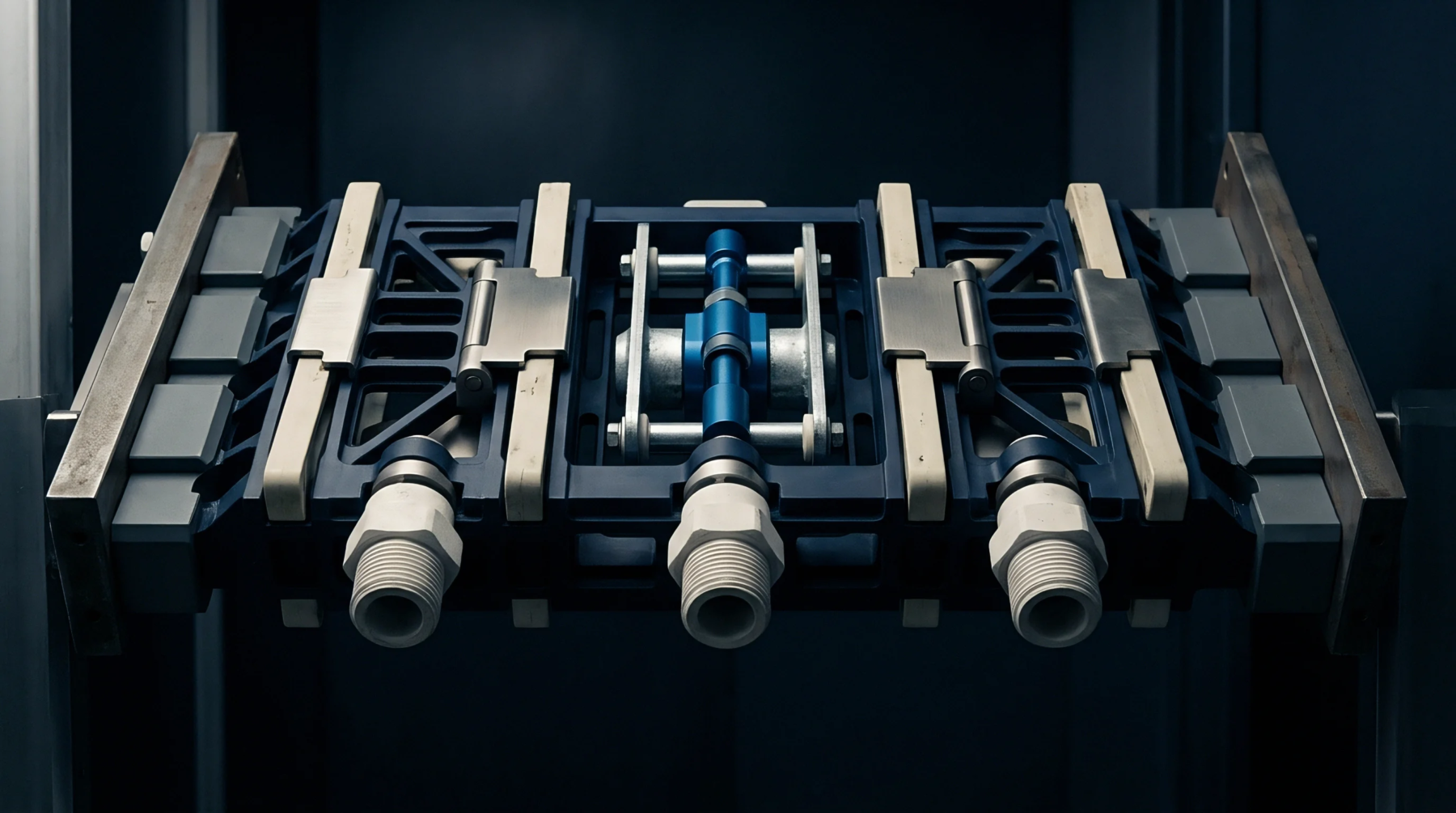
Testing protocols compress standard elastomeric disks by twenty-five percent of their original height inside steel fixture plates. Elevated compression set values denote significant loss of resilient back-force, which diminishes sealing pressure against structural mating walls. Gaskets exhibiting poor elastic recovery fail to fill mechanical surface imperfections, allowing water and fine dust particles to breach enclosure seals.
Mechanical engineers select fluorosilicone, ethylene propylene diene monomer, or fluoropolymer compounds based on their capacity to resist permanent structural thinning.
Temperature Aging
Sustained exposure to elevated temperatures accelerates polymer chain scission and cross-linking within compressed sealing elements. A material presenting low compression set at room temperature often degrades rapidly when subjected to automotive operating limits reaching one hundred and twenty-five degrees Celsius. Laboratory thermal chambers hold stressed material specimens under mechanical load for hundreds of hours to simulate entire product operational lifecycles.
Post-test measurements taken after room-temperature cooling periods indicate whether internal cross-linking density sustained irreversible thermal degradation.
Seal Integrity
Enclosure qualification programs verify that physical ingress protection ratings remain intact through extensive environmental life testing. Designing outdoor electronics demands calculating minimum gasket contact pressure, which drops steadily as compression set accumulates over operational decades. If clamping fasteners loosen under cyclic vibration, an elastomer with excessive structural set cannot expand to bridge the newly formed opening.
Gasket datasheets specify these residual recovery percentages to provide enclosure designers with reliable input values for non-linear finite element sealing simulations. Quality assurance inspectors reject incoming elastomer batches whose tested permanent deformation exceeds engineering drawing tolerances.