Post Production Hardware Modification Rework Cost Recovery Guidelines
Hardware rework cost recovery demands auditable defect attribution separating design transfer errors from contract manufacturer assembly process escapes.
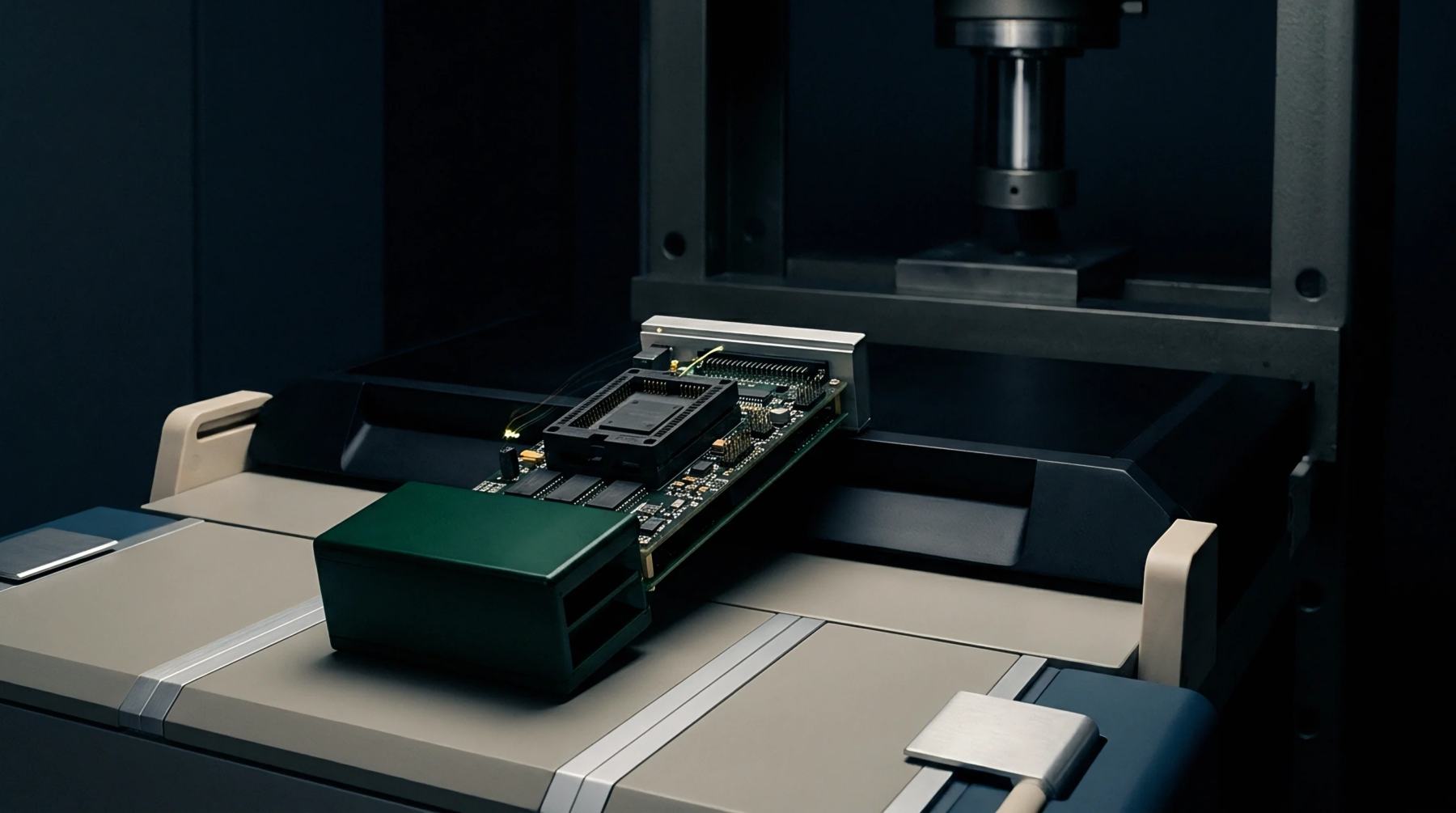
Localized thermal energy transferred through directed nitrogen or compressed dry air streams reconstitutes individual solder joints without heating an entire printed circuit assembly. Thermal rework stations execute hot gas reflow using custom-machined steel nozzles that envelope specific multi-lead integrated circuits, surface-mount sockets or shielded radio frequency modules. The process governs point repairs, component replacements and engineering sample modifications where adjacent temperature-sensitive components cannot tolerate secondary passage through a bulk soldering tunnel.
Temperature boundaries terminate at the outer rim of the directed flow shroud, leaving adjacent joints below liquidus values. Verification relies on thermocouple data logging across hidden ball grid array arrays to confirm that eutectic profiles match original assembly standards.
Solder joint reconstruction follows an automated closed-loop thermal profile mimicking original furnace parameters. Bottom-side infrared or convection preheaters bring the overall circuit assembly to an intermediate baseline around one hundred and fifty degrees Celsius. This global elevation prevents localized warping, copper delamination and internal via rupture caused by extreme temperature differentials.
Once baseline preheat stabilizes, an upper hot gas tool channels inert nitrogen down through directed vents, ramping targeted solder balls past their melting liquidus point. Controlled dwell times lasting fifty to ninety seconds allow liquid wetting without burning internal substrate epoxy matrices. Nitrogen atmospheres suppress oxygen contamination, preventing oxidation formation across pads and preserving clean joint wetting without corrosive liquid fluxes.
Rapid cool-down cycles solidify the alloy with refined grain structures that resist fatigue fracturing.
Mechanical shroud design governs heat uniformity across dense component footprints. Hot gas streams exit micro-baffles positioned directly over package perimeters to address thermal inertia differences between plastic bodies and copper leads. Poorly directed air currents introduce convection shadows, melting outward leads while leaving center connections cold.
High airflow velocities also create pneumatic drag that dislodges micro-scale passive resistors and capacitors bordering the rework perimeter. Specialized tooling integrates internal vacuum pickup wands that lift loosened components off circuit footprints immediately upon solder liquidation. Precise flow balancing preserves the thermal envelope, keeping adjacent non-target components at least twenty degrees below their solder solidus thresholds.
Replaced integrated circuits undergo structural validation using multi-axis transmission X-ray imaging before boards return to field service pipelines. Radiographic views reveal solder bridge defects, head-in-pillow joints, micro-voiding ratios and misaligned ball orientations beneath opaque quad-flat no-leads or ball-grid packages. Production quality protocols set maximum allowable voiding inside individual joints at twenty-five percent according to IPC-7095 guidelines.
Solder ball volume balance confirms that localized hot gas delivery avoided trace burnout and pad detachment. Engineering handover documentation catalogs recorded gas velocity curves, preheat baseline temps and peak thermal sensor readouts. Approved signatures on rework traveling cards verify that reworked connections possess electrical and mechanical integrity equivalent to primary line production.
Hardware rework cost recovery demands auditable defect attribution separating design transfer errors from contract manufacturer assembly process escapes.
Expertise is a utility, not a secret. sentiention™ publishes its working knowledge as open reference: intelligence layer covering the materials it sources, the markets it enters, and the reference that serves both.