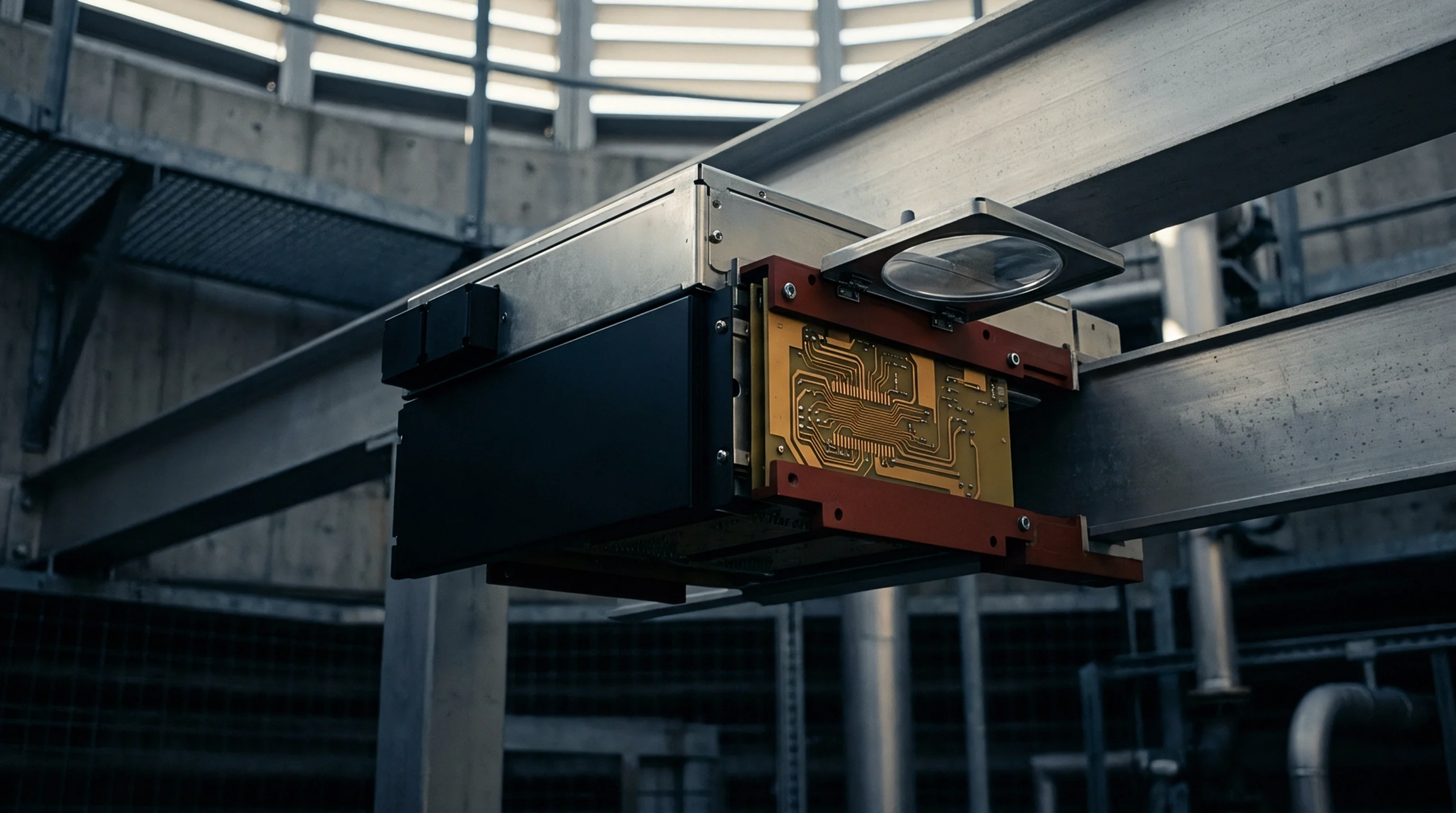
Statistical Process Control Limits for High Speed Component Placement Fixtures
Statistical process control limits for placement fixtures isolate pocket wear and thermal expansion from machine gantry errors to prevent component pad misalignments.
Time-dependent permanent mechanical deformation occurring in composite fixture materials under prolonged thermal exposure and cyclic mechanical loads characterizes the gradual sag or warping of carrier trays through thermal processing zones. Within surface mount technology and selective wave soldering lines, reflow pallet creep denotes the irreversible distortion of fiber-reinforced synthetic resin carriers that support thin or irregularly shaped circuit boards through multi-zone soldering ovens. The parameter governs structural support rigidity, board planarity and bottom-side component clearance during high-temperature passes.
It ceases to apply to transient, purely elastic deflections that recover completely once the pallet cools to ambient factory temperature.
Reflow carriers pass through repeated heating cycles where temperatures exceed two hundred and sixty degrees Celsius in the presence of aggressive chemical fluxes. The synthetic polymer matrices inside composite pallets, typically carbon-fiber or glass-fiber reinforced epoxy or duroplastic resins, experience cumulative molecular relaxation under these elevated thermal conditions. When unsupported spans or thin-walled web sections carry heavy mechanical payloads, such as clamp bars, top hats or dense electronic subassemblies, reflow pallet creep accumulates across hundreds of thermal runs.
This sustained structural degradation produces permanent center sag that pulls circuit boards out of their nominal focal planes. Solder paste deposits then experience uneven thermal profiles, leading to bridging, open joints or insufficient wetting along peripheral connector interfaces.
Warped pallets transfer mechanical strain directly into the assemblies they carry, generating localized stress across cooling solder joints. As reflow pallet creep shifts fixture dimensions, locating pin centerlines drift, causing circuit boards to bind in pallet pockets or ride up on locating edges. Clearance pockets milled into the pallet base to protect bottom-side pre-mounted passives gradually lose vertical clearance, allowing delicate components to strike wave solder nozzles or internal convection oven baffles.
Pallet maintenance procedures include flat-bed coordinate measuring machine inspections to map surface planarity over the working life of the carrier. When permanent z-axis center deflection exceeds drawing limits, the pallet must be retired from the production loop to protect high-frequency boards from bow and twist defects.
Manufacturing tooling teams establish life-cycle limits for carriers based on measured material stability verified during initial tooling buyoff protocols. The technical data sheet of the composite raw stock must confirm a glass transition temperature substantially higher than the peak reflow profile to resist long-term softening. Tooling sign-off packages require baseline flat plate scans and scheduled re-verification intervals within the preventative maintenance tracking software.
Inspection personnel audit pallet thickness and pocket depths against mechanical drawings using dial gauges and granite surface plates. Retiring fixtures before creep exceeds allowable assembly coplanarity limits guarantees uniform solder joint formation and prevents board handling jams in automated conveyor transfers.
Statistical process control limits for placement fixtures isolate pocket wear and thermal expansion from machine gantry errors to prevent component pad misalignments.
Expertise is a utility, not a secret. sentiention™ publishes its working knowledge as open reference: intelligence layer covering the materials it sources, the markets it enters, and the reference that serves both.