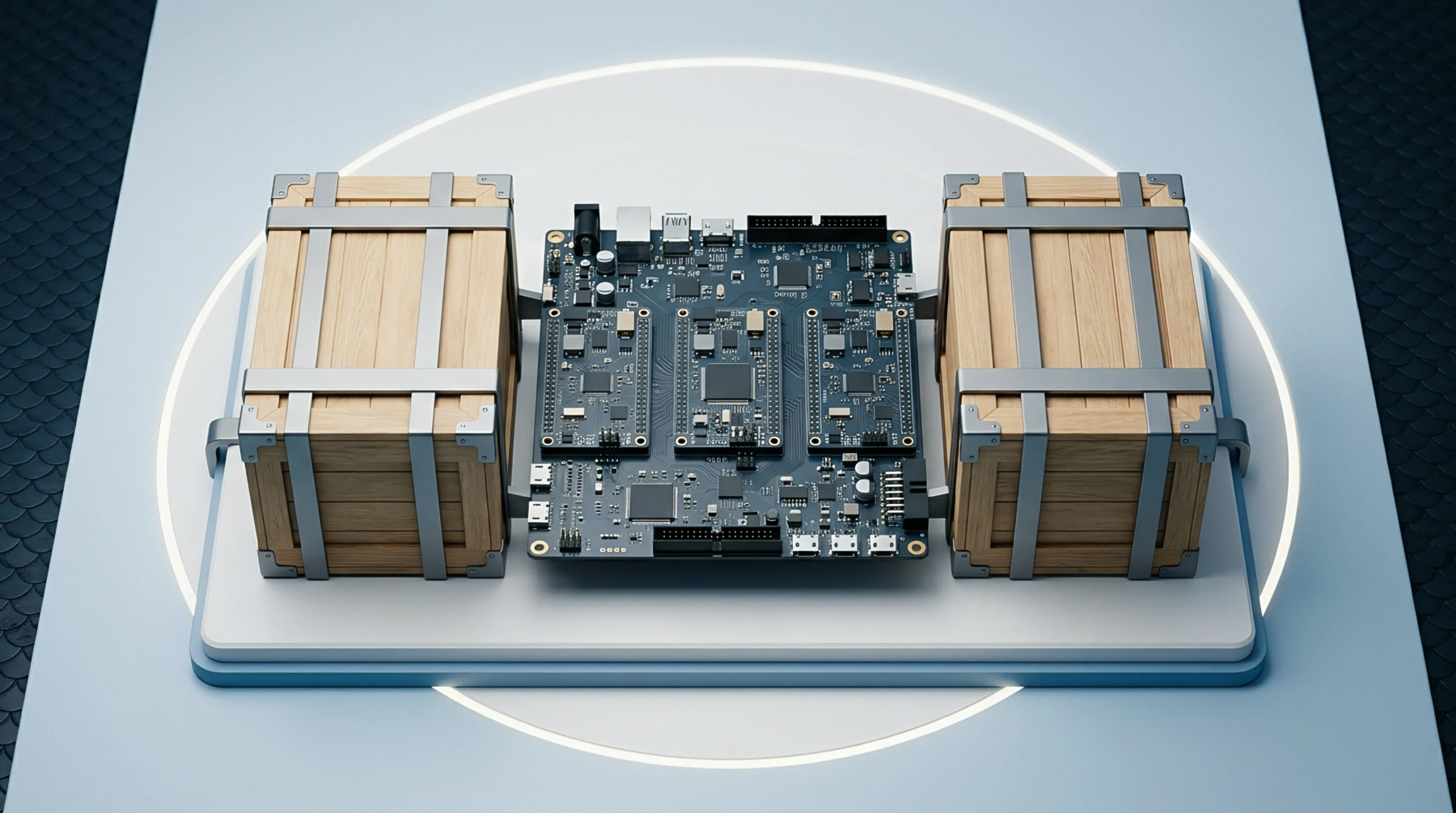
Deconstructing Unit Price Amortization Schedules to Recover Design Ownership Rights
Unbundling NRE from unit pricing via explicit amortization schedules establishes clear buyout terms and secures total ownership of manufacturing design assets.
Commercial financial assessments determine the total unliquidated cost exposure assumed by a purchaser when canceling, modifying, or terminating a manufacturing procurement agreement before order fulfillment. A residual liability calculation quantifies the monetary value of obsolete raw material inventories, non-cancellable component purchase orders, work-in-process hardware, and vendor-specific amortized tooling. It governs commercial reconciliation between original equipment manufacturers and electronic manufacturing services providers during contract termination, engineering change orders, or product retirement.
The metric excludes future lost sales margins, warranty reserves, field repair costs, and general operational overhead outside the direct manufacturing pipeline.
Valuation matrices group pipeline materials into clear risk categories based on supplier cancelability, lead times, and merchantability. In a typical residual liability calculation, unique components such as custom-tooled plastic enclosures, stamped antennas, and programmed microcontrollers represent full liability because they carry zero salvage value across alternate market programs. Standard commercial passives and discrete semiconductors carry lower exposure because the contract manufacturer can return them to distribution channels or reallocate them to other production lines subject to restocking fees.
The assessment categorizes stock into raw components held on the factory floor, open purchase orders that have passed supplier cancellation windows, and subassemblies sitting along active assembly conveyors. Auditors calculate the gross liability by multiplying unit contract pricing against verified physical counts, subtracting supplier restocking credits.
Unfinished printed circuit board assemblies and custom sub-modules demand precise physical auditing to determine salvageable value. Partially built assemblies sitting inside surface mount lines carry incurred manufacturing labor, consumable solder paste, and automated optical inspection costs on top of raw bill-of-materials expenditures. When an engineering revision invalidates an active production run, engineers inspect work-in-process boards to assess whether rework can salvage the units or if total scrapping is required.
The scrap value of reclaimed gold, copper, and bulk plastics provides a slight offset, which the manufacturer deducts from the gross exposure figure. Disputed counts require third-party physical reconciliation on the assembly floor before financial approval.
Final settlement documents formalize the negotiated liability balance into an actionable payment agreement between the commercial counterparties. The reconciliation statement records verified inventory disposition choices, itemizing parts designated for scrap, materials to be delivered to the customer, and components absorbed into distributor stock. Financial controllers execute the residual liability calculation against agreed purchase contracts, establishing binding credit memos or payment schedules.
Clear settlement definitions prevent supply chain disputes and clear contract manufacturing capacity for subsequent electronic production cycles.
Unbundling NRE from unit pricing via explicit amortization schedules establishes clear buyout terms and secures total ownership of manufacturing design assets.
Expertise is a utility, not a secret. sentiention™ publishes its working knowledge as open reference: intelligence layer covering the materials it sources, the markets it enters, and the reference that serves both.