Contractual Escrow Triggers and Field Failure Liability Split in Dual Sourced Hardware Transfer
Structure hardware escrow with bit-exact build verification, secure factory OTP traceability keys, and tie field liability to physical failure mechanisms.


Deposit
Moving production of an embedded wireless module or complex compute board to a second manufacturing site requires a complete, unencumbered technical deposit held under a three-party agreement. Original design manufacturers routinely resist handing over native CAD databases, board layer stack-ups, bare-die wire-bonding diagrams, and proprietary test firmware. To counter this, a buyer setting up a dual-sourcing arrangement must specify every electronic deliverable by file extension, tool version, and checksum verification routine directly within the escrow schedule.
Upon execution of the master services agreement, the primary manufacturing partner places the complete hardware dossier with a neutral custodial agent. That package has to include Altium, Cadence Allegro, or Mentor Xpedition design databases with full hierarchy, parametric schematic symbol libraries, IPC-2581 or ODB++ manufacturing archives, bare printed circuit board impedance calculation sheets, and complete fabrication drawings detailing dielectric constants and copper weights.
A complete escrow archive allows a secondary assembly facility to generate bare circuit boards and surface-mount stencils without altering line impedance or thermal profiling.
Firmware deposits demand strict separation between production binaries and maintenance source repositories. Beyond bare-metal board support packages and peripheral driver source code, the deposit must encompass makefiles, linker scripts, build container images tied to fixed toolchain versions, and factory calibration routines for radio frequency trimming. Dropping in binary blobs without source code or hardware abstraction layers leaves a secondary site unable to bring up the board.

Deliverables within Hardware Escrow Schedules
To prevent incomplete submissions, custodians validate data packages against an explicit verification matrix. Automated scripts then confirm that the archive actually compiles into bit-for-bit identical firmware binaries matching current production revisions.
- Native schematic files contain hierarchical schematics, simulation models, and component databases with manufacturer part numbers rather than internal supplier stock-keeping codes.
- Gerber and drill archives incorporate RS-274X or IPC-2581 files along with bare board drill tables, fabrication notes, IPC-A-600 Class 3 specifications, and stack-up dielectric thickness tolerances.
- Bill of materials spreadsheets list exact component manufacturer part numbers, secondary qualified alternates, moisture sensitivity levels, and per-board component reference designators.
- Factory test software includes source code for radio calibration, functional test scripts, boundary scan test files, and board-level unique identifier flashing utilities.
Custodians audit the deposited media annually, checking physical integrity and matching cryptographic hashes against active production revisions.
An archive that omits its automated compiler environment can stall factory re-qualification for months.


Release
Escrow release conditions draw the exact contractual lines under which a buyer can pull deposited design assets and hand them to an alternate manufacturing partner. Negotiations typically pit narrow bankruptcy definitions against broader operational triggers ~ such as prolonged production allocations, unannounced material changes, sustained quality failures, and delivery suspensions that exceed agreed thresholds.
Once a release is triggered, the secondary contract manufacturer can begin tool replication, SMT line setup, and component procurement. The underlying contract defines whether that license is exclusive or non-exclusive, perpetual, royalty-bearing, or royalty-free.
Under commercial escrow terms, an unannounced component substitution causing lot rejection rates above five percent triggers full technical release within ten business days.
Release conditions balance operational continuity against supplier intellectual property protection. The table below compares common escrow release triggers, verification burdens, and operational timelines.
| Trigger Category | Contractual Condition | Verification Requirement | Cure Window |
|---|---|---|---|
| Insolvency | Filing of voluntary or involuntary bankruptcy petition | Certified court docket filing or formal receiver notice | Zero business days |
| Supply Interruption | Failure to supply minimum committed volume for 30 consecutive days | Purchase orders, binding delivery schedules, warehouse receiving logs | 10 business days |
| Sustained Epidemic Defect | Field failure rates exceeding 3.5 percent across three rolling monthly lots | Root-cause failure analysis report from an accredited testing laboratory | 15 business days |
| Unauthorized Design Change | PCN omission altering form, fit, function, or RF regulatory compliance | Independent dimensional, optical, or RF bench characterization dossier | 5 business days |
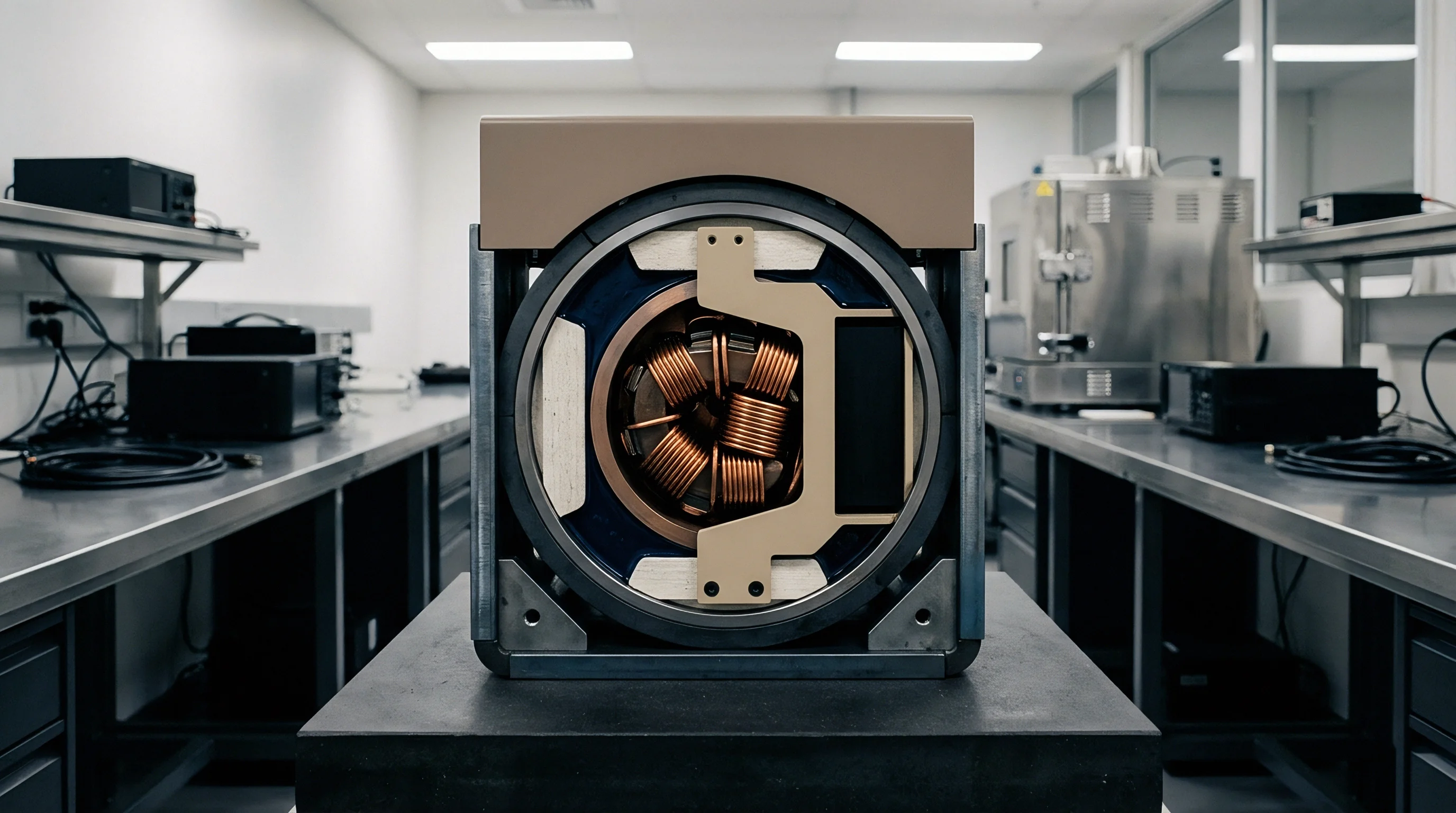
Why Do Release Clauses Trigger Extended Supplier Disputes?
Ambiguity over what constitutes an uncured material default frequently stalls asset retrieval during supply emergencies. When yield collapses, primary manufacturers often point to incoming component tolerances or host-board integration errors rather than process defects. Buyers protect themselves by tying release triggers to objective delivery and line-yield milestones instead of fault determinations that can be argued indefinitely.
If the primary manufacturer fails to contest an escrow demand within ten business days, the custodial agent is required to release all repositories electronically without further notice.
Under Section 14.3 of the Master Supply Agreement, disputed escrow releases head straight to expedited commercial arbitration, with technical repositories transferring to the secondary site while the hearing is pending.

Jig
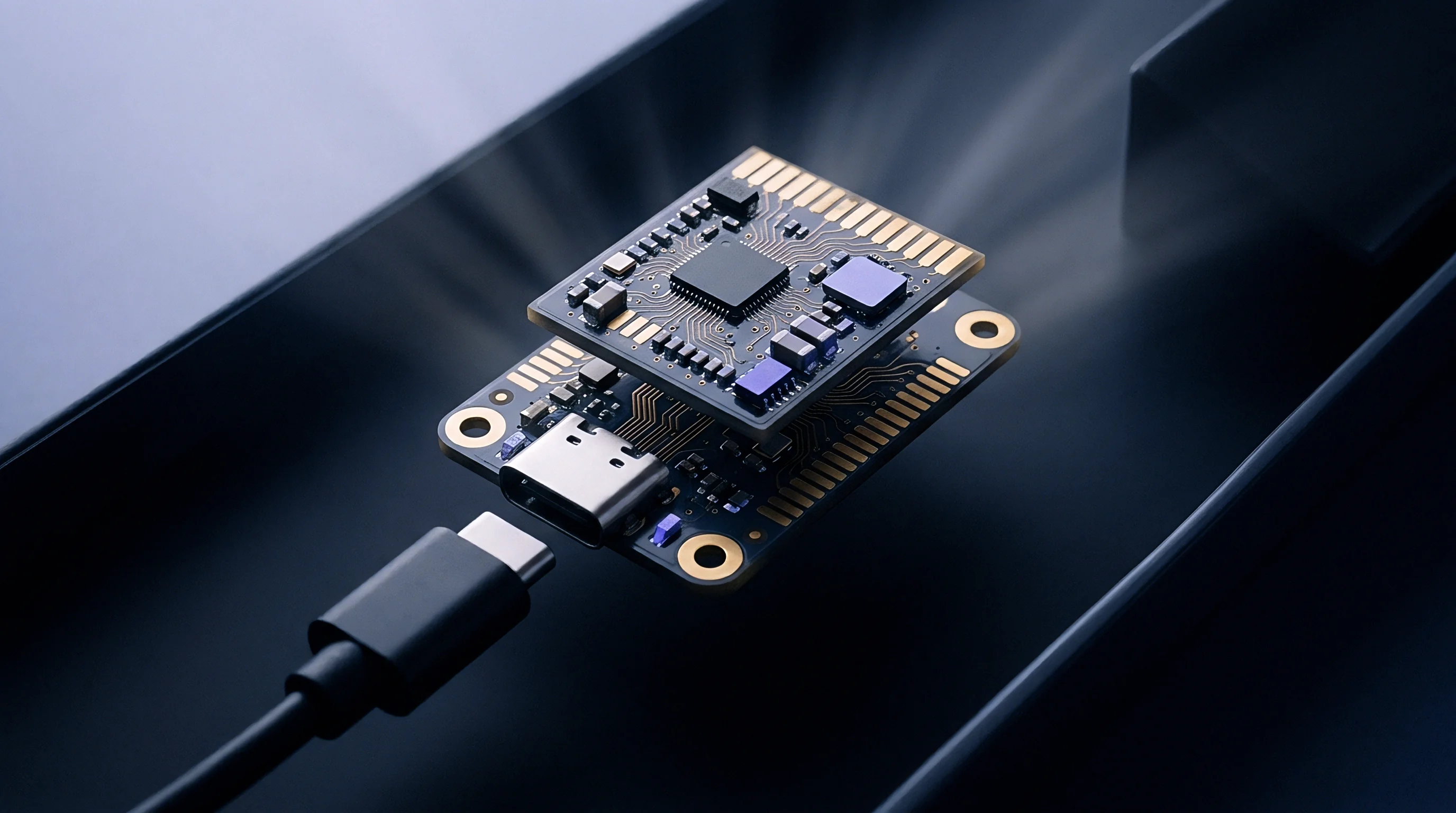
Line replication depends on far more than board layout: custom functional test fixtures, bed-of-nails jigs, automated flashing stations, and RF test chambers dictate the outcome. Copying bare copper traces is straightforward, but cloning the original supplier’s custom test fixtures and calibration algorithms is where bring-up usually stalls.
The escrow archive must include mechanical drawings for every in-circuit test fixture, pogo pin coordinate maps, pneumatic clamp actuator specifications, and vector network analyzer calibration profiles. Without these schematics, a secondary manufacturing partner cannot build identical end-of-line test stations.
A test fixture specification missing pogo pin contact resistance tolerances and RF attenuation calibration values yields discordant pass-fail classifications across dual-sourced assembly lines.
RF calibration routines depend on precise compensation matrices for cable loss, switch matrix attenuation, and ambient chamber reflection. If the secondary facility relies on different spectrum analyzers or reference antennas, radio performance will drift between the two manufacturing lines.
Calibration Alignment across Dual Sites
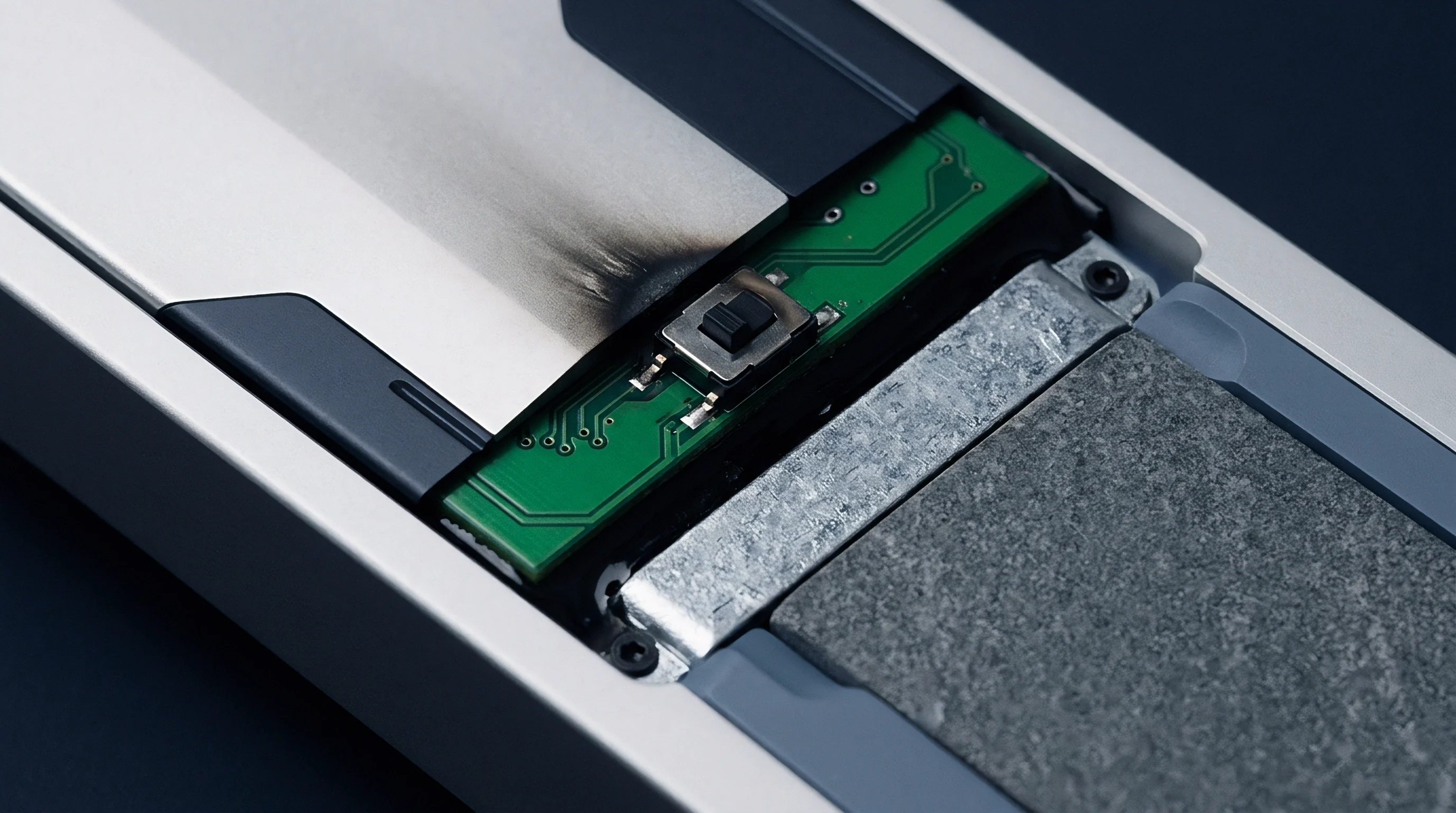
Cross-factory yield parity requires matched test hardware and shared golden units. Establishing a quarterly golden unit rotation ensures that both plants verify their functional test fixtures against an identical hardware reference artifact.
For line qualification, both factories run a randomized batch of 500 identical units through their fixtures to confirm that measurement distributions for transmit power, error vector magnitude, receiver sensitivity, and sleep currents align within three standard deviations across both setups.
Yield disputes frequently stall over whether scrap rates stem from process drift or differences in line calibration and ambient RF noise floors between the two sites.

Apportionment
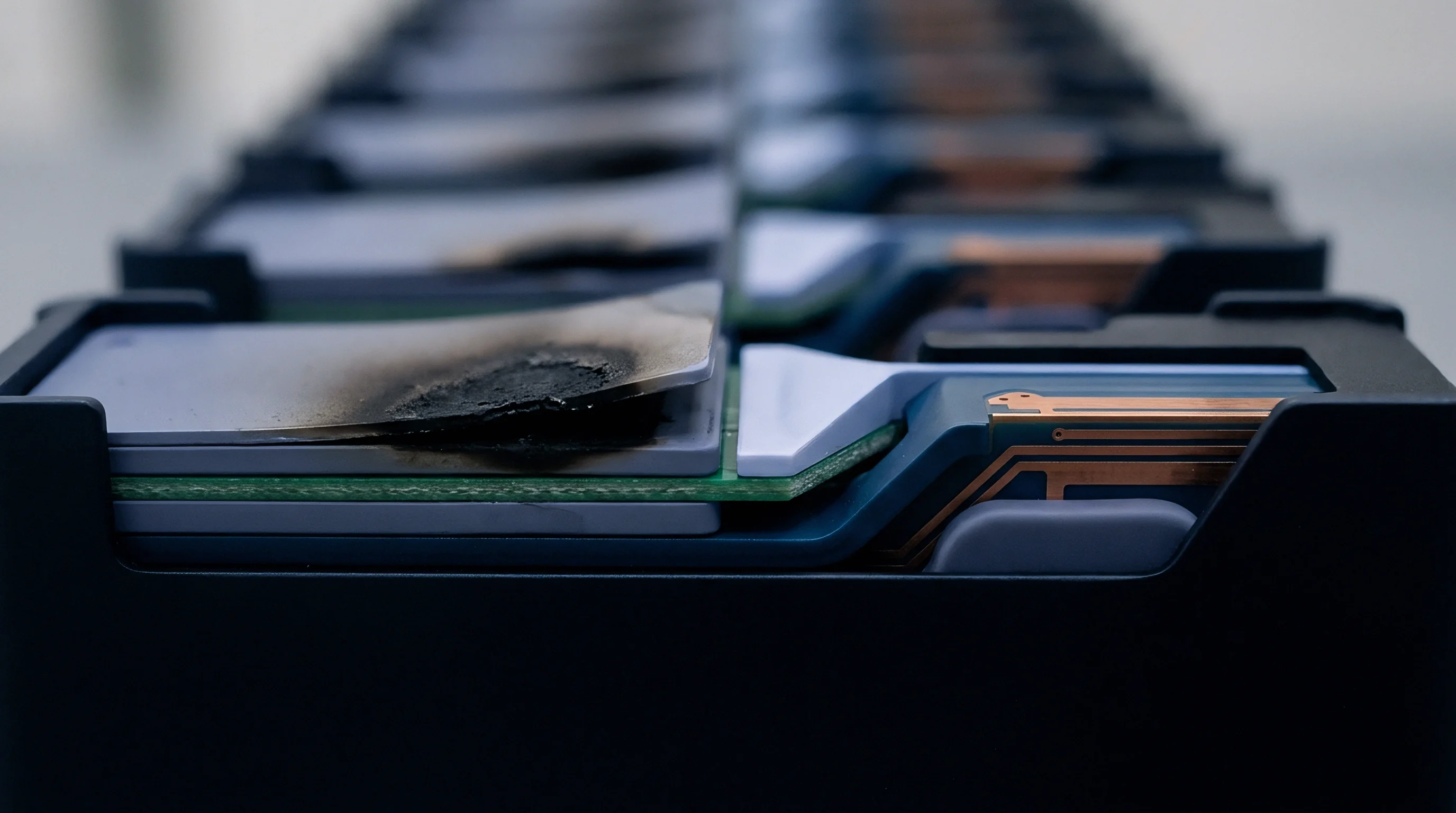
Field failures in dual-sourced hardware spark messy liability disputes among design owners, secondary assemblers, and component vendors. Pinpointing whether a defect traces back to design flaws, bad silicon lots, bare-board fabrication issues, or SMT assembly drift requires rigorous failure analysis.
Tracing liability starts with cryptographically secure tracking registers burned into one-time-programmable memory on the line. Each module must log its manufacturing facility ID, SMT line identifier, bare PCB lot code, assembly date, firmware revision, and test station calibration serial numbers.
| Observed Failure Mode | Physical Failure Mechanism | Primary Root Cause | Liable Party |
|---|---|---|---|
| RF Transmission Drop | Fractured solder joint beneath BGA shield can due to thermal cycling | Insufficient reflow thermal profile or solder paste volume | Assembly Factory |
| Systemic Boot Loop | Flash memory charge leakage at high ambient operating temperature | Sub-tier silicon foundry gate oxide defect across specific silicon lot | Silicon Vendor |
| Intermittent Reset | Power rail brownout under simultaneous radio transmission and flash write | Inadequate decoupling capacitance in original baseband reference design | Design Authority |
| Clock Frequency Drift | Crystal oscillator load capacitance mistuning across operating temperature | Unapproved passive component substitution by secondary manufacturing site | Secondary Assembler |
| RF Harmonic Violation | Shielding frame coplanarity distortion causing RF leakage at cavity joint | Mechanical stamping tool wear at enclosure fabricator | Tooling Owner |

Whose Diagnostics Determine Commercial Liability?
Resolving attribution disputes requires formal failure analysis protocols using scanning electron microscopy, energy-dispersive X-ray spectroscopy, focused ion beam cross-sectioning, and automated optical inspection records. If an intermittent reset traces back to an unannounced layout revision introduced by the secondary plant, that assembler shoulders all warranty, reverse logistics, and customer replacement costs.
If failures instead lead back to a latent bug in the escrowed base firmware architecture, liability falls under design ownership clauses. The original design owner covers direct engineering fixes, while both assembly plants receive compensation for scrapped inventory and rework hours.
Without factory-specific cryptographic traceability keys in non-volatile memory, any multi-million-dollar warranty claim deteriorates into an unrecoverable dispute that gets absorbed as an operational loss across both partners.

Indemnity
Recovering losses from systemic hardware defects requires clear warranty indemnification caps, recall allocation schedules, and liquidated damage terms. Standard commercial clauses capping supplier liability at one hundred percent of trailing twelve-month purchase value rarely cover the true costs of field extraction, logistics, and downstream customer penalties.
Dual-sourcing contracts establish tiered warranty windows tied to operating hours or component date codes. Contracts generally define an epidemic failure as any verified defect sharing a common root cause that exceeds three percent of delivered units within a twelve-month rolling window.
Standard commercial terms limiting remedy to component replacement leave the product owner holding all field extraction, air freight, and customer shutdown costs.
Once an epidemic defect is declared, the liable party assumes all reasonable costs for root-cause analysis, reverse logistics, field disassembly, factory rework, regulatory re-certification, and scrapped inventory. Agreements frequently back this with an escrow-funded indemnity reserve or a standby letter of credit to ensure funds are accessible during containment campaigns.
Whether a secondary contract manufacturer can claim full indemnification against an original design owner when escrowed test software misses a latent silicon timing margin flaw remains an unsettled question in cross-border commercial law.