Contractual Allocation Mechanics for Software Maintenance in Turnkey Module Manufacturing
Turnkey module software maintenance requires explicit tier allocations, build container preservation, and formal errata liability boundaries in supply contracts.


Custody
When an OEM specifies a turnkey wireless or computing module, commercial negotiations usually focus on hardware unit pricing, NRE charges for PCB layout, and bill-of-materials costs. Software deliverables are typically bundled into initial engineering scope as compiled binary images, basic board support packages, and demo drivers. Embedded code does not physically degrade, but its operational environment constantly shifts: silicon vendors issue register-level errata, open-source networking libraries uncover security flaws, toolchains change, and host operating systems modify driver APIs.
Once a module enters high-volume manufacturing, who handles ongoing maintenance determines whether that module remains commercially viable over a seven-year production run or becomes an unmanageable liability.
Turnkey manufacturing agreements traditionally treat software as an incidental deliverable attached to physical module shipments, creating a fundamental mismatch in expectations. The module vendor views software engineering as a completed milestone tied to initial factory acceptance testing; once the board passes checks and enters mass production, vendor engineers shift to new design wins. The host integrator, meanwhile, assumes the agreement includes ongoing support for the module’s embedded software ~ including critical security patches and driver updates when host microcontrollers change.
Turnkey suppliers frequently treat board support packages as static assets. When a software defect turns up six months into production, arguments break out immediately over whether the fix is a warranty repair, routine product maintenance, or a new engineering request requiring additional NRE fees. Without explicit contractual mechanics, software maintenance costs fall on whichever party suffers the most financial damage if production halts.
Allocating software maintenance obligations across an eight-year cellular module production run adds between four and nine percent to effective landed unit costs when structured as an annual retainer rather than ad-hoc engineering orders.
An evaluation of thirty custom module supply agreements with unpriced software maintenance showed that eighty-four percent required emergency contract addendums within twenty-four months. Those addendums carried hourly engineering rates thirty to fifty percent above the baseline design rates negotiated in initial RFQ stages. Leaving software maintenance unpriced merely defers financial liabilities until they surface during production ramps or field deployments.

Turnkey Supply Models and Software Responsibility
Where hardware ownership ends and software maintenance begins depends on the integration model. In a pure turnkey arrangement, the module vendor owns the schematic, bill of materials, board support package, and lower-layer firmware drivers. The host OEM interacts with the module through a defined application programming interface or protocol ~ such as AT commands over a serial interface or API calls across PCI Express.
Because the supplier retains full control of the source code, the host OEM cannot apply direct fixes or compile custom patches, leaving them entirely reliant on the vendor for updates.
Semi-custom integration models shift some software responsibility to the host OEM. The vendor provides driver source code and Hardware Abstraction Layer libraries, but keeps core wireless protocol stacks, security enclaves, and power management algorithms proprietary. Maintenance here requires a clear split: the host OEM ports drivers to new host OS kernels and fixes application-level integration bugs, while the supplier maintains closed-source binaries, issues microcode patches for silicon errata, and patches vulnerabilities in proprietary stacks.
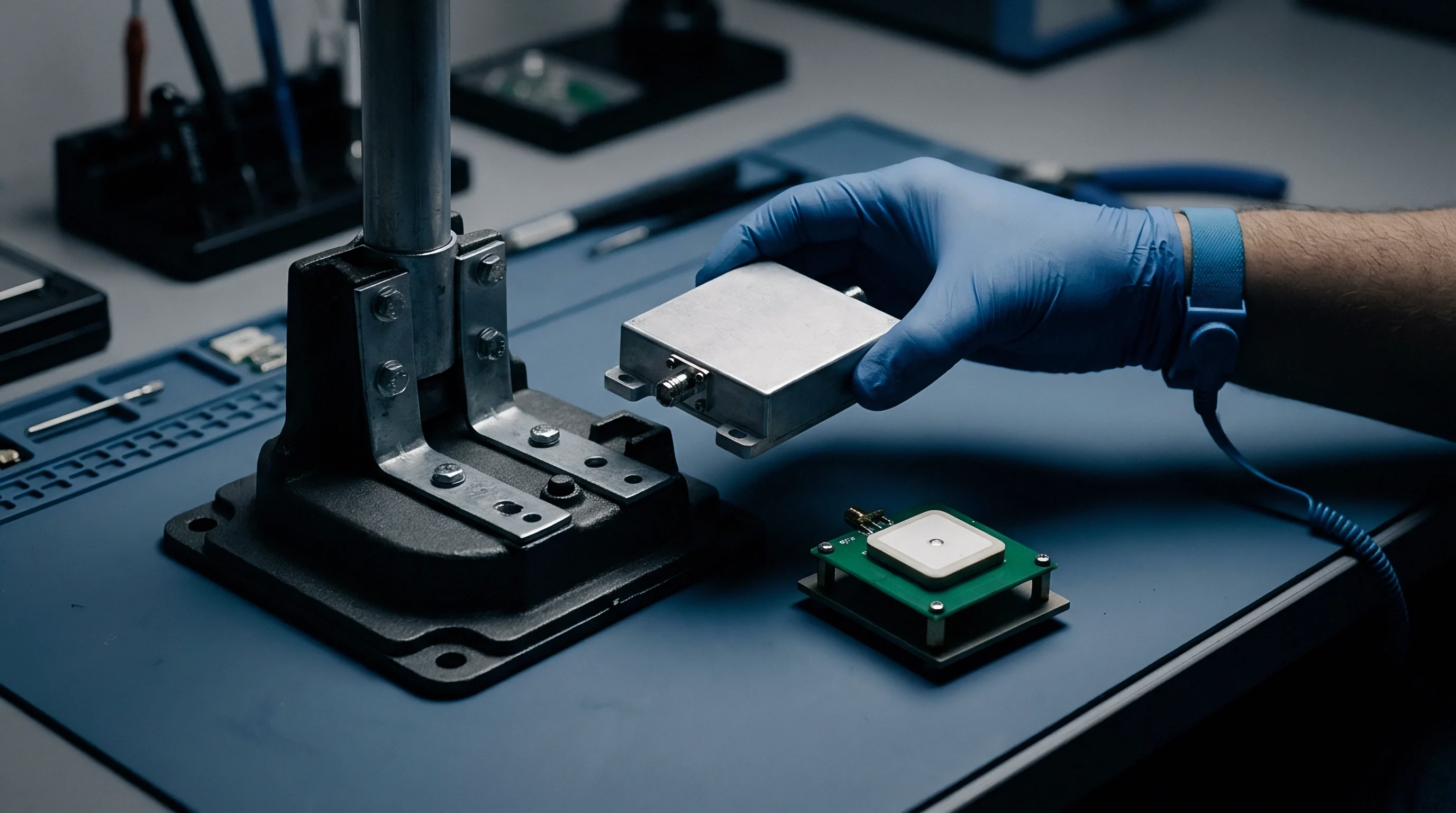
Lifecycle Phase Transitions in Firmware Ownership
Software obligations shift as a module moves through its lifecycle. During initial bring-up and pilot production, software changes rapidly to resolve layout parasitics, signal integrity issues, and early driver bugs. Initial supply contracts cover this phase under NRE deliverables, which terminate once the module achieves qualification and mass production approval.
The post-qualification phase brings long-term maintenance realities into focus. Lifespans for industrial, medical, and automotive electronics routinely stretch from five to twelve years. Across these spans, component obsolescence forces hardware revisions ~ such as swapping a flash memory IC following die shrinkage or substituting an RF front-end module.
Every hardware change demands software updates, whether adjusting memory controller timing parameters or modifying RF power table registers. If the supply agreement does not allocate engineering hours for obsolescence re-qualification, the module vendor passes these costs down as mandatory engineering change orders, risking production stops.
Misjudging how software maintenance is divided leaves unmaintained firmware binaries in the field ~ exposing hardware to remote exploits, bricking during failed over-the-air updates, and halting factory lines when toolchain deprecations block flashing.


Stack
Breaking embedded firmware down into functional layers provides a clear structure for assigning maintenance duties. Software running on a turnkey module is rarely a single monolithic block; it consists of multiple tiers written by different entities across the supply chain. A typical wireless or compute module includes a primary bootloader, a silicon vendor BSP, a Hardware Abstraction Layer, vendor-proprietary middleware, protocol stacks, security enclave code, and host-facing driver interfaces.
Tracing the root cause of a software failure determines who pays for and delivers the fix. When a cellular module drops connections under specific network conditions, the issue could stem from an application timer error, a driver memory leak, a bug in the proprietary protocol stack, or undocumented silicon errata in the baseband processor. Contracts need to map maintenance tasks directly to these individual layers rather than treating the binary as a single black box.

Layered Architecture and Defect Origin Mapping
At the lowest layer sits immutable boot ROM code etched into the silicon die during fabrication, along with a secondary bootloader stored in non-volatile flash. Bootloader maintenance carries high risk: mistakes in a secondary bootloader update can permanently brick the hardware. Turnkey suppliers must remain responsible for secondary bootloader maintenance, including patch validation, secure boot signature verification, and anti-rollback logic.
Just above the bootloader are the silicon vendor’s Board Support Package and Hardware Abstraction Layer. Semiconductor vendors supply these drivers so the module manufacturer can initialize peripherals, manage clock trees, configure power management ICs, and control register-level operations. Defects at this level often trace back to the chip maker rather than the module vendor.
Maintenance contracts must spell out how the module vendor handles upstream updates, including the maximum delay allowed between a silicon vendor releasing a BSP fix and the module vendor delivering updated firmware to the buyer.
| Software Layer | Primary Code Author | Typical Defect Vectors | Maintenance Responsible Party | Resolution Deliverable |
|---|---|---|---|---|
| Primary Bootloader & ROM | Silicon Vendor / Module OEM | Secure boot verification bypass, flash initialization timing errors | Turnkey Module Vendor | Signed binary bootloader patch |
| Silicon BSP & Drivers | Semiconductor Manufacturer | Register configuration flaws, power domain state transition deadlocks | Module Vendor via Silicon Upstream | Updated BSP driver release |
| Core Middleware & Stacks | Turnkey Module Vendor / Third Party | Memory buffer overflows, wireless protocol timing non-conformance | Turnkey Module Vendor | Patched stack library / firmware build |
| Hardware Abstraction Layer | Module Vendor / Host OEM | API definition mismatches, interrupt service routine race conditions | Shared based on boundary clause | Re-compiled HAL driver wrapper |
| Host Driver & Application API | Host OEM / Integrator | User-space memory leaks, incorrect command sequencing, buffer overflow | Host OEM Integrator | Host application software patch |

Silicon Errata Propagation across Middleware
Silicon errata are hardware flaws in the microcontroller or SoC that the chip maker chooses to work around in software rather than re-spinning silicon masks. These errata change register behavior. When a chip maker issues an errata notice, the fix almost always requires modifying low-level peripheral drivers or adding software guard bands around specific hardware routines.
In turnkey manufacturing, the host OEM does not have access to module schematics or raw chip registers, making it impossible to implement silicon errata fixes independently. The turnkey contract must explicitly require the module supplier to monitor errata sheets, fold official workarounds into the module firmware stack, and deliver regression-tested binaries within a defined window ~ typically thirty days for critical errata affecting stability or wireless compliance.
Open-source software adds another layer of maintenance complexity. Turnkey modules rely heavily on open-source networking stacks, cryptography libraries, and real-time operating systems. When vulnerabilities (CVEs) are discovered in these libraries, the module vendor cannot stall patch delivery on the grounds that the code originated from a third party.
The maintenance rider should treat open-source dependencies as integral parts of the vendor’s deliverable.
- Memory pool exhaustion occurs under high network throughput when third-party protocol stack libraries fail to release buffers.
- Peripheral driver deadlocks surface when nested hardware interrupts collide during high-frequency DMA serial transfers.
- Flash file system corruption stems from unhandled power loss during garbage collection inside flash translation layer firmware.
- Crypto-engine timing side-channels emerge when hardware acceleration routines fall back to non-constant-time software paths.
Contractual clauses that classify open-source software libraries as third-party code exempt from vendor warranty claims shift the full cost of vulnerability remediation onto the buyer.
Driver updates required for major host OS kernel revisions frequently fall outside standard reference BSP support, leaving driver porting unaddressed unless contractually specified.


Rider
Operationalizing software maintenance requires a dedicated contract rider attached to the primary manufacturing agreement. While the main supply agreement handles commercial terms, volume commitments, hardware warranties, and logistics, the software rider governs operational mechanics: SLAs, bug classification frameworks, vulnerability patching schedules, toolchain preservation, and fee adjustments over the module’s production life.
A software maintenance rider turns vague support promises into enforceable performance metrics. Without one, disputes devolve into subjective debates over whether a glitch renders the hardware defective or is simply a feature request. The rider establishes clear definitions for defect severity, response times, build formats, and cost allocations.

Service Level Tiers and Defect Classification
Defect severity classification drives the operation of the maintenance rider. Classification schemes should rely on objective operational impacts rather than arbitrary priority labels assigned during emergency calls. A four-tier matrix sets clear expectations for response times, engineering allocation, and delivery schedules.
Severity Level 1 defects are critical operational blockers: field failures that brick systems, severe exploits allowing remote code execution, memory leaks that crash devices within twenty-four hours, or software flaws causing non-compliance with regulatory emissions limits. For Level 1 issues, the rider mandates an initial response within four hours, continuous engineering effort until a workaround or patch exists, and final patched firmware within five business days.
Severity Level 2 defects involve major functional degradation: lost peripheral functionality, intermittent wireless drops, memory leaks requiring weekly reboots, or driver crashes that don’t halt core operations. Initial response for Level 2 defects is capped at twenty-four hours, with validated firmware updates due within fifteen business days. Severity Level 3 covers minor functional bugs that have workarounds, while Severity Level 4 encompasses cosmetic API inconsistencies, documentation errors, and non-blocking performance optimizations.

Which Fault Escalation Pathway Resolves Silicon Vendor Errata?
When a software failure traces back to third-party semiconductor IP or silicon vendor BSP code, standard response timelines frequently break down. Fixing bugs in closed-source binary blobs provided by chip makers lies outside a module vendor’s direct code access. A well-constructed software maintenance rider prevents suppliers from hiding behind third-party delays.
The rider must establish a dual-track escalation procedure for upstream silicon defects. For Level 1 and Level 2 defects originating in silicon vendor code, the module vendor must commit to delivering a software workaround inside their proprietary middleware or HAL wrapper within twenty business days ~ whether or not the silicon vendor has issued an official patch. If a software workaround is impossible due to physical silicon constraints, the supplier must trigger emergency hardware change protocols, supplying drop-in replacement modules with revised silicon steppings at no added NRE cost to the buyer.
Structuring maintenance schedules around explicit binary revision thresholds rather than calendar quarters keeps progress measurable. Linking deliverables to specific build milestones prevents suppliers from deferring minor bug fixes indefinitely.

Toolchain Maintenance and Build Reproducibility
Toolchain aging is a primary cause of software maintenance failure in long-lifecycle manufacturing. Embedded software depends on specific toolchains: cross-compilers, linkers, C libraries, build systems like Yocto or Buildroot, and signing utilities. Over a ten-year product run, host OSs upgrade, build libraries are deprecated, and toolchain links break.
If a critical security patch is needed five years after qualification, but the supplier failed to preserve a reproducible build environment, engineers cannot compile modified source code into a matching binary without risking unknown compiler-induced regressions.
The maintenance rider must require the turnkey vendor to document and archive containerized build environments for every qualified production firmware release. The vendor must preserve Docker or Podman build containers containing the exact compiler versions, system libraries, configuration scripts, and source repositories used for factory-flashed binaries. The rider should mandate a verification build from the archived container every twelve months to confirm it still produces identical binary outputs.
Failing to maintain a reproducible toolchain forfeits the vendor’s right to bill NRE hours for re-creating build environments later in the product life.
The rider should also include explicit clauses governing vulnerability patching cadences, independent of customer bug reports. A standard clause specifies: The Supplier shall actively monitor the National Vulnerability Database, silicon vendor security bulletins, and open-source software advisories for all software components incorporated into the Module deliverable. Upon publication of any Common Vulnerabilities and Exposures rating with a Common Vulnerability Scoring System Base Score equal to or exceeding 7.0 (High Severity), the Supplier shall deliver a fully validated firmware patch and updated build container to the Buyer within thirty calendar days, without requiring a separate purchase order or engineering change authorization.


Jig
Verifying software patches requires physical test infrastructure to confirm a bug is fixed without introducing functional or regulatory regressions. Embedded software updates carry risk: patching a memory leak in a serial driver might alter interrupt timing, causing packet loss in a concurrent Wi-Fi stream or shifting RF transmit power tables in a cellular baseband. Accepting a firmware patch based solely on vendor desktop unit tests leaves the host OEM exposed to field failures and regulatory issues.
Contracts must specify the exact test rigs, automated test suites, physical hardware setups, and acceptance criteria used to validate maintenance builds before patches are approved for factory flashing or OTA deployment.

Hardware in the Loop Test Infrastructure
Automated Hardware-in-the-Loop (HIL) test jigs represent the technical baseline for continuous firmware regression testing. An HIL setup interfaces physical module hardware with automated test instruments: programmable DC power supplies, RF vector signal analyzers, digital oscilloscopes, logic analyzers, and test execution software on a control host. The jig runs automated scripts that stress the module across voltage margins, temperature ranges, RF signal degradation states, and heavy bus traffic.
The turnkey contract must specify who builds, maintains, and owns this test infrastructure. In typical arrangements, the module vendor maintains a test jig at their facility and provides duplicate test scripts to the buyer. Every delivered software maintenance build must include automated test logs from the HIL rig, verifying that the patch passed functional, performance, power consumption, and error-recovery regression suites.
| Patch Classification | Code Modification Scope | HIL Test Jig Scope | RF / EMI Re-Test Requirement | Regulatory Impact & Action |
|---|---|---|---|---|
| Class A: Application / API | User-space APIs, host communication wrappers | Functional command interface, stress test sequences | None required | No regulatory filing change required |
| Class B: Driver / HAL | Peripheral drivers, DMA configuration, memory allocation | Full peripheral regression, power management states | Emissions spot-check (spurious emissions) | Permissive change evaluation under FCC / RED |
| Class C: Wireless Stack | Cellular, Wi-Fi, Bluetooth protocol stack updates | Protocol compliance, throughput, link drop recovery | Full RF parameter & SAR verification | Class II Permissive Change filing required |
| Class D: Silicon / Microcode | Baseband microcode, low-level RF power table registers | Complete system regression, thermal stress testing | Full regulatory re-certification test suite | Full re-certification filing & test report update |

Regulatory Re Certification Triggers from Firmware Patches
Updating software on wireless-enabled modules introduces real regulatory exposure. RF compliance certification under FCC Part 15, the EU Radio Equipment Directive (RED), and similar global frameworks relies on physical test results tied to specific firmware binaries. Modern radio modules depend on software parameters to control RF output power, frequency hopping sequences, duty cycles, and spurious emissions.
Changes to that software can invalidate existing filings.
If a patch modifies low-level radio drivers, protocol stacks, or power table calibration registers, the existing regulatory grant may no longer hold. Deploying uncertified firmware exposes both vendor and host OEM to regulatory fines, customs holds, and product recalls. Contracts must explicitly categorize firmware patches by regulatory impact and state who pays for re-certification testing.
Class C and Class D patches that alter RF control parameters require formal regulatory re-evaluation. The maintenance contract should state that if a vendor-initiated fix or security patch requires Class II Permissive Change filings or full re-testing, the vendor covers test lab fees and filing costs. If the patch was requested by the host OEM for custom application features, those expenses fall to the OEM.
The EU Cyber Resilience Act introduces legal mandates for ongoing vulnerability management, software bills of materials, and mandatory security updates throughout a product’s expected lifecycle. Software maintenance contracts for European markets must explicitly assign legal responsibility for Cyber Resilience Act compliance, ensuring security patches do not compromise certified baseline profiles.
Validation tests conducted on desktop evaluation boards yield unreliable power and thermal metrics. Regression testing is only valid when run on final production PCB stack-ups operating inside thermal chambers.

Deposit
A major commercial risk when buying turnkey modules is supplier lock-in coupled with insolvency, acquisition, or product line abandonment. Because turnkey suppliers maintain exclusive control over firmware source code, board support packages, and build environments, a supplier dropping support forces the host OEM into an immediate, unplanned hardware redesign. Code escrow protects against that exposure.
Source code escrow provides a legal and operational safety net, granting access to critical software without forcing the vendor to surrender proprietary IP during normal operations. But escrow must go beyond placing raw source files in a safe; it needs to mandate complete, verified design transfer packages that allow the buyer ~ or a third-party engineering firm ~ to maintain the software independently.

Escrow Trigger Conditions and Build Manifests
Traditional source code escrow agreements often fail because they rely on extreme release triggers, such as formal bankruptcy or complete liquidation. A vendor can stay solvent while quietly dropping support for a legacy module line, reassigning engineers to newer projects, or ignoring bug reports from medium-volume buyers.
A practical maintenance agreement builds operational release triggers directly into the rider. These triggers define specific conditions that grant access to escrowed assets: failing to meet Severity Level 1 SLA timelines three consecutive times, issuing a formal End-of-Life notice without offering a drop-in replacement, missing mandatory CVE security patch windows by sixty days, or breaching toolchain preservation covenants. When an operational trigger occurs, the escrow agent releases the archived software repository to the host OEM.
Tracking toolchain deprecation through containerized build manifests ensures long-term buildability. A complete escrow deposit must contain every software and documentation asset required to independently compile, link, sign, and flash module firmware binaries.
- Confirm the deposit contains full source code repositories for custom drivers, HAL layers, protocol stacks, and bootloader stages, including complete Git history.
- Extract containerized build manifests and verify Dockerfile configurations against approved toolchain specifications.
- Execute an automated bit-for-bit clean build within an isolated sandbox environment, confirming the output binary checksum matches factory-flashed production binaries.
- Validate cryptographic key management procedures, verifying that private signing keys or Hardware Security Module tokens required for bootloader signature validation are accessible and functional.
- Run hardware-in-the-loop test scripts using the locally compiled binary image on physical reference hardware to confirm complete functional parity.

Containerized Repositories and Toolchain Preservation
Source code without its matching build environment is nearly useless. If an escrow release yields only uncompiled C files and custom headers, the buyer’s engineering team will waste months recreating compiler flags, reconstructing linker scripts, resolving library dependencies, and reverse-engineering proprietary binary blobs.
The software maintenance contract must define the structural contents of the deposit manifest. The manifest needs containerized build environments containing cross-compilers, system libraries, configuration files, Makefiles, and signing scripts. For third-party proprietary binary blobs that the vendor cannot legally redistribute as source code, the deposit must include raw object files, static libraries, and explicit license rights allowing the buyer to compile and deploy them for internal maintenance.
Indemnity clauses must protect the buyer during post-escrow maintenance. If a buyer takes over direct maintenance of module firmware following an escrow release, the vendor must warrant that the escrowed source code does not infringe third-party patents or copyrights, indemnifying the buyer against claims arising from code written or incorporated by the vendor.
What technical audit mechanism guarantees that an escrowed binary generated from a containerized repository contains no hidden backdoor vulnerabilities or undisclosed open-source license obligations when released during an emergency failure?

Toll
Allocating software maintenance obligations requires aligning technical mechanics with commercial pricing models. Software engineering is an ongoing operational expense, yet traditional hardware procurement attempts to cover support through initial NRE fees or by hiding software margins inside module unit prices. Mispricing maintenance creates conflicting incentives: the vendor wants to minimize post-sale engineering hours, while the buyer expects ongoing maintenance, bug fixes, and updates throughout the hardware’s lifespan.
Establishing transparent fee structures creates a balanced framework that compensates the vendor for dedicated engineering while bounding the host OEM’s operational costs.
Commercial Software Fee Allocation Models
Three primary fee structures dominate software maintenance allocation in turnkey module manufacturing: amortized unit fee models, annual maintenance retainers, and time-and-materials rate cards with pre-allocated hourly buffers.
Amortized unit fee models add a dedicated software maintenance line item to the Bill of Materials for each module shipped. For instance, a module with a baseline manufacturing cost of $18.00 carries an additional $1.20 software maintenance fee, bringing the total landed unit price to $19.20. The supplier earns maintenance revenue proportional to production volume.
This works well during peak manufacturing, but fails as volumes taper off late in the product lifecycle, leaving the supplier without enough revenue to cover ongoing engineering hours.
Annual Maintenance Contracts (AMCs) offer more predictable financial support for long-lifecycle products. Under an AMC model, the buyer pays a fixed annual retainer ~ typically eight to fifteen percent of the initial software NRE costs. In exchange, the supplier guarantees dedicated engineering coverage, toolchain maintenance, continuous CVE monitoring, and adherence to SLA response times.
However, fixed fees can still create friction if scope boundaries are poorly defined.
| Evaluation Metric | Amortized Unit Allocation | Annual Maintenance Contract (AMC) | Time & Materials Rate Card |
|---|---|---|---|
| Primary Revenue Driver | Physical module shipment volume | Fixed annual calendar fee | Billed hourly per active ticket |
| Financial Predictability | Variable, ties directly to hardware sales | High predictability for both parties | Low predictability, high spike risk |
| Late-Lifecycle Support Viability | Poor support viability as volume drops | High viability, revenue decoupled from volume | Moderate viability, requires emergency POs |
| Vendor Alignment Incentive | Aligned during peak volume manufacturing | Aligned to maintain system stability | Misaligned, vendor profits from bugs |
| Administrative Friction | Low friction, built into module unit price | Low friction, single annual invoice | High friction, invoice audits per fix |
| Effective 7-Year Total Cost | $210,000 (at 250,000 total units) | $175,000 ($25,000 fixed per year) | $260,000 (variable engineering hours) |

Liability Thresholds and Recall Cost Mechanics
A major point of commercial tension in software maintenance agreements involves liability caps for firmware defects. If a supplier delivers a corrupted software update that bricks twenty thousand deployed industrial devices, the cost of field technician dispatches, hardware recovery, board re-flashing, and downtime far exceeds the commercial value of the module contract. Vendors routinely try to limit their financial exposure to the total purchase price of modules delivered over the preceding three to six months.
Host OEMs should push back against blanket liability caps where software defects stem from gross negligence, skipped security validations, or a lack of basic regression testing. The contract rider should establish tiered liability limits instead. While routine bug fixes remain capped at baseline contract values, defects causing field recalls, safety hazards, regulatory fines, or remote security breaches should carry expanded liability caps equal to three to five times annual contract value, backed by mandatory errors and omissions insurance.
Aligning software maintenance fee allocations with component lifecycle roadmaps keeps expectations clear. To enforce compliance, buyers can audit maintenance scope through structured checklists during quarterly supplier performance reviews:
- Binary checksum verification logs confirm that factory lines flash identical, qualified software builds without unauthorized localized hotfixes.
- Security vulnerability monitoring reports demonstrate active scanning of open-source dependencies and silicon vendor advisories.
- Toolchain build container validation records prove that archived Docker compilation environments generate reproducible binary outputs on demand.
- SLA compliance tracking sheets record incident resolution timelines against contractual severity classifications for all submitted bug tickets.
- Regulatory change impact assessments document software modification scopes prior to deploying patches into mass production channels.
Software maintenance cost allocations depend directly on hardware volume projections, compiler lifecycles, and silicon stability. An OEM procuring turnkey modules must balance initial NRE expenditure against long-term maintenance retainers, making sure software maintenance stays an explicit, fully priced line item throughout the product’s lifespan. Ultimately, the landed cost of a hardware module includes every line of code required to keep it operating safely in the field.