
Hierarchical Variance Component Decomposition in High Speed Radial Component Placement Platforms
Hierarchical variance decomposition isolates turret spindle runout and feeder play from board drift, securing high-speed radial placement capability.
Hierarchical variance decomposition isolates turret spindle runout and feeder play from board drift, securing high-speed radial placement capability.

Enforce hardware revision manifests signed under vendor keys to halt mismatched firmware blobs before bootloader execution damages uncalibrated board silicon.

Inline secure boot flashing demands localized hardware security modules and Quad SPI interfaces to preserve automotive takt times across dual assembly plants.

Secondary factory qualification requires exact memory partition mapping, programmer timing validation, and cryptographic attestation for closed binary blobs.
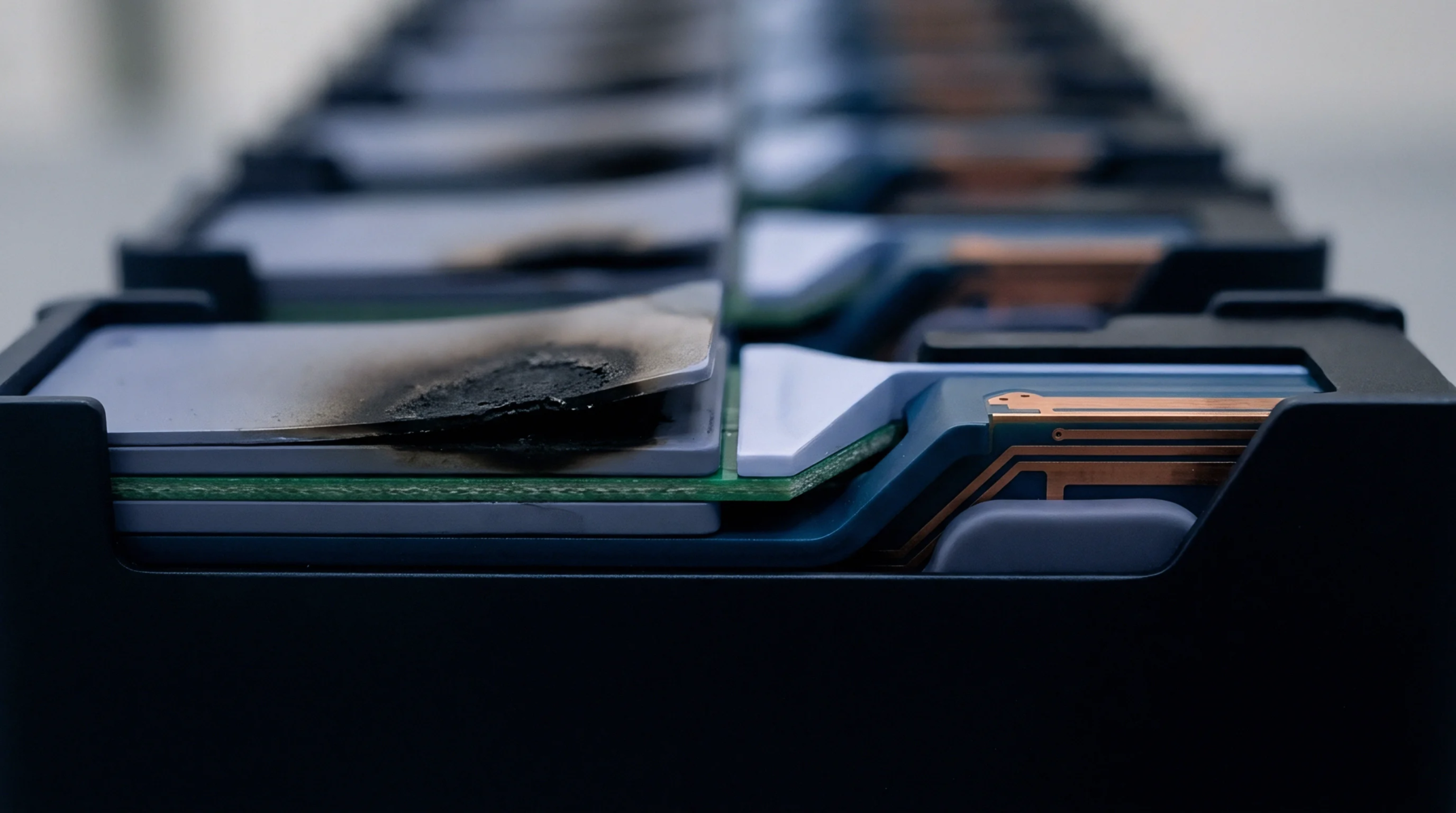
Cryptographic build hash verification failures occur when environmental variations across CI nodes inject host paths and timestamps into compiled binaries.

Hermetic build container escrow guarantees bit-for-bit firmware reproducibility and independent hardware maintenance across extended production lifecycles.

Decouple proprietary firmware via hardware abstraction layers while tying silicon stepping liabilities directly to unescrowed supply agreements.

Verify semicustom hardware deliverables using native CAD source files, containerized build environments, and physical bench test jigs before milestone sign-off.

Automated IP-XACT test benches ingest divergent vendor schemas to execute unified UVM register regressions, securing dual-sourced wireless module parity.
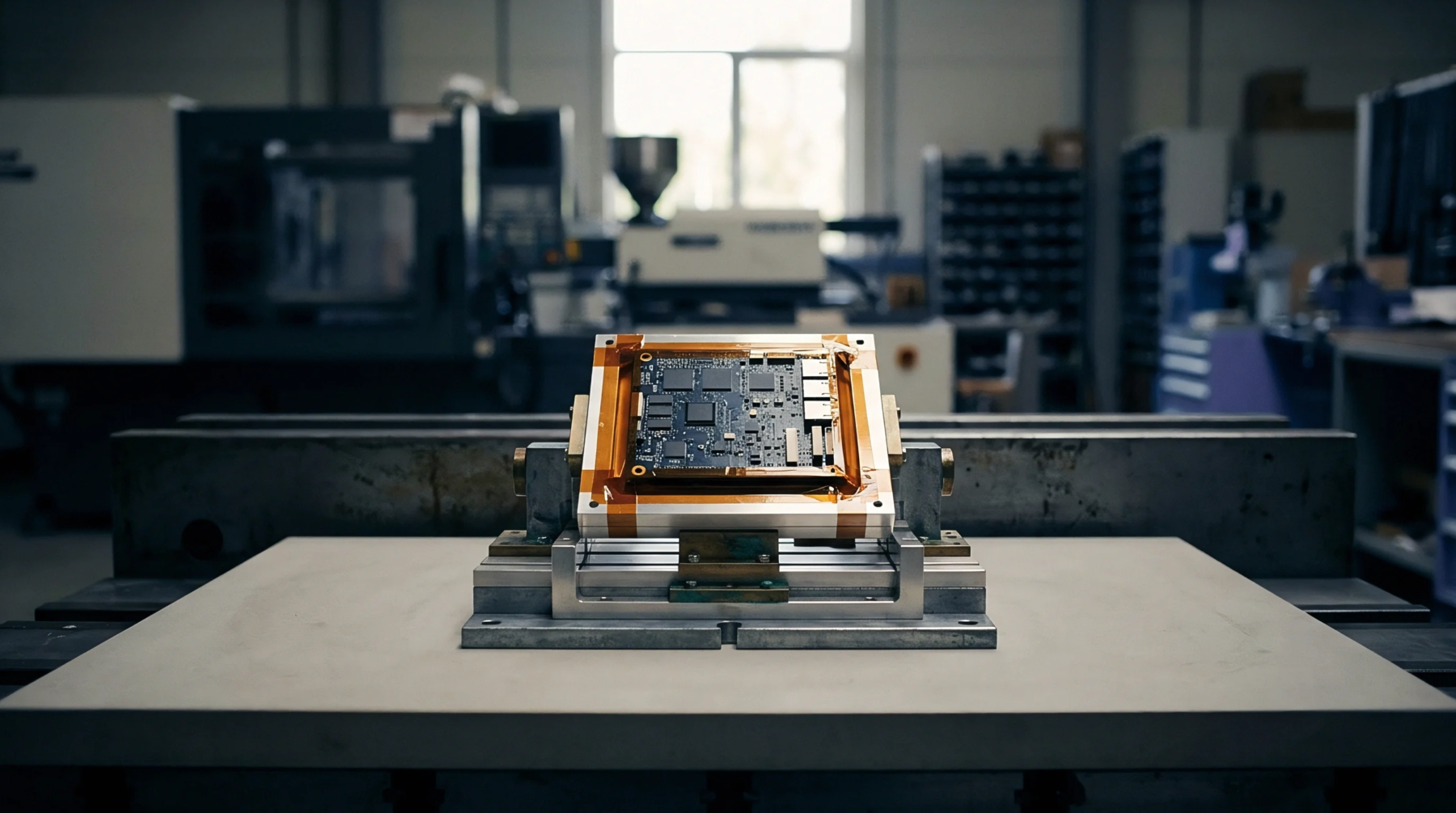
Regulatory grants and test fees must harmonize with customs entry values to prevent dutiable assist omissions and border seizures.

Dynamic hardware abstraction layers resolve multi-foundry silicon deltas at boot through e-fuse register redirection, preserving unified modem firmware.

Dual-sourced baseband register drift requires low-level polling drivers and contractual ninety-day change notification clauses to eliminate silent field lockups.

Reconciling cross-border packaging dossiers requires mapping recipe parameters against territorial process patents and enforcing parameter limits in SOW contracts.

Multi-tier OSAT procurement requires binding pass-through covenants that bridge packaging liability caps with system-level field recall exposure.

Cross-border packaging agreements assign redistribution layers and bonding recipes through explicit work statements to prevent offshore vendor lock-in.

Contractual allocation of radiated emission testing costs requires explicit baseline margin covenants and shared laboratory fee matrices tied to root-cause audits.

Managing firmware escrow and design transfers requires verified deterministic toolchains, complete EDA files, and factory test fixture documentation.

Clear intellectual property boundaries require explicit deliverable specifications for raw CAD source files, firmware build scripts, and test fixture designs.

Root cause apportionment isolates optical defocus and motion jitter through stroboscopic testing, allocating error variance to defined supplier scope lines.

Increasing gate cross-sectional area and minimizing land length reduces peak shear and elongational strain, preserving fiber aspect ratios and structural stiffness.

Statutory possessory liens override arbitral emergency surrender orders until the buyer confirms the order in local court or substitutes cash escrow.

Cross-border tooling recovery requires local asset registry filings, physical marking, and explicit statutory lien waivers to defeat local retention claims.

Guardbanding converts metrological measurement uncertainty into tightened acceptance limits to prevent defective production lots from reaching field deployment.
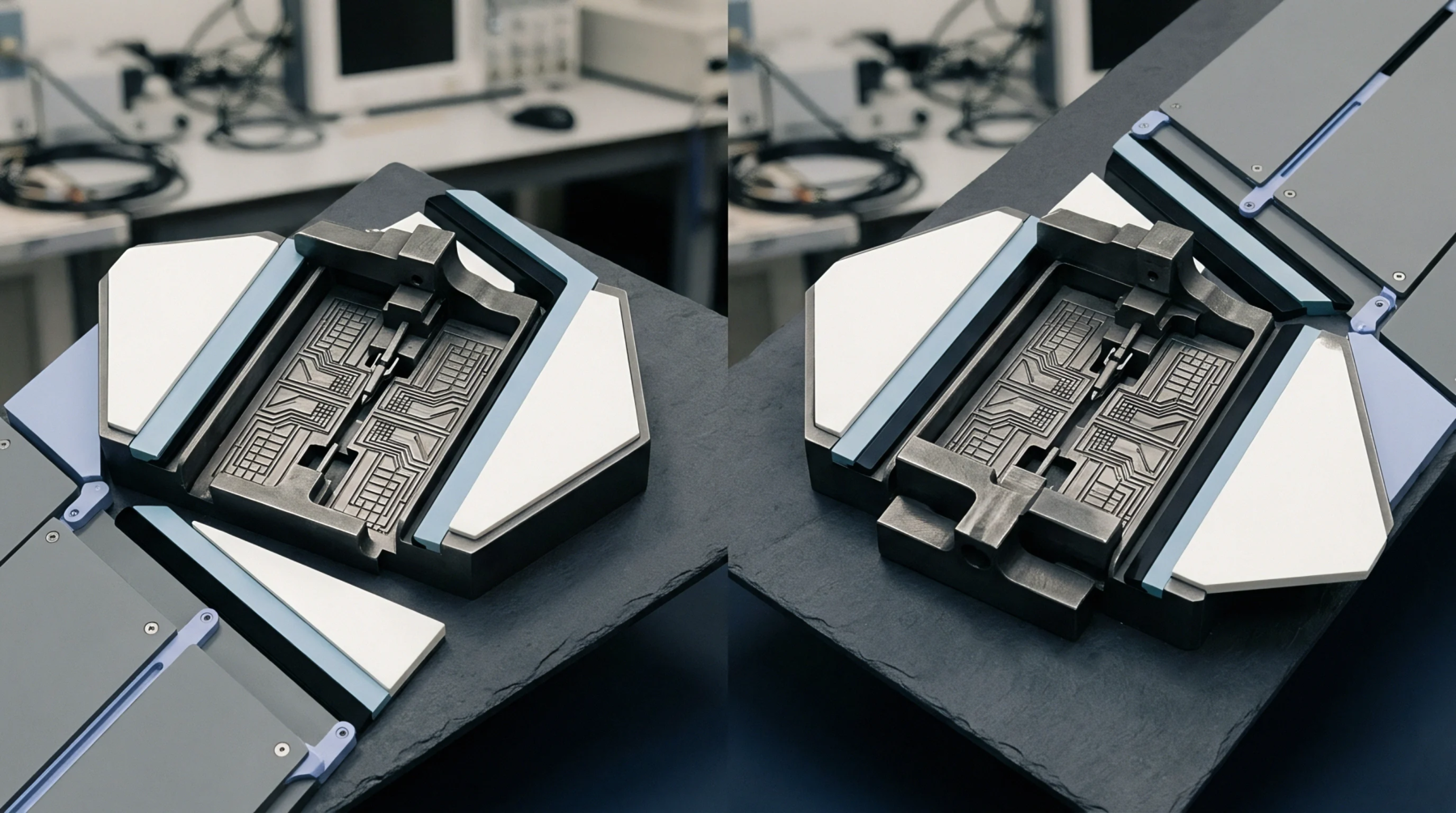
Designing automated contact interface boards for high-volume semiconductor testing requires balancing pin wiping mechanics, high-frequency signal integrity, and mechanical stiffener design to prevent substrate deflection under multi-hundred-kilogram contactor loads.
Expertise is a utility, not a secret. sentiention™ publishes its working knowledge as open reference: intelligence layer covering the materials it sources, the markets it enters, and the reference that serves both.