Continuous Integration Build Container Escrow Practices for Hardware Module Firmware
Hermetic build container escrow guarantees bit-for-bit firmware reproducibility and independent hardware maintenance across extended production lifecycles.


Vault
Firmware source deposits fail when compilation targets move. A tarball stored with an escrow agent provides zero delivery guarantee if the compiler toolchain, silicon errata patches, board support packages, and linker scripts cannot reproduce a bit-for-bit identical binary five years later. Build container escrow addresses this breakage by capturing the entire hermetic build apparatus: the base operating system root filesystem, locked compiler versions, proprietary vendor patch libraries, cryptographic signing utility harnesses, and the orchestrating continuous delivery pipeline.
Modern radio and system-in-package module engineering places silicon vendor IP deep inside precompiled binary blobs. These libraries link against custom application code at predetermined flash offsets. Standard software escrow agreements assume host-level execution environments where target hardware changes do not invalidate runtime assumptions.
Module firmware operates under opposite constraints. A compiler toolchain update from GCC 10.3 to GCC 11.2 can alter instruction scheduling across critical timing loops inside a proprietary Bluetooth Low Energy controller or an IEEE 802.15.4 MAC layer, breaking regulatory compliance testing or introducing hard faults during power-state transitions.
A build environment is hermetic only when every toolchain dependency and cryptographic signing stub resides within the frozen image.
Procuring custom or semi-custom hardware modules transfers long-term maintenance risk directly to the buyer when production runs extend across seven to ten years. If the original design house faces insolvency, acquisition, or commercial sunsetting, raw C source code leaves the buyer stranded once upstream package registries stop hosting the exact dependencies required to run the build. The build container functions as the definitive production artifact.
Container escrow practices demand depositing not just the Docker or Open Container Initiative image manifest, but the flattened, multi-architecture tar archive containing every static binary, configuration file, build pipeline definition, and automated verification suite.
Escrow agents charge between 3,000 USD and 7,500 USD per annum for technical deposit custody, yet typical software escrow verification tests simply uncompress an archive and confirm the presence of readable ASCII text. For embedded hardware modules, that level of oversight creates catastrophic supply exposure. True container escrow verification requires running the container inside an isolated network sandbox, executing the build sequence against a verified Git commit tag, extracting the generated binary image, and verifying an identical cryptographic hash against the production firmware burned onto factory-floor modules.


Envelope
Build containers for embedded systems require strict isolation from external network dependencies. Standard container recipes frequently include package management commands that query live Debian, Alpine, or Python package repositories during instantiation. An escrow deposit built on dynamic base images degrades within months as package maintainers deprecate older package versions or alter package signing keys.
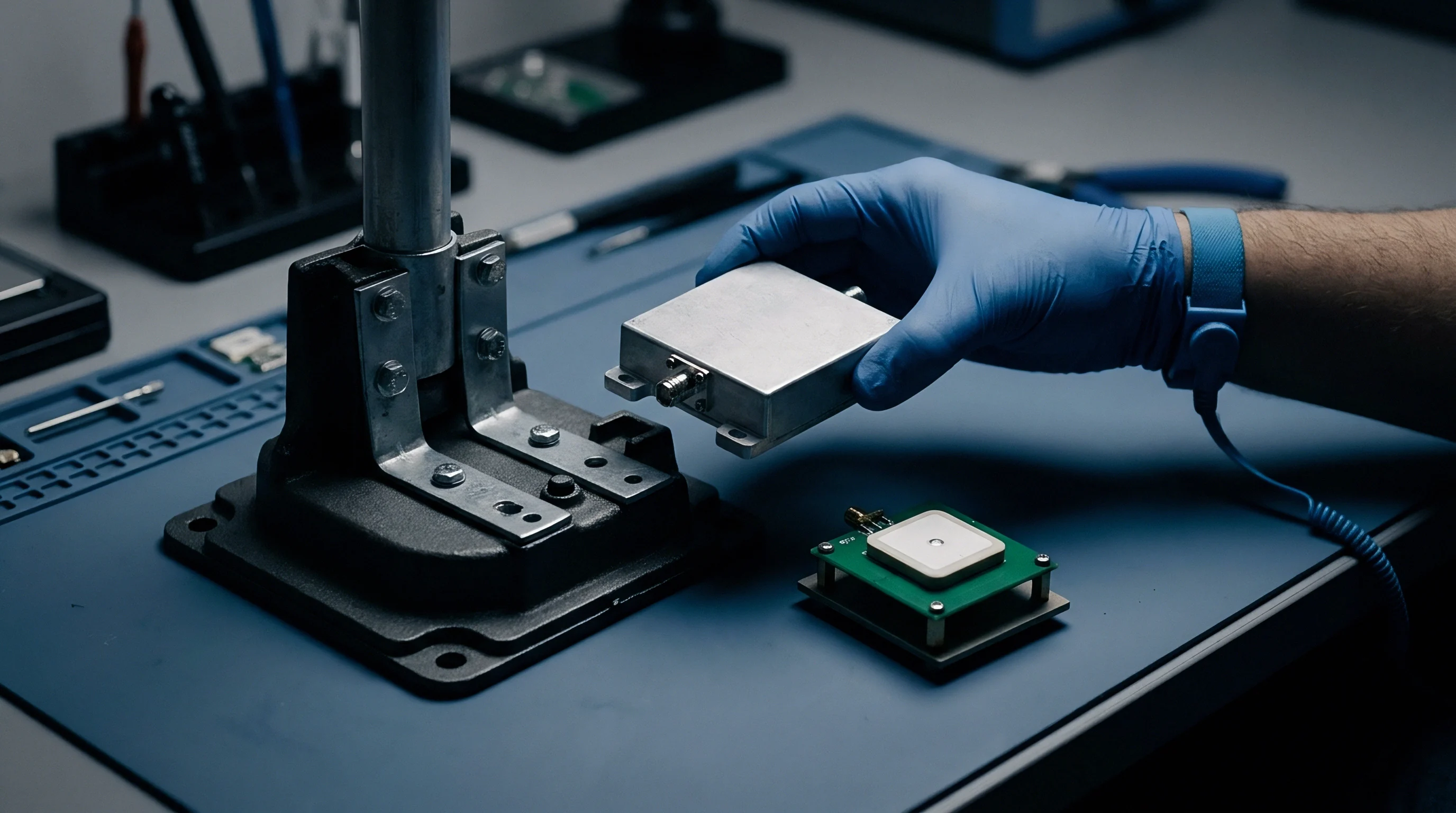
Hermetic Base Environment Structure
A compliant build container establishes an immutable runtime boundary. The container engine executes within a completely disconnected networking environment, preventing arbitrary package resolution or live dependency polling. Every toolchain element resides in predetermined paths within the image layer filesystem.
- Base Operating System Layer pins an exact Long Term Support Linux distribution release using a SHA-256 digest rather than a mutable floating version tag.
- Cross-Compiler Toolchain Binaries install into static system paths alongside pinned target libc versions, binutils, and embedded hardware floating-point libraries.
- Silicon Vendor Software Development Kits reside as read-only directory trees containing proprietary hardware abstraction layers, register definition headers, and vendor-supplied precompiled core library archives.
- Automated Pipeline Automation Scripts encapsulate build targets, test execution harnesses, static analysis scanners, and flash packaging scripts inside reproducible shell entries.
Multi-stage container definitions decouple the compilation environment from developer debugging utilities. The build environment isolates the compiler toolchain from host operating system variability, eliminating discrepancies introduced by differing kernel versions, user permissions, or system locale definitions. When the continuous integration server fires a build job, it passes the exact source repository commit hash into the container as an environment parameter.

Handling Proprietary Silicon Toolchains
Microcontroller families often require commercial toolchains or vendor IDE utilities for build execution and code size reduction. Proprietary compilers enforce node-locked or floating network license servers, introducing an external vulnerability into an escrow deposit. If the escrowed build environment requires a call to an external license daemon, the escrow deposit fails whenever that external license server shuts down.
| Toolchain Category | License Mechanism | Escrow Feasibility | Mitigation Strategy |
|---|---|---|---|
| Open Embedded (GCC, Clang) | GPLv3, LLVM Open Source | High | Full binary and source toolchain capture inside root filesystem |
| Commercial Embedded (IAR, Keil) | Dongle or FlexLM Network Daemon | Low | Contractual escrow of perpetual node-locked dongles or migration to LLVM |
| Silicon Vendor Custom (Proprietary GCC) | Click-through Proprietary EULA | Medium | Archived distribution tarballs with signed license redistribution rights |
| DSP Core Vendor Toolchains | Node-locked MAC Address Check | Low | Virtual network interface spoofing inside isolated build container runtime |
Design teams negotiating firmware deliverables address proprietary compiler dependencies during initial statement of work formulation. When commercial compilers are unavoidable, the agreement stipulates that the design house supplies a perpetual, offline-activated compiler license node-locked to a virtualized hardware configuration, or migrates build automation to open-source toolchains prior to final delivery sign-off.
Proprietary silicon vendor libraries introduce another layer of complexity. Chip manufacturers distribute Bluetooth, Wi-Fi, and cellular baseband protocols as compiled object libraries to protect silicon register secrets. These binary files tie directly to specific linker scripts and processor architectures.
The escrow container incorporates these immutable object libraries alongside their exact interface headers, ensuring the build pipeline links downstream application changes without upstream dependency resolution failures.
A design transfer package lacking hermetic build isolation leaves the purchasing team unable to modify, patch, or verify the deployed module codebase without hiring the original vendor engineers.

Crate
Packaging an embedded build container for escrow demands an explicit protocol governing the storage of large container files, signing infrastructure, and hardware configuration records. Standard practice treats an image as a sequence of Open Container Initiative layer tars accompanied by an encrypted credential envelope.
The container layer filesystem captures the whole operational environment. Creating an escrow deposit package involves exporting the complete continuous integration image to an uncompressed tape or disk archive format, computing its cryptographic digest, and generating an exhaustive Software Bill of Materials (SBOM) using standardized inventory specifications such as SPDX or CycloneDX. This package sits alongside a mirror of the project Git tree, preserving all commit histories, branches, and release tags matching production module revisions.
Depositing an unverified container image without its cryptographic signing keys creates an unmaintainable software archive.
Cryptographic signing keys represent the most sensitive component of any embedded firmware escrow package. Without access to the bootloader signing keys, code generated from an escrowed build cannot execute on production hardware featuring secure boot verification. Escrowing production private keys directly inside a third-party repository introduces severe corporate liability.
Standard engineering contracts resolve this tension by partitioning keys into three operational categories.
- Hardware Root of Trust Public Keys permanently burned into module One-Time Programmable (OTP) eFuses, verifying the integrity of the second-stage bootloader.
- Development and Verification Signing Keys packaged directly inside the escrow container, enabling automated builds to output functional binaries for engineering test benches.
- Production Release Signing Keys sealed inside a physical Hardware Security Module (HSM) or multi-party split-key escrow envelope, released only under explicit contract trigger events.
The build pipeline inside the container includes a key-stubbing abstraction layer. During standard continuous integration verification cycles, the build invokes a localized signing utility loaded with development credentials, producing a test-signed binary. The pipeline configuration documentation explicitly specifies how production release automation substitutes the test signing stub with a secure key management service endpoint.
Hardware configuration artifacts accompany the container deposit. A firmware build relies upon board-level assumptions: crystal oscillator load capacitances, radio frequency matching networks, internal DC-DC converter register settings, and GPIO pin mapping assignments. The escrow package contains the full hardware schematic outputs, board layer stackup configurations, and manufacturing component bills of materials matching the targeted module hardware revision.
Depositing only raw source files treats toolchain and environment maintenance as a client responsibility rather than a supplier deliverable.


Audit
Verification of an escrowed build container requires a deterministic validation procedure executed within a sterile target environment. Handing a digital archive to an escrow agent without independent execution testing provides zero technical assurance. The buyer establishes an active audit regime verifying both reproducible binary output and target module bring-up.

Bit-for-Bit Deterministic Verification Protocol
Embedded systems build reproducibility hinges on eliminating non-deterministic inputs during the compilation and linking phases. Compilers and linkers regularly leak ambient host variables into generated binaries: timestamps via preprocessor macros like __DATE__ and __TIME__, arbitrary memory allocations affecting symbol sorting, absolute source file pathnames embedded in DWARF debug symbols, and host usernames recorded by continuous integration runners.
Achieving bit-for-bit equivalence requires enforcing reproducible build compilation parameters. Flags such as -fdebug-prefix-map strip absolute local filesystem paths, while environment variables such as SOURCE_DATE_EPOCH force the preprocessor to substitute timestamps with fixed Unix epoch integers derived from the latest Git commit tag. The build container enforces these flags systematically across every invocation.
- The escrow auditor instantiates the container within an air-gapped test server with host network routing completely disabled.
- The container executes the primary compilation pipeline against the designated release commit tag using automated shell execution.
- The build script strips raw debug artifacts and produces production binary images in raw binary and Intel HEX formats.
- The auditor computes a SHA-256 hash of the generated raw binary image and compares it directly against the gold-standard factory image extracted from production inventory.
- If the cryptographic hashes match perfectly, the deposit passes bit-for-bit verification; any hash mismatch halts the audit and triggers formal discrepancy reporting.
Binary equivalence testing proves that the deposited source code and containerized toolchain match the deployed firmware precisely. When compiler optimizations alter binary outputs due to subtle toolchain differences, low-level flash images fail verification instantly.

Hardware Target Verification and Test Automation
Confirming binary equivalence resolves only the compilation half of the escrow equation. The resulting binary must execute properly on physical silicon. The audit regime incorporates a hardware-in-the-loop test bench connected to the escrow validation server.
| Level | Verification Scope | Deliverables Checked | Pass Criteria |
|---|---|---|---|
| Level 1 | Integrity Inspection | Container checksum, Git tree tags, SBOM file list | Archive unpacks cleanly; file formats match manifest |
| Level 2 | Isolated Build Execution | Hermetic container execution, toolchain sanity run | Build completes with zero network access; binary generated |
| Level 3 | Binary Parity Audit | SHA-256 hash matching against factory gold images | Zero-byte divergence between fresh build and production bin |
| Level 4 | Hardware Target Flash | Automated flash programming via SWD/JTAG debuggers | Target boots; hardware self-test logs emit via serial UART |
| Level 5 | Full Functional Regression | Automated RF test jig execution, boundary scan | Module passes RF TX/RX limits, current draw within spec |
During Level 4 and Level 5 testing, an automated runner flashes the freshly compiled binary to a golden sample target module using a standard SWD or JTAG debug probe. The system checks initialization sequences, monitors current draw across standard operating states, and verifies low-level RF calibration settings over a serial command console. If the compiled image fails to initialize onboard peripherals correctly, the escrow release remains uncertified.
Engineering agreements stipulate that the vendor bears all financial and engineering costs associated with remediation if an escrow verification audit fails to achieve Level 3 binary parity within three validation attempts.

Breach
Legal escrow mechanisms protect neither party without unambiguous, contractually defined trigger events and explicit operational handoff procedures. The master development agreement defines precise operational conditions that mandate immediate release of escrowed container materials to the buyer, bypassing supplier consent.

What Triggers an Escrow Release?
Embedded hardware agreements establish clear, objective parameters governing default conditions. Relying on vague terms like failure to support creates months of arbitration gridlock while factory assembly lines sit idle. Robust agreements define specific, provable operational breaches.
A typical trigger clause incorporates standard insolvency benchmarks, including voluntary or involuntary bankruptcy filings, assignment of corporate assets for the benefit of creditors, or liquidation under corporate reorganization statutes. Commercial triggers prove equally significant. A design house may discontinue an engineering practice, abandon maintenance of a custom module variant, or exceed maximum contractually allowable turnaround windows for addressing critical security vulnerabilities or silicon errata workarounds.
Contractual language specifies that if the supplier fails to patch a Common Vulnerabilities and Exposures (CVE) exploit scored at 7.0 or higher within forty-five calendar days of public disclosure, the escrow agent must release the entire container build package immediately upon written notification by the buyer.

Transfer Costs and Tooling Economics
Obtaining the container archive marks the beginning of an intensive, costly engineering transfer. The buyer now assumes responsibility for maintaining custom firmware, managing silicon errata, and operating manufacturing programming fixtures.
Under standard development agreements, the supplier warrants that released escrow containers require zero third-party proprietary software licenses not included in the original deposit.
Assume a semi-custom connectivity module program shipping 250,000 units annually across a five-year lifecycle. The original design house charged a 1.20 USD per-unit firmware maintenance and intellectual property royalty embedded inside the 14.50 USD module unit price. When an escrow release occurs due to supplier insolvency, the buyer eliminates that embedded royalty but inherits significant immediate and ongoing engineering overhead.
The engineering transfer requires re-hosting the escrow container within the buyer’s internal infrastructure, provisioning dedicated hardware test fixtures, and assigning internal firmware engineering staff to assume code maintenance. Re-hosting the build pipeline, qualifying the container in internal compute infrastructure, and verifying binary generation consumes approximately 160 engineering hours. Re-establishing RF compliance testing fixtures and validating firmware changes against FCC and CE regulatory profiles requires an additional 240 engineering hours.
At an average loaded engineering cost of 135 USD per hour, initial bring-up demands 54,000 USD in immediate non-recurring transfer expenses.
Ongoing maintenance requires dedicating fractional embedded engineering staff (approximately 0.25 full-time equivalents) for security patches, silicon stepping migrations, and factory test fixture support, adding approximately 45,000 USD to 60,000 USD annually. If the original container was architected cleanly, this internal investment remains predictable. If the container relied on brittle dependencies or broken signing automation, transfer costs double as engineers reverse-engineer low-level peripheral drivers.
A carefully drafted escrow agreement provides that the supplier’s pre-paid escrow deposit fees fully forfeit upon breach, providing partial immediate liquidity to fund the incoming engineering transfer.