Harmonizing Modular Transmitter Approval Documentation with Customs Entry Valuation Filings
Regulatory grants and test fees must harmonize with customs entry values to prevent dutiable assist omissions and border seizures.


Dock
Container cranes drop forty-foot boxes onto chassis while Automated Commercial Environment message sets clear entry summaries electronically. When an entry includes wireless devices, the customs broker inputs the tariff classification alongside the Federal Communications Commission alphanumeric identifier. The customs interface checks the equipment authorization database instantly.
A discrepancy between the declared commercial description and the authorization grant halts release immediately.
Importers regularly classify assembled printed circuit boards under Harmonized Tariff Schedule heading 8517.62 as basic data transmission machines. The underlying FCC Grant of Equipment Authorization tells a different story. That document specifies an intentional radiator operating under Part 15C or Part 15E, listing output power, specific antenna gain figures, and tested modulation circuitry.
Customs authorities evaluate the commercial invoice value against the declared mechanical state. If an invoice declares a bare component price of four dollars while the FCC equipment authorization details an integrated transceiver with complex radio-frequency shielding and proprietary front-end silicon, the valuation entry fails preliminary risk targeting.
A thirty-day clearance delay accumulates thousands of dollars in container demurrage fees at ocean terminals.
Commercial invoices drawn up by overseas logistics departments often leave off technical particulars entirely. Shipping manifests routinely omit non-recurring engineering expenses, regulatory testing disbursements, and tooling contributions. Customs valuation law binds the importer of record to declare the complete transaction value under 19 U.S.C. Section 1401a or Union Customs Code Article 70.
When the documentation lists only the physical board run while the FCC filing reveals hundreds of hours of design integration, an audit path opens.
Physical cargo inspections at container freight stations verify device markings against electronic filings. Discrepancies generate formal holds:
- Grantee Code Inconsistencies trigger redelivery notices whenever the physical label displays an identifier assigned to an entity distinct from the commercial shipper.
- Modular Approval Shielding Breaches cause immediate product rejections if an invoice declares a complete modular transmitter yet the inspected boards lack soldered metal RF covers.
- Unlisted Component Integration produces customs detention notices when cargo units feature integrated trace antennas conflicting with external dipole antennas documented in filing exhibits.
Importers discovering classification conflicts face administrative forfeiture, escalating penalty liabilities, and mandatory physical cargo scans across all subsequent shipments.


Apportionment
The financial ledger behind radio qualification determines customs valuation accuracy. Qualifying a transmitter requires radiated emissions scans, conducted power measurements, and electromagnetic compatibility evaluations. Test houses charge substantial fees for anechoic chamber time, engineering staff, and Telecommunication Certification Body review.

How Do Laboratory Test Grants Constitute Assists?
Under United States customs regulations, assists include engineering, development, artwork, design work, and plans undertaken outside the country of importation. When an importer funds pre-compliance testing and regulatory qualification at a laboratory in Shenzhen, Taipei, or Munich, those payments modify the dutiable value of the imported hardware. Sourcing managers frequently pay testing laboratories directly from domestic bank accounts, bypassing the foreign assembly plant entirely.
Customs auditors inspect general ledgers to trace engineering expenditures. Direct payments to overseas test facilities represent tangible assists tied to the production of the imported radio module. These amounts belong inside the transaction value base.
Leaving overseas testing fees off entry declarations leads directly to undervaluation claims under 19 U.S.C. Section 1592.
| Expenditure Category | Geographic Origin | Dutiable Assist Status | Valuation Apportionment Method |
|---|---|---|---|
| Anechoic Chamber Time | Domestic Facility | Non-Dutiable | Direct Exclusion from Entry Value |
| Radio Frequency Optimization | Overseas Facility | Dutiable Assist | Apportionment Across First Production Run |
| TCB Application Administrative Fees | Domestic Entity | Non-Dutiable | Recorded in SG&A Expense Ledger |
| Antenna Matching Network Design | Overseas Contractor | Dutiable Assist | Amortization Over Contracted Hardware Units |
| SAR Body-Worn Simulation | Domestic Laboratory | Non-Dutiable | Exempt Domestic Engineering Exclusion |
Development work carried out inside the United States has an explicit statutory exclusion from dutiable assists. Importers running anechoic chambers in California or Michigan can put millions of dollars into domestic tuning without touching the dutiable basis of foreign-assembled boards. The geographic location of the laboratory governs dutiability.
Test reports filed with regulatory agencies show the exact facility, down to the accreditation numbers and street addresses, which customs examiners match against vendor invoices.
Clause 4.2 of standard supply master agreements binds foreign vendors to report third-party engineering disbursements on all commercial documentation.
Consider a sourcing engagement involving 50,000 wireless IoT nodes. The importer commissions a test laboratory in Taiwan to execute ETSI EN 300 328 and FCC Part 15.247 qualification testing. The total test bill equals 42,000 dollars.
The factory bills three dollars per finished node for mechanical assembly and basic surface mounting. The true dutiable transaction value per unit equals three dollars plus eighty-four cents of apportioned overseas engineering assist. Omitting the eighty-four cents reduces the dutiable baseline by nearly twenty-two percent.
This discrepancy exposes the buyer to retroactive duty assessments.
Section 152.103 of Title 19 in the Code of Federal Regulations mandates that assists be apportioned across production in accordance with generally accepted accounting principles.

Royalty
Wireless modules run complex protocol stacks alongside underlying baseband silicon. Firmware embedded into read-only flash memory contains intellectual property licensed from third-party consortia, cellular patent pools, and specialized software vendors. Importers frequently pay separate software licensing fees to access carrier-certified cellular stacks or proprietary mesh networking protocols.
Customs authorities assess whether patent and copyright royalties are dutiable additions to the transaction value. The statutory standard examines two primary conditions. First, the payment relates to the imported merchandise.
Second, the buyer pays the royalty as an explicit condition of sale. When an importer purchases bare microcontrollers from an offshore facility and loads proprietary stack software before shipment, customs scrutinizes the license agreement.
Cellular modules targeting LTE-M or 5G RedCap networks illustrate this friction. Baseband chip suppliers license patents through standard essential patent pools, where fees regularly reach several dollars per unit. The buyer settles royalty fees directly with licensing administrators under global agreements.
Customs inspectors determine that the module cannot function as an imported intentional radiator without this protocol firmware. Consequently, the royalty payment represents a dutiable addition to the landed hardware cost.
A contract condition requiring intellectual property settlement before factory gates open renders the payment dutiable.
Operational snags multiply when licensing fees peg to end-device selling prices, because entry filings require fixed numbers at the dock. Reconciliation programs allow corporate filers to submit preliminary estimates at the border, followed by formal financial true-ups twelve to fifteen months later. Without formal reconciliation flags, initial entry values remain fixed, creating exposure to fraud charges when tax records reveal unbundled software distributions.
Foreign assembly invoices show only mechanical labor costs, while underlying software rights run on separate corporate accounts.

Discrepancy
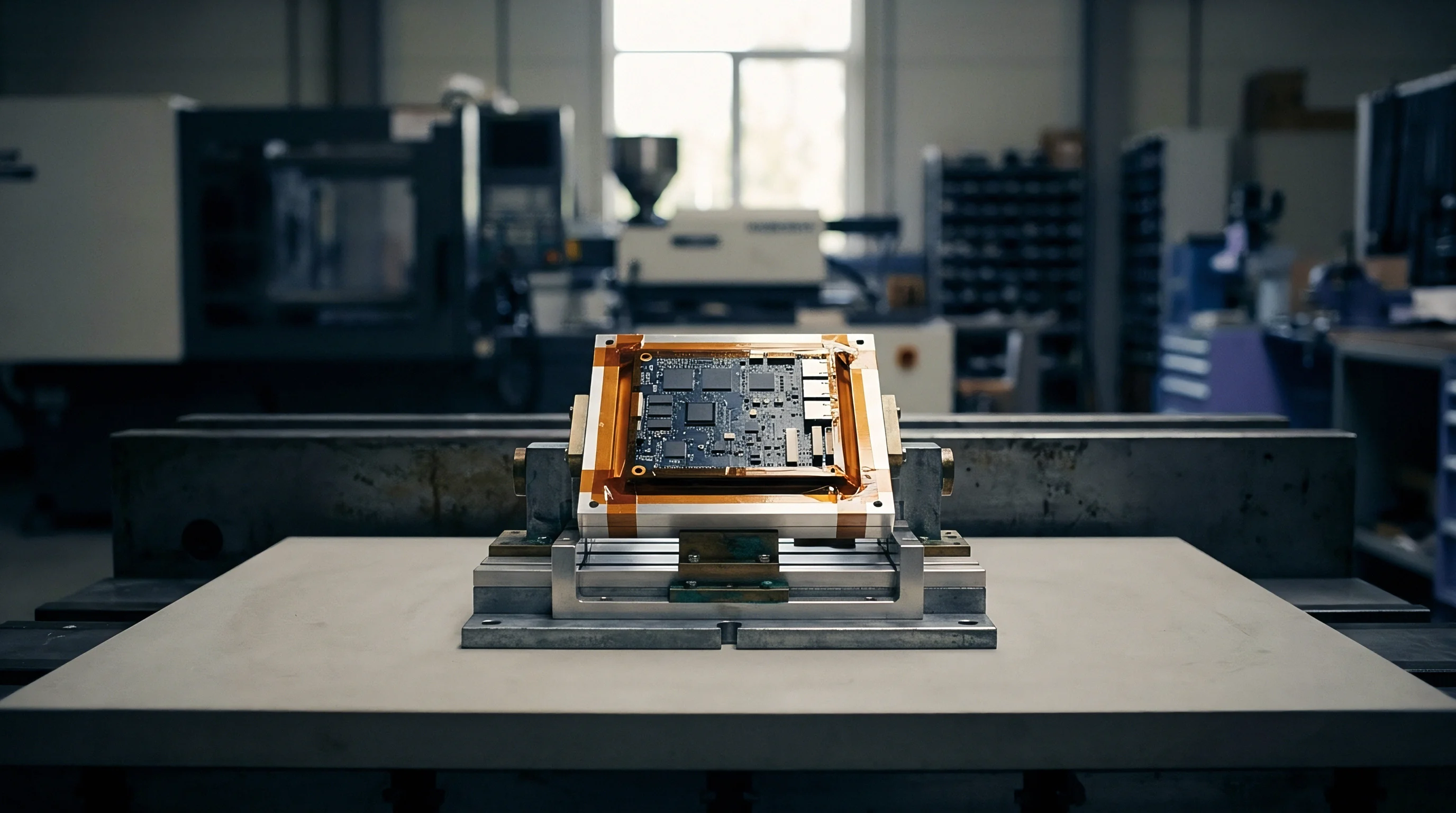
Regulatory dossiers contain detailed mechanical and commercial data. When an engineer files an equipment authorization application, the submission package includes schematics, parts lists, block diagrams, internal photographs, and user manuals. These exhibits become permanent public records in regulatory clearinghouses.
Customs enforcement officers use these filings to identify trade fraud.

Why Do Certification Filings Trigger Penalty Demands?
Tariff classification disputes frequently arise from the bill of materials submitted to certification agencies. An importer may classify an incoming shipment under HTS 8542.31 as an electronic integrated circuit to take advantage of zero-tariff treatment. The corresponding FCC equipment authorization grant defines the merchandise as a complete wireless module with integral voltage regulation, clock generation, and high-frequency filtering.
Customs reclassifies the unit under 8517.62, triggering regular duty rates and Section 301 trade remedies.
The gap between the technical file and the entry summary reveals operational failure:
- Component Level Declarations show base silicon values on customs invoices while technical grant exhibits prove the device contains passive arrays, surface-acoustic-wave filters, and power amplifiers.
- Radio Frequency Shielding Documentation demonstrates full modular independence in regulatory dossiers while entry summaries claim the boards are unfinished sub-assemblies lacking operational capability.
- Antenna Valuation Separations appear on import declarations as distinct low-value commodities despite regulatory filings certifying the antenna as an irreplaceable matched component of a single system.
- Operational Power Capabilities documented in test reports reflect high-wattage commercial amplification that invalidates low-tier customs classification descriptions.
A discrepancy between declared values and technical capabilities leads directly to CBP Form 28 Requests for Information. The agency demands accounting ledgers, purchase orders, engineering contracts, and laboratory reports. If the responses demonstrate knowing omissions, Customs issues a CBP Form 29 Notice of Action, reclassifying the merchandise and demanding supplemental duty payments.
| Dossier Element | Regulatory Parameter | Customs Declaration Line | Compliance Exposure Point |
|---|---|---|---|
| Parts List Exhibit | Active Power Amplifiers | HTS 8542 (Integrated Circuit) | Misclassification of Transceiver Assembly |
| Test Report Location | Overseas Facility Address | Commercial Invoice Labor Only | Omission of Dutiable Testing Assist |
| Grant Condition Page | Restricted Modular Approval | HTS 8517.62 (Complete Unit) | Mismatch of Integration Responsibility |
| Internal Photos Exhibit | Metal Shielding Installed | Bare Circuit Board Description | False Physical Description on Entry |
Financial penalties scale according to the culpability standard defined in 19 U.S.C. Section 1592. Negligence penalties reach two times the lawful duty loss or twenty percent of the entered merchandise value. Gross negligence elevates penalties to four times the duty loss or forty percent of entered value.
Fraud allegations result in civil penalties equal to the full domestic value of the merchandise.
The unresolved question remains how trade modernization programs will resolve automated data cross-checks when confidential engineering schematics stored in regulatory databases contradict commercial invoice lines during automated cargo clearance.

Ledger
Harmonizing technical approval documentation with customs entry filings requires shared oversight between engineering and trade compliance departments. Engineers typically complete test campaigns, obtain grants, and transition directly to mass production. Procurement groups issue purchase orders based purely on physical unit manufacturing quotes.
Neither party accounts for the customs impact of technical submissions.
Trade compliance teams establish documented audit trails before production lots leave the manufacturing floor. Every regulatory equipment grant code links directly to an approved internal part number. The accounting system flags that part number with all associated non-recurring engineering expenses, test house invoices, external antenna matching costs, and software royalty obligations.
When the customs broker prepares the entry summary, the declared transaction value matches the landed hardware cost plus the amortized regulatory burden.
Verification steps prevent misalignments before borders are crossed. Testing expenditures incurred abroad are tracked inside dedicated project accounts. Software license payments are flagged for condition-of-sale assessments.
Customs brokers receive technical specification sheets directly from compliance managers rather than relying on abbreviated commercial invoices prepared by overseas forwarders.
Hardware modifications that invalidate modular approvals create parallel customs crises. A minor antenna trace alteration demands a Class II Permissive Change under FCC regulations or a new conformity declaration under the Radio Equipment Directive. If factory lines implement hardware revisions before filing the permissive change, the imported goods violate regulatory entry conditions.
The physical hardware no longer matches the registered grant parameters, invalidating the entry summary.
Documented traceability across the product lifecycle protects operating capital.