Accredited Radio Test Plan Execution across Multiple International Certification Regimes
A unified radio test plan executed in accredited chambers minimizes duplicate scans, reduces retest risks, and opens multi-market regulatory approval streams.
A unified radio test plan executed in accredited chambers minimizes duplicate scans, reduces retest risks, and opens multi-market regulatory approval streams.

Maintain explicit grantee agency agreements and independent grant lineages to execute multi-market permissive changes when module vendors alter hardware.

Verify laboratory regulatory recognition listings rather than general accreditation badges to prevent unbudgeted retesting and market entry delays.

Radiated spurious scanning determines whether wireless host modifications qualify for Class I permissive status or demand Class II re-filing.

Intermediate host integration requires Class II Permissive Changes when antenna gain, trace layout, or RF exposure separation distances change from original grant conditions.
Metallic host enclosures alter RF emissions, turning module changes into Class II Permissive filings costing 6000 to 20000 USD over four to eight weeks.
Electronic labeling eliminates physical marking on the chassis only when menu paths take under four clicks and packaging carries complete transit identifiers.

Pre-certified FCC modular grants eliminate fundamental radio testing but require strict host trace adherence, exposure compliance, and Part 15B verification.
Cross-border radio verification requires accredited laboratory scope validation, standard gap analysis, and cryptographic document provenance at customs.

Modular approval requires eight statutory hardware conditions; host integrators must perform spot checking and unintentional radiator evaluation before market entry.

Resolve regulatory technical file disputes by embedding tripartite direct-to-authority escrow release covenants into module procurement contracts.

Auditing test laboratory scopes requires matching exact standard versions, frequency limits, and regulatory recognition before filing market entry applications.
Standalone SAR exclusion allows portable wireless hosts to bypass laboratory phantom testing when time-averaged power falls below frequency-scaled distance thresholds.

Modular radio grants only protect host products when integration documentation, antenna parameters, and Class II permissive change filings match final hardware.

Multijurisdictional co-location SAR evaluation requires host-level total exposure ratio analysis and spatial decoupling to ensure global market clearance.

FCC modular class changes require Class I audit logs for minor zero-increase emissions shifts and Class II filings for higher gain, host SAR, or altered spurious profiles.
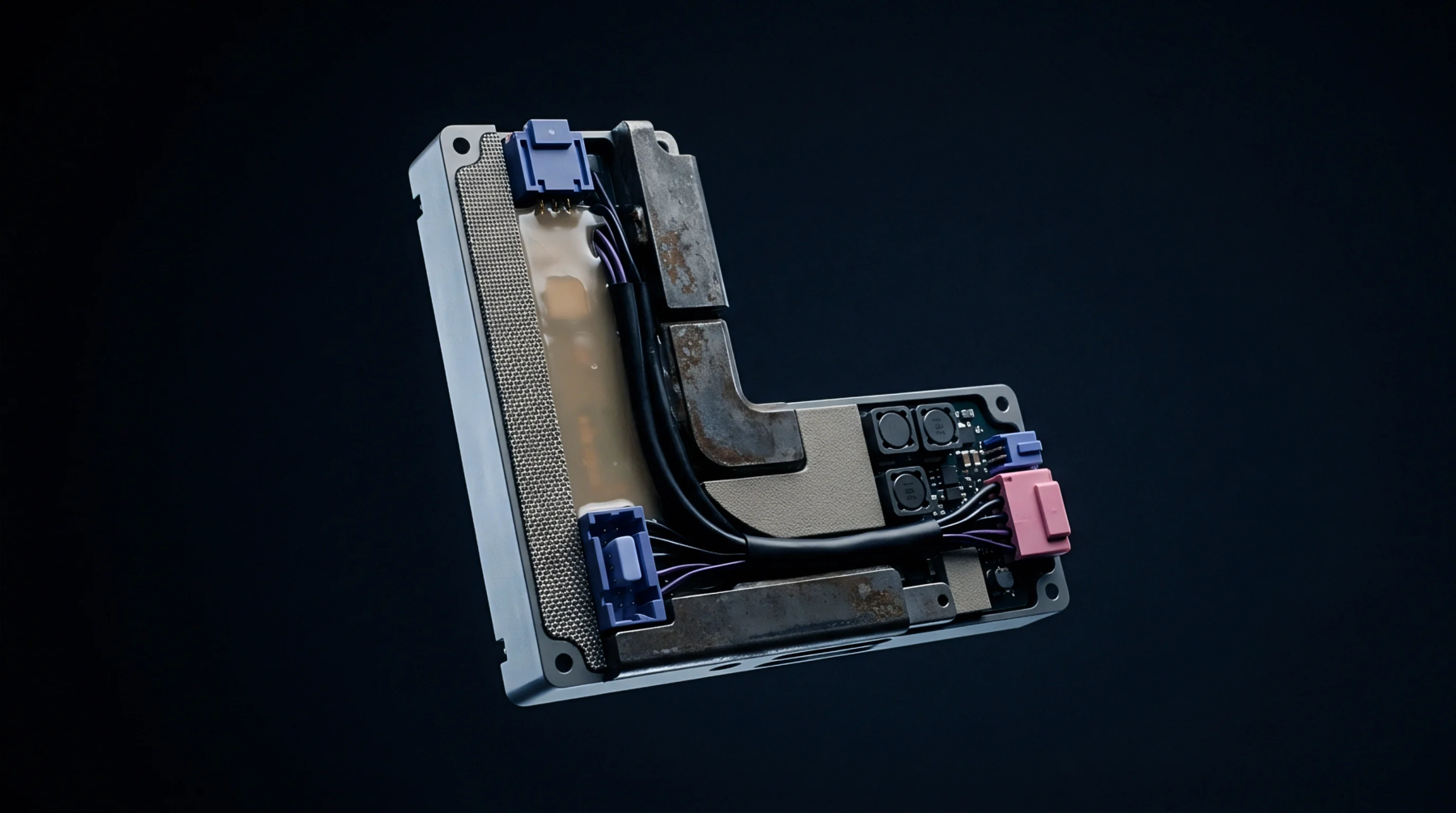
Managing Change in ID filings requires an authentic Grantee Authorization Letter, verbatim documentation alignment, and strict host design compliance.

A certification budget fails on sample availability and unbuffered retest hours long before it fails on base lab application fees.

Relying on a third-party FCC grant leaves host integrators exposed to vendor EOL and filing locks; owning the grantee code secures complete regulatory control.
Expertise is a utility, not a secret. sentiention™ publishes its working knowledge as open reference: intelligence layer covering the materials it sources, the markets it enters, and the reference that serves both.