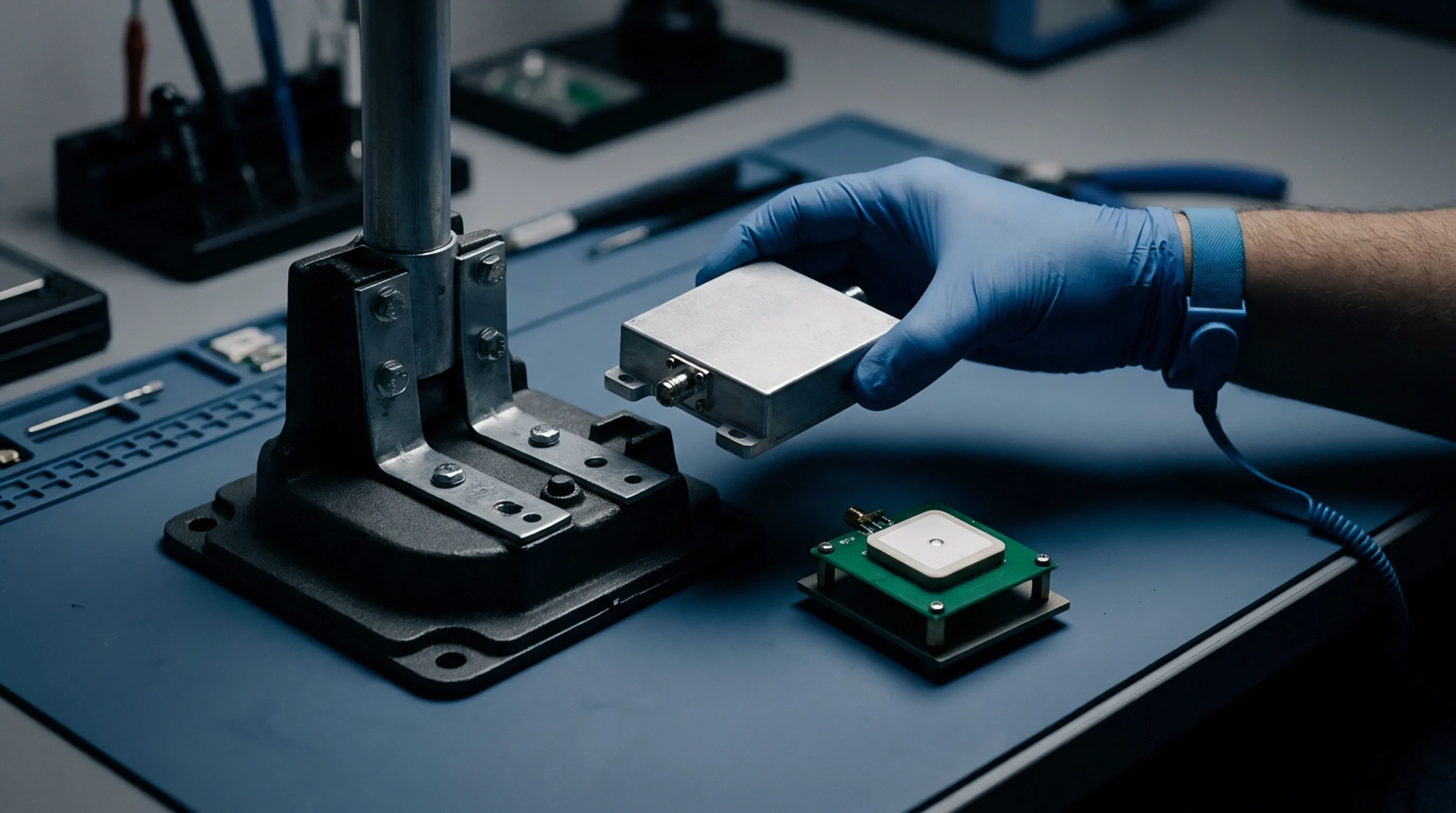
Navigating Basic Mutual Recognition Rules for Radio Compliance
Mutual recognition rules streamline radio market entry by allowing accredited home labs to test for foreign markets, but regional spectrum limits still apply.
Mutual recognition rules streamline radio market entry by allowing accredited home labs to test for foreign markets, but regional spectrum limits still apply.

Software-activated radio modules face customs reclassification under GRI 2(a) and valuation additions under GATT Article 8 if dormant silicon contains functional RF front-ends.

Non-accredited RF test dossiers require continuous calibration chains to SI standards and recalculation of excess measurement uncertainty against CISPR limits.

Resolving regulatory discrepancies requires binding supply agreements, host radiated validation, precise regional firmware power caps, and escrow reserves.

Radome permittivity shifts from polymer environmental aging alter radar spatial masks and EIRP, invalidating type approval grants without permissive change recertification.
Host devices in South Korea require mandatory radiated spurious emission tests regardless of pre-certified module status to secure valid KC market entry.

Exclusion of simultaneous wearable SAR requires summing individual link ratios below unity under KDB 447498 D04 using maximum factory tune-up power limits.

Tripartite escrow covenants allow host integrators to release proprietary RF firmware source code directly to EU market surveillance auditors during compliance audits.

CE module approvals do not cover host integration; host manufacturers must execute physical delta testing and compile a full RED Technical File.

Radio compliance transition management requires tracking Official Journal withdrawal dates, auditing inventory placement, and securing gap retesting before presumption lapses.

Unaccredited lab test reports require rigorous audit of calibration chains, resolution bandwidth settings, and firmware parameters to survive regulatory surveillance.
Resolve regulatory technical file disputes by embedding tripartite direct-to-authority escrow release covenants into module procurement contracts.

FCC rule changes governing modular radios demand precise classification of trace, antenna, and proximity shifts to prevent illegal radiated emissions.

Korean radio import compliance requires local representative legal assignment and RRA registration transfers to clear customs without import re-testing.
Firmware updates altering output power, channels, or DFS logic trigger mandatory permissive change filings or retests before distribution.

FCC modular class changes require Class I audit logs for minor zero-increase emissions shifts and Class II filings for higher gain, host SAR, or altered spurious profiles.
Expertise is a utility, not a secret. sentiention™ publishes its working knowledge as open reference: intelligence layer covering the materials it sources, the markets it enters, and the reference that serves both.