Permissive Changes against Full Retest after a Firmware Update
Firmware updates altering output power, channels, or DFS logic trigger mandatory permissive change filings or retests before distribution.
Threshold
Classifying Operational Boundary Shifts in Transceiver Firmware
Firmware modifications that alter RF output power, occupied bandwidth, spurious emission profiles, or operational frequency boundaries force an administrative choice between filing a permissive change and submitting the product for full re-certification. Under federal and international wireless rules, any software revision that alters the radio frequency behavior declared during original equipment authorization invalidates the initial test report once those changes cross defined technical thresholds. The core issue is whether the modified parameter stays within the envelope established during initial compliance testing.
If a patch increases maximum conducted output power beyond the manufacturing tolerance on the grant, or enables previously restricted channels, the device’s compliance status is lost.
Federal Communications Commission rules under Title 47 of the Code of Federal Regulations, specifically Section 2.1043, govern changes to certified equipment. For intentional radiators, permissive changes follow three main paths. A Class I Permissive Change covers software or physical alterations that do not degrade RF characteristics or increase radiated emissions beyond the parameters in the original certification file.
No formal filing goes to the Telecommunications Certification Body for Class I modifications, though internal engineering change notices and updated test logs must remain in the grantee’s technical file. A Class II Permissive Change is required when a firmware update degrades electromagnetic compatibility or increases spurious emissions while staying within the limits of the applicable rule parts. Class III Permissive Changes apply to Software Defined Radios where software controls operating frequency, output power, or modulation mode through locked interfaces.
Innovation, Science and Economic Development Canada follows a similar structure under Radio Standards Procedure RSP-100. Software updates altering power output settings, operational bands, or modulation formats trigger either a Re-assessment or a Permissive Change. A Class 4 Permissive Change under RSP-100 applies specifically to firmware updates for certified equipment that alter transmitter parameters without hardware changes.
If an update introduces operating modes that exceed original test limits or unlocks restricted frequency ranges, the filing escalates to a full technical re-assessment requiring complete test evidence and new certification numbers.
The addition of an uncertified operating band via software patch automatically voids the regulatory grant under FCC Rule Section 2.1043.
European market access under the Radio Equipment Directive 2014/53/EU does not use permissive change classes, relying instead on manufacturer risk assessments and technical file updates. When a firmware update alters operational parameters governed by essential requirements under Article 3.2, the manufacturer re-evaluates compliance against harmonized standards such as ETSI EN 300 328 or ETSI EN 301 893. If the update changes the maximum Equivalent Isotropically Radiated Power, alters duty cycle, or affects adaptive frequency hopping, the original Declaration of Conformity no longer covers the updated device.
The manufacturer must update the technical construction file, run targeted verification tests, and issue a revised Declaration of Conformity. Distributing over-the-air firmware updates without re-verifying compliance makes the deployment non-compliant under European market surveillance laws.
Regulatory Divergence across Federal and European Frameworks
Navigating Asian approvals requires tracking firmware-driven parameter shifts closely. Japan Radio Law regulations, administered by the Ministry of Internal Affairs and Communications, require construction type certification amendments when software modifications adjust radio parameters. A patch changing transmitter output power or modulation techniques requires an amendment filing through a Registered Certification Body.
Minor parametric changes that keep the radio within original approval margins allow an administrative notification, while adding functional bands demands complete re-certification. The Japanese framework treats firmware controlling radio parameters as a structural element of the module itself.
China State Radio Regulation Committee rules take a strict approach to unannounced firmware updates. Any update altering operational frequency boundaries, spurious emission limits, or nominal radio output power invalidates the existing type approval certificate. SRRC rules require test data from an accredited in-country laboratory for any parametric change affecting transmitter performance.
Pushing an over-the-air patch that boosts signal amplification without prior SRRC review can lead to revoked import permissions and mandatory recalls across Chinese sales channels.
South Korea’s National Radio Research Agency procedures under the Radio Waves Act demand formal change notifications for any software modification affecting RF circuitry or operating parameters. The Korean framework categorizes modifications by technical severity. Updates altering software security, output power profiles, or spectral masks require supplemental testing at a designated laboratory before filing the modification application.
Unregistered updates discovered during market surveillance trigger administrative sanctions and corrective orders for host equipment manufacturers.
Commercial contracts between radio module integrators and host manufacturers typically define explicit regulatory boundaries for software updates. In supply agreements governing certified wireless assemblies, section 14.3 dictates that any firmware build altering calibrated register settings, antenna gain assumptions, or spectral mask limits obligates the software supplier to deliver accredited laboratory verification data prior to public release.

Patch

Power Table Manipulation and Unintended Spectral Spills
Modern transceivers rely on software-defined power tables stored in non-volatile memory or hardcoded in firmware binaries to regulate drive levels across individual operational channels. When engineering teams modify these power tables to compensate for unexpected range issues or antenna attenuation inside tight host enclosures, non-compliance risks rise quickly. Elevating power settings across targeted channels distorts the drive level supplied to power amplifier stages, pushing them into non-linear operational regions.
This generates intermodulation products and harmonic energy that spill into adjacent bands, breaching occupied bandwidth limits and band-edge compliance masks set during original certification.
Software developers often try channel-specific power adjustments to maximize link budget without checking the original regulatory test report. A patch designed to boost a weak Wi-Fi or Bluetooth channel by two decibels can easily push power spectral density past the maximum allowable milliwatts per megahertz threshold mandated by FCC Part 15.247 or ETSI EN 300 328. Higher signal levels simultaneously worsen out-of-band spurious emissions near band edges, where regulatory attenuation curves steepen sharply.
Spot adjustments in software ripple through the RF front-end and can invalidate existing compliance filings.
Calibration parameter modifications are another common source of unexpected compliance failures. Transceiver firmware relies on factory calibration constants to equalize power output across temperature shifts and manufacturing variations. Altering the algorithm that calculates these power offsets changes the radio’s real-world output in the field.
A firmware update intended purely to optimize power efficiency at high operating temperatures can inadvertently bypass output back-off algorithms, resulting in excessive radiated power during sustained transmissions in hot ambient conditions.

How Do Firmware Power Tables Truncate Compliance Scope?
Edits to firmware power tables alter the compliance scope recorded on regulatory grants by changing the relationship between software settings and physical radio behavior. When an updated build writes higher scaling integers into transceiver drive registers, maximum conducted output power can exceed the figure reported on the original grant. Federal certification grants list exact conducted power numbers and antenna gain configurations.
Operating a radio with firmware that forces output beyond those explicit values constitutes unauthorized operation under federal law, leaving the host device ineligible for market deployment.
Compliance scope shrinks because regulatory approvals treat the certified power level as a ceiling. Firmware changes that lower power levels generally stay compliant under Class I permissive change criteria, provided the modulation profile and occupied bandwidth parameters do not change. Raising power levels on even a single channel breaches the grant parameters.
A host manufacturer cannot rely on the module vendor’s original certificate once software drives the hardware outside its tested envelope.
Antenna beamforming algorithms introduced in firmware updates present similar boundary issues. Software enabling phased array beamforming or cyclic delay diversity changes the directional gain of the antenna system. When firmware activates spatial multiplexing or directional steering, effective isotropically radiated power increases in specific directions.
This localized power density spike can easily breach maximum permissible exposure limits or directional EIRP caps mandated in the 5 GHz and 6 GHz bands.
Algorithm Modifications in Dynamic Frequency Selection
Dynamic Frequency Selection algorithms are among the most sensitive firmware components in 5 GHz devices. DFS software monitors radar signatures from weather radar and defense installations, forcing the radio to vacate occupied channels within specified milliseconds when radar pulses appear. Modifying software algorithms that evaluate pulse width, pulse repetition frequency, or detection thresholds directly impacts compliance under FCC Part 15 Subpart E and ETSI EN 301 893.
Any change altering radar detection sensitivity triggers mandatory retesting.
Regulatory software security rules aim to prevent end-users or unauthorized third parties from modifying radio firmware to disable DFS or force operation on restricted frequencies. FCC KDB 594280 guidance requires manufacturers to implement software security architectures that protect operational parameters. If an update modifies cryptographic signing mechanisms, updates the bootloader, or alters the memory protection isolating RF parameters, the manufacturer must demonstrate through a formal filing that security remains uncompromised.
Channel Availability Check timing and In-Service Monitoring routines in firmware control transceiver state transitions. Optimizing boot times by shortening the mandatory 60-second Channel Availability Check period breaks compliance under ETSI EN 301 893 Article 4.2.6. Engineers attempting to streamline channel switching must ensure monitoring windows adhere strictly to statutory timelines, as automated test suites quickly flag reduced verification intervals during compliance scans.
In technical disputes following field failures, register updates intended solely to improve connection stability in dense operational environments fail scrutiny once an accredited chamber scan shows that the update drove out-of-band emissions past statutory limits.


Bench

Prescan Execution and Radiated Emission Radii
Determining whether a firmware update permits an administrative filing or requires a complete retest takes systematic laboratory evaluation on the bench and in semi-anechoic chambers. Testing begins with conducted RF prescans across the operational frequency band to establish baseline comparisons between original and updated builds. The radio module connects directly to a spectrum analyzer or vector signal analyzer through precision coaxial cabling and calibrated attenuators.
Conducted measurements eliminate airborne interference and path loss variables, allowing test engineers to isolate small parametric shifts in fundamental power, occupied bandwidth, and spectral mask profiles caused by the software revision.
Prescans focus on worst-case operational configurations identified during original certification. Automated test scripts force the radio into continuous transmit modes across low, mid, and high channels, evaluating all supported modulation schemes and data rates under the new firmware. Test software compares peak power, average power, and 26 dB occupied bandwidth traces against historical baseline datasets.
If the conducted prescan matches historical limits, with power variations remaining within typical laboratory measurement uncertainty margins of plus or minus 0.5 dB, verification advances to radiated evaluation.
Radiated prescan testing evaluates the physical interaction between updated radio firmware, the host enclosure, internal cabling, and the antenna system. The full host device sits on a motorized turntable inside a 3-meter or 10-meter semi-anechoic chamber. A calibrated receiving antenna on an adjustable mast sweeps from 1 to 4 meters high while the turntable rotates 360 degrees.
This spatial sweep captures directional radiation patterns and flags localized spurious emission spikes triggered by the new software logic. Firmware patches altering clock frequencies, bus timing, or display refresh rates frequently introduce digital logic noise that radiates through host wiring harnesses, elevating spurious emissions in bands far removed from the primary RF carrier.
Conducted peak power measurements across three operational channels must show less than 0.5 dB variance from original grant baseline data to avoid mandatory Class II permissive change filings.
Engineers evaluate radiated emissions from 30 MHz up to the tenth harmonic of the highest operational frequency. The measurement receiver executes quasi-peak sweeps below 1 GHz and peak/average sweeps above 1 GHz under ANSI C63.10 standards. High-density frequency sweeps detect unexpected harmonic spikes caused by power amplifier non-linearities under updated drive conditions.
Finding a radiated emission spike within 3 dB of the statutory limit during prescans prompts immediate investigation to determine whether the elevated trace stems from RF front-end drive shifts or host digital processing noise.

EIRP Measurement Protocols across Temperature and Voltage
Accurate verification of Equivalent Isotropically Radiated Power demands measurement protocols across specified environmental limits. Software updates modifying closed-loop power control algorithms or thermal compensation routines can exhibit compliant power characteristics at 20 degrees Celsius while violating limits at environmental extremes. Test procedures mandate placing the device inside a climate chamber connected to calibrated spectrum measurement instruments, cycling temperature from minus 40 degrees to plus 85 degrees Celsius while varying input supply voltage by plus and minus 15 percent.
Conducted power readings taken inside the climate chamber track internal power leveling loops across operating ranges. Updated firmware containing revised temperature compensation lookup tables must demonstrate smooth power throttling curves without overshoot spikes. If compensation logic overcorrects at cold temperatures, initial transmitter bursts can exceed maximum allowed output power for several milliseconds, triggering compliance failures during peak detector sweeps.
Automated test setups record peak and average burst power metrics across hundreds of consecutive transmission cycles to verify stability.
Three-dimensional EIRP spherical scans validate antenna system performance under updated software drive states. Placing the integrated product in a spherical near-field or far-field antenna measurement chamber captures total radiated power and total isotropic sensitivity. These measurements verify that software updates activating multi-antenna spatial multiplexing or phase-steered array configurations do not generate localized power hot spots that breach regional radiation safety thresholds.
Spherical data generates clear gain patterns, confirming that directional antenna gains align with original grant filings.
Conducting Occupied Bandwidth and Mask Scans
Occupied bandwidth measurements show how firmware revisions impact spectral efficiency and channel spacing. Vector signal analyzers measure 99 percent occupied bandwidth and 26 dB emission bandwidth according to standardized protocols. Updates introducing new modulation coding schemes or adjusting pulse-shaping digital filters directly alter the spectral footprint of the emitted signal.
Broadened emission footprints breach adjacent channel power limits, requiring immediate rollback of software filter coefficients.
Spectrum mask evaluations require continuous transmit sweeps while applying precise resolution bandwidth filters defined by regional standards. For instance, ETSI EN 300 328 mandates specific mask boundaries for wideband data transmission equipment operating in the 2.4 GHz band. The spectral mask enforces steep attenuation limits immediately adjacent to the authorized band edge.
Software updates altering power amplifier ramp-up times or burst envelope shaping can generate transient spectral splatter that breaches these mask limits during the start and end of packet bursts.
Error Vector Magnitude testing gives clear diagnostic visibility into transmitter signal quality changes caused by firmware modifications. Elevated EVM readings signal phase noise degradation, power amplifier saturation, or IQ constellation distortion introduced by modified baseband processing code. When firmware optimizations push drive levels to maximize transmission distance, deteriorating EVM performance serves as an early indicator that spurious emissions and out-of-band splatter will soon exceed regulatory thresholds.
An unannounced vendor firmware update that altered power amplifier bias currents created a third-harmonic spur failing Class B radiated limits at 7.2 GHz, resulting in a three-week schedule loss and a 14,000 dollar chamber fee re-run.
| Firmware Change Type | Conducted Power Verification | Radiated Spurious Emissions | Occupied Bandwidth / Mask | DFS / Radar Verification | Required Filing Path |
|---|---|---|---|---|---|
| Bug fix with no RF parameter or clock changes | Spot check 1 channel | Not required | Not required | Not required | Class I Permissive Change (Internal TCF) |
| Power table lookup modification (< 0.5 dB variation) | Full check (3 channels) | Prescan worst-case channel | Full check (3 channels) | Not required | Class I Permissive Change (Internal TCF) |
| Power table increase beyond original grant limit | Full check across all rates | Full chamber sweep (30 MHz – 40 GHz) | Full check across all rates | Not required | Class II Permissive Change or Retest |
| Activation of previously disabled frequency band | Full compliance suite | Full chamber sweep (30 MHz – 40 GHz) | Full compliance suite | Required if band includes 5 GHz DFS | Class II / Class III or New Certification |
| Modification of DFS detection algorithms or logic | Not required | Not required | Not required | Full DFS compliance sweep | Class III Permissive Change (FCC) |
| Modulation scheme or filter coefficient update | Full check across all rates | Prescan top 3 harmonic frequencies | Full check and mask evaluation | Not required | Class II Permissive Change |

Dossier

Constructing the Software Security Attestation File
Maintaining regulatory compliance across continuous software release cycles demands systematic documentation in the technical construction file. For devices operating in spectrum bands governed by software security rules, such as U-NII 5 GHz bands, the dossier must include explicit software security attestation documentation. The FCC KDB 594280 D02 guide mandates that manufacturers answer detailed operational questions regarding software control interfaces, update mechanisms, and access restriction barriers.
The software security file details how the device prevents unauthorized firmware modifications that could alter RF operational boundaries.
The security dossier documents the cryptographic signing procedures used to validate firmware binaries prior to execution on the baseband processor. Test labs and certification authorities require clear descriptions showing that the system bootloader rejects unsigned or modified software binaries attempting to flash non-compliant power tables or band limits into device memory. The documentation outlines logical isolation boundaries separating host application processors from dedicated wireless baseband execution units, proving that third-party host software cannot directly access transceiver drive registers.
Attestation cover letters submitted alongside permissive change applications state that software updates maintain original compliance envelopes. Signed by authorized engineering managers, these legal declarations confirm that modified software code introduces no operational frequency additions, power increases, or structural radio parameter shifts beyond those declared in the accompanying test reports. Certification bodies archive these attestations as primary evidentiary records during compliance audits and market surveillance reviews.

Risk Assessment Architecture for European Radio Equipment
European conformity under the Radio Equipment Directive 2014/53/EU requires manufacturers to maintain formal risk management documentation for software revisions. In accordance with standard ETSI EG 203 367, manufacturers construct a risk assessment matrix evaluating how planned firmware changes impact essential requirements specified in Article 3. The risk evaluation examines potential failure modes, including unintended power elevation, spectral filter degradation, software crash conditions causing continuous transmission, and compromised adaptive frequency mechanism behaviors.
Updating European Declaration of Conformity documents without archiving supporting laboratory delta scans breaches technical file compliance requirements under RED Article 10.
The risk assessment document records specific risk mitigation steps executed by the development team. If a firmware update introduces elevated processing loads that increase thermal dissipation near RF front-end components, the assessment documents thermal testing proving that thermal drift does not drive transmitter frequency accuracy outside harmonized limits. The completed risk assessment resides permanently within the European Technical Construction File, available for inspection by National Market Surveillance Authorities upon request.
Revising the formal Declaration of Conformity is the final administrative step under European rules. When a software update passes risk evaluation and laboratory delta verification, the manufacturer issues an updated Declaration of Conformity referencing the latest firmware version control hash alongside applicable harmonized test standards. Distributing software updates to European field deployments without updating the archived Declaration of Conformity and corresponding technical file violates European market rules, exposing manufacturers to administrative penalties and sales suspension orders.
Grant Maintenance and Cover Letter Requirements
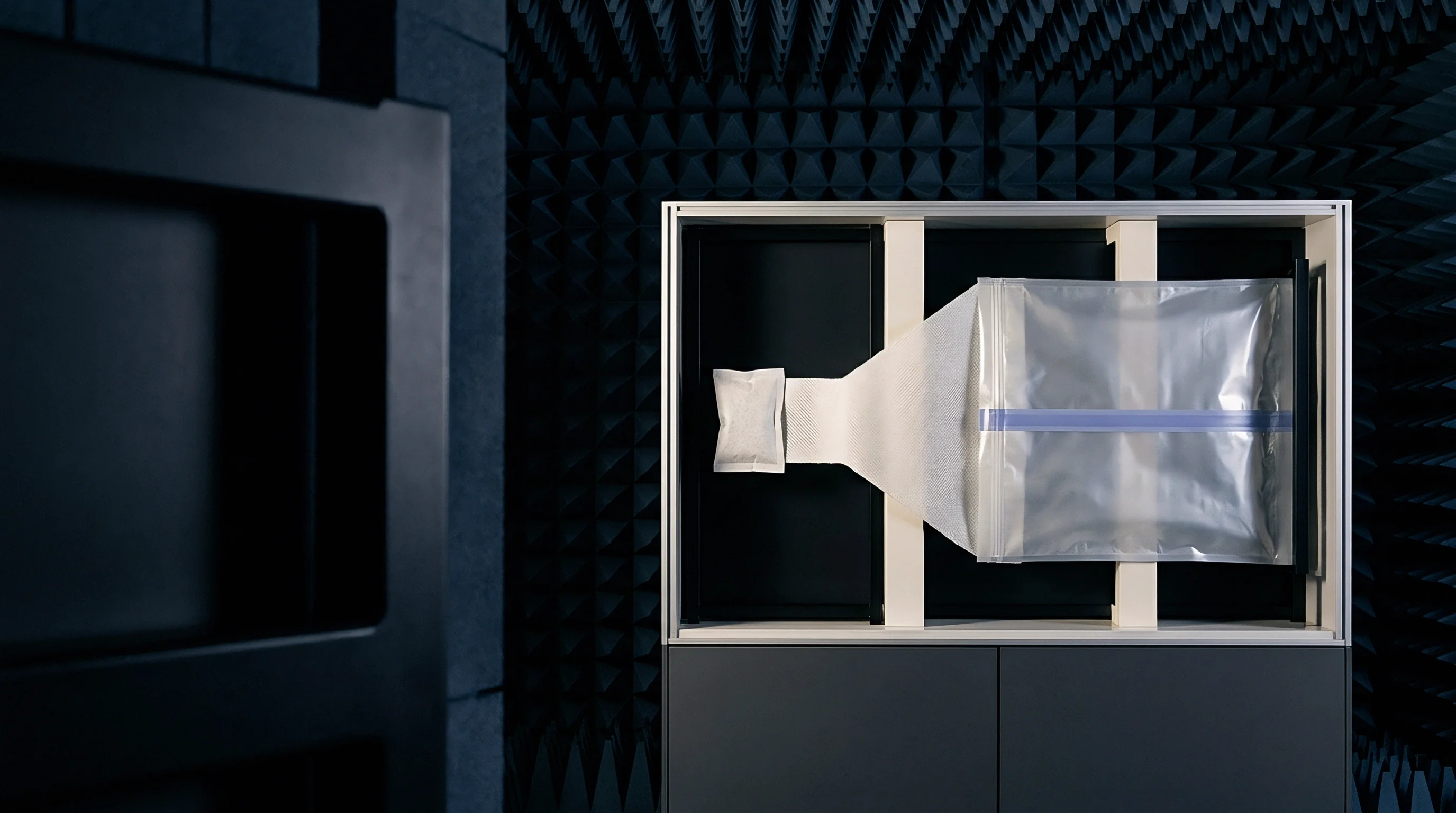
Updating federal regulatory grants requires submitting detailed cover letters and operational documentation to Telecommunications Certification Bodies. Application packages for Class II Permissive Changes contain cover letters detailing the scope of software modifications implemented since original certification. The letter explains the rationale behind the revision, detailing modified parameters while declaring unchanged hardware elements and radio frequency architectures.
Updated operational descriptions and tune-up procedures accompany permissive change filings when software updates modify operational state logic or power targeting rules. The tune-up procedure lists revised factory power target tolerances, drive integer mappings, and calibration routines used during host assembly. Providing comprehensive, transparent operational descriptions prevents delays caused by certification body information requests during review cycles.
Documentation issues frequently stall regulatory filings. Submitting incomplete or contradictory documentation forces certification reviewers to reject filings or issue formal administrative holds.
- Omitted Software Security Explanations occur when software updates touch U-NII bands without submitting updated KDB 594280 security attestations detailing binary signing protocols.
- Mismatched Power Figures happen when cover letters claim identical RF parameters while accompanying laboratory measurement addendums indicate minor power level shifts.
- Inadequate Revision Tracking arises when technical files fail to maintain detailed version histories linking physical firmware build hashes to corresponding test reports.
- Unsigned Attestation Declarations occur when administrative submission packages lack formal authorization signatures from designated corporate grant custodians.
- Inconsistent Host Integration Limits happen when permissive change documentation fails to list explicit host platform installation limits and revised separation distance constraints.
How far should a lead agency pursue retrospective technical file remediation when a legacy upstream vendor silently deprecates signature validation keys in legacy deployed baseband firmware?

Arithmetic

Quantifying Retest Fees against Filing Clock Delays
Deciding between a permissive change filing and full regulatory re-certification requires financial and schedule modeling. Permissive change filings lower costs and shorten review cycles, provided technical parameters remain strictly within allowable thresholds. A standard Class II Permissive Change testing campaign for a single market typically consumes between 3,000 and 8,000 dollars in accredited laboratory fees, focusing on conducted power verification, targeted radiated prescan sweeps, and band-edge compliance.
TCB review and filing processing fees add between 1,200 and 2,500 dollars, with administrative approval usually taking 15 to 20 working days.
Full re-certification carries far higher costs and longer delays. Initiating a full initial certification suite for a multi-band wireless product consumes between 22,000 and 45,000 dollars in laboratory chamber time, execution fees, and documentation costs. Laboratory chamber usage rates run between 350 and 600 dollars per hour, with exhaustive radiated spurious emission sweeps and DFS radar validation tests requiring up to 40 hours of continuous chamber occupancy.
TCB grant processing, administrative file creation, and mandatory database listings add another 3,500 to 6,000 dollars, extending the complete cycle across 8 to 14 weeks.
Time-to-market penalties represent the dominant cost when firmware updates stall product delivery schedules. Holding finished hardware inventory in distribution warehouses while awaiting delayed regulatory approvals incurs substantial carrying costs and risks missing retail launch windows. Contractual penalties for delayed store delivery frequently exceed 50,000 dollars per week for high-volume consumer electronics shipments.
Release management strategies must prioritize regulatory validation timelines so compliance delays do not block revenue generation.
A four-week delay in regulatory approval costs more in lost product margin than executing three complete laboratory delta prescan campaigns.

Multi-Jurisdictional Approval Pipeline Cost Structures
Managing global market access multiplies filing costs across divergent regulatory jurisdictions. A software update requiring permissive change filings across the United States, Canada, Europe, Japan, South Korea, and China triggers compounding financial liabilities. While European market access relies on self-declaration backed by internal technical file updates, Asian jurisdictions require paid administrative applications and local agent interactions for every parameter change.
Japanese Giteki certification updates through Registered Certification Bodies average 2,500 to 5,000 dollars per revision filing, requiring 3 to 5 weeks for processing. South Korean KC mark amendments require mandatory submittals to the National Radio Research Agency, costing between 2,000 and 4,500 dollars per update. Chinese SRRC approvals are even pricier, where mandatory in-country laboratory verification testing for radio modifications commands fees between 6,000 and 12,000 dollars alongside processing cycles extending up to 8 weeks.
Evaluating multi-market filing budgets requires detailed cross-jurisdictional financial tracking. Organizations model compliance costs across all target distribution regions before approving firmware revisions that alter radio frequency operational parameters.
| Jurisdiction | Filing Classification | Typical Lab Fees (USD) | Filing & Agency Fees (USD) | Processing Clock (Weeks) | Local Testing Mandatory? |
|---|---|---|---|---|---|
| United States (FCC) | Class I Permissive Change | $1,000 – $2,500 | $0 (Internal TCF) | 0 – 1 | No |
| United States (FCC) | Class II Permissive Change | $3,500 – $8,000 | $1,500 – $2,500 | 3 – 4 | No |
| European Union (RED) | Technical File Update | $2,000 – $5,000 | $0 (Self-Declaration) | 1 – 2 | No |
| Japan (MIC / Giteki) | Type Amendment Filing | $1,500 – $3,500 | $2,000 – $4,000 | 3 – 5 | No (Data Review) |
| South Korea (KC) | Modification Application | $2,000 – $4,500 | $1,500 – $3,000 | 4 – 6 | Selective |
| China (SRRC) | Minor/Major Revision | $6,000 – $12,000 | $2,000 – $4,000 | 6 – 8 | Yes (In-Country) |
Evaluating firmware builds before public over-the-air deployment follows a disciplined verification sequence to prevent regulatory default.
- Isolate altered software modules within the firmware build system, identifying code changes affecting radio front-end drivers, power tables, or clock management algorithms.
- Execute conducted RF bench prescan sweeps across low, mid, and high operational channels, measuring peak output power, average output power, and 26 dB occupied bandwidth.
- Compare measured conducted metrics against historical baseline datasets recorded in the original regulatory test file, flagging variances exceeding 0.5 dB.
- Execute radiated spurious emission prescans in a semi-anechoic chamber across harmonic frequency bands to confirm out-of-band emissions remain within statutory margins.
- Evaluate software security architectures, verifying cryptographic binary signing protocols and attestation documentation compliance under regional rules.
- Determine applicable permissive change pathways or full re-testing requirements based on delta scan outcomes across each target geographic market.
- Assemble updated technical dossiers, risk assessments, attestation cover letters, and certification application packages for submission to designated certification bodies.
- Archive all measurement datasets, official grant addendums, and updated Declarations of Conformity within the permanent technical construction file prior to software deployment.
Firms that validate radio parameters in laboratory chambers before freezing software release candidates avoid emergency field recalls and unscheduled regulatory filing costs.


Audit
Marketplace Compliance Sweeps and OTA Tracking
Regulatory authorities and competitive enforcement organizations monitor market compliance through random product sampling and over-the-air firmware audits. The FCC market surveillance program obligates Telecommunications Certification Bodies to audit at least 5 percent of all certified radio products annually. Audits involve purchasing off-the-shelf retail units, extracting executed firmware binaries, and subjecting hardware to laboratory compliance sweeps.
If an audited product running current over-the-air firmware exhibits non-compliant radiated power or spurious emissions, enforcement actions commence against the corporate grant holder.
European Market Surveillance Authorities execute coordinated compliance sweeps across member states, targeting wireless consumer products and industrial Internet-of-Things gateways. Authorities pull units from retail distribution networks and inspect internal technical construction files. Under European rules, market surveillance laboratories re-test radio equipment against published harmonized standards.
Discovering that a silent over-the-air firmware update pushed operational parameters outside harmonized limits triggers rapid alert notifications under the Safety Gate network, resulting in sales bans across all European Union member states.
Customs agencies increasingly use automated compliance tracking systems to block non-compliant radio imports at port facilities. Border inspectors verify device radio identification numbers against centralized regulatory databases. When customs inspections discover host equipment operating with unregistered software versions or modified wireless modules lacking proper permissive change filings, shipment lots are impounded at port facilities until documentation discrepancies are resolved.

Regulatory Enforcements and Custom Import Seizures
Operating non-compliant radio equipment subjects grant holders to severe legal enforcement mechanisms. The FCC Enforcement Bureau issues formal Notices of Apparent Liability for Forfeiture against companies deploying unauthorized software updates that breach regulatory limits. Financial penalties run up to 20,000 dollars per violation day, compounding rapidly across multi-thousand-unit production runs.
Beyond monetary fines, regulatory bodies hold the authority to revoke equipment authorization grants entirely, barring non-compliant devices from operating within regulated spectrum.
Host equipment integration responsibilities fall squarely on final host manufacturers. Integrating a pre-certified radio module does not insulate host manufacturers from legal liability if subsequent firmware updates alter host-level compliance. When an over-the-air software patch pushes host radiated emissions beyond Class B digital device limits, the host manufacturer faces mandatory recall orders and inventory quarantine sanctions.
Host integration contracts must establish clear regulatory maintenance covenants, binding module vendors to maintain certification validity across all distributed software revisions.
Enforcement authorities execute detailed post-market investigations when unauthorized software updates disrupt primary spectrum users. Investigations into interference reported by airport weather radar facilities or public safety communications networks prompt immediate regulatory sweeps. Tracing interference sources back to non-compliant DFS logic or elevated drive levels in commercial radio deployments results in rapid seizure of operating equipment and severe administrative sanctions against offending entities.
Maintaining post-market software integrity requires continuous audit procedures within corporate release engineering pipelines.
- Binary Cryptographic Verification ensures that baseband processors execute only cryptographically signed firmware binaries matching verified compliance release builds.
- Automated Power Table Audits verify that non-volatile memory drive register values match baseline target constants archived within regulatory technical construction files.
- Regulated Channel Access Controls prevent host operating systems or user configuration utilities from unlocking restricted frequency bands or bypassing DFS detection routines.
- Continuous Delta Scan Protocols mandate brief laboratory prescan sweeps for any software candidate release modifying radio execution logic prior to over-the-air distribution.
- Centralized Dossier Lifecycle Management maintains synchronized regulatory technical files, attestation letters, and regional grant addendums across all active software versions.
Engineers and compliance managers who maintain continuous visibility over firmware parameters preserve market access, protect release schedules, and maintain the legal integrity of global equipment authorization grants.