
Verifying Modular Radio Equipment Authorization for Import Clearance
Verify modular radio grants, match physical host labels to database records, and test unintentional chassis emissions to secure smooth import clearance.
Verify modular radio grants, match physical host labels to database records, and test unintentional chassis emissions to secure smooth import clearance.

Permissive changes avoid multi-transmitter volume scans when the ratio of combined absorption to spatial peak separation remains at or below 0.04.

Unannounced RFIC silicon stepping changes exceeding 0.5 dB conducted power or 3 dB spur limits invalidate modular grants, forcing Class II Permissive Changes.

Modular inheritance fails under Chinese radio frameworks if host noise elevates radiated spurs or unlisted antenna gains exceed approved regulatory thresholds.

Dual-band Wi-Fi 6 deployments near heavy machinery demand 20 MHz channels, 3.2 microsecond guard intervals, and 22 dB fade margins to stop packet drops.

Modular integration under the Korean Radio Waves Act demands host Registration of Conformity and full EMC testing despite certified RF modules.

Managing documentation chain of custody links physical hardware equivalence to active root grants, preventing sudden global market distribution bans.

Sliding-window time averaging balances cellular and Wi-Fi transmit power to satisfy specific absorption rules without sacrificing wireless link throughput.
Transfer regulatory grants without retesting through Section 2.933 filings by proving legal chain of custody, BOM parity, and unredacted test report access.
Direct overseas grant ownership combined with domestic agency appointment eliminates distributor certificate hold-up risks under amended South Korean radio rules.

A Class II permissive change is required whenever host integration changes antenna type, increases gain, reduces RF exposure distance, or adds collocation.

Real Bluetooth range requires calculating conducted power, antenna loss, indoor obstruction models, and fade margins beyond basic datasheet sensitivity.

Sub-GHz link margin calculations require combining receiver sensitivity, regulatory power limits, log-distance path loss, and enclosure detuning losses.

IEEE 802.11ax OBSS-PD threshold scaling elevates preamble detection up to -62 dBm while mandating a proportional 1:1 transmit power back-off to balance reuse.
Auditing ISO IEC 17025 test reports against active laboratory scope schedules prevents expensive certification rejections and product market holds.

Portable transmitter SAR evaluation exemptions depend on frequency, separation distance, and tune-up power to bypass costly physical chamber testing.

Host integrators holding third-party radio modules assume transmitter regulatory liability through trace compliance, filing maintenance, and localized testing.

Grantee authorization letters legally permit host integrators to reuse module test data, preventing expensive re-testing and customs import rejections.
Section 2933 filings transfer FCC equipment authorization to a new grantee code without retesting, provided hardware and circuitry remain unchanged.

Pre-certified FCC modular grants eliminate fundamental radio testing but require strict host trace adherence, exposure compliance, and Part 15B verification.

Antenna detuning alters PA load impedance, degrading efficiency and thermal headroom across wideband transceivers during high-VSWR operational shifts.

Modifications to encapsulated radio modules require Class II permissive change filings whenever conducted power increases or radiated emissions degrade.
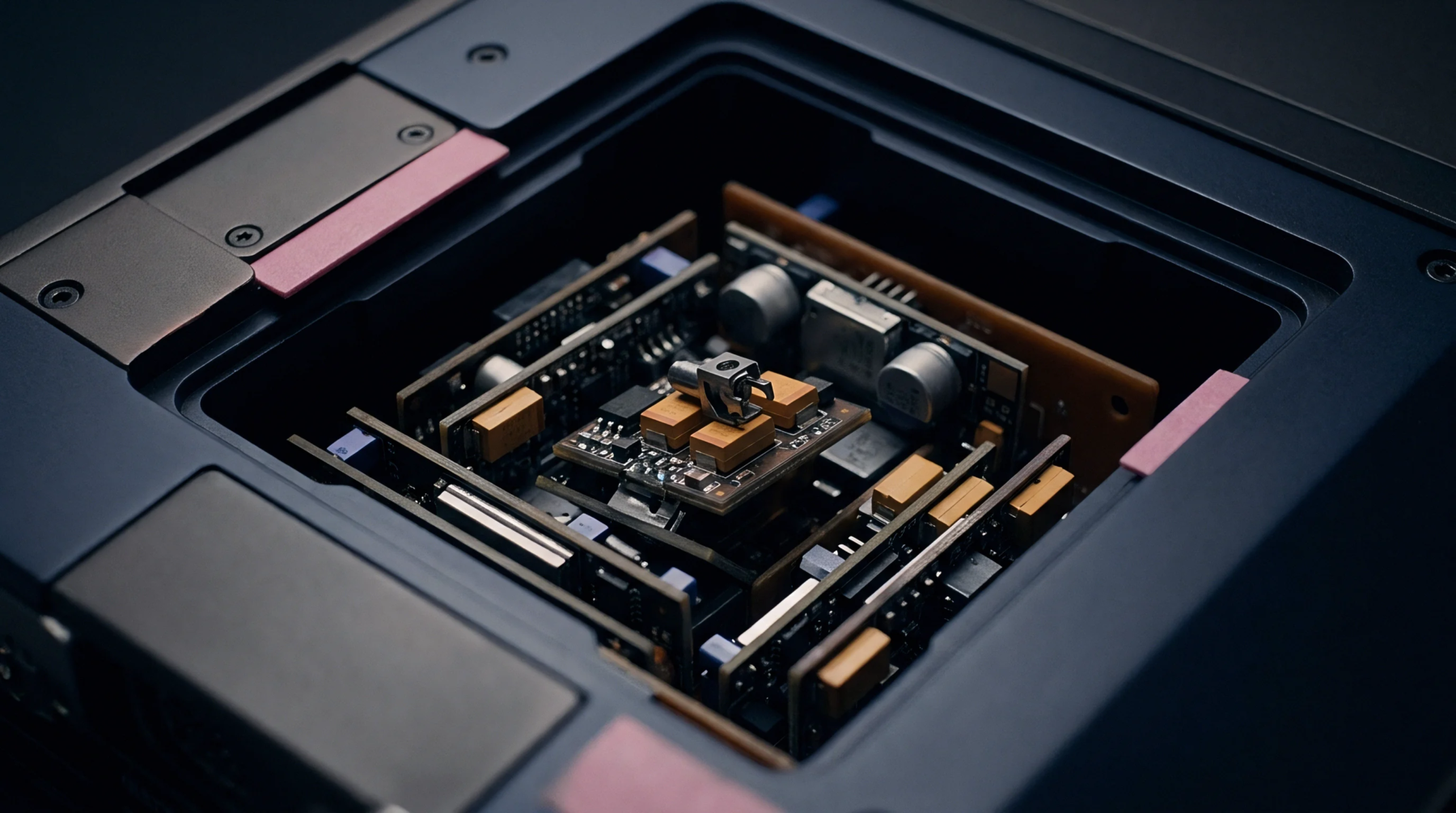
Unlicensed commercial radio access requires precise chamber testing, strict host integration boundaries, and regional type approval filings to prevent customs rejections.

Radio filings in Japan and Korea depend on local representatives to hold legal title, navigate national test standards, and prevent customs cargo impoundment.
Expertise is a utility, not a secret. sentiention™ publishes its working knowledge as open reference: intelligence layer covering the materials it sources, the markets it enters, and the reference that serves both.