
Measurement Uncertainty Mechanics across Accredited Laboratories during Multi Market Radio Retests
Radio measurement uncertainty differences across accredited labs require mandatory 6 dB design guardbands to prevent market surveillance failures.
Radio measurement uncertainty differences across accredited labs require mandatory 6 dB design guardbands to prevent market surveillance failures.

Modifying modular antennas triggers FCC Class II Permissive Changes whenever gain, radiator type, or host SAR conditions alter baseline RF compliance.

Managing modular compliance requires maintaining strict reference trace layouts, securing firmware power tables, and contracting vendor liability for permissive changes.

Modular radio updates split into minor Class I file updates and major Class II filings based on measured shifts in radiated power, emissions, and frequency bands.

Hardware root of trust integration requires active bus testing and targeted permissive change filings to preserve modular radio compliance across global markets.

Radiated spurious emissions in multi-radio designs demand aggressive board-level isolation and predictive intermodulation filtering to secure market approvals.

Dynamic near-field reconstruction requires real-time dielectric telemetry to prevent false spatial peak absorption errors during regulatory SAR certification scans.

Statutory duty cycle limits capping airtime at 0.1 to 10 percent govern sub-GHz telemetry, requiring precise packet timing to avoid legal non-compliance.

Dual-function wireless transceiver modules classify under HS code 8517.62 as finished transmission apparatus under General Rules of Interpretation 1 and 6.

Low-frequency pre-scan correlation requires analytical transfer functions compensating for enclosure wall reflections, reactive coupling, and antenna factor shifts.

Antenna detuning shifts transmitter power amplifier load impedance away from nominal conjugate match, slashing power added efficiency and draining battery reserves.

Dense transceiver enclosures generate common-mode currents and dynamic intermodulation across metal seams, requiring early near-field scanning to prevent costly compliance retests.
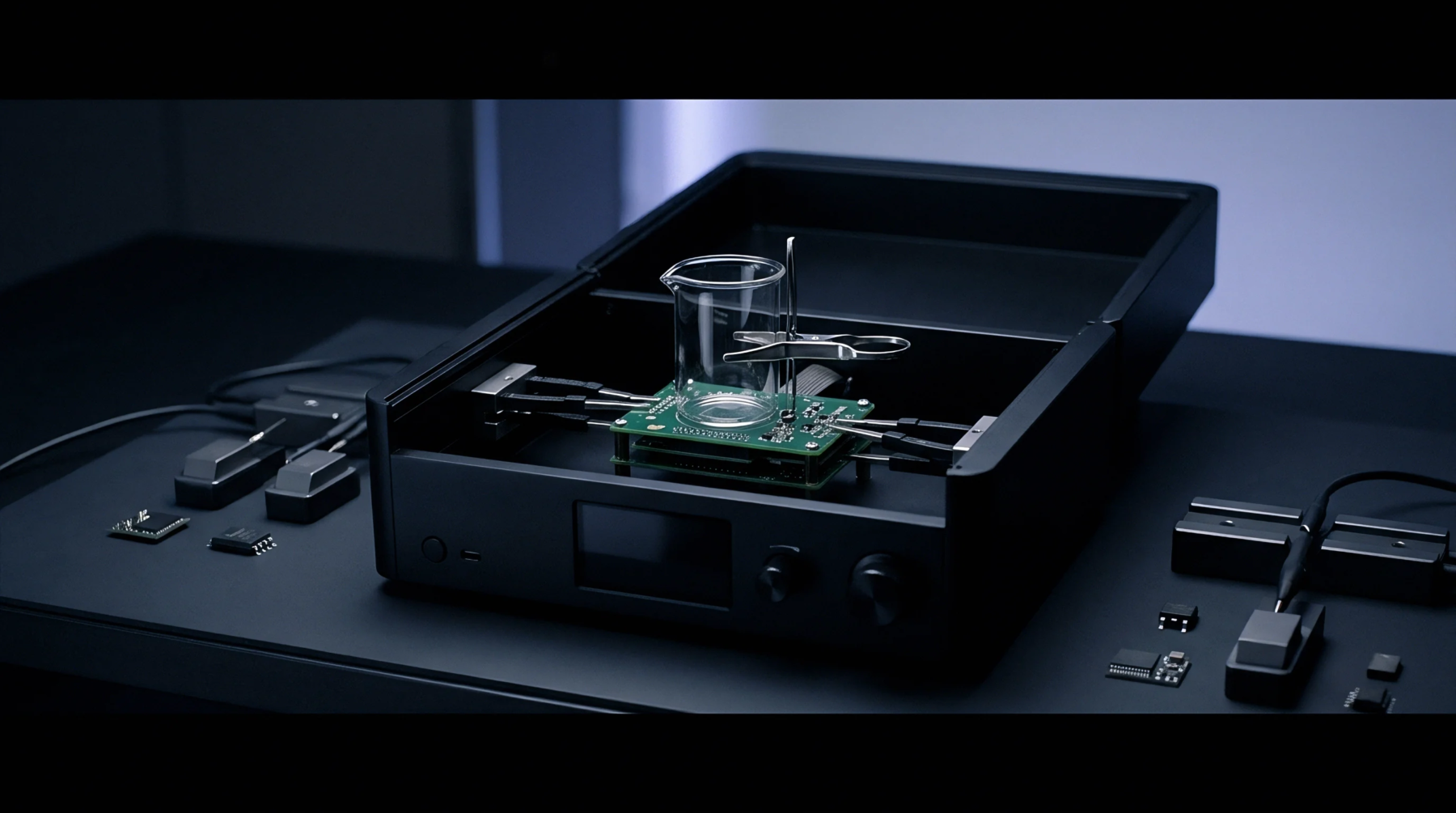
Resolving host enclosure resonances relies on identifying cavity modes and sealing seam apertures before submitting embedded radios for regulatory scans.

Reconciling international MRA discrepancies in modular radio dossiers requires structured delta testing to satisfy regional radiated limits and CAB scopes.

Aggressive dynamic CCA elevation trades spatial isolation for medium concurrency, raising co-channel interference floors and forcing MCS drops on distant stations.

Verify laboratory regulatory recognition listings rather than general accreditation badges to prevent unbudgeted retesting and market entry delays.

IEEE 802.11ax OBSS-PD threshold scaling elevates preamble detection up to -62 dBm while mandating a proportional 1:1 transmit power back-off to balance reuse.
Expertise is a utility, not a secret. sentiention™ publishes its working knowledge as open reference: intelligence layer covering the materials it sources, the markets it enters, and the reference that serves both.