Verifying Modular Radio Equipment Authorization for Import Clearance
Verify modular radio grants, match physical host labels to database records, and test unintentional chassis emissions to secure smooth import clearance.


Dock

Border Presentation Realities
Shipments carrying intentional radiators routinely get held at border control when physical markings fail to match import paperwork. Under 47 CFR Part 2 and Part 15, United States Customs and Border Protection checks equipment identifiers directly against standard Entry Summary filings. If a container is flagged for physical examination, the inspecting officer looks for an external label with an equipment identifier or clear wording that marks an embedded transmitter module.
Discrepancies trigger immediate holds. A commercial invoice might describe a finished end-use item while the bill of lading lists generic industrial instrumentation. When customs queries the entry and turns up an unregistered assembly lacking verifiable radio authorization, redelivery notices issue under standard commercial bonds, with no opportunity for rectification on the tarmac.
Customs holds multiply when commercial invoices cite whole-device names while underlying transport papers declare disparate component sub-assemblies.

Customs Documentation Chains
Before tendering freight, four records have to reconcile. The commercial invoice must carry the exact model name alongside the harmonized tariff code, while the packing list maps individual serial allocations to physical shipping cartons. On the hardware itself, the rating plate has to match the manufacturer certificate or supplier declaration word for word.
Clear electronic filings keep customs brokers from guessing. When radio authorization details are missing, brokers often clear goods under general merchandise tariff lines, which sets off automated post-entry audits. If an audited line item cannot be supported with lab test records, the importer of record faces formal demands for liquidated damages.
Entry documentation varies by region. In the United States, brokers transmit FCC Form 740 data elements through the Automated Commercial Environment system, where the importer must formally state whether an import is an authorized intentional radiator, an exempt unit, or an incomplete assembly imported strictly for laboratory testing.
European Union customs posts require an EU Declaration of Conformity issued under Radio Equipment Directive 2014/53/EU. The document must pair the specific host assembly with the exact harmonized radio, EMC, and safety standards applied during evaluation. Omission of health and safety assessments under EN 62368-1 or EN 62311 invalidates customs release at ports like Rotterdam or Hamburg.
Importer Commercial Liability
Regulators hold the importer of record legally accountable for non-compliant radio gear, not the overseas factory. If a distributor puts an uncertified radio onto the market, civil penalties hit the domestic entity directly. Beyond fines, enforcement proceedings can require total product recalls and the physical forfeiture of warehouse stock.
Storage tallies mount fast in bonded warehouses. Between carrier demurrage and forwarder holding fees, detention costs can wipe out a shipment’s entire gross margin within fourteen calendar days. Port authorities prioritize container turnover, and cargo that sits past thirty days without clearance risks destruction or mandatory re-export.
Indemnity clauses in vendor supply agreements offer little relief at the terminal gate. Foreign contract manufacturers rarely wire funds for daily demurrage or port penalties in real time. The domestic importer satisfies municipal bond requirements out of pocket or forfeits local import privileges.


Gate

The Eight Criteria of Full Modular Approval
A modular approval lets an intentional radiator pass through customs inside varied host enclosures without full transmitter recertification. The Federal Communications Commission outlines this route under 47 CFR Section 15.212, which sets out eight discrete engineering benchmarks evaluated during lab testing.
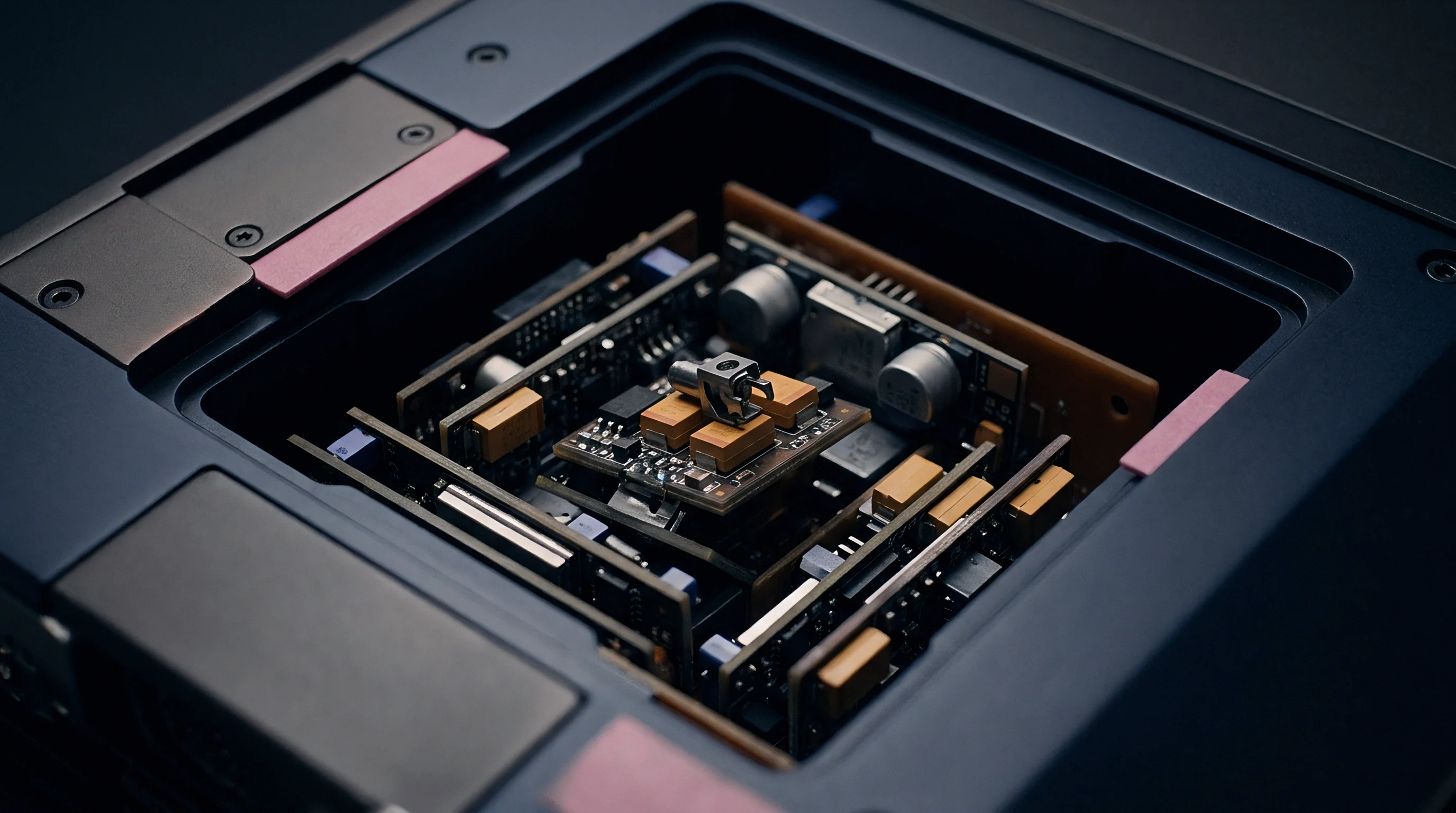
- Radio frequency shielding must enclose modulation and transceiver circuitry against external coupling, preventing host fields from inducing spurious radiation.
- Buffered modulation data inputs isolate internal signal processing from external bus overvoltages, keeping transmission frequency stable across severe interface ringing.
- Internal power supply regulation suppresses host board ripple down to certified tolerance bands, using linear or switching stages to stabilize final power amplifier input voltage.
- Antenna coupling specifications mandate integrated traces, unique non-standard connectors, or locked enclosures when common sub-miniature push-on interfaces are used.
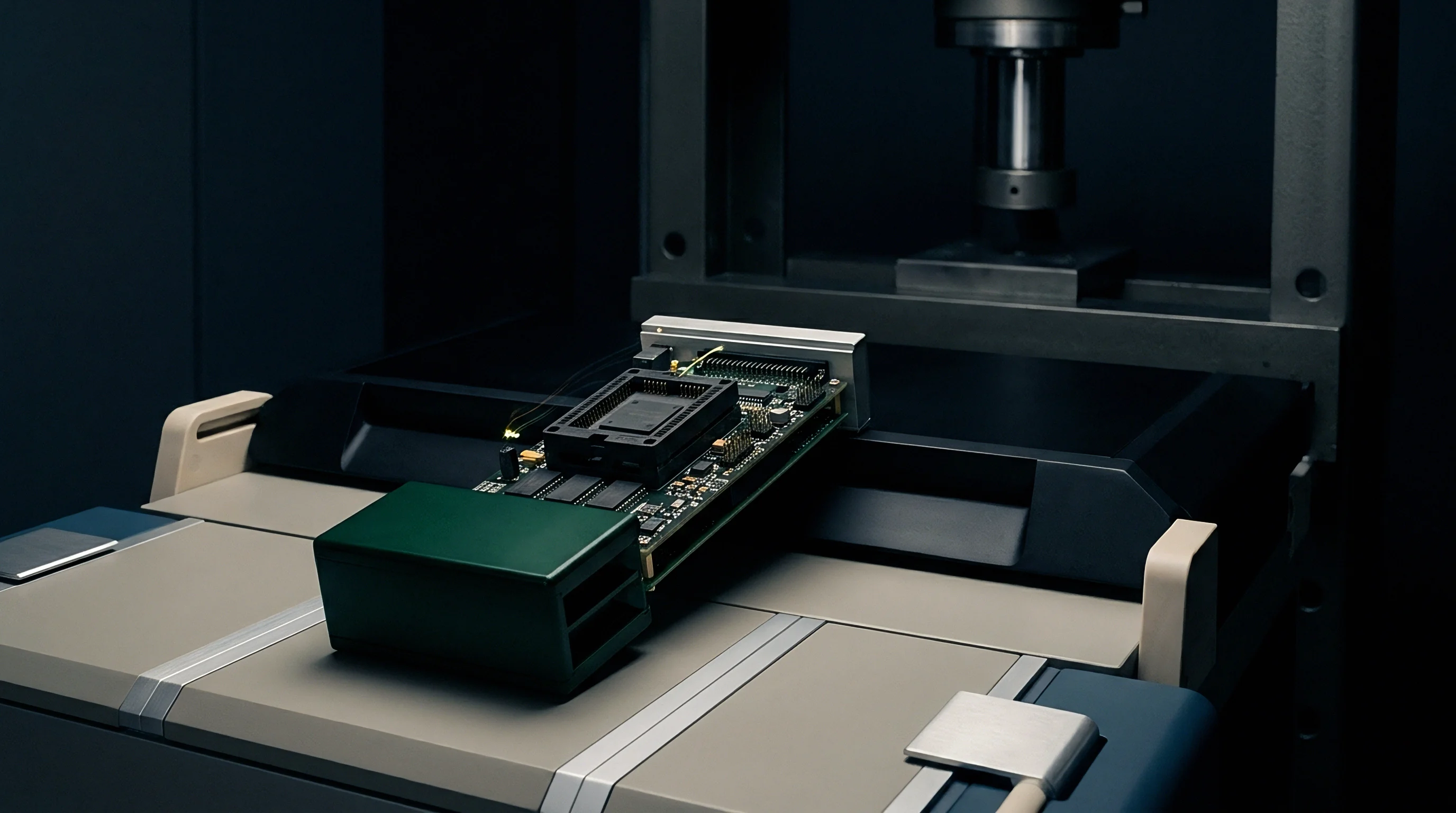
- Stand-alone test configurations prove emission compliance without host enclosure shielding, tested while extended outward on an evaluation jig.
- Physical or electronic labeling displays the registered equipment identifier unmistakably, ensuring markings remain visible to customs agents during physical dock examinations.
- Specific operational conditions detail installation parameters clearly in product documentation, governing trace routing, ground plane dimensions, and power settings.
- Radio frequency exposure compliance establishes safe operational separation distances across all configurations, requiring mobile classification data or localized SAR testing for handheld deployments.

Split and Limited Classifications
Failing any one of the eight requirements pushes hardware into restricted approval categories. Limited modular approval applies when an RF subassembly lacks autonomous power regulation or on-board shielding, requiring the Grantee to limit installation to its own host products or execute strict integration contracts with third-party partners.
Split modular approvals separate the radio control software from the physical radio front end, exchanging telemetry over controlled buses. Regulators mandate unique cryptographic handshakes to prevent unauthorized host operating systems from modifying modulation timing.
Transmitter certifications remain strictly tied to the physical hardware tested. Altering an internal amplifier, substituting a ceramic dielectric filter, or swapping a crystal oscillator breaks the grant, and the importer holds no authority to modify granted hardware without fresh agency filings.
Limited grants demand active importer oversight. The original Grantee assumes ongoing responsibility for validating that every host chassis provides sufficient power filtering and structural shielding. If a third party integrates a limited module without formal Class II Permissive Change filings, customs authorities treat the finished product as an uncertified transmitter.
Submitting a restricted radio for standard port clearance invites scrutiny. Customs software cross-references entry codes against the public database of equipment authorizations. A mismatch between limited grant conditions and the declared standalone commercial product triggers immediate physical impoundment.


Label

Housing Identifier Mechanics
Customs officers verify incoming cargo through visual inspection of physical enclosures. Under FCC rules, a host product integrating a certified radio module carries an exterior label stating Contains FCC ID: followed by the specific alphanumeric grantee code and equipment product code. The text must remain legible under ordinary lighting without optical magnification.
Markings must be permanent. Paper stickers without industrial-grade acrylic adhesives fail customs entry inspections when containers transit humid ocean routes; if labels peel, curl, or fade during transit, port inspectors treat the assembly as uncertified stock. Thermal transfer printing onto polyester substrates resists abrasion and solvent exposure during industrial handling.
Small host enclosures present spatial constraints. When an exterior surface is smaller than four square inches, the Commission allows the identifier to sit in the user manual, provided the battery compartment or accessible maintenance door displays the code. Permanent direct-part marking via laser etching eliminates label detachment risks entirely.
Canadian border controls enforce matching standards via Innovation, Science and Economic Development Canada requirements. The marking reads: Contains IC: followed by the assigned company number and Unique Product Number. Both English and French notices must accompany user instructions distributed within Canadian provinces.
| Jurisdiction | Regulatory Agency | Exterior Host Marking Requirement | Database Registry Reference |
|---|---|---|---|
| United States | FCC | Contains FCC ID: | Equipment Authorization System |
| Canada | ISED | Contains IC: – | Radio Equipment List |
| European Union | National Authorities | CE Mark with host identification | Internal Technical File |
| Japan | MIC | Giteki Mark with Symbol and Certificate Code | MIC Certified Equipment Search |
| South Korea | RRA | KC Mark with Basic Certification Identifier | National Radio Research Agency Registry |

Electronic Labeling Thresholds
Electronic display methods eliminate physical marking costs on digital assemblies. Under the FCC E-Label Act, devices incorporating integral three-line electronic screens may display the FCC ID through internal system menus. The user access pathway must not require special access codes, accessories, or proprietary software tools.
Access instructions must appear in the physical packaging. The accompanying user literature or product insert specifies the precise menu sequence: Settings, About Device, Regulatory Approvals. If a unit ships without charge in the main battery, a temporary external adhesive label must display the identifiers during customs inspection.
Customs officers will not boot products or supply bench power to inspect internal displays. If an electronic label is used, the outer bulk packaging, master shipping carton, or removable protective film must carry the full equipment identifiers. Failure to present outward markings on boxed stock results in automated cargo holds.
Electronic displays satisfy end-user disclosure rules, yet shipping cartons still mandate physical outward markings to clear visual customs examinations.
Audit procedures at the dock inspect both primary and transport packaging. A customs inspector will open a random master carton, unpack a retail package, and inspect the product face. Discrepancies between the shipping manifest, the outer retail box, and the internal e-label route the cargo directly to secondary evaluation.


Test

Radiated Spurious Emissions on Turntables
Integrating an approved module into a commercial chassis generates secondary RF couplings. The internal traces of the host motherboard act as accidental radiators when driven by digital bus clocks, making radiated emissions testing inside semi-anechoic chambers mandatory for the complete assembly.
The host assembly sits centered atop a non-conductive turntable inside a calibrated 3-meter or 10-meter chamber. An operator rotates the product through a full 360-degree sweep while an automated mast moves a broadband antenna between one and four meters in height. The spectrum analyzer logs worst-case field strength across both horizontal and vertical antenna polarizations.
Digital clock harmonics regularly couple into modular antenna feed lines. Even when the module passed autonomous tests, the finished host enclosure often radiates harmonics that violate CFR 47 Part 15 Subpart B limits. Running thorough chamber pre-scans identifies these peaks before volume customs clearance.
The testing laboratory establishes baseline noise floors using spectrum analyzers paired with low-noise pre-amplifiers. Measurements extend from 30 MHz up to the tenth harmonic of the highest internal operating frequency. Any peak within 3 dB of the statutory limit demands immediate circuit re-layout or local ferrite suppression.

Are Simultaneous Transmissions Handled Legally?
Modern commercial assemblies combine multiple modular transmitters within a single plastic housing. An industrial gateway frequently integrates a cellular modem, a dual-band Wi-Fi module, and a Bluetooth Low Energy transceiver. Each subassembly may possess its own autonomous modular grant, yet co-located operation alters radiation fields fundamentally.
Simultaneous transmission introduces intermodulation products. Mixing frequencies between co-located transmitters creates new non-harmonic spurious emissions, requiring verification sweeps while all transmitters radiate at peak rated power.
Regulatory rules forbid concurrent transmission unless supported by explicit grant conditions. The Federal Communications Commission defines co-location as transmitters operating within twenty centimeters of one another. Placing two distinct transceivers inside this boundary invalidates individual modular authorizations absent a permissive change filing.
Importers must assemble a composite technical evaluation. The testing house records radiated spurious traces with all transceivers active concurrently. If intermodulation products exceed general Part 15 limits, the host manufacturer files a Class II Permissive Change under the primary FCC ID or registers a new comprehensive composite system identifier.
Missing co-location documentation exposes the importer to charges of distributing unauthorized transmitters. When customs agents request the composite test summary and receive only isolated modular test reports, clearance halts immediately. A complete technical file bridges individual grants with systemic multi-radio evaluation.


File

The Grant Condition Boundary
Verifying modular authorization requires inspecting the original Grant of Equipment Authorization issued by an accredited Telecommunication Certification Body. The grant contains restrictive notes that bound the physical conditions of legality; operating outside these boundaries voids the authorization completely.
Antenna selection represents the most common boundary violation. Grants specify allowable antenna types, such as dipole, patch, or PIFA, along with the maximum permissible peak gain in dBi. Substituting an antenna with a different design or higher gain invalidates the grant, converting the modular transmitter into an uncertified device.
RF exposure notes define user separation distances. A grant classified under mobile conditions mandates a separation distance of at least twenty centimeters between the radiating structure and all human bodies. Integrating that same module into a handheld scanner or wearable device shifts the regulatory classification to portable use, mandating specific absorption rate testing.
Power output restrictions demand careful configuration. Grants state the peak conducted power across designated operating bands. If host firmware sets transceiver registers above the certified power tables to overcome internal enclosure attenuation, the radiated field violates statutory limits, exposing the host maker to regulatory sanctions.
| Filing Class | Modification Scope | Required Documentation | Approval Authority |
|---|---|---|---|
| Class I | Non-substantive component swaps with equal performance | Internal test logs and engineering justification | Grantee internal records |
| Class II | Hardware tweaks, new equivalent antennas, higher spurious traces | Full accredited laboratory test report | TCB or Direct FCC Filing |
| Class III | Software-defined radio firmware parameter alterations | Software security and radio parameter dossiers | TCB or Direct FCC Filing |
| New Application | Core transceiver chip change or major trace geometry redesign | Complete original qualification documentation | Accredited Certification Body |
Permissive Change Mechanics
Host manufacturers often alter peripheral circuits, antenna traces, or enclosure plastics after initial product launch. Regulatory frameworks accommodate minor engineering modifications through the permissive change system. Minor alterations that maintain radiated performance without increasing harmonic output fall under Class I Permissive Changes, requiring internal engineering logs rather than agency notifications.
Class II Permissive Changes require accredited laboratory testing and formal submission to the original Certification Body. A host manufacturer adding a new antenna type possessing equal or lower gain must execute radiated emission tests and submit the data through the original Grantee. The agency updates the public record without re-issuing the underlying identifier.
Commercial relationships complicate Class II filings. Third-party host integrators rarely hold the authorization credentials needed to file updates against a supplier’s FCC ID. If the original module vendor refuses to sponsor the permissive change, the host manufacturer must obtain a Change in Identification authorization under 47 CFR Section 2.933, creating a new equipment identifier under their own company grantee code.
This administrative transfer requires formal authorization letters from the original Grantee. The applicant files photographs showing the new model name and exterior housing label, while confirming that the underlying radio hardware, schematic design, and firmware modulation remain entirely unchanged. This procedure grants the host manufacturer control over subsequent Permissive Change filings.
Failure to track permissive change chains leaves importers vulnerable. Customs audits cross-reference current bill-of-materials revisions against original grant exhibits. An undocumented component revision identified during secondary examination stops freight movement until engineers produce certified test amendments.


Ledger
Worked Financial Comparison
Securing market clearance balances modular component premiums against full custom discrete RF engineering. Discrete radio designs incur steep up-front laboratory expenses, while pre-certified modular components demand continuous unit price premiums. The optimum financial path depends on cumulative production run volume.
Consider an industrial controller requiring 2.4 GHz and 5 GHz dual-band connectivity, evaluated across an initial production run of 10,000 finished units. The modular route utilizes a pre-certified surface-mount module costing $8.50 per unit, while the discrete design relies on a native transceiver chipset costing $3.20 per unit alongside $1.10 in passives, crystal filters, and matching networks, totaling $4.30 in bill-of-materials costs.
Laboratory testing charges differ sharply across the two architectures. The modular implementation requires host unintentional radiator testing under FCC Part 15 Subpart B and equivalent CE EMC testing under EN 301 489, costing $6,500 across five chamber days. The full discrete radio demands comprehensive intentional radiator qualification under FCC Part 15.247, Part 15.407, and dynamic frequency selection testing, incurring $38,000 in laboratory fees across four weeks of active scan time.
Administrative filing fees through Telecommunication Certification Bodies add $4,500 to the discrete approach, compared to zero additional agency fees for standard modular host integration. Engineering overhead for RF trace matching, layout optimization, and antenna simulation adds $22,000 to the discrete initiative, whereas modular integration consumes $4,000 in base host validation engineering.
| Cost Component | Pre-Certified Modular Route | Discrete Chipset Route |
|---|---|---|
| Unit BOM Hardware Cost | $85,000 ($8.50 per unit) | $43,000 ($4.30 per unit) |
| RF Layout and Simulation Labor | $4,000 | $22,000 |
| Accredited Laboratory Testing | $6,500 | $38,000 |
| TCB and Agency Filing Outlays | $0 | $4,500 |
| Regulatory Maintenance Contingency | $1,500 | $6,000 |
| Total Non-Recurring Engineering | $12,000 | $70,500 |
| Total First-Year Production Outlay | $97,000 | $113,500 |
| Net Landed Cost per Completed Unit | $9.70 | $11.35 |
At 10,000 units, the modular route delivers an overall savings of $16,500. The break-even inflection threshold occurs near 14,000 units, where lower discrete BOM costs offset the initial $58,500 testing and engineering premium. If production volume increases to 50,000 units, the discrete radio path yields significant landed cost advantages, saving over $150,000.
Selecting a modular part does not grant immunity from regulatory laboratory testing; host-level unintentional radiator verifications remain mandatory under FCC Part 15 Subpart B and European EMC directives. Every electronic enclosure requires testing regardless of module pedigree.

Retest Contingency Allocations
Budgets must absorb the financial cost of testing failures. Upwards of thirty percent of host integration campaigns encounter spurious harmonic failures during initial chamber scans, arising from switching power supplies, high-speed RAM traces, or poorly grounded display ribbon cables.
Chamber time costs between $250 and $450 per operational hour. A typical troubleshooting session runs two full eight-hour shifts, consuming up to $7,200 in chamber time alongside board rework charges. Redesigning enclosure plastics to incorporate conductive shielding gaskets adds tooling modification costs and slips commercial delivery windows by six weeks.
Missing a commercial delivery deadline triggers harsh financial consequences. Retail accounts impose chargeback penalties for unfulfilled shipment windows, while industrial supply contracts enforce liquidated damages ranging from one to five percent of the unfulfilled shipment value per week. Factoring in chamber contingencies safeguards project profitability.


Audit

Purchase Order Compliance Clauses
Preventing border disputes requires enforcing legal and technical compliance at the original purchase order contract stage. Buyers must construct purchase agreements with explicit regulatory warranties that bind overseas suppliers to accredited test validation, as reliance on unverified supplier product brochures guarantees customs friction.
An effective compliance clause explicitly shifts certification liability to the vendor. The contract stipulates that invoices remain unpaid until the supplier provides valid Grant documentation, accredited test reports, and verified integration instructions. If a shipment faces customs detention due to missing, falsified, or mismatched equipment authorizations, the supplier covers all port storage, legal representation, and return transit expenses.
A commercial purchase order remains defective unless it expressly binds final payment releases to verified customs clearance of the underlying radio authorization codes.
Contracts must prohibit unauthorized component substitutions. Component brokers frequently substitute passive filter components or antenna matching elements during volume production runs to mitigate supply chain pinches. A robust clause mandates formal engineering change notifications thirty days before production, accompanied by laboratory evidence confirming that RF emission traits remain completely unaltered.

Pre-Shipment Documentation Checklists
Importers prevent port impoundments by executing systematic audits prior to container sealing. The quality engineering team collects technical records into a unified compliance file, validating every reference against global customs databases to prevent container rejections at modern terminals.
- Verify that the exterior product label precisely mirrors the approved regulatory identifiers without typos or altered hyphens.
- Ensure the outer master shipping cartons bear the mandatory radio transmitter notices and country of origin declarations.
- Confirm that the commercial invoice explicitly cites the full model number and corresponding equipment authorization numbers.
- Confirm that the operating frequency range and conducted RF power output stated in user manuals match the grant records.
- Validate that the installed antenna matches the exact model, type, and peak dBi gain specified in the primary grant exhibits.
- Verify that user manuals contain the required statutory operational warnings regarding RF exposure and non-interference requirements.
- Confirm that internal and external product photographs in the agency dossier match the physical units packed inside the shipping boxes.
Importers should audit these nodes at the manufacturing facility prior to factory exit. Once freight boards an ocean vessel or cargo aircraft, remediation options drop to zero. A systematic checklist ensures cargo moves smoothly through port barriers into active distribution channels.
Supply agreements incorporate this standard clause: Supplier warrants that all products delivered under this Agreement comply fully with all applicable radio frequency and electromagnetic compatibility regulations of the destination market, including the retention of valid, unexpired equipment authorizations, and Supplier agrees to defend, indemnify, and hold Buyer harmless from any port charges, demurrage, fines, or losses resulting from regulatory non-compliance.