Port Border Inspection Workflow for Radio Frequency Hardware Clearance Compliance
Pre-shipment verification of FCC grants and CE documentation prevents costly port customs detentions and container freight storage demurrage fees.


Gate
Radio transceivers arriving at container terminals face immediate automated customs scrutiny. Automated systems scan entry summaries for tariff codes tied to radio hardware, using Harmonized System classification codes on manifests to flag intentional radiators for port processing engines. Specific subheadings under Chapter 85 ~ covering wireless transceivers, transmission apparatus, and modular assemblies ~ trigger automatic compliance checks against national frequency tables and authorized equipment databases.
If an entry lists a wireless HS code without a matching equipment grant registration string, the clearance system stops automated processing. Cargo drops out of green-channel manifest handling straight into red-channel administrative detention.
When reviewing import paperwork at container freight terminals, missing regulatory registration codes explain most immediate detentions. Port authorities cross-reference manifest declarations against spectrum databases maintained by regional communications regulators. In the United States, customs queries the Federal Communications Commission Equipment Authorization System database for declared FCC IDs.
European inspectors check maritime bills of lading against the EU Declaration of Conformity repository and importer records. Asian ports ~ whether operating under Japanese Ministry of Internal Affairs and Communications rules or Chinese State Radio Regulatory Commission requirements ~ verify Technical Regulations Conformity Certification numbers and CMIIT approval codes in real time. Any discrepancy between commercial invoices, model numbers, and official grant records holds the cargo at the dock.

Harmonized System Classification Flags for Transceivers
Customs screening relies heavily on global product codes to spot intentional radiators. Importers often misclassify wireless gear under generic digital processor categories to bypass regulatory flags. HS code 8517.62 covers machines for receiving, converting, and transmitting voice, images, or data, including switching and routing gear.
Subheading 8517.69 covers broader transmission apparatus, while 8517.79 covers electronic subassemblies and modular radio cards. Automated systems link these subheadings directly to spectrum rules; declaring any of them opens mandatory fields requiring valid equipment approval numbers, grantee codes, and reference numbers for country-of-origin technical construction files.
Radio hardware gets no leeway at customs. Screening algorithms flag incomplete filings instantly, and minor documentation mismatches freeze cargo on the spot.
Attempts to clear transceivers under non-radio subheadings risk severe civil penalties. Classifying a device under HS 8471.80 as a generic expansion unit when it incorporates Bluetooth Low Energy or Wi-Fi 6E radios counts as an improper entry declaration. Screening software uses natural language processing to check commercial invoice line items for terms like Wi-Fi, Bluetooth, Zigbee, radar, transceiver, transmitter, RF module, or antenna.
When descriptive text conflicts with a non-radiating tariff code, the system generates an automated hold, locking the container in place while customs officers issue formal requests for verified compliance files.
Article 10.8 of the European Union Radio Equipment Directive obliges importers to print operating frequency bands and maximum transmitted radio-frequency power directly on the secondary packaging.

Red Channel Routing at Container Freight Terminals
Customs risk engines weigh commercial invoices against national databases automatically. Once a manifest triggers a red-channel flag, terminal operators move the container out of general de-consolidation stacks and into a bonded inspection facility. Physical access drops to licensed customs brokers and border officers, while detention costs start racking up immediately ~ including gate fees, daily chassis rentals, and yard re-handling charges.
Red-channel routing demands total documentation transparency from the importer of record. Inspectors verify that the legal entity importing the transceivers matches the grantee or authorized representative listed in official databases. If an overseas manufacturer holds the grant, the importer must produce a formal authorization letter from that grantee granting permission to market, distribute, and clear that model number.
Without that letter, officials treat the cargo as unauthorized gray-market goods or potential trademark infringement.

Documentary Triangulation of Imports
Cross-referencing bills of lading with equipment grants quickly exposes paperwork discrepancies. Inspectors focus on three primary sets during documentary review: shipping manifests, commercial invoices with packing lists, and regulatory grants. Model numbers, trade names, and technical specs on the invoice must match certified grant details exactly.
A mismatch as small as a trailing hyphen, an unlisted regional suffix, or a modified sub-model identifier is enough for inspectors to reject the submission.
Reviews go deeper than simple model matching. Officers check the technical details inside accredited test reports attached to compliance dossiers, ensuring declared operating frequencies fall within the destination country’s legal spectrum allocations. Transceivers tuned to unauthorized frequencies ~ like non-compliant 5.8 GHz UNII bands in restricted jurisdictions ~ face flat rejection.
Importers must supply a full technical construction file with block diagrams, operational write-ups, and label schematics to show that physical goods match certified records.
Although underlying silicon may carry a modular grant, the finished commercial assembly still requires its own regulatory filing before arriving at customs.


Inspection
Border authorities send specialized field personnel directly to cargo areas for physical sampling, moving past paper checks into hardware teardowns and spectrum measurements. Major commercial ports house dedicated electromagnetic labs equipped with calibrated RF test gear. Inspectors pull sample boxes from detained pallets following statistical sampling rules, comparing silkscreen markings, enclosure builds, PCB layouts, and radiated RF emissions against filed test reports.
When evaluating incoming hardware, marking non-compliance is the single most common reason customs rejects a shipment. Officers inspect enclosure markings under high-magnification optics and calibrated grids. Symbols must follow strict geometric proportions: the CE mark requires exact semi-circular curves aligning on specific grid intersections, while FCC IDs must be legibly sized and permanently affixed or laser-etched onto the body.
Japanese Telec/MIC marks require the registered logo alongside the unique equipment code. Missing, faint, or distorted marks lead straight to physical seizure.

Near Field Screening at Port Customs Laboratories
Port labs run preliminary RF evaluations inside bonded inspection rooms using portable, battery-powered spectrum analyzers paired with calibrated magnetic and electric field sniffer probes. Inspectors power up sample units using local supplies or batteries and force them into active transmission modes. Probing along PCB traces, enclosure seams, and antenna ports reveals fundamental frequencies, spectral mask shapes, and unintended spurious emissions.
Spectrum analyzers quickly catch uncertified emissions, while swapped antennas distort expected field patterns. Even readable labels cannot cover up technical non-compliance.
Technicians compare measured near-field peaks against operational bounds in the test report. If an analyzer picks up peak transmissions on unauthorized bands or spots spurious harmonics exceeding statutory limits, the container gets a formal non-compliance citation. Screening also checks that dynamic frequency selection functions on radar-shared 5 GHz Wi-Fi bands.
Gear attempting to transmit on restricted military or weather radar frequencies without active radar detection is classified as hazardous radio equipment, leading to confiscation and federal enforcement.
| Radio Band | Border Screening Instrument | Threshold Limit | Applicable Standard Clause | Action on Exceedance |
|---|---|---|---|---|
| 2.4 GHz ISM | Handheld Spectrum Analyzer & Near-Field Probe | 20 dBm EIRP peak | ETSI EN 300 328 Clause 4.3.2.2 | Immediate entry suspension and chamber quarantine |
| 5.15 to 5.35 GHz UNII | Swept Receiver with Horn Antenna | 23 dBm EIRP with DFS requirement | FCC Part 15.407(h)(2) | Customs seizure for unauthorized radar band transmission |
| 5.725 to 5.850 GHz ISM | Portable Power Meter | 30 dBm conducted peak | SRRC Regulation Article 4 | Detention for uncertified high-power transmission |
| 57 to 71 GHz mmWave | Waveguide Antenna Converter | 40 dBm EIRP | ETSI EN 305 550 Clause 5.2 | Freight hold pending technical dossier review |

Housing Markings and Physical Labeling Audit
Enclosure compliance checks demand detailed verification of regulatory artwork, serial numbers, and approval IDs. Because rules vary across regions, label layouts require careful review before packaging. The device housing must feature every mark required by the destination country’s telecom authority.
Inspectors test etched, stamped, molded, or adhesive labels with solvent wipes to ensure markings will not rub off or degrade during commercial handling.
Physical housing inspections at ports regularly turn up several common failure modes:
- Deceptive CE Marking Geometry ~ The letters C and E lack correct semi-circular grid spacing, mimicking European Conformity without satisfying legal dimension rules.
- Omitted FCC Identifier String ~ Secondary host enclosures omit the mandatory FCC ID prefix, listing only an internal inventory serial number.
- Truncated MIC Registration Code ~ Japanese radio approval labels leave off the equipment category prefix before the certificate registration number.
- Unreadable Laser Etching Depth ~ Shallow laser etching on metallic housings leaves regulatory symbols unreadable under standard inspection lighting.
Label audits extend to secondary packaging and master shipping cartons. Under the EU Radio Equipment Directive, outer retail packaging must display the CE mark, manufacturer contact details, a single-point legal address, and explicit operating frequency parameters. Omitting operational specs from commercial packaging halts customs clearance even when the internal circuit board has valid technical approvals.
Radiated spurious emission scans conducted at a three-meter test distance yield a 6 dB clearance below the CISPR 32 Class B limit line in passing port laboratory audits.

Antenna Substitution Verification in Port Audits
Test reports define specific radiator configurations that bound a product’s legal operating limits. Inspectors tear down sample units to inspect antenna assemblies against photos, gain tables, and construction drawings in the filed lab report. Antenna gain, radiation patterns, trace geometry, and connector types are critical parameters that cannot be modified without formal re-testing.
Swapping a certified internal PCB trace antenna for a high-gain external dipole changes the system’s equivalent isotropically radiated power. If inspectors find unapproved antenna alterations, the host device loses its compliance authorization. Replacing standard reverse-polarity SMA connectors with off-the-shelf standard SMA fittings violates the anti-tampering rules in FCC Part 15.203, leading customs to detain the shipment for illegal antenna substitution and uncertified power amplification.
Section 15.19(a)(3) of Title 47 in the Code of Federal Regulations requires explicit interference statements on host housings, making a single missing sentence ground for entry rejection.


Discrepancy
Discrepancies between modular component certifications and finished host products create major regulatory exposure. Importers often buy pre-certified RF modules, assuming an integrated wireless module grants automatic compliance to the final host device ~ an assumption that frequently leads to customs holds. A modular grant covers only the specific radio subassembly under original test conditions.
Placing that module into a new enclosure ~ surrounded by metalwork, power supply circuits, digital processors, and adjacent antennas ~ alters its electromagnetic emissions profile.
When evaluating modular grants against physical host assemblies, scope violations show up quickly. Customs agencies pay close attention to host products relying on modular approvals. If the host chassis shifts RF shield placement, alters trace routing, adds co-located cellular or Wi-Fi transmitters, or places an antenna within 20 centimeters of human tissue without SAR testing, the modular grant no longer applies.
The finished product requires host-level testing and updated regulatory filings before customs will clear it.
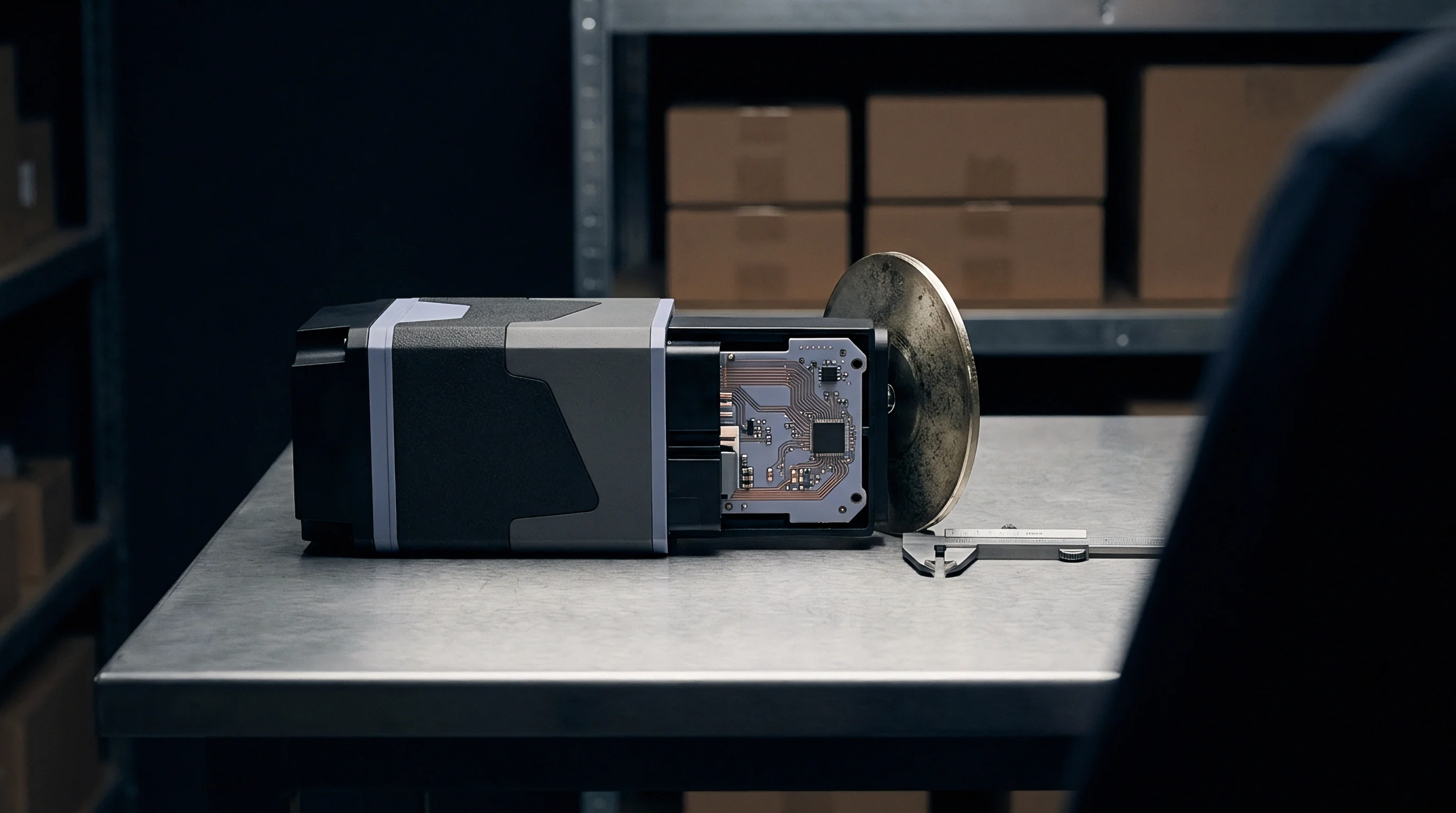
Modular Scope Drift and Host Enclosure Losses
Grant conditions issued by certification bodies set strict limits for RF subassemblies. Full modular grants require a radio subassembly to have its own RF shield, onboard voltage regulation, and dedicated antenna interface. Restricted modular grants add integration constraints, requiring the original grantee to maintain control over how the module is integrated into hosts.
Inspectors check the Grant of Equipment Authorization notes to see whether those integration conditions hold true in the physical product.
Modular grants are narrow by design. Host enclosures modify antenna radiation patterns, and unapproved integration changes void market access.
Metal enclosures often create coupling losses and parasitic radiation. Inside an industrial aluminum chassis, internal reflections alter antenna matching impedance and elevate harmonic emissions. Plastic housings introduce a different problem: unshielded noise from digital processors couples into the receiver path, producing broadband spurious emissions.
Customs lab testing catches these emission spikes, showing that the assembled product fails basic electromagnetic compatibility rules despite containing a certified wireless module.

Which Permissive Change Triggers Border Rejection?
Regulatory bodies set clear thresholds for hardware revisions that require re-certification. Changes in passive component values, trace layout adjustments, or component swaps fall under permissive change rules. Under FCC guidance, Class I Permissive Changes cover minor modifications that do not degrade RF performance or raise radiated emissions, requiring no TCB filing.
Class II Permissive Changes cover design modifications, antenna swaps, or host changes that increase emissions while staying within legal limits ~ requiring accredited lab re-testing and formal TCB approval.
Importers arriving at customs with hardware modified under undocumented Class II changes risk immediate seizure. If inspection uncovers antenna swaps or layout revisions absent from official grant databases, officials reject claims of Class I exemption. The importer must show a Class II Permissive Change grant issued before the shipment’s bill of lading date.
Retrospective filings completed after detention rarely satisfy authorities, who view pre-grant importation as a trade violation.
Verifying host modular integration compliance requires several core checks:
- Antenna Gain Matching ~ Confirm peak directional gain on the host antenna does not exceed the maximum gain in the original module grant report.
- Co-Location Spurious Assessment ~ Verify that operating multiple transmitters simultaneously does not create intermodulation products above radiated emission limits.
- Enclosure Shielding Integrity ~ Check that metal host shielding maintains RF isolation without parasitic coupling into trace antennas.
- Body SAR Compliance Verification ~ Ensure portable devices used within 20 centimeters of human tissue carry valid specific absorption rate test reports.
A 2.4 dBi patch antenna substitution increased peak EIRP by 3.1 dB, driving harmonic emissions past the FCC Part 15.247 radiated limit.

Electronic Labeling Accessibility and Firmware Lockout
Digital displays allow manufacturers to replace physical markings with software menus. Rules under statutes like the US E-LABEL Act and European RED directives permit devices with built-in screens to display FCC IDs, CE marks, and warning notices electronically. However, access rules are strict: inspectors or users must be able to reach compliance screens within three menu steps from the main system screen.
Officers detain e-labeled devices if accessing regulatory menus requires administrative passwords, specialized diagnostic tools, or live network connections. If hardware arrives unconfigured or with drained batteries that prevent booting, inspectors treat the shipment as unlabeled cargo. Similarly, factory firmware updates that accidentally drop or obscure compliance screens render whole shipments non-compliant on arrival.
Whether international authorities will harmonize e-label access standards to let customs inspect compliance without booting locked operating systems remains an open question.


Detention
Customs holds on non-compliant radio hardware trigger immediate financial and logistical problems. When inspectors issue a red-channel hold or formal detention notice, freight stops moving. Containers move into bonded storage managed by terminal authorities or private warehouse operators.
While bonded storage secures the cargo during legal and technical reviews, daily storage fees, administrative fees, and escalating demurrage accumulate rapidly.
Bonded storage fees stack up daily, and demurrage rates escalate quickly. In many cases, re-exporting non-compliant cargo is the only way to cap losses.
Costs tied to customs holds escalate rapidly. Ports usually grant three to five calendar days of free time after discharge. Once that window closes, ocean carriers charge container demurrage to discourage long stays, while terminal operators bill separate daily storage charges.
Combined daily fees can quickly surpass the wholesale value of the hardware inside, forcing rapid decisions under tight schedule pressure.

Bonded Storage Escalation and Carrier Demurrage Mechanics
Terminal operators bill daily storage penalties as soon as an administrative hold is filed. Demurrage uses tiered rate structures that double or triple as time drags on. Over the first five days past free time, major ports average $150 to $250 per TEU daily.
From days six through ten, rates routinely jump to $350 to $500 per container day. After ten days, emergency congestion surcharges can push daily costs above $800 per container.
Demurrage is only part of the bill. Importers also face chassis fees, transfer costs, drayage charges, and legal fees. Bonded warehouses charge handling fees for moving pallets into inspection bays, plus labor rates for supervised unpacking and repacking.
A 30-day detention on a single 40-foot container of wireless gear easily generates over $30,000 in accumulated penalties.
| Remediation Option | Labor & Filing Fee | Daily Storage Rate | Total Resolution Lead Time | Risk of Forfeiture |
|---|---|---|---|---|
| Physical Relabeling in Bond | $4,500 base supervision fee | $150 per pallet day | 12 to 18 business days | Moderate |
| Expedited Class II Permissive Filing | $8,200 TCB emergency fee | $220 per container day | 20 to 35 business days | Low |
| Partial Re-Exportation to Origin | $6,000 freight return fee | $180 per container day | 14 to 25 business days | Minimal |
| Customs Supervised Destruction | $3,200 disposal execution fee | $250 per container day | 45 to 60 business days | Absolute |

Remediation Pathways in Bonded Customs Warehouses
Importers dealing with customs holds usually choose between four recovery strategies, depending on the violation type, shipment value, and whether local authorities allow supervised corrective action.
Securing detention relief requires specific documentation:
- Telecommunication Certification Body Attestation ~ A formal letter from an accredited TCB confirming that a pending permissive change matches the hardware revision held at the port.
- Customs Bond Amendment Endorsement ~ An updated surety bond covering potential regulatory fines during in-bond relabeling.
- Technical Construction File Audit Extract ~ Test report excerpts showing radiated spurious emissions meet local regulatory limits.
- Importers Declaration of Conformance Letter ~ A binding declaration signed by an officer of the importing company accepting corporate liability for host integration compliance.
For basic marking errors, physical relabeling inside the bonded facility offers a way out. The importer requests permission for authorized workers to enter the site under customs oversight. Staff apply overlay labels, re-etch compliance strings, or repack retail cartons.
Customs then re-inspects the lot to lift the hold. If the issue is a fundamental spectrum failure rather than labeling, relabeling will not help, leaving re-exportation or destruction as the only options.

Financial Comparison of Clearance Failure Remedies
Calculating landed costs for non-compliant gear means balancing daily demurrage against filing and logistics fees. Re-exporting allows importers to return transceivers to factory sites for rework, avoiding seizure or forfeiture. But returning cargo requires export authorizations, return freight payments, and settling all accrued storage fees first.
If product value is low or technical fixes are impossible, importers often choose supervised destruction, paying disposal fees to licensed electronic waste handlers.
Filing an emergency regulatory application while cargo sits in bond is a risky gamble. Lab testing and TCB reviews take weeks, during which storage charges accumulate continuously. If the TCB rejects the filing or requires board modifications, demurrage costs add to the loss of cargo that must be destroyed anyway.
Sourcing managers need to evaluate total financial exposure carefully before funding drawn-out appeals at port facilities.
Remediating physical labeling errors while cargo rests inside a bonded port facility costs significantly more than conducting pre-shipment clearance audits at the assembly line.
The importer absorbed a $34,800 demurrage charge at the Port of Long Beach when a three-week delay securing a TCB grant update kept two thousand industrial gateways pinned inside a bonded warehouse.


Release
Ensuring smooth customs clearance for RF products requires pushing verification upstream to manufacturing sites. A reliable clearance workflow combines pre-shipment audits, explicit vendor compliance clauses, and electronic data interchange integration with customs networks. Assembling complete technical construction files and embedding regulatory IDs into manifest metadata before ships depart eliminates red-channel holds and keeps launch schedules on track.
Upstream audits catch issues early, and complete compliance dossiers keep delivery timelines intact.
Moving from reactive border fixes to proactive supply chain management requires complete pre-shipment document alignment. Importers of record should maintain centralized digital repositories for test reports, regulatory grants, factory quality records, and manifest metadata. When cargo arrives, automated customs engines verify pre-filed declarations instantly, allowing goods to bypass physical inspection stacks and clear terminals within hours of discharge.

Pre-Shipment Compliance Dossier Architecture
Building a complete regulatory package before containers ship prevents surprises at the border. A complete dossier contains every technical and legal document needed for customs scrutiny, linking purchase orders directly to accredited lab test results and official grants. Teams should validate dossier contents before authorizing factory release or issuing bills of lading.
A complete compliance dossier includes six core elements: Grants of Equipment Authorization from regulatory bodies; accredited test reports covering EMC, spectrum, safety, and SAR; bills of materials for critical RF components; high-resolution photos of internal board builds and label locations; factory quality logs verifying test station calibration; and signed declarations of conformity from corporate officers. Storing these files in a central digital portal ensures fast response when customs issues requests for information.

Single Entry Authorization and Electronic Manifest Integration
Modern logistics frameworks allow direct electronic submission of regulatory authorization codes. Customs platforms operate through electronic data interchange systems like the Automated Commercial Environment in the US or single-window port logistics systems in Europe and Asia. Importers should mandate that customs brokers enter full regulatory metadata into entry summaries before vessels arrive.
Electronic manifest integration requires transmitting structured compliance data into customs databases, including exact approval codes, country of origin, manufacturer legal entities, and registered importer authorization numbers. When the manifest engine matches these entries against official databases, it issues an automated release before container offloading. Pre-clearance turns regulatory checks into a background digital transaction, allowing drayage trucks to haul freight straight to distribution centers without bonded storage delays.

Long Term Supply Chain Risk Mitigation
Binding compliance mandates protect importers against unapproved vendor changes. Suppliers and design manufacturers often adjust bills of materials to cut costs or navigate silicon shortages. Unannounced component swaps, passive value changes, or antenna substitutions can instantly invalidate regulatory grants.
Contracts must hold suppliers financially liable for customs fines, demurrage, and re-export costs caused by unauthorized hardware modifications.
Long-term risk management also relies on unannounced factory audits and independent lab sampling. Sourcing teams should pull production units off assembly lines for lab pre-scans, checking radiated spurious emissions, occupied bandwidth, and label durability against certified prototypes. Continuous pre-shipment controls turn regulatory compliance from a vulnerable bottleneck into a reliable commercial advantage.
A verified pre-shipment compliance package eliminates container terminal delays, turning physical inspections into routine automated manifest verifications.