Jurisdictional Conflicts in Cross Border Tooling and Equipment Recovery Proceedings
Cross-border tooling recovery requires local asset registry filings, physical marking, and explicit statutory lien waivers to defeat local retention claims.

Anvil

Physical Identification and Subcontractor Custody Realities
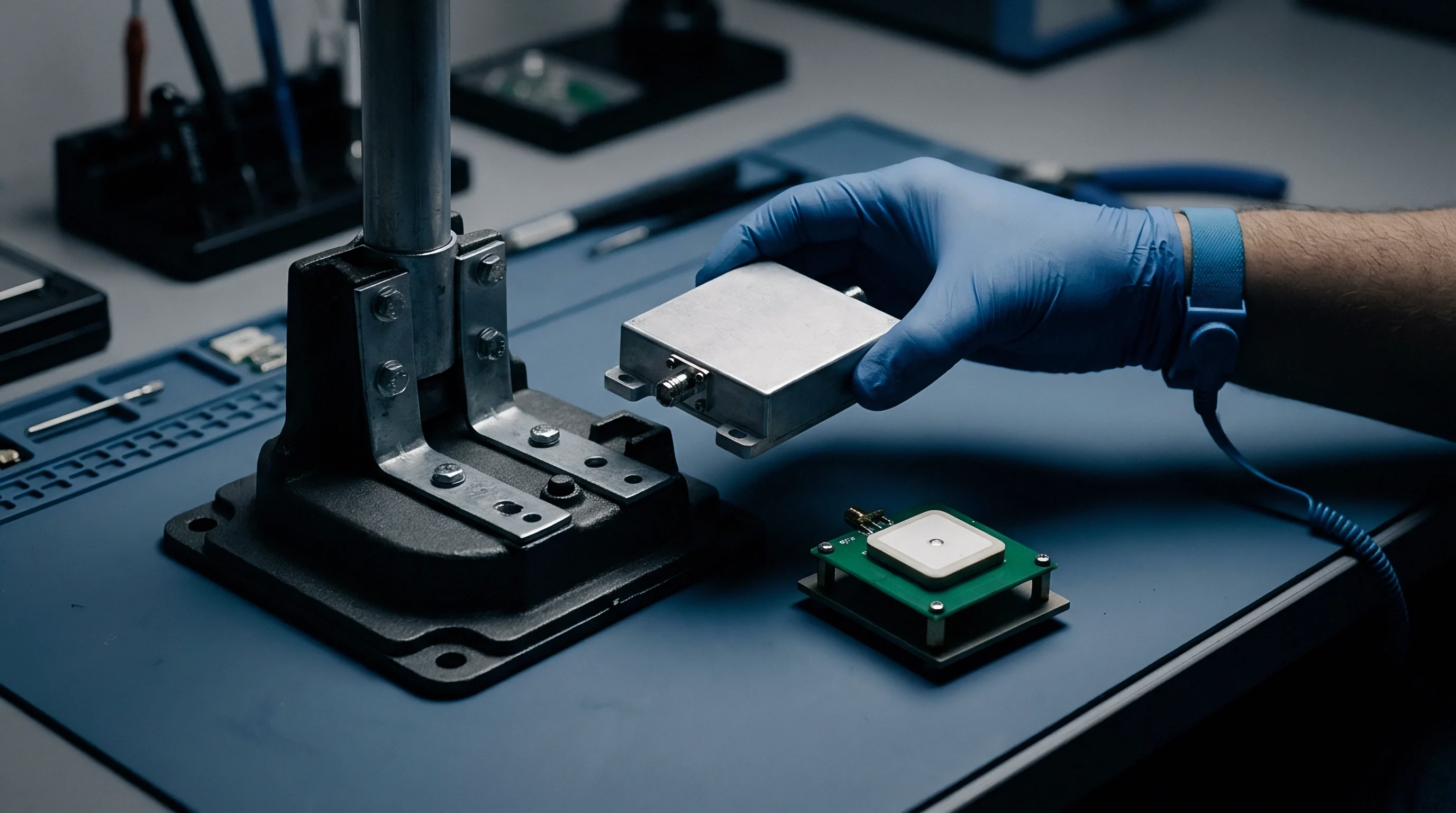
Cross-border tooling recovery efforts break down most frequently on the factory floor before legal proceedings ever reach a courtroom. A multi-cavity injection mold, a hardened progressive stamping die, or a specialized RF automated test fixture represents a physical asset that must be precisely identified to be claimed. When an original equipment manufacturer demands the return of proprietary production equipment from an overseas supplier, the immediate challenge lies in physical verification.
Tooling drawings specify target dimensions, steel grades such as P20 or H13, and runner configurations, but physical assets on a factory floor rarely display explicit, unalterable proof of ownership unless strict physical marking protocols were enforced at initial qualification.
Factory audits routinely reveal tools stripped of external brass ownership plates, re-marked with local factory asset codes, or modified to fit alternative press platen configurations without buyer consent. Contract manufacturers operating under tight margin pressure often farm out specific processing steps, such as wire electrical discharge machining, EDM texture etching, or specialized PVD coating, to unvetted tier-3 sub-tier facilities. Under these conditions, physical custody drifts away from the primary contractor.
The physical asset sits inside an unregistered third-party workshop, outside the direct reach of local court bailiffs executing inspection warrants.
Audit procedures require explicit, permanent physical attribution directly on the tool base and core assemblies. Machine-stamped serial numbers, deep-engraved ownership legends on non-wearing steel surfaces, and embedded passive RFID tags sealed in high-temperature epoxy provide the physical baseline needed to establish identity during a court-ordered asset seizure.
- Unstamped core inserts lack permanent asset identifiers, allowing suppliers to claim the core belongs to an unrelated customer project.
- Subcontractor shop drift occurs when tools leave the primary facility without transfer documentation, breaking the chain of physical custody.
- Unapproved cavity modifications alter tool geometry away from approved CAD models, rendering third-party identification matching inconclusive.
- Missing maintenance logs prevent verification of remaining shot life and historical cycle counts during physical asset valuations.
Equipment documentation packages must match the physical tool resting on the shop floor down to the cooling line quick-disconnect fittings and ejector pin layouts. Discrepancies between historical tool approval sign-offs and physical tooling state give recalcitrant suppliers sufficient ambiguity to delay court-ordered physical inspections.
When pressed for physical access during preliminary recovery discussions, overseas facility managers frequently report that the requested injection mold was dismantled for routine surface repolishing at an off-site specialist and cannot be inspected in assembled form.

Statute
Lex Situs Conflicts and Statutory Possessory Rights
Legal agreements governing cross-border hardware manufacturing almost universally select a sophisticated neutral law to govern contractual disputes. English law, New York law, or Singapore law frequently appears in master services agreements. While choice-of-law clauses bind the contracting parties to contract claims, the physical recovery of tangible personal property operates under an entirely different legal doctrine: lex situs, the law of the place where the property is physically located.
Regardless of whether a supply agreement specifies Singapore law and arbitration, a court or enforcement authority sitting where the tool physically resides applies local property law to determine title, possessory rights, and statutory liens. Civil law jurisdictions across East Asia, Latin America, and Continental Europe recognize broad possessory liens, mechanics’ liens, and retention rights that override contractual choice-of-law provisions.
| Jurisdiction | Statutory Basis | Lien Trigger Conditions | Impact on Asset Seizure |
|---|---|---|---|
Under statutory retention regimes, a contract manufacturer facing contract termination can fabricate or inflate claims for unpaid setup expenses, yield shortfall adjustments, or unrecouped engineering change hours. By asserting a statutory lien over the tooling under local law, the supplier transforms a breach of contract dispute into an asset retention action, forcing the buyer into local litigation to release the tools.
A local statutory retention right asserted under the law of physical asset location overrides contractual choice-of-law provisions governing title transfers.
Commercial contracts that fail to align explicit title reservation clauses with local property registration mechanisms leave buyers exposed to long possessory standoffs. Overseas courts do not enforce foreign court orders or arbitral awards that purport to strip a local entity of statutory lien rights without local judicial review and adequate financial security posted in local currency.
Failing to account for local possessory retention statutes when structuring international supply agreements converts routine commercial disputes into prolonged asset lockouts that halt downstream production lines.


Customs

Cross-Border Border Controls and Duty Status Recovery
Extracting tooling from an overseas contract manufacturing facility and securing physical custody represents only half of the operational challenge. Moving recovered molds, test equipment, or CNC fixtures across international borders introduces severe regulatory checks administered by local customs agencies and export control regimes.
Production equipment imported into manufacturing hubs often enters under specific duty-suspension schemes, processing trade regimes, or temporary import permits. Under these structures, the supplier imported the machinery tax-free or at preferential tariff rates subject to the condition that the equipment remains dedicated to exporting finished goods. Unilateral extraction of tooling without formal customs deregistrations exposes the asset to immediate seizure by customs authorities for tax evasion and tariff fraud.
- Conduct a comprehensive customs status audit to identify historical import declaration forms, duty payment receipts, and tariff classifications assigned to each asset.
- Obtain a formal valuation certificate from a certified local asset appraiser to establish current depreciated market value for customs declaration calculations.
- File a formal application for re-export or equipment transfer with the regional customs office, attaching original purchase contracts, bill of lading documentation, and bailment agreements.
- Settle outstanding back-taxes, VAT adjustments, or customs processing fees triggered by early termination of processing trade status.
- Secure export clearance permits, verifying that high-precision tooling, multi-axis motion controllers, or optical inspection rigs do not trigger dual-use export control restrictions.
Customs officials operate independently of civil judicial decrees. An injunction or replevin order issued by a local court directing a contract manufacturer to surrender a mold does not compel customs authorities to grant an export declaration. If export documentation lists the local contract manufacturer as the declarant of record, the buyer cannot export the asset without obtaining administrative transfer approvals from local trade ministries.
Customs export clearances require independent administrative filings that operate outside civil court asset recovery decrees.
Export control laws present further complications when recovering high-specification test jigs or semiconductor packaging equipment. Equipment containing advanced field-programmable gate arrays, specialized high-frequency RF components, or multi-axis CNC stages requires dual-use export licences before departing the host country. Attempting to move un-cleared equipment through an international port results in criminal impoundment.
Contracts must explicitly mandate that suppliers execute all necessary customs export documentation within five business days of receiving a formal asset return request.


Remedy

Judicial Pathways, Emergency Relief, and Enforcement Realities
When negotiations break down and physical asset retention persists, buyers must select an enforcement forum capable of granting immediate relief. International commercial arbitration offers enforceable awards under the New York Convention, but arbitral tribunals take months to form, appoint arbitrators, and issue procedural orders. Specialized emergency arbitrator mechanisms inside institutional rules, such as those of the HKIAC, SIAC, or ICC, shorten this timeline to days, producing interim emergency orders for asset preservation.
Emergency arbitral orders face enforcement friction when presented to local onshore courts. Onshore enforcement of a foreign emergency arbitral award requires local court recognition, during which recalcitrant suppliers can hide, transfer, or dismantle the contested tooling. Buyers requiring immediate physical intervention often turn to local court ex parte replevin or provisional seizure actions, bypassing offshore arbitration to secure immediate bailiff action.
How Do Foreign Interim Orders Operate in Local Courts?
Local courts in key manufacturing jurisdictions enforce local provisional measures far more swiftly than foreign orders. An ex parte preservation order issued by a court sitting where the tooling resides allows court enforcement officers to lock down a production facility, apply physical seals to molds, or supervise the immediate extraction of fixtures to a neutral bonded warehouse.
| Enforcement Mechanism | Average Time to Asset Seizure | Local Court Cash Bond Obligation | Risk of Asset Dissipation |
|---|---|---|---|
Local courts require foreign plaintiffs to post substantial cash security or local bank guarantees before executing provisional asset seizures. Security deposits cover potential damages suffered by the local supplier if the court subsequently finds the asset recovery action unjustified. Financial strategy must account for cash reserves locked in court escrows for the duration of recovery proceedings.
Preparation of evidence dictates success in local provisional proceedings. Applications must include notarized and legalised copies of original supply agreements, certified translations of technical specifications, photographic proof of physical ownership marks, and verifiable records of prior demand notices.
Litigation teams preparing for emergency asset recovery actions operate against a specific procedural checklist:
- Notarized power of attorney documents executed by legal representatives and legalised through diplomatic channels or apostille.
- Certified title trail dossiers demonstrating original purchase orders, bank wire payment receipts for tooling fabrication, and sign-off acceptance certificates.
- Local currency cash deposit arrangements secured through regional banking partners to satisfy mandatory court security deposits immediately upon filing.
- Independent logistics escorts engaged to transport recovered tooling from factory gates to secured third-party warehousing under bailiff supervision.
Whether local judicial systems execute provisional asset seizures fast enough to prevent a vendor from destroying complex internal core components remains a constant practical risk during contested proceedings.


Clause

Contractual Design for Rapid Operational Asset Recovery
Preventing cross-border tooling lockouts requires drafting supply contracts that anticipate the precise failure modes of local property law, customs rules, and jurisdictional conflicts. Standard title-retention clauses that rely on broad assertions of global ownership fail when confronted with local statutory liens and possessory rights.
A resilient cross-border tooling contract establishes a distinct bailment framework alongside the broader commercial agreement. The agreement must explicitly characterize the supplier as a pure bailee holding temporary physical possession for the sole purpose of processing components, with zero equity or ownership transfer rights accruing through production use.
Contracts must explicitly waive supplier possessory liens under local civil codes. While certain jurisdictions consider statutory lien waivers void if they contravene core public policy, explicit contractual waivers combined with liquidated damages clauses created specifically for unauthorized tooling retention drastically increase the buyer’s leverage in local court proceedings.
A clear, registered bailment agreement accompanied by a pre-executed customs power of attorney removes administrative hurdles to physical tooling extraction.
The operational framework requires a dedicated tooling schedule attached to the agreement. This schedule lists every mold, die, jig, and fixture by serial number, engineering change level, physical weight, shot-count rating, and physical address. The schedule mandates quarterly physical inventory audits conducted by buyer-designated third-party inspection firms.
Sourcing strategies must mandate registration of title inside local asset registries where available. Registering ownership interests in regional commercial asset registries establishes public notice of title, defeating subsequent claims by third-party creditors seeking to attach liens over factory assets during supplier insolvency proceedings.
Agreements must include an irrevocable customs power of attorney executed by the supplier at program launch. This power of attorney authorizes the buyer or its designated forwarder to file customs export declarations, re-export filings, and tariff adjustments directly with customs authorities if the supplier defaults on supply commitments or refuses to cooperate during asset extraction.
Physical possession without registered title protection creates vulnerability, but explicit contracts backed by local asset registry filings secure ownership against both suppliers and their third-party creditors.