Aligning Radio Equipment Marking Directives with Custom Subassembly Import Clearance
Aligning subassembly marking with customs clearance requires verified modular grants, HTS accuracy, and explicit OEM assembly declarations on import manifests.


Cargo
Bills of lading frequently hide physical radio modules behind vague electronics classifications. Freight forwarders often declare multi-sensor circuit boards under generic populated board headings like tariff code 8534.00 or generic data converter subheadings under 8517.62. But customs authorities inspect physical crates, and port agents who spot surface-mount transceiver chips or printed trace antennas on bare boards will cross-reference that hardware directly against the commercial invoice.
Any discrepancy triggers an immediate hold. Market surveillance authorities at sea ports evaluate subassemblies under rules distinct from finished consumer goods, leaving assemblies with active radio frequency transmitters in an enforcement gap between raw industrial inventory and fully regulated radio apparatus. Under the European Union Radio Equipment Directive 2014/53/EU, specific boundary conditions apply to products entering member state territory.
Article 10 sets out explicit marking, traceability, and packaging criteria for radio equipment placed on the market. While importers frequently claim that bare circuit assemblies shipped to an original equipment manufacturer are mere components exempt from retail rules, customs officers reject that defense if the board can transmit the moment DC power is applied.
Radiation patterns degrade by twelve decibels across the upper band edge when grounding gaskets fail to bond with the subassembly chassis frame.
Shipments detained on suspicion of non-compliance go to border warehouses for physical examination. Inspectors check the circuit card for physical rating plates, etched compliance markings, and manufacturer addresses. If an intermediate assembly carries no CE symbol and lacks a customs declaration identifying it as an unfinished component for industrial processing, border control flags the crate as illicit grey-market radio gear.
- Unpopulated printed circuit boards move across borders without radio marking obligations because bare laminate lacks active silicon or intentional radiating elements.
- Transceiver subassemblies with soldered shielding face mandatory equipment authorization checks whenever active radio firmware resides in on-board flash memory.
- Modular transmitter subassemblies require legible identifier marks directly on the metal shield unless host installation physical dimensions prevent legible etching.
- Evaluation engineering circuit kits require written customs bonds declaring non-commercial deployment alongside temporary admission paperwork under specific entry codes.
When port authorities find unlabelled radio subassemblies without supporting manufacturing exemption paperwork, they issue formal detention notices that pile warehouse storage fees onto the landed cost while customs attorneys draft legal appeals.

Foil
Radio enclosures rely on metal shielding cans to cut stray harmonic emissions and protect high-frequency circuits from external noise. But the lid of an RF shield does more than contain interference; it serves as the main surface for mandatory compliance information. Laser etching or indelible ink on cold-rolled steel, nickel silver, or copper alloy must endure the solvent rub tests required by international lab standards.
UL 969, for instance, sets strict baseline requirements for physical adhesion, temperature exposure, and chemical abrasion using petroleum spirit and water rubs over printed labels.
Label durability determines whether a shipment passes port entry. Legible identifiers on a shield can let customs officers cross-check hardware immediately against databases like the Federal Communications Commission equipment authorization portal or national telecommunications registries. Compact IoT subassemblies present real spatial problems here: a 12-millimeter by 12-millimeter shield simply cannot fit a full CE mark, notified body identification numbers, the FCC ID string, the UKCA symbol, and the manufacturer’s postal address.
IEC 62368-1 Clause 4.1.1 voiding eliminates commercial entry rights whenever an unapproved daughterboard draws unshielded high-voltage current from the host bus.
Micro-subassemblies that omit physical shield markings shift regulatory risk straight onto their packaging. In jurisdictions covered by the Radio Equipment Directive, Article 19(2) permits the CE mark and traceability details to go on the packaging or accompanying paperwork if the radio equipment itself is too small for legible marking. Yet customs brokers frequently fail to present matching packaging marks at the dock.
When subassemblies arrive in bulk anti-static trays inside unmarked corrugated boxes without printed compliance papers, port inspectors classify the shipment as uncertified contraband.
| Market Jurisdiction | Governing Regulation | Marking Substrate Mandate | Intermediate Subassembly Exemption Scope | Traceability Information |
|---|---|---|---|---|
| European Union | 2014/53/EU (RED) | Metal shield or board silkscreen | Exempts intermediate components for professional manufacturing | Manufacturer name and single postal contact address |
| United States | 47 CFR Part 15 Subpart C | Permanent shield engraving or label | Requires modular grant or integration customs declaration | FCC ID alphanumeric identifier string |
| United Kingdom | Radio Equipment Regulations 2017 | Permanent label or laser etch | Exempts incomplete machinery and subassemblies | UKCA mark and importer address details |
| Japan | Radio Act (MIC) | Shield surface or antenna base | Requires technical conformity mark on final retail board | Giteki mark and assigned certification sequence |
Suppliers routinely brush off physical labeling requirements, arguing that intermediate circuit boards need no markings until they are installed in a final consumer enclosure.
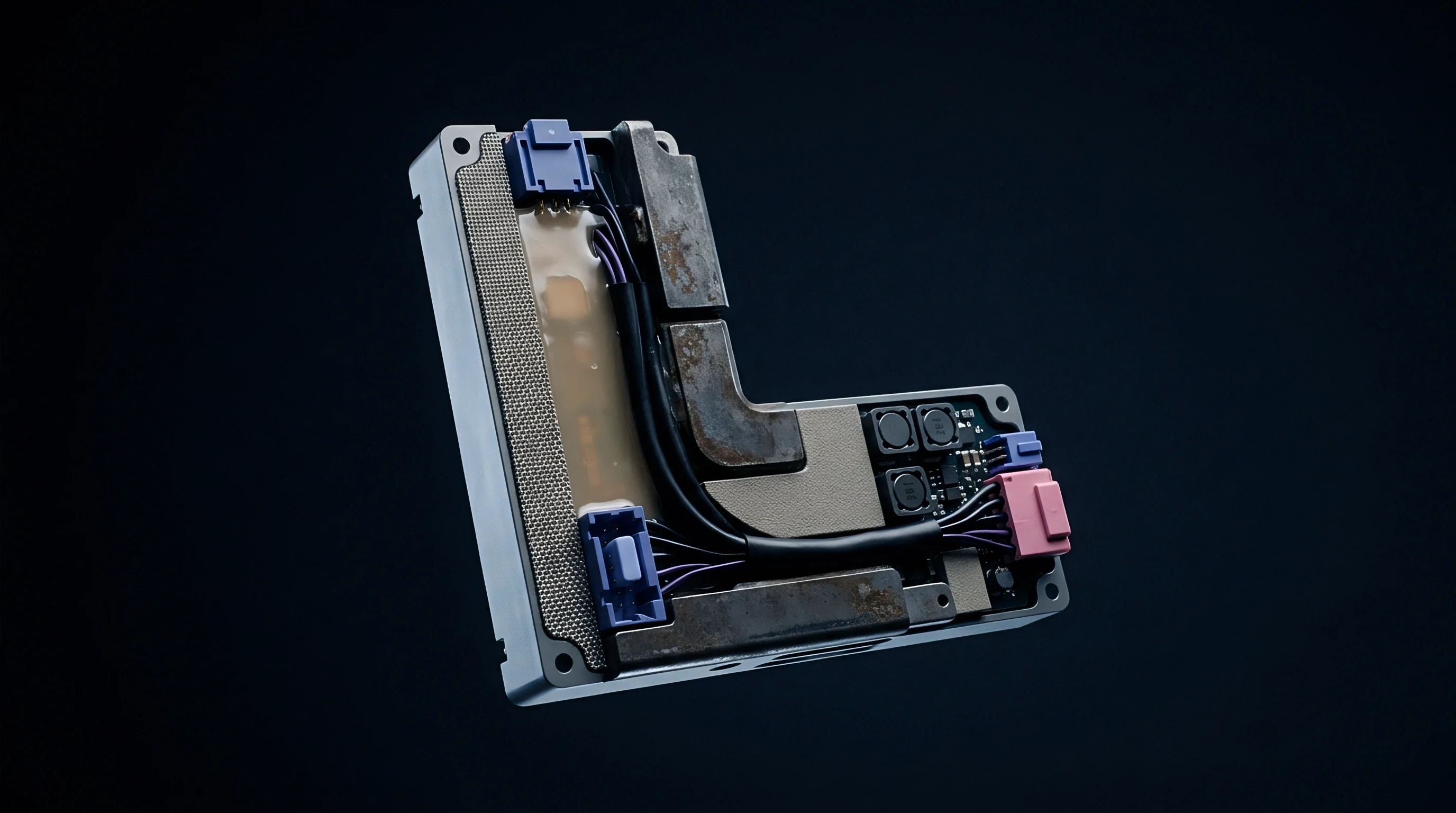

Filing
Equipment authorization filings tie physical subassemblies back to accredited laboratory emissions test reports. Any manufacturer shipping radio assemblies across international borders needs clarity on the hardware’s exact regulatory classification. Federal Communications Commission rules under 47 CFR § 15.212 govern modular transmitter approvals.
Obtaining a full modular grant demands an on-board RF shield, buffered modulation and data inputs, internal power regulation, a unique or permanently attached antenna coupler, stand-alone test capability, external label placement, and compliance with RF exposure limits. Missing even one of these hardware features disqualifies an assembly from full modular approval.

Will Incomplete Assemblies Face Physical Border Detention?
Commercial subassemblies built without onboard voltage regulation or integrated antenna traces fall under Limited Modular Approval. An LMA grant shifts certain compliance duties to the host integrator. When customs border enforcement officers review imports of limited modular radios, they look for proof that the importer holds the grant or maintains a formal integration agreement with the grant holder.
If an unshielded board is declared under an existing modular FCC ID, CBP officers compare the physical hardware against internal photos in the original filing docket. Any discrepancy between board layout and docket photography leads to immediate detention under 19 CFR § 133.51 for certification irregularities.
Customs inspection officers treat missing silk-screen markings on populated circuit boards as evidence of non-compliant consumer inventory.
Declarations of Conformity create similar hurdles at European ports of entry. Article 10(4) of Directive 2014/53/EU obliges manufacturers to supply every radio unit with a copy of the EU Declaration of Conformity or a simplified declaration linking to an active web address. When custom subassemblies enter the EU under an OEM contract for final fabrication, shipping documents must state that subassembly status explicitly.
Importers avoid regulatory holds by assembling this dossier before parts ever leave the factory.
- Execute bilateral integration covenants specifying that uncertified boards enter strictly for internal factory processing and downstream compliance verification.
- Audit laboratory test reports covering ETSI EN 300 328, EN 301 489, and EN 62368-1 to verify that conducted test conditions match the exported printed board revision.
- Upload comprehensive declarations into trade portal interfaces linking the specific commercial invoice line items to accredited third-party test dossiers.
- Apply temporary component placards to inner protective moisture-barrier bags establishing batch codes, engineering change order numbers, and factory tax identification.
Sourcing agreements that govern compliance documentation delivery under Clause 7.3 of standard Orgalime supply terms place direct liability on the vendor whenever incomplete technical files delay customs clearance.


Ledger
Budgeting for regulatory clearance involves far more than laboratory test fees and notified body certificates. Harmonized Tariff Schedule classification dictates both duty rates and inspection scrutiny. Importers frequently declare radio subassemblies under HTS heading 8548 as general machinery parts to simplify entry paperwork, but customs audits regularly reclassify those goods under 8517.62.0050 as machines for receiving, converting, and transmitting data.
That shift often triggers formal inquiries into whether the imported items should have held telecommunications equipment authorization prior to entry.

Would Firmware Locking Prevent Secondary Tariff Classification?
Software controls can disable radio features during transit. Flashing factory test firmware that deactivates radio frequency oscillators and synthesizers allows an assembly to be entered temporarily as a non-transmitting logic board. Customs enforcement agencies, however, evaluate equipment by its physical capabilities rather than temporary software blocks.
If the board features a populated power amplifier, RF matching network, and antenna port, customs labs can reflash open-source firmware during an audit to prove intentional radiation capability.
Declared component values on shipping manifests balance duty exposure against regulatory scrutiny at port of entry.
Secondary customs examinations at port terminals accumulate container detention fees of two hundred to six hundred dollars per day. When market surveillance officials hold an unlabelled radio subassembly, demurrage piles up while accredited test laboratories evaluate samples pulled from the impounded lot. Sourcing managers calculating landed costs need to weigh potential detention expenses against the upfront cost of laser-etching shields and obtaining modular certifications.
| Declared Commodity Code | Radio Hardware State | Border Inspection Action | Tariff Rate Spread | Daily Demurrage Exposure |
|---|---|---|---|---|
| 8534.00.0020 | Bare board with etched RF traces | Visual layer audit and green light clearance | 0.0% to 2.8% | Zero detention probability |
| 8517.62.0050 | Fully populated radio transceiver | Documentary review and radio database match | 0.0% to 3.2% | Standard port dwell time |
| 8517.70.0000 | Intermediate subassembly with shield | Physical crate inspection and marking review | 0.0% to 2.5% | 350 dollars per held container |
| 8473.30.0002 | Subassembly declared as computer part | Red line hold, laboratory emission test | 0.0% to 5.0% | 600 dollars plus mandatory lab fees |
| Demurrage costs reflect average maritime container terminal storage fees across major European and North American container freight stations under formal customs hold. | ||||
Port enforcement actions leave buyers uncertain whether customs authorities will accept electronic QR code documentation on internal packaging in place of direct silkscreen markings on custom circuit boards.

Transit
Moving unfinished radio subassemblies requires exact alignment between logistics tracking numbers, packing lists, and regulatory declarations. Importers using foreign trade zones or bonded logistics hubs ~ where entry bonds cover seizure fees ~ can defer radio equipment marking obligations until final housing integration. Inside a bonded facility, unlabelled subassemblies undergo automated pick-and-place assembly, reflow onto motherboards, and enclosure installation where final external laser marking is applied.
Shipments billed directly to production lines require complete documentary alignment. A single line item describing cargo as an RF Controller Assembly without corresponding regulatory authorization numbers triggers clearance holds in digital customs systems like the United States Automated Commercial Environment. Automated flags require immediate filing of FCC registration numbers or entry declarations under 47 CFR § 2.1204(a)(4), which allows radio frequency devices to be imported for assembly provided they are not offered for sale to end users before full compliance testing is complete.
Commercial paperwork must explicitly cite these assembly provisions. Customs brokers instruct factory dispatch teams to print dedicated handling statements directly on all commercial invoices and packing slips. The wording establishes the cargo’s status: Unfinished subassembly for original equipment manufacturing integration; contains non-activated radio frequency transmitter circuitry; final product marking and equipment authorization to be completed post-assembly prior to market distribution.
Clear documentation reduces the risk of border officials mistaking OEM components for uncertified consumer goods.
Proper commercial paperwork moves hardware through maritime customs far faster than technical explanations offered after container seals are broken.