Managing Host Product Conformity Declarations during Mandatory Standard Revisions
Updating host conformity declarations during standard revisions requires delta chamber testing, supplier report verification, and technical file alignment.
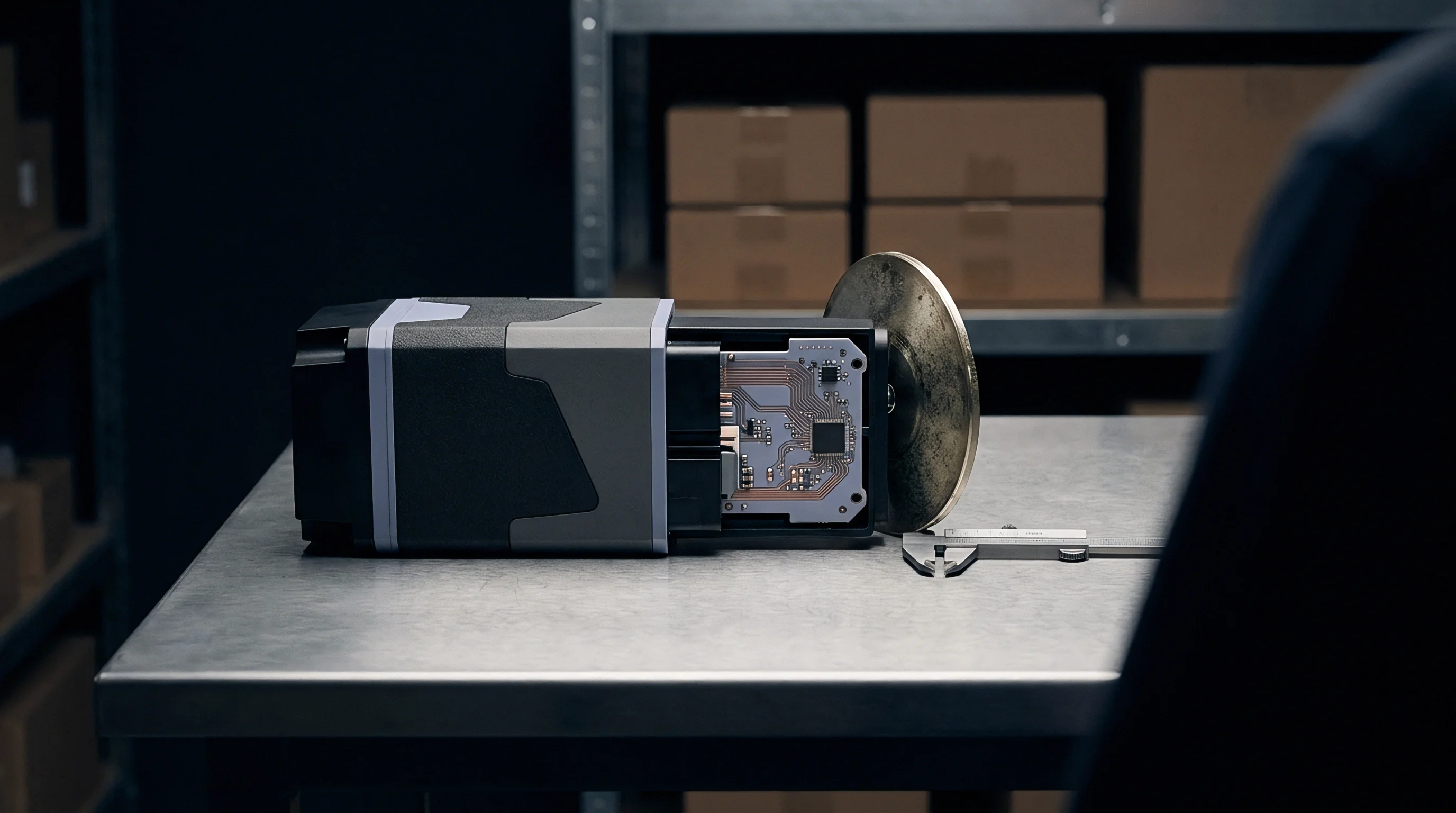

Transit
Publication of a new harmonised standard in the Official Journal of the European Union starts a definitive timer for host radio integrators. When the European Telecommunications Standards Institute revises a standard such as ETSI EN 300 328 for 2.4 GHz wideband transmission systems or ETSI EN 301 489-17 for EMC, the European Commission assigns a Date of Cessation of Presumption of Conformity. This Date of Cessation defines the exact calendar day on which the outgoing standard version stops conferring automatic compliance with the essential requirements of Directive 2014/53/EU.

Presumption of Conformity Expiration Timelines
Manufacturers declaring compliance under European Directive 2014/53/EU maintain legal protection only while cited standard versions remain active. Transition windows historically span twelve to thirty-six months from official publication, during which host product manufacturers can use test reports under either edition. Once that transition window closes, any host product entering the customs territory of the European Union requires an updated EU Declaration of Conformity citing the current standard version.
Placing a host product on the market is a specific legal event under European trade law, occurring when an individual finished item transfers from manufacturing into the EU distribution pipeline. Units manufactured and imported before the Date of Cessation remain valid for sale in downstream retail channels without requiring retrofitted documentation.
A standard revision carrying a 24-month transition window leaves legacy stock legally saleable in the European single market only if placing on the market occurs before the Date of Cessation.

Legacy Inventory Grandfathering Mechanics
Products already sitting inside distribution warehouses within destination territories before the enforcement date require no retroactive physical modification. However, warehouse stock that has not cleared EU customs before midnight on the Date of Cessation faces immediate border holds if accompanied by an expired declaration.
Customs officers verify the explicit date on the uploaded host declaration against the active standard list published in the Official Journal. When a standard revision incorporates new technical requirements, host manufacturers must evaluate whether existing test data from component modular approvals still satisfies the revised parameters.
Article 10(2) of Directive 2014/53/EU specifies that economic operators maintain technical file references matching applicable standards active at the exact moment individual serial numbers pass through European customs entry points.


Gap
Evaluating delta specifications between outgoing and incoming standard editions isolates exact test clauses demanding physical re-measurement. Standard revisions rarely invalidate an entire legacy test dossier. Instead, revisions introduce targeted test clause modifications, altered spectral density masks, or tighter receiver performance parameters.

What Triggers a Mandatory Chamber Re-Scan?
Radio frequency modifications, receiver category shifts, and updated spurious emission thresholds force hardware back onto test turntables. When ETSI updated EN 300 328 from version 2.1.1 to version 2.2.2, the receiver blocking measurement clause underwent a fundamental structural revision. The revised clause introduced continuous-wave interferer signals at specific frequency offsets with defined power levels, forcing host integrators with Category 2 or Category 3 receivers to perform fresh conducted laboratory sweeps.
Host products incorporating pre-certified Bluetooth or Wi-Fi modules cannot automatically inherit legacy blocking passes if the underlying module supplier evaluated receiver performance under the legacy version 2.1.1 setup. Chamber technicians mount the host product on a non-conductive turntable inside a semi-anechoic chamber, rotating the host through 360 degrees while probing for spurious emissions across active operating bands.
| Standard Designation | Legacy Version | Revised Version | Primary Delta Scope | Re-test Requirement Level |
|---|---|---|---|---|
| ETSI EN 300 328 | v2.1.1 | v2.2.2 | Receiver blocking test methodology and interferer power levels | Mandatory conducted receiver scan |
| ETSI EN 301 489-1 | v1.9.2 | v2.2.3 | Radiated immunity frequency extension to 6 GHz and surge limits | Mandatory host EMC chamber sweep |
| ETSI EN 301 489-17 | v3.1.1 | v3.2.4 | Altered measurement setups for multi-radio co-located hosts | Host spot-check required |
| FCC Part 15 Subpart C | ANSI C63.10-2013 | ANSI C63.10-2020 | Unlicensed wireless device measurement procedures and field strength calculation | Clause evaluation and file alignment |
Modifying a host product’s internal component layout or replacing an unshielded internal ribbon cable can introduce parasitic radiation paths. These paths bypass modular shielding, turning structural metal in the host into unintentional radiators during transmitter operation.
- Receiver blocking degradation occurs when modern broadband interference sources overload older front-end filtering networks.
- Spurious emissions limit breaches manifest at harmonic frequencies when host microprocessor clock harmonics align with newly restricted radio bands.
- Transient immunity failures emerge during conducted immunity sweeps due to unshielded internal interconnect cabling.
Enclosure geometry alterations that alter internal cable harness routing frequently convert a passing module report into an out-of-spec host spurious emission scan.

Delta Testing Scope and Measurement Uncertainty
Chamber technicians reduce test time by identifying identical parameters between standard releases and executing only modified clauses. Pre-compliance testing verifies whether host emissions hold a sufficient margin against revised limits before formal compliance sweeps begin. Measurement uncertainty budgets inside accredited test facilities typically claim +/- 4.1 dB for radiated emissions below 1 GHz and +/- 4.6 dB for emissions between 1 GHz and 18 GHz.
When a host product’s radiated spurious trace sits within 2 dB of the revised limit line, laboratory engineers require additional scan passes under varying supply voltage conditions. Small revisions in spurious emission limits can consume entire compliance budgets when high-speed digital busses leak energy into adjacent unlicensed spectrum.
Selecting a test laboratory equipped with fully automated continuous-sweep turntable controls prevents missing directional emission spikes during high-frequency spurious scans.


Deck
Maintaining alignment between physical product builds and administrative paperwork requires structured file management. The host product Technical Construction File serves as the legal foundation for the host Declaration of Conformity. When standards update, the manufacturer must audit every document inside the technical construction file to confirm that legacy evidence supports current regulatory citations.

Technical Construction File Dossier Updates
System integrators archive legacy test records alongside updated laboratory reports inside a centralized compliance repository. The technical dossier must contain host assembly drawings, schematic diagrams, bills of materials, software version controls, antenna specification sheets, and all applicable modular test reports with explicit test references.
Article 10(2) of the Radio Equipment Directive obligates manufacturers to retain technical documentation and declarations of conformity for ten years after product distribution.

Deploying Supplier Modular Grants and Test Reports
Host manufacturers relying on pre-approved radio components continuously verify that component vendors update their own laboratory credentials. A modular grant issued by a Telecommunications Certification Body under FCC rules or a test report issued under the EU Radio Equipment Directive belongs to the module vendor. If the module vendor fails to update their test reports to match revised ETSI standards, the host manufacturer cannot cite those component-level reports to cover the finished product.
- Obtain the updated module test report from the radio component vendor showing compliance with the revised harmonised standard.
- Cross-check the module antenna gain and host installation conditions against the specific integration operational limits specified in the original modular grant.
- Execute host-level spot-checks for radiated spurious emissions to confirm that internal host digital circuitry does not corrupt module radio performance.
- Update the host product EU Declaration of Conformity with the current standard designation numbers and active dates.
- Sign and date the updated declaration before entering production lots into commercial transit pipelines.
When harmonised standard updates are not fully applied, or when standard references remain unlisted in the Official Journal, host integrators engage an EU Notified Body to issue an EU-Type Examination Certificate under Annex III of Directive 2014/53/EU.
A modular approval does not automatically protect host manufacturers from secondary host-level EMC and safety updates when standard rules change.


Filing
Global regulatory bodies treat mandatory standard updates through distinct administrative mechanisms across different regulatory jurisdictions. While the European Union relies on self-declaration backed by the publisher’s transition dates, regulatory schemes in the United States, China, Japan, and South Korea enforce strict administrative re-filing pathways.

Permissive Change Classifications across Global Authorities
The Federal Communications Commission governs hardware modifications through Class I and Class II permissive change protocols. Under KDB 996369 D04 Modular Integration Guide, host product manufacturers using certified radio modules do not re-file the underlying FCC ID when standard rules update, provided the module’s grant conditions remain unbroken. However, if host modifications alter transmitter tuning, increase RF output power, or introduce high-gain antennas, the integrator must initiate a Class II Permissive Change filing through a Telecommunications Certification Body.
| Target Jurisdiction | Regulatory Authority | Mechanism for Standard Updates | Typical Filing Lead Time | In-Country Testing Needed |
|---|---|---|---|---|
| European Union | CE / RED Market Surveillance | Host EU Declaration of Conformity update | 1 to 2 weeks | No (if module report valid) |
| United States | FCC / TCB Network | Class II Permissive Change or new FCC ID | 3 to 6 weeks | Only for host delta scope |
| China | SRRC (CMIIT) | Type approval renewal / standard migration | 6 to 10 weeks | Yes (accredited state lab) |
| Japan | MIC / Registered Certification Body | Giteki certificate amendment filing | 2 to 4 weeks | Documentary review primary |
| South Korea | RRA (KC Mark) | Conformity Registration amendment | 4 to 8 weeks | Required for host EMC shifts |
Marketplace listings routinely remove connected hardware products the moment an automated regulatory scraper flags an expired standard number on an uploaded declaration.
International Domino Effects of Harmonised Standard Updates
National authorities across Asia and South America often update local technical standards six to eighteen months after European standards update. A revision in European standards forces global supply chain updates that ripple into China SRRC filings, Japan Giteki certifications, and South Korea KC registrations. Local agents in destination countries must submit translated technical documentation updates to regional spectrum managers.
- Class I Permissive Change suitability applies when circuit changes yield lower radiated emissions without altering radio frequency parameters.
- Class II Permissive Change triggers activate whenever hardware layout modifications alter fundamental radio emissions or antenna characteristics.
- Notified Body intervention needs arise under European rules when harmonised standards are partially applied or missing from the Official Journal.
Coordinating international regulatory updates prevents container ships from arriving at customs entry ports with invalid paperwork. When regional authorities refuse to recognize updated European test reports without local re-testing, host integrators allocate samples directly to local accredited test facilities.
Whether international mutual recognition agreements will eventually streamline cross-border standard revision filings without redundant local chamber testing remains an open question for global product managers.


Toll
Financial impact calculations during standard migrations encompass laboratory testing fees, administrative filing expenses, and physical inventory holding costs. Budgeting for standard transitions demands evaluating both direct chamber expenses and indirect supply chain exposure.
Retest Arithmetic and Chamber Budgeting
Chamber access fees average between 1,500 USD and 2,500 USD per eight-hour shift during standard commercial pre-compliance sweeps. Formal accredited compliance testing for a host product undergoing a standard update consumes between sixteen and forty hours of chamber time, depending on the complexity of the host radio configuration and multi-transmitter operating modes.
Take a host product incorporating a dual-band Wi-Fi module and a Bluetooth Low Energy radio facing an updated EMC standard (EN 301 489-17) and an updated safety standard (IEC 62368-1). If an accredited testing laboratory quotes 1,800 USD per day for test chamber access, completing host-level radiated immunity, conducted emissions, and receiver blocking spot-checks requires three days of chamber access, yielding 5,400 USD in direct lab operational charges.
Adding a Notified Body file review fee of 2,200 USD and an international agency administrative update fee of 1,500 USD brings direct non-recurring engineering charges to 9,100 USD for a single product variant.

Inventory Quarantine and Landed Cost Exposure
Customs holds generated by invalid compliance documentation accumulate warehouse demurrage charges at primary entry ports. Storage fees at major container terminals routinely run between 150 USD and 350 USD per container day after the standard four-day demurrage grace window expires.
| Expense Category | Low-Complexity Host (USD) | High-Complexity Host (USD) | Schedule Delay (Days) |
|---|---|---|---|
| Laboratory Pre-scan Hours | 1,200 | 3,600 | 2 to 4 |
| Accredited Chamber Formal Test | 3,500 | 12,500 | 5 to 10 |
| Notified Body Examination Fee | 1,800 | 4,000 | 7 to 14 |
| International Filing & Agent Updates | 1,000 | 6,500 | 14 to 30 |
| Customs Demurrage & Holding Exposure | 1,050 | 7,000 | 3 to 20 |
| Figures reflect typical industry laboratory rates and commercial port storage fees; actual costs vary based on host RF architecture, multi-radio co-location density, and targeted import countries. | |||
Holding five thousand host units in port quarantine for three weeks while waiting for laboratory re-scans and revised paperwork adds thousands of dollars in pure holding loss. That holding loss directly reduces landed margin per unit shipped. Managing host declarations during mandatory standard revisions is a scheduled operational requirement protecting hardware lines from regulatory blockades.
Failing to update host conformity declarations prior to standard expiration dates leads directly to customs seizures, marketplace delistings, and mandatory recall orders.