South Korean Conformity Assessment Registration Procedures for Foreign Radio Equipment
KC radio registration demands local testing, a domestic agent, accurate schematics, and strict adherence to National Radio Research Agency standards.

Chamber
Radiated Measurement Configurations and Turntable Scans
RF testing for South Korean radio conformity relies on calibrated 10-meter semi-anechoic facilities operating under National Radio Research Agency Notice requirements. When evaluating an uncertified transmitter, test engineers mount the device on a non-conductive turntable three or ten meters from the antenna. Calibration requires thermal equilibrium before measurements begin.
The turntable rotates through 360 degrees while the receiving antenna scans between one and four meters in height to capture peak emissions across both horizontal and vertical polarizations. For intentionally radiating devices operating in the unlicensed 2.4 GHz and 5 GHz Industrial, Scientific, and Medical bands, the National Radio Research Agency applies technical standards derived from Notice No. 2023-26 and relevant KS standards, specifically KS X 3123 for short-range radio equipment.
Spurious emissions radiated from the transmitter front-end face strict limit masks. Measurements below 1 GHz use a quasi-peak detector with a 120 kHz resolution bandwidth, whereas measurements above 1 GHz require peak and average detectors set to a 1 MHz resolution bandwidth. RF spurious emission limits outside the operational channel allocation must stay below specified thresholds, typically -30 dBm or -36 dBm depending on the frequency band and radio service designation.
An unshielded clock line or poorly grounded PCB trace that pushes radiated emissions past the electromagnetic compatibility limits defined in KS C 9832 for multimedia equipment will immediately halt the test sequence.
| Frequency Band | Radio Service | Technical Standard | Test Parameter | Compliance Threshold |
|---|---|---|---|---|
| 2400.0 – 2483.5 MHz | Wi-Fi / Bluetooth / Zigbee | KS X 3123 | Conducted Peak Output Power | 10 mW/MHz (EIRP limit applies) |
| 5150.0 – 5350.0 MHz | U-NII Low / Mid (Indoor) | KS X 3123 | Dynamic Frequency Selection | 60s CAC, 30 min Non-Occupancy |
| 5470.0 – 5725.0 MHz | U-NII Extended (Outdoor/Indoor) | KS X 3123 | Radiated Spurious Emissions | -30 dBm/MHz above 1 GHz |
| 9.0 kHz – 30.0 MHz | All Transmitter Types | KS C 9832 | Conducted Disturbances | Class B Quasi-Peak / Average limits |
| 30.0 MHz – 6.0 GHz | All Transmitter Types | KS C 9835 | Radiated Immunity | 3 V/m field strength, 80% AM |

Conducted Front End Analysis and Band Edge Compliance
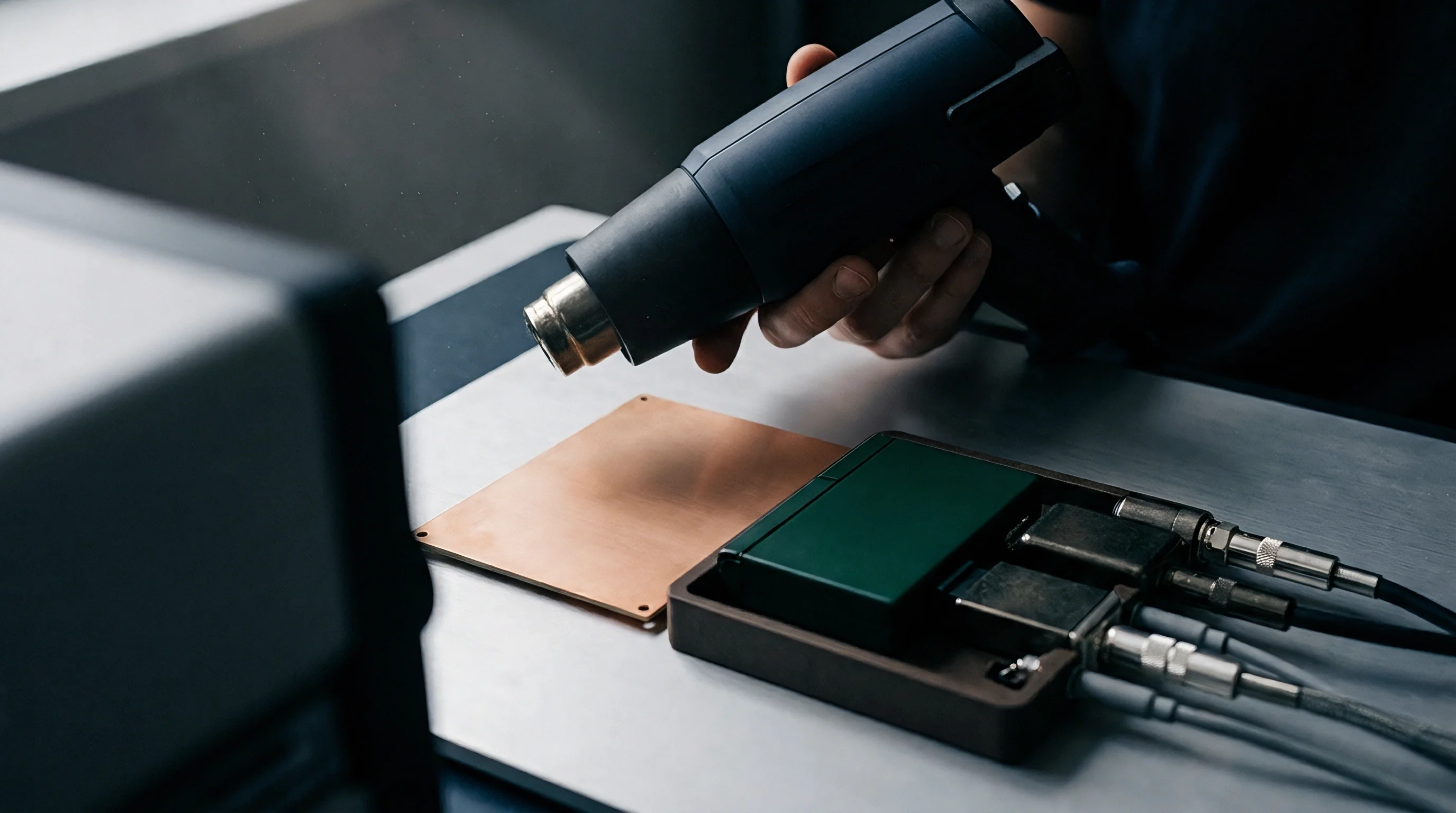
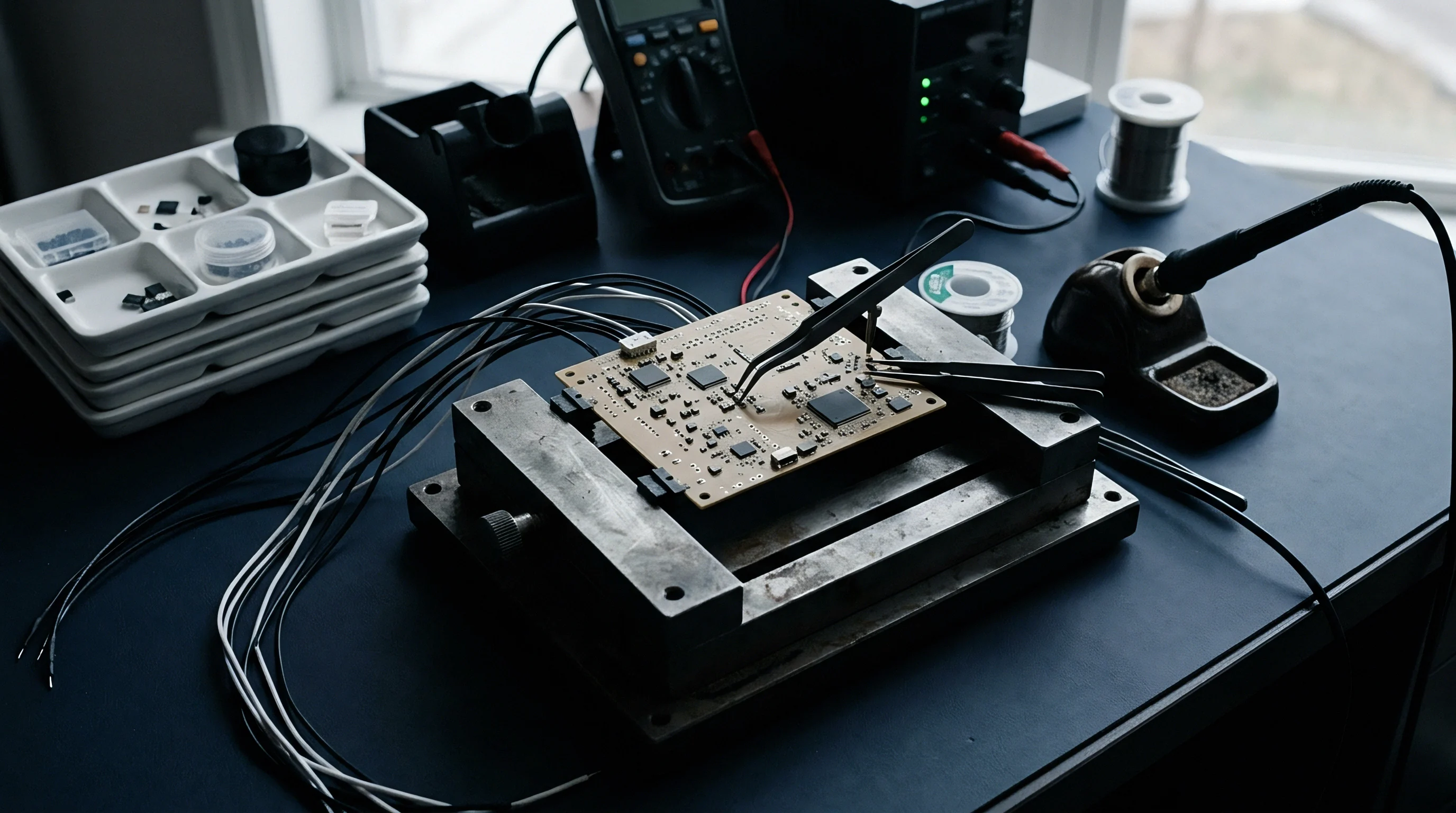
Direct coaxial connections to the antenna port supply the data needed to verify output power, occupied bandwidth, and spectral power density. Test labs require a dedicated conducted sample with a temporary SMA or U.FL coaxial pigtail soldered directly to the RF output trace before the antenna matching network. The device must run test firmware that can lock the transmitter into continuous wave, unmodulated transmission, and continuous modulated burst modes on low, middle, and high channels.
Standard commercial firmware lacks these diagnostic control states, making off-the-shelf production units unusable inside the lab.
Occupied bandwidth measurements assess the 99 percent power containment zone across the operating spectrum. For 2.4 GHz spread-spectrum systems, the 6 dB bandwidth must exceed 500 kHz to ensure sufficient frequency spread under high data rates. Power spectral density rules limit output power to 10 mW per MHz for short-range data equipment.
Band-edge compliance checks evaluate upper and lower frequency boundaries to confirm sideband splatter remains within safe margins. Dynamic Frequency Selection testing for 5 GHz Wi-Fi gear confirms the device detects radar pulses between -62 dBm and -64 dBm and vacates the channel within 200 milliseconds.
A radiated spurious peak of -31.2 dBm at the third harmonic invalidates the test run when measured with a 100 kHz resolution bandwidth.
Frequency stability testing subjects the radio module to extreme conditions inside an environmental chamber. Continuous frequency drift is measured as temperatures drop to -20 degrees Celsius and rise to +50 degrees Celsius in 10-degree steps, while the primary DC supply voltage shifts by plus and minus 15 percent. Operating frequency has to stay within the licensed tolerance band ~ typically 20 parts per million ~ to prevent channel overlap into adjacent public radio services, as any failure halts product entry.
Higher harmonic spikes observed during the 5 GHz scan originated from the host developer’s unshielded power trace rather than the transmitter silicon.
Route
Legal Framework under the Radio Waves Act
Accessing the South Korean market requires navigating Article 58-2 of the Radio Waves Act. The Ministry of Science and ICT delegates authority over broadcast and communications equipment to the National Radio Research Agency. The regulatory framework divides hardware into three conformity assessment paths based on interference risk, public safety impact, and operating frequency bands.
Foreign manufacturers exporting radio-frequency devices to South Korea need to establish the precise legal route for their hardware before scheduling lab tests.
Conformity Certification covers specified radio equipment where high output power, public safety, or licensed spectrum usage presents significant interference risk. This category includes cellular base stations, marine radars, satellite earth stations, and broadcast transmitters. Getting certified involves technical evaluation by designated testing facilities and formal document review directly by the National Radio Research Agency.
Approval certificates carry long-term legal liability and require strict adherence to certified technical specifications.
| Assessment Category | Legal Basis | Target Product Type | Testing Authority | Filing Destination |
|---|---|---|---|---|
| Conformity Certification | Radio Waves Act Art. 58-2 Par. 2 | High-power, licensed RF transmitters | RRA-Designated Lab | National Radio Research Agency |
| Designated Lab Registration | Radio Waves Act Art. 58-2 Par. 3 | Unlicensed RF: Wi-Fi, BT, RFID, Radar | RRA-Designated Lab | National Radio Research Agency |
| Self-Declaration Registration | Radio Waves Act Art. 58-2 Par. 3 | EMC-only peripherals, wired telecom | Manufacturer/Self Test | National Radio Research Agency |
| Interim Assessment | Radio Waves Act Art. 58-2 Par. 7 | New RF technology lacking standards | Special Committee | Ministry of Science and ICT |
Conformity Registration applies to standard unlicensed commercial wireless equipment, including Wi-Fi access points, Bluetooth peripherals, millimeter-wave radars, and industrial short-range communication modules. The process splits into Designated Laboratory Registration and Self-Declaration Registration. Since wireless transmitters generate intentional radiation, foreign radio gear almost universally requires Designated Laboratory Registration.
Self-Declaration is restricted to purely wired peripherals and non-emitting industrial equipment where electromagnetic compatibility represents the sole compliance metric.

Why Do Korean Test Laboratories Reject Overseas Test Reports?
Foreign hardware developers frequently attempt to use existing FCC Grant reports or European CE Declaration of Conformity dossiers to secure Korean approvals. However, South Korean law restricts test report acceptance to laboratories formally designated by the National Radio Research Agency. While South Korea participates in Mutual Recognition Agreements with countries such as the United States, Canada, and EU member states, these operate within strict limits.
Under an MRA Phase I agreement, designated foreign labs can test equipment according to Korean technical standards, but test reports must follow exact Korean measurement protocols, references, and KS standards.
A standard FCC Part 15 test report or ETSI EN 300 328 dossier cannot substitute for a Korean test report. Differences in frequency allocations, occupied bandwidth calculation methods, band-edge emission limits, and line-conducted immunity testing under KS C 9835 render generic foreign reports invalid. When an unaccredited foreign report reaches a Korean certification body, reviewers reject the submission immediately, forcing a complete re-test inside an authorized laboratory.
- Missing Korean Standard Annotations test reports generated without explicit references to KS X 3123, KS C 9832, or KS C 9835 standards fail administrative verification immediately upon portal submission.
- Non-Compliant Frequency Band Allocations hardware transmitting on channels permitted under FCC rules but restricted in South Korea, such as specific upper 5.8 GHz U-NII band channels, faces automatic rejection.
- Absence of Conducted Test Port Photographs regulatory filings lacking clear visual documentation of the temporary coaxial pigtail assembly soldered to the RF board fail laboratory audit rules.
- Incompatible Operating Voltage Variances test files missing frequency stability measurements conducted across the Korean standard 220 V AC or nominal DC battery variation limits undergo rejection.
Article 58-2 Paragraph 2 of the Radio Waves Act mandates that any modification to an RF module’s output stage invalidates the original registration record.
Interim Conformity Assessment provides a temporary regulatory path for novel radio technologies that lack established national technical standards. Applicants submit technical specifications, experimental test data, and risk assessments to the Ministry of Science and ICT. A dedicated expert committee evaluates the submission to issue a conditional approval valid for up to three years, though subsequent antenna changes trigger full retesting.
Clause 4.1 of the RRA Designation Notice specifies that any change in antenna peak gain exceeding 2 dBi requires a supplementary radiated test filing before commercial shipment.
Agency
The Domestic Representative Obligation and Certificate Ownership
Foreign corporate entities lacking a physical legal presence inside South Korea face an immediate statutory barrier during regulatory filing. Article 58-2 of the Radio Waves Act dictates that only a legally registered domestic entity can hold a Conformity Certificate or Conformity Registration record. A foreign manufacturer producing wireless access points in Taiwan or industrial sensor nodes in Germany cannot directly submit an application to the National Radio Research Agency.
The foreign vendor must appoint a South Korean Domestic Representative to act as the legal applicant of record.
Local representation carries legal weight. The Domestic Representative assumes full statutory liability for product safety, electromagnetic compatibility compliance, market surveillance responses, and post-market corrective action orders. This legal structure creates significant commercial exposure regarding certificate ownership.
The identity of the certificate holder links directly to the RRA applicant code embedded within the mandatory KC mark identifier format R-R-xxx-ProductCode. The three-character xxx segment identifies the domestic applicant entity registered in the National Radio Research Agency database.
Using a commercial importer or regional distributor as the Domestic Representative carries real risk. If a foreign hardware manufacturer permits its local Korean distributor to serve as the KC certificate holder, that distributor retains legal ownership of the regulatory registration. Should the commercial partnership dissolve, the foreign vendor cannot automatically transfer the certificate or export products into South Korea through a new distribution partner.
Transferring a registration record requires a formal application signed by the existing certificate holder along with an official corporate consent seal.
Contractual Mechanisms for Third Party Representation
To avoid distributor lock-in, foreign manufacturers often engage independent third-party domestic representative services or establish a wholly owned South Korean subsidiary entity. Independent legal representatives hold the KC registration on behalf of the foreign vendor while executing a formal agreement to transfer or surrender the registration upon commercial instruction. Professional representation services charge annual retainer fees alongside initial administrative filing costs, but they preserve the foreign vendor’s operational independence in the South Korean market.
A foreign hardware vendor lost 14,000 USD and six weeks of market entry when an uncooperative Seoul distributor refused to sign the certificate transfer letter for an industrial Wi-Fi gateway.
Appointing a Domestic Representative requires executing a legally binding Power of Attorney and submitting the representative entity’s South Korean Corporate Registration Certificate (사업자등록증) to the National Radio Research Agency. Any formal corporate change within the representative entity, such as a change in legal name, address, or corporate chief executive, requires an administrative update filing within 30 days of the modification. Failure to update representative records leads to administrative fines and potential suspension of customs import privileges.

Record
Dossier Architecture and Schematic Exposure Risks
Filing an application with the National Radio Research Agency demands a structured technical package verified for internal consistency. The technical dossier must contain complete documentation explaining the electrical design, operational frequency spectrum, RF power levels, component layout, and physical construction of the radio equipment. Administrative officers review the package alongside test reports generated by designated laboratories.
Incomplete filings or discrepancies between circuit schematics and physical test samples halt the registration sequence.
Circuit schematics are usually the most sensitive element of the submission package. The National Radio Research Agency requires full schematic diagrams illustrating all active components, RF matching networks, oscillator circuits, power management ICs, and antenna connection paths. Foreign hardware vendors frequently express concern regarding intellectual property exposure when uploading unencrypted schematics to regulatory databases.
Schematics submitted during registration remain stored within confidential agency records, protected under South Korean administrative privacy statutes, but they must disclose component values and semiconductor part numbers without redactions.
- Complete Circuit Schematics full electrical schematics detailing RF front-end architecture, crystal oscillator frequencies, trace impedance targets, and semiconductor part numbers without black-box block redactions.
- Localized Korean User Manual end-user operational guide translated into natural Korean containing mandatory statutory safety warnings, frequency usage constraints, and localized technical specifications.
- Antenna Radiation Data Sheet technical document specifying antenna type, physical dimensions, omnidirectional or directional gain patterns, and maximum peak gain across operational frequency bands.
- Domestic Representative Authorization Letter notarized Power of Attorney establishing the legal appointment of the South Korean representative signed by an authorized foreign corporate officer.
Labelling Syntax and Physical Marking Specifications
Labeling requirements for certified radio equipment in South Korea follow exact statutory design rules. Every compliant device offered for sale or commercial deployment must carry the official KC Mark logo paired with the unique RRA registration code. The KC mark logo must conform to standardized geometric proportions, maintaining a minimum height of 5 millimeters unless severe space constraints justify a micro-label exception authorized by regulatory rules.
The registration code follows a standardized alphanumeric syntax: R-R-abc-EquipmentModel. The initial letter R identifies the broadcasting and communications equipment framework. The second letter R designates a Conformity Registration approval (whereas a C indicates a Conformity Certification approval).
The three-character segment abc represents the unique applicant ID assigned to the Domestic Representative by the National Radio Research Agency. The final string EquipmentModel contains up to 14 alphanumeric characters selected by the applicant to identify the specific hardware model.
Customs authorities routinely detain hardware operating on unapproved frequencies, while regulatory dossiers require precise technical alignment and translated manual warnings carry binding legal weight.
A label printed on removable packaging rather than the physical host housing guarantees immediate customs rejection at the port of entry.
User manual documentation must include specific statutory language rendered in the Korean language. Products operating in the 5150-5350 MHz frequency range must display a prominent warning notice stating that the radio device is restricted strictly to indoor operational use to prevent harmful interference with satellite communication services. The manual must also detail the applicant name, manufacturing date, country of origin, model designation, and local customer service contact information.
Electronic user manual labels remain valid only when the host display accessible to the end user operates without requiring special diagnostic tools or external hardware tokens.
Clock
Laboratory Scheduling and Sample Logistics Workflow
Planning launch schedules for South Korea means factoring in administrative processing durations and laboratory chamber availability. Work starts months before launch with sample production, diagnostic firmware integration, and international shipping. Foreign manufacturers must send enough samples to absorb hardware failures or firmware corruption during destructive testing phases.
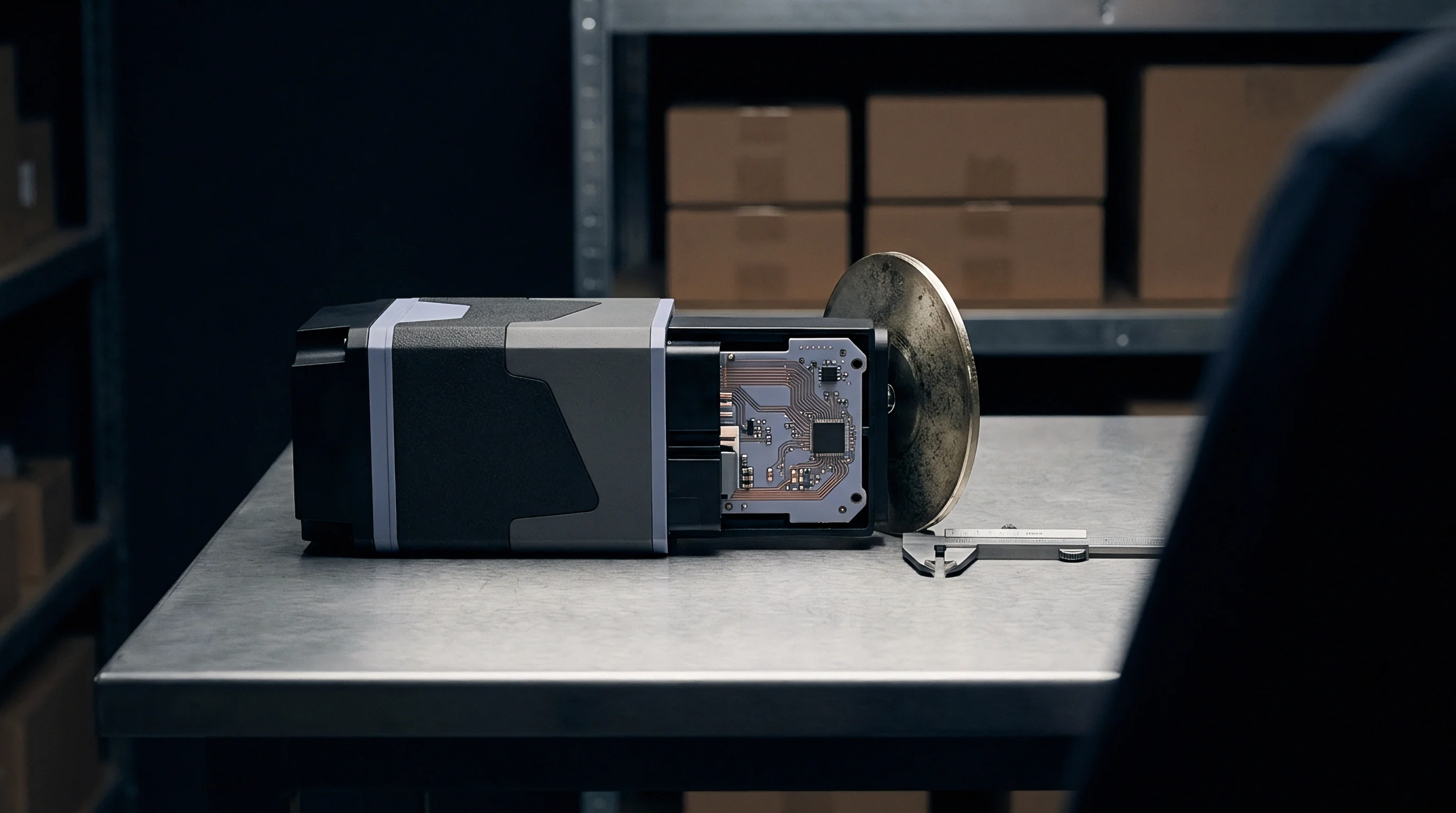
Testing facilities require at least two complete hardware samples to execute a full radio conformity assessment campaign. The primary sample must be a conducted RF test unit modified by soldering coaxial pigtails directly to each RF output channel, allowing engineers to connect spectrum analyzers directly to the transmitter paths. The secondary sample must be an unmodified, fully assembled production unit in its final commercial enclosure, used for radiated emissions scans, electrostatic discharge testing, and radiated immunity evaluation.
Both samples require working AC/DC power adapters matching South Korean voltage specifications (220 V at 60 Hz) or fully charged battery packs with custom power management test cables.
| Phase / Activity | Responsible Party | Estimated Duration | Average Cost Range (USD) | Failure Risk Factor |
|---|---|---|---|---|
| Sample Preparation & Firmware Setup | Foreign Hardware Manufacturer | 2 – 3 Weeks | 1,000 – 2,500 | Low: Invalid RF control code |
| Customs Transit & Temporary Import | Freight Forwarder / Customs Agent | 1 – 2 Weeks | 500 – 1,200 | Medium: Tariff hold at Incheon |
| Laboratory Pre-Scan & RF/EMC Testing | RRA-Designated Test Lab | 3 – 5 Weeks | 6,000 – 12,000 | High: Radiated spurious failure |
| Dossier Compilation & Translation | Domestic Representative / Agent | 1 – 2 Weeks | 800 – 1,800 | Low: Schematic discrepancies |
| RRA Portal Review & Issuance | National Radio Research Agency | 5 – 10 Business Days | 150 – 300 (Official Fee) | Low: Administrative rejection |
International shipping carries unexpected timing risks. Wireless test samples entering South Korea must pass customs clearance under specific temporary import procedures or standard commercial clearance. Customs officers verify that imported radio devices possess clearance documentation or formal test sample exemption notices issued by the National Radio Research Agency.
Shipping samples without proper test exemption paperwork triggers immediate customs holds at Incheon International Airport, consuming valuable schedule buffer days.
Filing Fee Mechanics and Financial Landed Cost Breakdown
Budgeting for South Korean radio approval requires accounting for direct laboratory fees, government administrative tariffs, local representative fees, and potential re-test costs. Test fees charged by designated Korean laboratories depend heavily on radio architecture. A simple single-band Bluetooth Low Energy device requires relatively modest laboratory resources, whereas a dual-band Wi-Fi 6E access point operating across 2.4 GHz, 5 GHz, and 6 GHz bands demands extensive chamber time and specialized test automation routines.
Landed cost calculations include agency retainers. Laboratory fees for a dual-mode Wi-Fi and Bluetooth module typically range from 6,000 USD to 12,000 USD for complete RF and EMC evaluation. If the device operates within 20 centimeters of the user’s body, Specific Absorption Rate testing adds an additional 5,000 USD to 10,000 USD to the bill.
The official administrative filing fee charged by the National Radio Research Agency remains low, averaging approximately 150,000 KRW to 300,000 KRW per application. Retaining an independent Domestic Representative introduces an annual fee between 1,500 USD and 3,500 USD.
Take a real engineering project involving an industrial handheld terminal containing a pre-certified Wi-Fi 6E module and an integrated 13.56 MHz RFID reader. The product developer assumed that because the Wi-Fi radio holds a modular KC registration, host qualification would require minimal expenditure. Upon review, the Korean designated laboratory identified that the host enclosure altered the RF output impedance of the internal antenna traces and introduced digital noise from the color touchscreen display.
The laboratory mandated full radiated emissions re-testing under KS C 9832 Class B rules alongside intentional radiator testing for the 13.56 MHz RFID transmitter. Chamber availability dictated the schedule. The unexpected testing campaign added 8,500 USD in laboratory charges and delayed product launch by four weeks.
Modular Approval Scope and Host Integration Constraints
Leveraging pre-certified radio modules offers a legal mechanism to reduce testing overhead, but South Korean modular approval rules impose strict integration conditions. The National Radio Research Agency permits host products to incorporate registered radio modules under the original module’s certification number only if the host integrator adheres precisely to the original modular grant conditions. The module must retain its original RF shielding, onboard power supply regulation, integrated antenna, and fixed firmware power settings.
- Obtain the modular KC registration certificate and full RRA test report from the radio module vendor to verify grant scope limits.
- Mount the pre-approved module on the final host PCB using identical microstrip trace geometry and ground plane dimensions specified in the modular manual.
- Measure radiated spurious emissions inside an accredited local chamber under host EMC conditions to confirm display and peripheral noise isolation.
- Submit host EMC test report along with modular certificate cross-reference documentation to the RRA administrative portal for registration.
Re-testing an existing radio module inside a modified host enclosure costs significantly less than repeating a full radio frequency qualification campaign.
Any modification to the RF front-end invalidates modular coverage. Replacing an integrated trace antenna with an external dipole antenna of higher peak gain forces a complete radiated testing sequence for the host unit. Similarly, integrating a registered radio module into a host device containing uncertified digital logic circuits obligates the manufacturer to execute full electromagnetic compatibility testing under KS C 9832 and KS C 9835 standards.
The host device cannot bear the final KC mark until host-level EMC compliance is fully documented.
How the National Radio Research Agency will evaluate upcoming terahertz-band short-range sensing devices without established technical standards remains uncertain as commercial deployments expand.
Surveillance
Central Radio Regulatory Office Inspection Protocols
Maintaining active commercial status in South Korea requires ongoing adherence to post-market regulatory audits. The Central Radio Regulatory Office, an executive branch of the Ministry of Science and ICT, conducts continuous market surveillance sweeps across physical retail locations, online marketplace platforms, and commercial import warehouses. Surveillance officers purchase production units off the market and submit them to state-run metrology laboratories for audit testing.
Audit testing verifies that production hardware matches the technical parameters documented within the original registration dossier. State laboratories measure conducted output power, operating frequency spectrum, occupied bandwidth, and radiated spurious emissions. If audit testing reveals that a commercial device emits spurious radiation exceeding statutory limits or transmits on unregistered frequency channels, the Central Radio Regulatory Office initiates administrative enforcement proceedings.
Administrative sanctions under Article 84 of the Radio Waves Act carry severe commercial consequences. Penalties for selling unregistered radio equipment include administrative fines up to 30 million KRW, mandatory sales bans, and public recall orders directing the manufacturer to collect and destroy non-compliant inventory. Furthermore, the National Radio Research Agency maintains authority to revoke the KC registration record.
A revoked registration prevents the foreign manufacturer and its Domestic Representative from re-filing for conformity assessment on the affected product line for a statutory penalty period of up to one year.

Customs Detention and Unipass Clearance Interlocking
Border enforcement of radio regulations operates through real-time technical integration between the Korea Customs Service UNI-PASS customs processing system and the National Radio Research Agency registration database. When an international shipment carrying radio equipment arrives at Incheon International Airport or Busan Port, customs systems execute automated cross-checks matching the import declaration HS Code against registered KC certificate numbers and importer business IDs.
Discrepancies between the importing entity and the authorized Domestic Representative listed on the RRA registration database result in immediate customs holds. If a foreign vendor attempts to ship registered products to an unauthorized third-party importer without referencing a valid KC certificate issued in that importer’s name or linked via a valid authorization letter, customs officers block import release. Resolving customs detentions requires filing administrative clarification forms, presenting notarized domestic representation records, or executing formal permissive change filings to add authorized import entities to the official database record.
Engineering modifications implemented during a product’s manufacturing lifecycle must follow strict RRA change control procedures. Modifications classified as Class 1 changes, such as minor passive component swaps on non-RF circuitry or cosmetic enclosure alterations that do not impact electromagnetic compatibility, require internal engineering records retained within the technical file. Modifications classified as Class 2 changes involving RF pin layouts, power management firmware updates, or primary crystal oscillator substitutions demand supplementary laboratory testing and formal administrative update filings before modified units clear customs entry.
Product engineering teams that maintain synchronized documentation across software builds, antenna suppliers, and local representative records avoid administrative seizures during annual market sampling campaigns.