Harmonized Tariff Code Selection for Embedded Radio Transceiver Assemblies
Classifying embedded transceivers hinges on General Rule three to establish essential function between data transmission under heading 8517 and modular parts.


Structure
Hardware classification under the international Harmonized Commodity Description and Coding System turns on physical and operational boundaries rather than commercial labeling. Customs authorities break embedded wireless assemblies into discrete elements: signal-conditioning semiconductors, passive impedance-matching networks, quartz reference crystals, printed traces, and onboard baseband microcontrollers. The presence of a dedicated baseband controller processing protocol frames generally determines whether a board-level radio is treated as an incomplete telecommunication machine or simply a subassembly part.
If a transceiver assembly carries both an RF integrated circuit and a microprocessor running protocol stacks up to the media access control layer, classification within Chapter 85 quickly becomes contentious. Common candidates include heading 8517.62 for machines that receive, convert, and transmit data; 8517.79 or 8517.70 for radio apparatus parts; 8526.92 for radio remote control apparatus; 8542.31 for electronic integrated circuits configured as processors or controllers; and 8543.70 for electrical machines with individual functions not specified elsewhere.

RF Front-End Integration and Baseband Architecture
Silicon-germanium or gallium-arsenide power amplifiers paired with low-noise switches mark the boundary of basic radio-frequency front ends. When an assembly holds nothing more than passive matching components, an antenna switch, and a high-frequency amplifier package on a ceramic substrate, customs treats it as a discrete component rather than an apparatus. The signal stays analog across every trace, without digital protocol conversion or packet handling.
Transceiver modules operating above 2.4 gigahertz without dedicated host processing fall outside integrated circuit headings when mounted on multi-layer substrate carriers.
A baseband processor shifts that classification by turning digital bitstreams into modulated analog quadrature signals. Once a board includes a baseband IC executing firmware for IEEE 802.11, IEEE 802.15.4, or Cellular 3GPP protocols, it performs full telecommunications conversion. In tariff rulings worldwide, active onboard firmware execution is consistently what separates an operational data transport apparatus from a cluster of unconfigured parts.
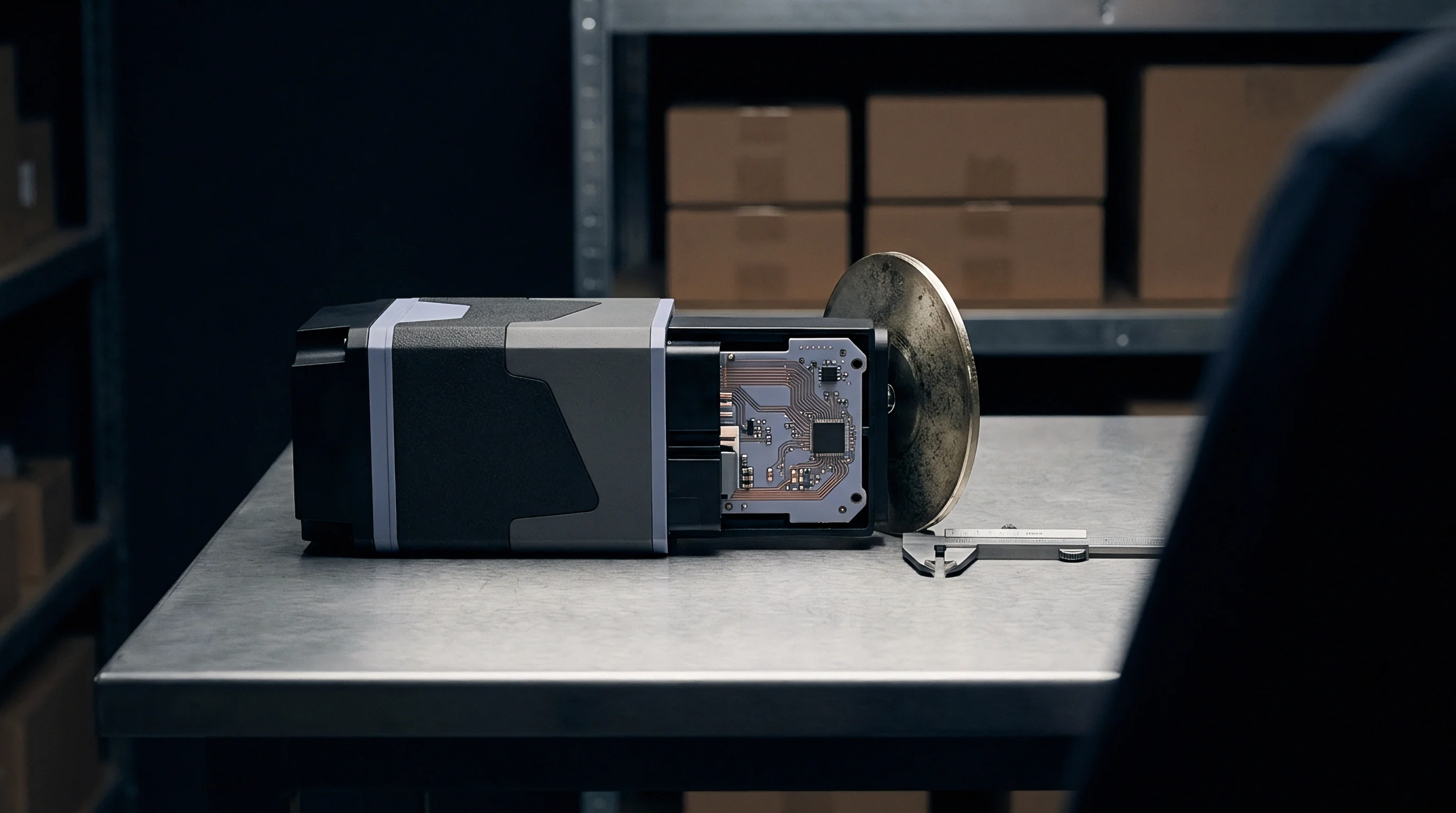
Printed Circuit Board Functional Boundaries
Substrate material and interconnect styles draw the legal line between multi-chip integrated circuits and populated circuit boards. Under heading 8542, multi-chip ICs consist of two or more microelectronic chips joined indivisibly on a single ceramic or resin substrate, encapsulated with or without lead frames. Add discrete surface-mount resistors, capacitors, a quartz crystal, and an etched antenna on an FR-4 board, however, and the assembly falls outside the strict limits of Note 11 to Chapter 85.
Subassemblies with dedicated shielding cans and castellated pads for host mounting fall squarely under populated printed circuit assemblies. Importers often try declaring these boards as duty-free integrated circuits to shave landed costs, but physical inspections routinely uncover the discrete passives and reclassify the shipments under machine headings with higher duties or trade-remedy tariffs.
| HTS Heading | Assembly Configuration Scope | MFN Duty Rate (US) | Essential Technical Criterion |
|---|---|---|---|
| 8517.62.00 | Complete radio transceivers with baseband and protocol controller | 0.0% | Executes autonomous data conversion and transmission protocol stacks |
| 8517.79.00 | Populated printed circuit boards forming parts of radio apparatus | 0.0% | Lacks autonomous operation; requires host board system power and data bus |
| 8542.31.00 | Single or multi-chip silicon integrated circuits without discrete board components | 0.0% | Encapsulated silicon substrate meeting Chapter 85 Note 11 parameters |
| 8543.70.99 | Specialized electrical radio apparatus not covered in telecommunication headings | 2.6% | Performs signal generation or conversion without telecommunication network transport |
Checking module schematics against the chapter notes before issuing purchase orders avoids expensive reclassifications at the port of entry.


Boundary
Pinning down the correct six-digit Harmonized System subheading for a multi-function or incomplete radio module requires following the General Rules for Interpretation in sequence. Tariff codes cannot be picked to suit margin targets, invoice descriptions, or internal part numbering. GRI 1 sets the legal baseline: classification is governed by heading terms and the relevant section and chapter notes.
Section XVI Note 2 governs parts intended for machines in Chapter 84 or 85. Under Note 2(a), any part that is itself a good covered by an existing heading in either chapter must go into that specific heading. Under Note 2(b), parts suitable for use solely or principally with a particular machine follow that machine’s classification.
The choice between those two notes dictates whether a radio module is categorized as a standalone functional machine or as a dedicated component of the larger host device.

Legal Hierarchy of General Rules for Interpretation
When an embedded radio seems eligible for multiple headings under GRI 1, the subsequent General Rules for Interpretation step in to resolve the conflict, primarily through GRI 3.
- GRI 1 Application direct classification based on heading language and relative section or chapter notes, establishing the legal baseline for all import declarations.
- GRI 2(a) Incomplete Goods classification of unfinished radio subassemblies that already possess the essential character of the complete or finished apparatus at entry.
- GRI 3(a) Specific Description selection of the heading offering the most specific product description over headings providing a general reference.
- GRI 3(b) Essential Character assignment based on the component or subassembly that gives a composite product its primary functional capability.
- GRI 3(c) Latter Heading resolution of equal heading claims by assigning the item to the heading occurring last in numerical order among those considered.
Applying Section XVI Note 2(a) redirects complete radio subassemblies into specific machine headings regardless of host product intentions.

Principal Function versus Part Classification Mechanics
Section XVI Note 3 directs that composite machines or multi-function combinations be classified according to the component that provides their principal function. An embedded transceiver fitted into an industrial utility meter illustrates the problem. When integrated into the meter, utility measurement under Chapter 90 dominates, and the radio serves merely as an auxiliary data link.
But if that radio board arrives at customs in a separate shipment before assembly, it cannot borrow the Chapter 90 status of an unfinished host instrument.
Imported on its own, a radio subassembly is judged strictly on what is physically present. If the populated board has a complete transceiver chain capable of autonomous two-way data transmission, heading 8517 takes precedence under Section XVI Note 2(a). Customs labs will test whether the board includes the voltage regulation, amplification, and protocol execution needed to run once connected to DC power and a basic data stream.
Under Section XVI Note 2(b), multi-function radio assemblies end up in heading 8517 whenever communication represents their primary role, overriding general part designations.


Specimen
Physical construction dictates how customs authorities classify embedded transceivers. Surface-mount System-in-Package modules, populated M.2 cards, and soldered dual-band subassemblies each follow different classification routes. Shielding cans, physical interconnects, and pin configurations must be evaluated carefully before shipment to anticipate how border officials will rule.
System-in-Package devices cause frequent confusion because of their appearance. An SiP often packs an RF chip, a baseband processor, passive matching elements, and interconnect pads inside one overmolded epoxy body. It looks like a standard integrated circuit, but placing discrete passives on an internal interposer substrate disqualifies it from single-chip status under heading 8542 in most jurisdictions.

System in Package Assemblies versus Populated Substrates
Classifying an SiP module requires checking how the internal substrate is built against Note 11 to Chapter 85. If passive elements are formed directly on the semiconductor die through thin- or thick-film deposition, integrated circuit treatment under heading 8542 holds up. If miniature 0201 capacitors and inductors are soldered onto an internal substrate beneath the mold compound, rulings in both the European Union and the United States push the part into populated circuit territory under 8517 or 8543.
Subassemblies retaining dedicated RF shielding cans and printed trace antennas consistently trigger finished apparatus headings over bare board part categories.
Transceiver boards built on FR-4 or polyimide remain the most prevalent design. With stamped metal shield cans, etched antennas or miniature U.FL coaxial sockets, and edge castellated pads, there is little ambiguity about what they are: composite electronic assemblies rather than integrated circuits.

Do Unpopulated Radio Board Subassemblies Qualify as Integrated Circuits under Chapter Note Eight?
Bare printed circuit boards carrying only etched traces, microstrip antennas, and solder pads are neither integrated circuits nor machines. In their unpopulated state, they belong in heading 8534.00. The moment passive or active components are soldered into place, heading 8534 ceases to apply, pushing the board into assembly headings like 8517, 8529, or 8543.
Classification across product portfolios depends on clear physical distinctions:
- Monolithic Silicon Die classification under heading 8542 applies when radio functionality exists entirely within an unencapsulated or encapsulated semiconductor package without external discrete passive components.
- Hybrid Integrated Circuits classification under subheading 8542.39 requires passive elements to be formed directly on the insulating substrate through film deposition processes during chip manufacturing.
- Modular Castellated PCBAs classification under subheading 8517.62 or 8517.79 applies when components are soldered onto a multi-layer fiberglass substrate carrying external connector pads.
- PCI Express and M.2 Cards classification under subheading 8517.62 applies directly to modular radio cards featuring standardized edge connectors designed for host bus insertion.
- Radar and Navigational Subassemblies classification shifts to heading 8526 when radio transceiver circuits operate in pulsed or continuous-wave detection modes rather than communication data transport.
Factory-preflashed transceiver modules are often presented as raw electronic integrated circuits on the basis of chip cost, but customs authorities evaluate physical assembly rather than bill-of-materials weighting.


Port
Import clearance puts declared tariff codes to the test. Port screening systems flag entries when line descriptions, unit values, and tariff numbers do not align statistically. Declaring goods under heading 8542 as duty-free integrated circuits while invoicing high unit values for wireless communication modules almost guarantees an automated inspection hold.
Inspection holds quickly run up demurrage fees and disrupt production schedules. During an examination, officers compare invoices, spec sheets, block diagrams, and manuals directly against the terms of the declared heading. Any mismatch between invoice terminology and statutory tariff definitions results in a hold and a formal Request for Information.

Border Entry Inspection Protocols and Documentation Proof
Backing up a declared classification requires solid technical documentation. Importers need schematics, full bills of materials, and descriptions explaining the exact role of each major IC. If the documentation leaves the function of an onboard microcontroller or DSP unclear, inspectors typically reassign the board to a general machine heading carrying higher duties.
Importers presenting incomplete block diagrams during customs audits face immediate reclassification to higher duty rate subheadings.
Customs administrations in the United States, China, and the European Union operate dedicated technical laboratories. If visual examination leaves an assembly’s internal structure in question, officers pull samples from the lot for physical and electrical testing.

Customs Laboratory Test Methods for Radio Identification
Customs lab personnel use several diagnostic tools on contested modules. X-ray imaging reveals hidden substrate layers, interposers, and internal surface-mount components inside molded packages. Spectrum analyzers and signal generators then verify whether a board transmits RF energy autonomously upon power-up, establishing whether it operates without host processor intervention.
| Destination Territory | Declared HTS Code | Base MFN Duty | Trade Remedy Surcharge | Total Applied Tariff Rate |
|---|---|---|---|---|
| United States | 8517.62.0050 | 0.0% | 25.0% (Section 301 China) | 25.0% |
| United States | 8542.31.0000 | 0.0% | 0.0% | 0.0% |
| European Union | 8517.62.0000 | 0.0% | 0.0% | 0.0% |
| European Union | 8543.70.9099 | 3.7% | 0.0% | 3.7% |
| China (Mainland) | 8517.62.9900 | 0.0% | 0.0% | 0.0% |
Tariff errors on these modules bring retroactive duty bills, interest charges, and holds on downstream import shipments.


Filing
Advance administrative rulings provide the only reliable certainty before production shipments start crossing borders. Securing a Binding Tariff Information ruling in the European Union or an advance ruling through the Customs Rulings Online Search System in the United States locks in a classification that binds customs authorities across all domestic ports.
Ruling requests demand complete transparency regarding hardware architecture, operational behavior, and manufacturing assembly. Submissions must tie the hardware directly to established chapter notes and past rulings while protecting proprietary firmware source code and core design IP.

Technical Dossier Preparation for Binding Rulings
Building an effective ruling dossier takes thorough preparation. The package should include block diagrams tracing signal flow, full schematics showing every active IC, high-resolution photos of both bare and populated boards, and customer-facing technical datasheets.
The application follows a structured administrative process:
- Pre-filing classification analysis matching hardware specifications against published customs ruling databases and relevant General Rules for Interpretation.
- Drafting formal written arguments explaining why specific chapter notes apply or exclude competing heading choices based on objective physical criteria.
- Submitting physical product samples alongside complete technical dossiers to the designated national customs classification headquarters.
- Responding to formal customs inquiries or requests for supplemental technical testing data within statutory time limits.
- Receiving the published binding determination and embedding the assigned ruling reference number into automated customs entry documentation systems.

Managing Regional Precedent Divergence
Different trading blocs frequently take divergent views on identical radio assemblies. The European Commission might classify a module under heading 8517.62 as a data transmission apparatus, while US Customs and Border Protection places the exact same hardware under 8543.70 based on differing interpretations of what constitutes an individual electrical function.
International supply chains must account for these regional splits to avoid compliance penalties. A company’s central part-master database needs to map distinct country-specific tariff codes against single internal SKUs so regional brokers receive the classification recognized in their local jurisdiction.
How customs agencies will harmonize the classification of AI-enabled radio transceivers ~ whether as data processors or communications equipment ~ remains an open question across major trading jurisdictions.


Arithmetic
Tariff classification directly shapes product margins and trade compliance reserves. The difference between heading 8517 and heading 8543 might look like technical hairsplitting on paper, but the cost gap widens drastically once volume shipments face trade remedy tariffs and punitive surcharges.
Landed cost models have to factor in base Most Favored Nation duties, special trade remedies like US Section 301 tariffs, merchandise processing fees, and local value-added taxes. A misclassification quickly erodes projected gross margins and exposes the importer to retroactive audits covering up to five years of past entries.

Landed Cost Model Construction and Sensitivity Analysis
A solid landed cost model breaks out each duty layer tied to tariff code selection. Working with finance, trade compliance groups typically model duty liabilities across best-case, probable, and worst-case tariff scenarios before issuing high-volume purchase orders to overseas contract manufacturers.
Take an annual import run of a Wi-Fi 6E transceiver module manufactured in China and imported into the United States for integration into industrial controllers: 100,000 units at a free-on-board price of $12.50 produce an entered value of $1,250,000.

Worked Import Tariff Variance Calculation
Under Scenario A, the importer declares the module under HTS code 8517.62.0050 as a machine for the reception, conversion, and transmission of data. The base MFN duty rate is 0.0%. However, HTS 8517.62.00 is subject to US Section 301 List 3 tariffs on Chinese-origin goods at an additive 25.0% ad valorem rate.
Annual duty under Scenario A totals $312,500, pushing the landed unit cost to $15.625 before harbor maintenance and merchandise processing fees.
Under Scenario B, the importer declares the module under HTS code 8542.31.0000 as a multi-chip electronic integrated circuit on the premise that it replaces a single-chip solution on the host board. HTS 8542.31 carries a 0.0% base MFN duty rate and is excluded from Section 301 duties. Annual duty liability under Scenario B is $0.00, keeping the landed unit cost at $12.50.
Under Scenario C, US Customs audits the entry after eighteen months of commercial shipments and rejects the Scenario B declaration, holding that discrete passives and an etched trace antenna disqualify the module from Chapter 85 Note 11 integrated circuit status. Customs reclassifies the part under HTS 8543.70.9960 as an electrical machine with individual functions. HTS 8543.70 carries a 2.6% base MFN duty plus the 25.0% Section 301 List 3 tariff, bringing the effective duty rate to 27.6%.
The reclassification under Scenario C raises annual duty liability to $345,000. Retroactive assessments across 150,000 units imported over eighteen months produce $517,500 in unpaid principal duties, alongside statutory interest and penalties for failure to exercise reasonable care that can reach twice the unpaid duty amount. An assessment of that scale can erase the host product’s entire operating margin.