Harmonized System Classification of Dual-Function Wireless Transceiver Modules
Dual-function wireless transceiver modules classify under HS code 8517.62 as finished transmission apparatus under General Rules of Interpretation 1 and 6.

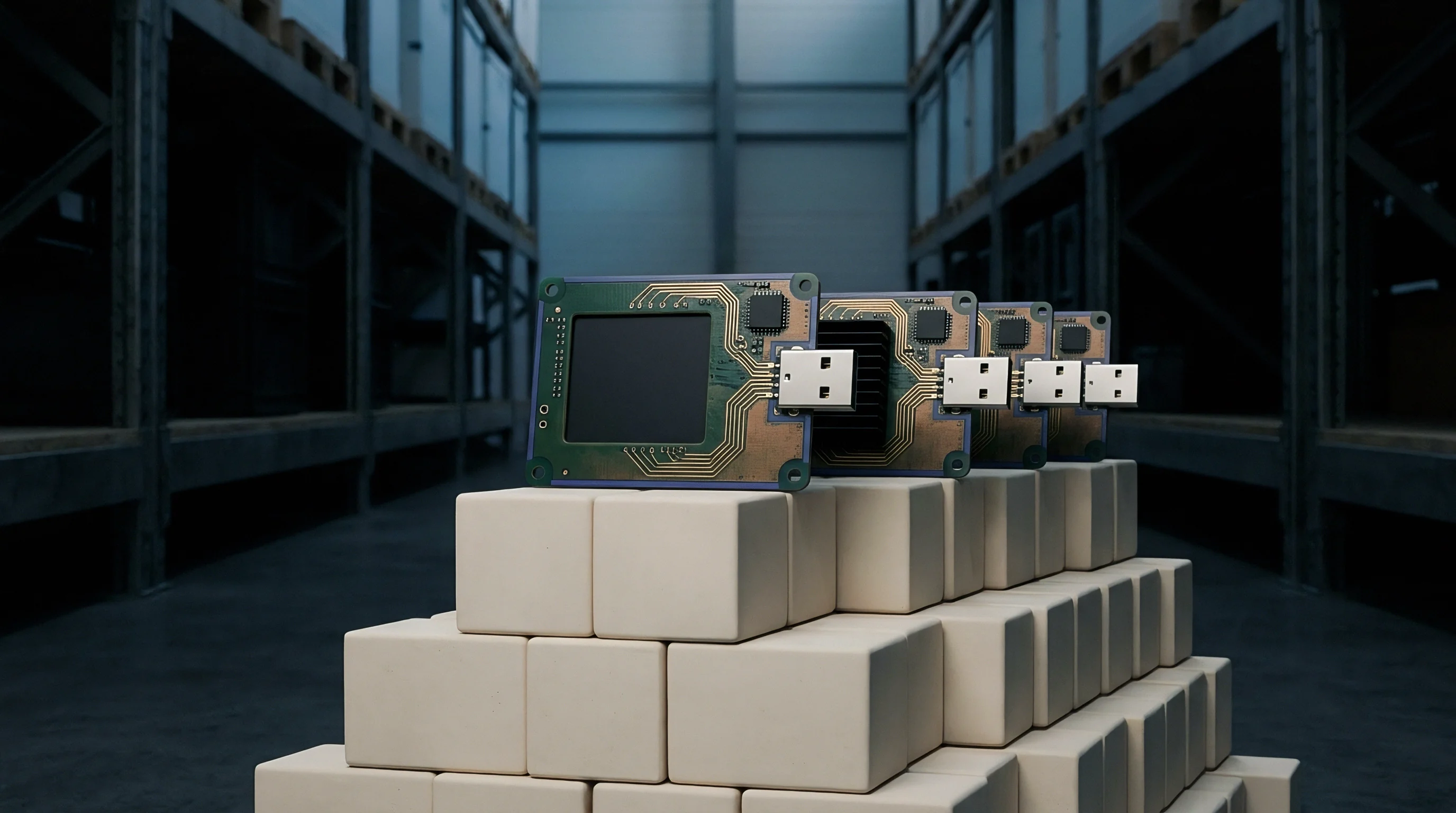
Entry
Cross-border customs clearance for dual-function wireless transceiver modules hinges on proper classification under Heading 8517 of the Harmonized System. Sourcing managers and trade compliance teams categorize combined Bluetooth and Wi-Fi assemblies under subheading 8517.62, as machines for the transmission or reception of voice, images, or other data. This code assignment governs base landed costs, free-trade agreement eligibility, and inspection risk at major ports.
Importers who misclassify dual-radio assemblies under discrete integrated circuit headings or basic RF component lines risk immediate port holds, redelivery demands, back duties, and administrative penalties.
The General Rules for the Interpretation of the Harmonized System (GRI) establish the legal framework. Dual-function modules integrate distinct RF basebands, power amplifiers, and switches onto a single printed circuit board substrate. GRI 1 requires classification according to the heading terms and related section or chapter notes.
Heading 8517 explicitly covers apparatus for the transmission or reception of voice, images, or other data, including equipment for wired or wireless communication. Because a dual-function transceiver handles autonomous signal conversion and packet transmission across multiple radio standards, customs authorities reject attempts to classify these assemblies as bare electronic microassemblies under Heading 8542.
Classification under subheading 8517.62 applies once an assembly integrates passive matching circuitry, baseband processing, and discrete radio-frequency switches on a shared substrate.
Disputes often arise when procurement teams evaluate the split between Wi-Fi and Bluetooth circuits under GRI 3(b). GRI 3(b) covers composite goods and instructs customs officers to classify them based on the component that gives the item its essential character. In a combined IEEE 802.11ax and Bluetooth 5.3 module, neither radio function takes precedence.
Both transmit independently, share the 2.4 GHz band through packet-level coexistence mechanisms, and handle core data transport for the host platform. World Customs Organization guidance dictates that when goods cannot be classified under GRI 3(a) or GRI 3(b), authorities apply GRI 3(c), which selects the heading appearing last in numerical order among those equally applicable. For 8517.62, both transmission functions fall under the same six-digit subheading, making GRI 3(c) splits irrelevant at the international level, though disputes still occur at national eight-digit and ten-digit tariff levels.
Suppliers sometimes claim that leaving antenna ports unpopulated allows classification under lower-duty subassemblies. That advice directly contradicts published customs rulings in both the European Union and the United States.
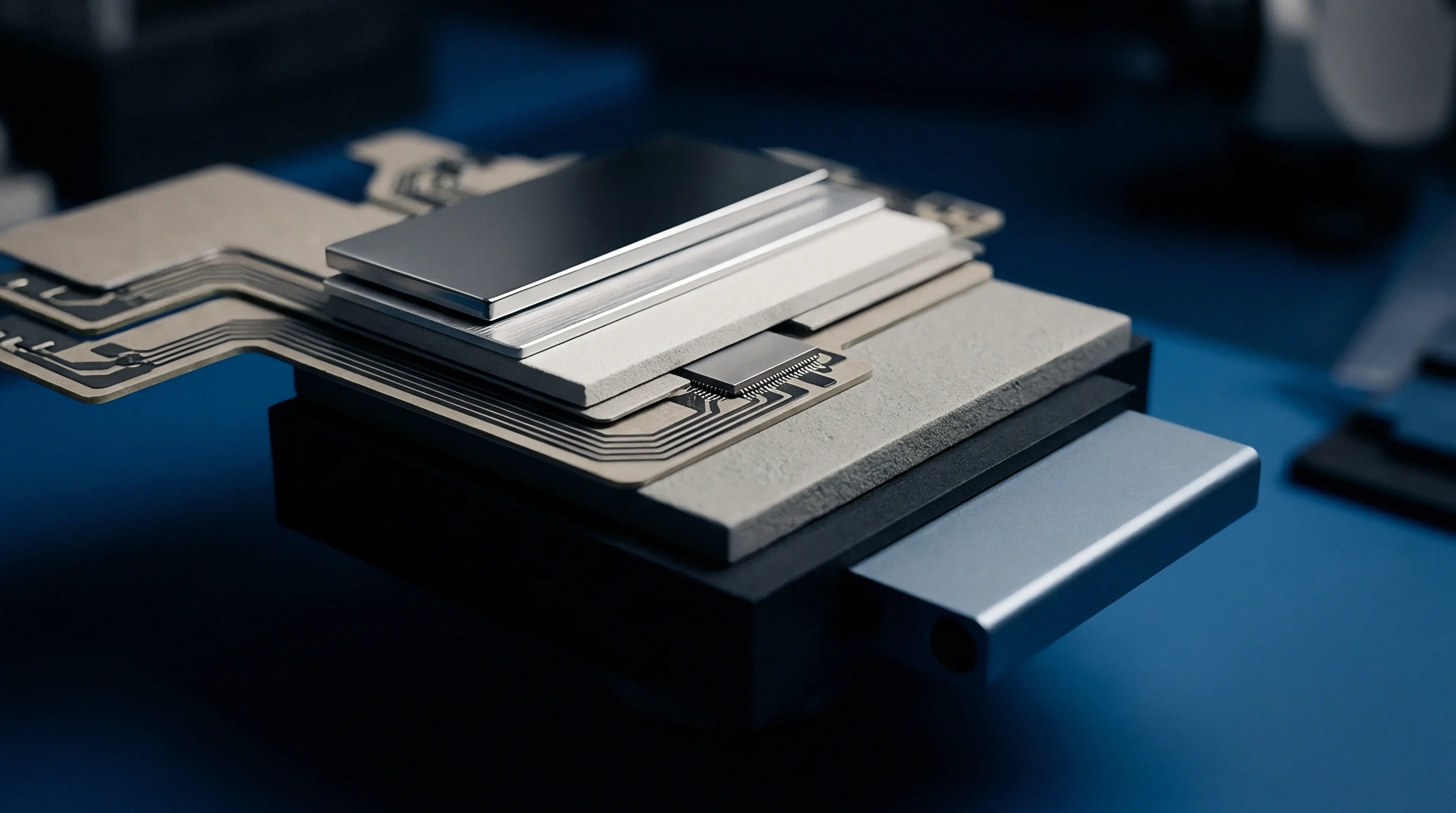
Shield
Radio-frequency shielding often marks the line between a component and a finished transmission apparatus. Customs inspectors look for self-contained radio functionality during physical clearance. A metal shielding can soldered over the transceiver IC, power management unit, and balun network points to an autonomous functional unit.
While this enclosure satisfies electromagnetic compatibility standards under FCC Title 47 CFR Part 15.212 for modular transmitters, it also serves as physical evidence that the item is a complete apparatus under customs guidelines.
Substrate design also affects classification. Modules built on multilayer FR4 or bismaleimide triazine laminates use copper traces to connect baseband processors with low-noise amplifiers, bandpass filters, and crystal oscillators. If the assembly includes a printed trace antenna or a microstrip feedline leading to a miniaturized coaxial connector, customs authorities classify the module as an assembled electronic apparatus under Section XVI, Note 2.
Conversely, modules without shielding, crystal references, or onboard voltage regulation often trigger reclassification into Heading 8542 as multi-chip integrated circuits or Heading 8529 as transmission equipment parts.
| Physical Hardware Configuration | Target HS Code | Applicable Tariff Rule | Customs Scrutiny Factor |
|---|---|---|---|
| Canned transceiver with integrated PCB trace antenna | 8517.62.00 | GRI 1, GRI 6 | Autonomous communication machine |
| Canned dual-radio module with U.FL external antenna port | 8517.62.00 | GRI 1, GRI 3(b) | Apparatus lacking only passive radiating element |
| Open-frame system-in-package without physical shield | 8542.39.00 | Chapter 85 Note 9(b) | Absence of discrete surface mount components |
| Baseband processing unit without radio front-end circuitry | 8542.31.00 | Chapter 85 Note 9(a) | Pure digital signal processing architecture |
| Raw passive printed circuit board with RF trace geometry | 8534.00.00 | GRI 1 | Zero active semiconductor elements mounted |
Consider two common market configurations. The first, typical of industrial Internet of Things endpoints, uses an Espressif ESP32-WROOM dual-core architecture combining 2.4 GHz Wi-Fi and Bluetooth LE on a layout with an integrated ceramic chip antenna. The second, common in automotive infotainment gateways, uses a Marvell or Qualcomm automotive-grade dual-band Wi-Fi 6E plus Bluetooth 5.4 chip connected to dual-pin surface-mount antenna feeds.
The industrial module includes onboard flash memory and runs autonomously without a host microprocessor, whereas the automotive module relies on PCI Express or SDIO interfaces connected to a vehicle telematics control unit. Customs authorities classify both under 8517.62 despite these differences in operational independence, because each contains the modulation, amplification, and packet management circuitry needed to handle high-frequency baseband signals.
Testing laboratories document these physical structures during international type approval testing. While a failure during radiated spurious emission sweeps from 30 MHz to 26 GHz under ETSI EN 300 328 Clause 5.4.9 or FCC Part 15.247(d) might indicate cracked solder joints along the shield perimeter, that same shield stops border inspectors from questioning whether the module is a finished assembly. Customs officers inspect the shield for laser-etched ID codes, compliance markings, and country-of-origin labels.
Presence of FCC IDs, CE marks, and Japanese MIC Giteki markings confirms to inspectors that the item is a certified wireless transmitter rather than an incomplete circuit.
Inspectors generally check the physical shield before reviewing the commercial invoice.

Dispute
Importers and revenue authorities frequently disagree over where component subassemblies end and complete transmission machines begin. Customs agencies routinely audit entries where dual-function transceivers were declared under duty-free computer parts or integrated circuit headings. Authorities challenge these filings by showing that modern transceivers process complex packetized protocol stacks internally, converting baseband digital data into modulated OFDM symbols.
That level of processing moves the hardware out of component-level headings and into apparatus-level codes.
Rulings from U.S. Customs and Border Protection reflect this friction. Importers often argue that transceivers built on small printed circuit boards are computer parts under Heading 8473, which provides duty-free entry for subassemblies intended for automatic data processing units. However, CBP rulings such as HQ H086438 and NY N237247 reject this argument.
Section XVI Note 1(m) explicitly excludes transmission apparatus from Chapter 84 if covered by Heading 8517, giving Heading 8517 priority over general computer component codes.
European authorities reach the same conclusion in Binding Tariff Information decisions, assigning dual-function transceiver boards to CN code 8517 62 00 00. Importers seeking classification under Heading 8542 as electronic integrated circuits often face laboratory analysis. If a cross-section shows discrete capacitors, pull-up resistors, crystal oscillators, or distinct substrate layers between silicon dies, the module fails the definition of an integrated circuit in Chapter 85 Note 9, settling the classification.
A physical assembly containing even one discrete passive component soldered alongside a silicon die falls outside the legal definitions of Chapter 85 Note 9 for integrated circuits.
Customs audits frequently target shipments with conflicting documentation between forwarders and billing parties:
- Bill of Lading Terminology describes the cargo as electronic microchips or PCB components, leading entry writers to default to Heading 8542.
- Commercial Invoice Descriptions read “dual-band Wi-Fi and Bluetooth wireless communication module,” pointing brokers directly to subheading 8517.62.
- Regulatory Compliance Certificates filed with import manifests show FCC Grant authorizations under Part 15C, confirming the item functions as a finished modular transmitter.
- Engineering Purchase Specifications list the item as a system component, creating confusion during post-clearance audits.
Addressing paperwork discrepancies early in the sourcing process prevents automated customs systems from flagging consignments for inspection. Mismatches between commercial paperwork and regulatory filings can trigger five-year retrospective tariff audits across all historical entries.


Filing
Type approval documentation serves as primary evidence during customs verification, with enforcement agencies routinely cross-referencing tariff declarations against national telecommunications registries. In the United States, entry data submitted through the Automated Commercial Environment links commercial entries directly to the FCC Equipment Authorization System. A declaration under HS 8517.62 triggers electronic checks against the declared FCC ID; any discrepancy between the invoice model number and the FCC grant automatically holds the shipment.
In European ports, Radio Equipment Directive (RED) compliance faces similar scrutiny. Market surveillance authorities review the EU Declaration of Conformity before customs releases dual-function modules. This declaration must cite harmonized standards demonstrating spectrum efficiency under RED Article 3.2, such as ETSI EN 300 328 for 2.4 GHz bands and ETSI EN 301 893 for 5 GHz systems.
If a shipment declared under 8517.62 lacks valid ETSI test certificates, customs will hold the freight for non-compliance.
| Jurisdiction | Regulatory Agency | Governing Radio Standard | National Tariff Code | Required Import Document |
|---|---|---|---|---|
| United States | Federal Communications Commission | FCC Part 15.247 / 15.407 | 8517.62.0050 | FCC Form 740 statement data in ACE |
| European Union | National Spectrum Directorates | ETSI EN 300 328 / EN 301 893 | 8517 62 00 00 | EU Declaration of Conformity under RED |
| Japan | Ministry of Internal Affairs and Communications | Radio Law Article 38-24 (Giteki) | 8517.62-000 | Technical Regulations Conformity Certificate |
| South Korea | National Radio Research Agency | Broadcasting and Communications Act | 8517.62.6080 | KC Certificate of Conformity |
| United Kingdom | Office of Communications | Radio Equipment Regulations 2017 | 8517 62 00 00 | UKCA Declaration of Conformity |
Clearance workflows break down when engineering teams update firmware without notifying trade compliance. Enabling Bluetooth Low Energy long-range coded PHY modes or activating additional 5 GHz DFS channels requires updated testing. Under FCC rules, changing operational frequency parameters calls for a Class II Permissive Change filing.
If customs discovers a module transmitting on uncertified frequencies, inspectors hold the cargo as suspected non-compliant telecom equipment, leaving the importer responsible for laboratory testing fees, demurrage, and detention charges.

What Breaks the Import Clearance Path?
Discrepancies between shipping invoices and regulatory certificates disrupt automated clearance at arrival ports. Customs systems perform character-matching checks across four key parameters:
- Certified Model Number on the outer carton must match the test report exactly.
- Hardware Revision Code on the PCB must match the schematics in the regulatory filing.
- Manufacturer Identification Details on the declaration must match the grantee code assigned by radio authorities.
- Firmware Version Designator declared to customs must match the build evaluated during emissions testing.
Test documentation stays linked to customs risk-scoring systems for the lifetime of a product line. Sourcing teams must verify that test reports, invoices, and tariff filings align before booking air or ocean freight. Discrepancies risk product impoundment under national customs laws.
Maintaining documented traceability between testing dossiers and import entries is standard practice for compliance teams.

Assessment
Customs valuation and duty calculations complete the classification lifecycle. Under the Information Technology Agreement (ITA), most participating nations apply a zero-rate MFN duty to items under subheading 8517.62. However, zero-duty status does not eliminate financial exposure, as importers remain liable for trade remedies, national ad valorem tariffs, port surcharges, and misclassification penalties.
U.S. imports illustrate the potential costs. While the base MFN duty rate for 8517.62 is zero, Chinese-origin modules face a 25 percent additional ad valorem duty under Section 301 of the Trade Act of 1974. Module imports under HTS subhead 8517.62.0050 incur this 25 percent duty if origin rules trace back to China.
Importers attempting to avoid Section 301 duties by declaring assemblies under Chapter 84 computer parts or Chapter 85 integrated circuits risk Section 592 civil penalty investigations, where gross negligence penalties can reach four times the duty shortfall or 40 percent of the entry’s declared value.
A misclassification penalty compounds across every historical entry filed within the statutory limitation period rather than calculating against a single intercepted carton.
A sample valuation comparison highlights the financial risk. Consider a program importing 250,000 dual-function modules over twelve months at a unit value of $4.20, establishing a baseline declared value of $1,050,000. These modules are assembled into industrial climate monitoring gateways.
Comparing a compliant filing against a misclassified filing demonstrates the total landed costs:
| Cost Component | Compliant Entry (HS 8517.62.0050) | Misclassified Entry (HS 8542.39.0000) |
|---|---|---|
| Base Customs Value | $1,050,000 | $1,050,000 |
| Base MFN Tariff Rate | 0.0% | 0.0% |
| Section 301 Tariff Assessment | 25.0% ($262,500) | 0.0% ($0 claimed) |
| Merchandise Processing Fee | $614 | $614 |
| Harbor Maintenance Fee | $1,313 | $1,313 |
| Post-Audit Revenue Recovery | $0 | $262,500 |
| Negligence Penalty under Sec. 592 | $0 | $105,000 (10% value) |
| Total Realized Landed Surcharge | $264,427 | $369,427 |
This comparison illustrates the false economy of misclassification. Declaring a transceiver under Heading 8542 avoids the initial $262,500 Section 301 duty at the port. However, a subsequent audit or laboratory review typically results in a Notice of Action reclassifying the entry under 8517.62.0050.
The importer must then pay the $262,500 duty deficit, accrued interest, and potential negligence penalties exceeding $100,000. Sourcing teams avoid this exposure by auditing substantial transformation rules and establishing secondary assembly facilities outside surcharged countries rather than altering tariff codes.
Origin determinations depend on where surface mounting and firmware flashing take place. When raw circuit boards, bare transceiver silicon, and passives are shipped to a facility in Vietnam, Malaysia, or Mexico, customs evaluates whether the assembly process constitutes a substantial transformation. Populating the board via pick-and-place lines and flashing functional firmware converts loose components into an autonomous communication machine under Heading 8517.
This establishes a new country of origin, legally removing Section 301 duties without misclassifying the product.
Questions remain over whether automated over-the-air firmware updates performed after entry could retroactively alter a module’s functional classification under customs law.