Navigating State Radio Regulatory Commission Approvals for Wireless Hardware
Obtaining SRRC type approval requires accredited domestic laboratory testing, valid in-country agency representation, and strict RF emission compliance.


Catalog
State Radio Regulatory Commission approval governs all intentional radiators operating in mainland China. Enforced by the Ministry of Industry and Information Technology through the Radio Regulation of the People’s Republic of China, the rules set strict radio frequency parameters for raw transmitters, integrated modules, and finished end-user devices alike. Hardware entering the commercial market needs a Radio Transmission Equipment Type Approval Certificate and an assigned identification code, which customs officials check against the ministry’s public database before releasing shipments at the port.
Classification depends on radiated power, operating frequency, and overall architecture. Short-range, micro-power devices can meet basic technical limits without formal lab testing, as long as field strength and occupied bandwidth stay within catalog thresholds. Wide-area cellular terminals, high-throughput wireless local area networks, Bluetooth transceivers, and millimeter-wave radar units, on the other hand, must go through evaluation at an accredited domestic lab.
Equipment operating under micro-power exceptions loses exemption status when external amplification expands the transmission boundary beyond specified field strength limits.
Modular setups require careful attention to physical and electrical design. Regulations distinguish complete modular approvals from restricted modular authorizations based on onboard shielding, voltage regulation, and antenna integration. Putting a pre-approved transceiver module into a host product can still trigger re-certification depending on the enclosure design and board layout.
- Complete Modular Approval grants broad host integration rights when the module incorporates its own radio frequency shielding, onboard power supply regulation, permanently affixed antenna or unique connector design, and independent firmware testing controls.
- Restricted Modular Approval obligates the host manufacturer to submit the unified host and radio assembly for supplementary radiated spurious testing whenever onboard voltage regulation or shielding is absent from the module substrate.
- Direct System Integration treats the end device as a unified transmission unit, enforcing complete physical testing across all operational frequency bands regardless of prior subsystem evaluations.
Filing under the wrong product category can set a schedule back by months. System architects avoid misclassification by matching circuit parameters directly against regulatory definitions before booking lab time.

Chamber
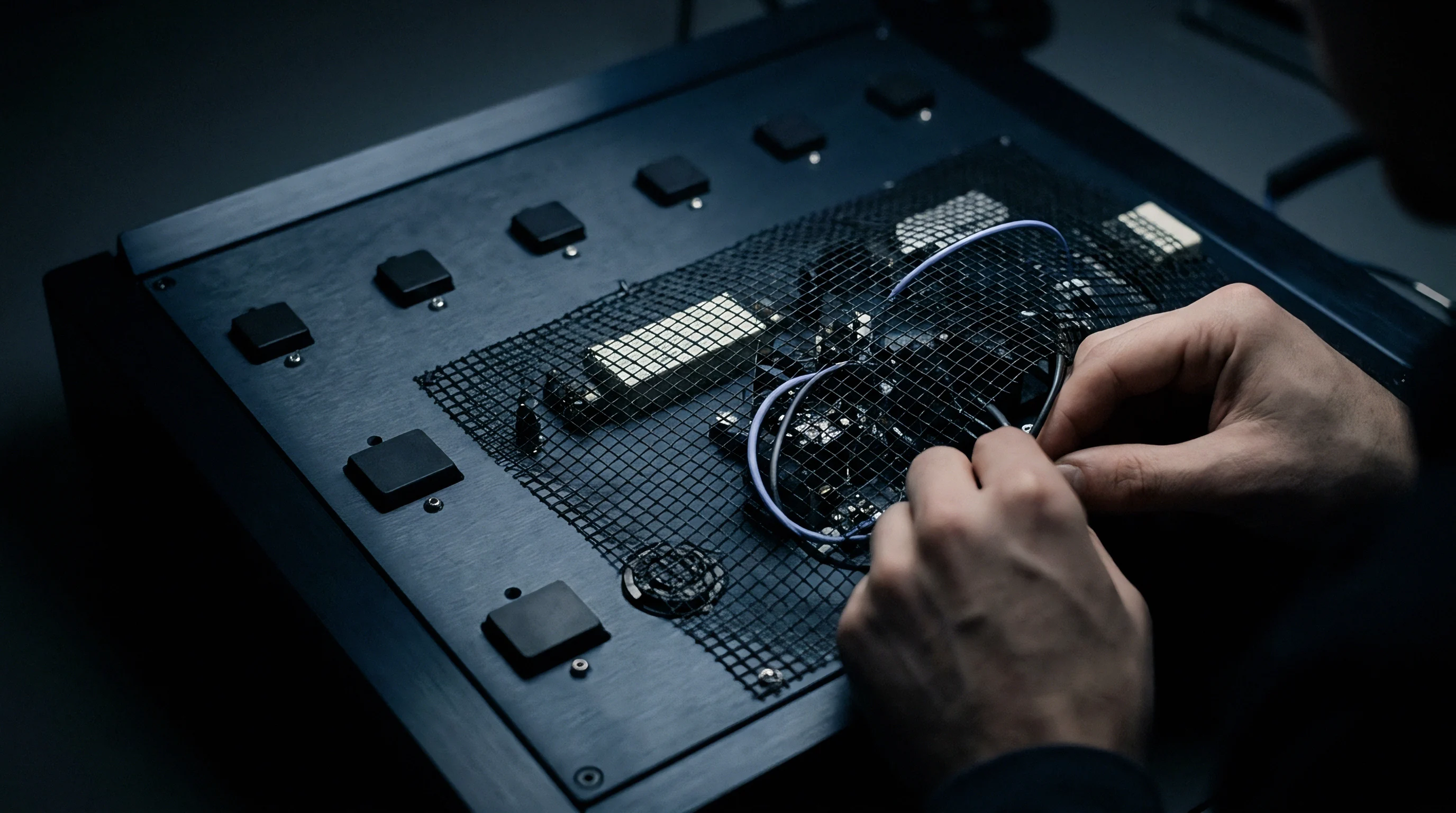
Testing must take place inside mainland facilities accredited by the authority. Foreign test reports, mutual recognition arrangements, and overseas lab accreditations carry no weight in the final application package. Inside an anechoic chamber, the device sits on a non-reflective turntable that rotates through three axes while measurement receivers record fundamental output power, out-of-band spectral density, and harmonic emissions.
Conducted RF testing measures output power, frequency tolerance, occupied bandwidth, and spectral mask compliance on low, middle, and high channels. Engineers connect the radio port directly to calibrated spectrum analyzers using matched attenuators. The evaluation protocol runs the unit under nominal voltage and across extreme temperatures from minus twenty to plus fifty-five degrees Celsius.
| Frequency Band | Primary Standard Notice | Maximum EIRP Limit | Maximum Spectral Density | Spurious Emission Floor |
|---|---|---|---|---|
| 2400 to 2483.5 MHz | MIIT Notice 2021 No. 129 | 20 dBm (100 mW) | 10 dBm/MHz (EIRP) | -30 dBm (30 to 1000 MHz) |
| 5150 to 5350 MHz | MIIT Notice 2021 No. 129 | 23 dBm (200 mW) | 10 dBm/MHz (EIRP) | -40 dBm/MHz (Standby Mode) |
| 5725 to 5850 MHz | MIIT Notice 2021 No. 129 | 30 dBm (1000 mW) | 14 dBm/500kHz (EIRP) | -30 dBm (Operating Spurious) |
| 5925 to 7125 MHz | MIIT Decree 2023 No. 88 | Allocated to IMT / 5G / 6G | Band Access Restricted | Standard Laboratory Limit |
Radiated spurious emissions cause more lab failures than anything else. Digital noise from high-speed memory lines, unshielded switching regulators, or display ribbon cables easily leaks into antenna traces. As the turntable spins, the receiving antenna scans for stray emissions up to the fortieth harmonic of the fundamental carrier frequency.
Any radiated energy climbing above minus thirty decibel-milliwatts between thirty megahertz and one gigahertz halts the test campaign instantly.

Where Do Modular Concessions Cease inside Enclosures?
A host product housing an approved module still needs chamber testing if the enclosure, power distribution, or antenna placement changes radiated behavior. Metal bezels, conductive coatings, and nearby passive components shift antenna impedance, pulling resonant frequencies into restricted adjacent bands.
Engineers lock test units into continuous transmission modes using custom engineering firmware. Commercial production firmware cannot generate the continuous modulated waves or unmodulated carrier signals that test instruments demand. Submission hardware therefore needs accessible serial debug ports or pre-flashed test routines that toggle channel frequencies, modulation schemes, and power levels through simple command-line scripts.
A transmission shift of two megahertz outside the designated band edge converts a standard type approval campaign into a complete board spin.
Labs strictly enforce required sample quantities based on channel density and radio complexity. A device combining dual-band Wi-Fi and Bluetooth Low Energy requires separate dedicated test units configured for conducted port access alongside pristine production-grade units for over-the-air measurements.
- Conducted Radio Sample Preparation involves soldering high-durability coaxial pigtails directly to the RF output trace before the antenna matching network, disabling internal antennas completely.
- Radiated Test Unit Calibration demands identical enclosure materials, plastic resins, internal shielding cans, and final assembly screws matching mass production runs.
- Control Software Validation confirms that the test interface responds to command line instructions across all power levels without crashing the embedded microcontroller.
Failed sweeps prompt immediate termination of testing, burning through reserved lab time and pushing production dates back into subsequent quarters.
Agent
Foreign companies cannot hold type approval certificates directly without an established domestic legal presence. Overseas manufacturers appoint a licensed in-country representative entity registered with the Chinese industrial authority. That domestic representative assumes legal responsibility for regulatory compliance, product traceability, and post-market quality supervision.
Authorization requires a formal letter of authorization drafted under strict bilateral legal formats, complete with official enterprise signatures, certified company chops, and standard corporate registration credentials. The appointed agent handles administrative filing portals, coordinates with accredited testing laboratories, and receives formal certification notices from ministerial clerks.
Letting a distributor entity hold equipment certificates creates severe commercial exposure. If that partnership dissolves, the foreign manufacturer forfeits the right to clear equipment through customs under that specific identification code. Using an independent third-party service entity keeps certificate ownership neutral, protecting brand autonomy across changing supply chains.
The agent was unable to submit the supplementary technical dossier because the overseas engineering division changed the power amplifier supplier without updating the bill of materials.

Crate
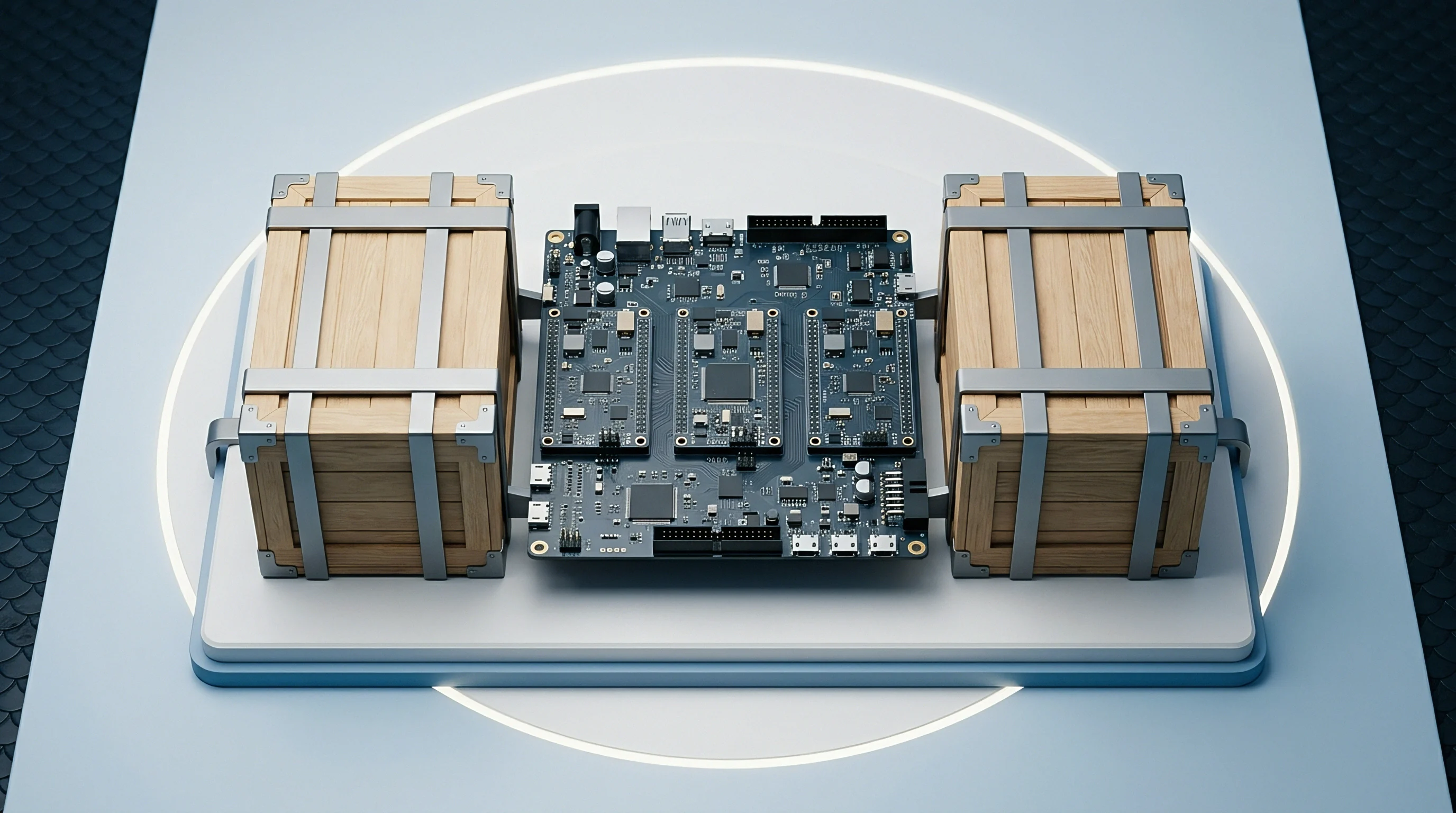
Customs clearance for physical test samples represents a difficult logistical checkpoint. Unapproved radio transmitters crossing Chinese customs borders require a formal test sample import permit issued by the radio regulatory agency. Freight handlers dispatching hardware without this entry permit face shipment impoundment at port facilities.
Customs declarations must detail exact internal hardware revisions, serial numbers, and circuit descriptions matching the preliminary portal registration. Packaging containers protect delicate RF coaxial pigtails from mechanical stress during international freight ~ damaged test cables alter port impedance, producing spurious transmission reflections during baseline laboratory sweeps.
Article 17 of the Radio Regulation mandates immediate customs impoundment for uncertified radio transmission hardware lacking accredited laboratory test consignment documentation.
Sample consignments include comprehensive peripheral hardware packages. Test engineers require dedicated host computers, custom level shifters, auxiliary DC power supplies, and proprietary antenna adapters to execute automated measurement sequences. A missing cable halts laboratory progression, placing the test queue in indefinite suspension.
Purchase contracts establish that the hardware supplier delivers three functional conducted samples, two unmodified radiated units, and dedicated flashing utilities ten business days prior to scheduled chamber slots.

Ledger
Certification expenses cover laboratory evaluation fees, agent representation fees, translation costs, and periodic regulatory maintenance outlays. While state funding covers testing fees for domestic applicants, foreign manufacturers using commercial fast-track programs or independent domestic agents budget standard market rates for technical execution.
| Wireless Technology | Sample Hardware Count | Active Chamber Time | Total Lead Time | Certificate Validity |
|---|---|---|---|---|
| Bluetooth Low Energy | 2 Conducted, 2 Radiated | 4 Business Days | 5 to 7 Weeks | 5 Years |
| Wi-Fi 2.4 GHz / 5 GHz Dual-Band | 3 Conducted, 2 Radiated | 8 Business Days | 6 to 8 Weeks | 5 Years |
| Cellular 4G LTE / NB-IoT | 4 Conducted, 2 Radiated | 12 Business Days | 8 to 10 Weeks | 5 Years |
| Cellular 5G NR Multi-Band | 6 Conducted, 3 Radiated | 18 Business Days | 10 to 14 Weeks | 5 Years |
Approved equipment receives a formal type approval certificate valid for five years. The assigned identification code appears prominently on product exterior housings, rating plates, or approved electronic display screens.
Physical marking follows exact formatting rules. Manufacturers print the text prefix followed by the year and factory sequence directly on the equipment casing. When product surface area falls below minimum visibility thresholds, the identifier appears in packaging inserts and user documentation manuals.
Whether future regulatory revisions will merge separate network access licenses, radio type approvals, and compulsory safety certifications into a unified digital filing schema remains an open administrative question across the telecommunications trade.