Meaning
Wireless local area network architectures utilise a specific portion of the super high frequency spectrum to achieve high data rates over short distances. Equipment operating in the 5150 MHz band benefits from wider channel bandwidths and lower levels of ambient congestion than those found in lower frequencies. This spectrum is internationally designated as part of the Unlicensed National Information Infrastructure.
Operational Constraint
Regulatory rules globally restrict the use of this spectrum to indoor environments to protect co-primary services such as satellite communications. Operating within the 5150 MHz band requires devices to adhere to strict power spectral density limits and integrated antenna configurations. These measures prevent harmful interference to meteorological radars and earth exploration satellites.
Hardware Design
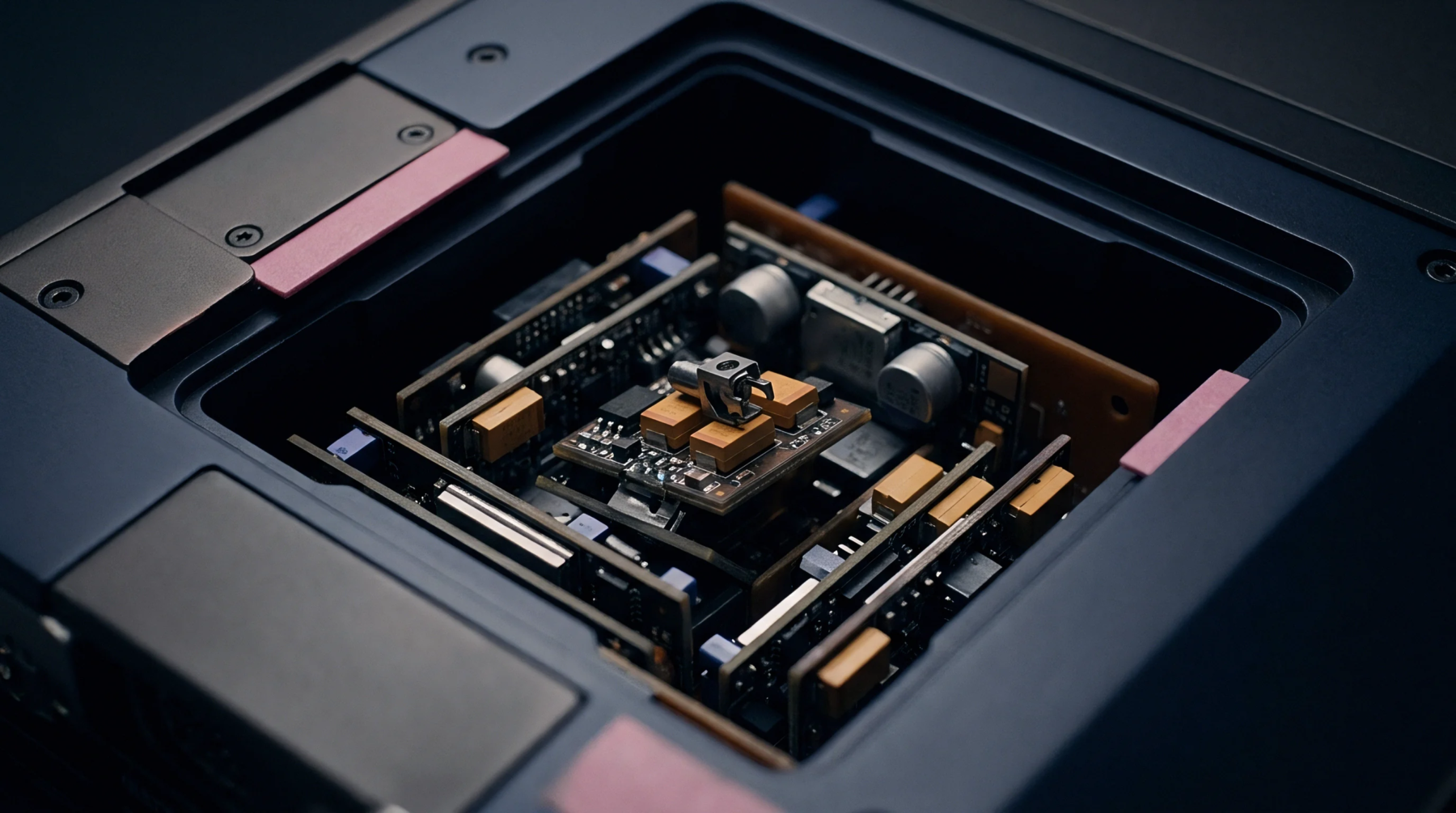
Designing RF front ends for high-frequency transceivers demands tight impedance matching and low-loss dielectric materials. Modules utilizing the 5150 MHz band must maintain high linearity in the power amplifier to prevent signal distortion across wide orthogonal frequency division multiplexing subcarriers. Shielding cans are typically solder-mounted directly over the RF circuitry to contain emissions and block external noise.
This arrangement minimizes the parasitics that degrade signal integrity at five gigahertz.
Approval Procedure
Laboratory verification of compliance is mandatory before a product can be sold. For the 5150 MHz band, the test suite includes transmitter power and unwanted emission measurements. Systems must demonstrate that they cannot be modified by the user.