Integrating Hardware Root of Trust Implementations with Wireless Modular Radio Approvals
Hardware root of trust integration requires active bus testing and targeted permissive change filings to preserve modular radio compliance across global markets.
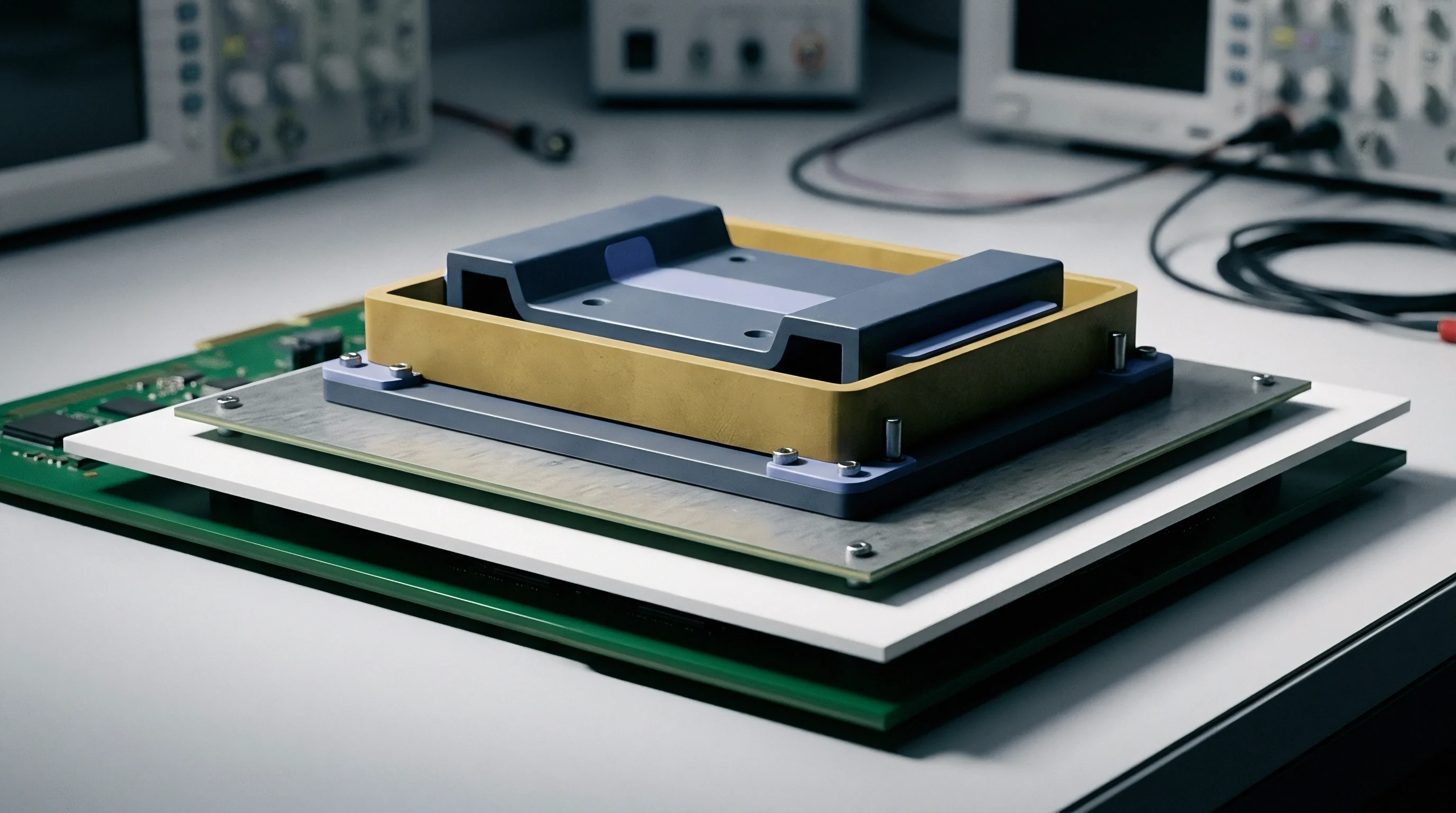

Trace
Interconnecting a discrete secure element to a pre-certified radio module introduces unexpected physical high-frequency conductive paths. Silicon roots of trust handle cryptographic authentication, key storage, and secure boot verification. When mounted on a shared system board, these dedicated security chips interface with wireless transceivers over high-speed buses.
Digital pulse transitions along SPI, I2C, or SPMI lines generate broad spectral content that readily couples into adjacent radio frequency circuits. Antenna trace geometry, once isolated on a certified reference board, now interacts with fast edge rates from security coprocessor clock pins.
Clock signals operating at frequencies between 10 MHz and 50 MHz produce harmonic lines extending deep into the ultra-high frequency band. If a serial peripheral interface line running at 24 MHz sits near an unshielded Wi-Fi or Bluetooth trace, odd harmonics appear directly inside the 2.4 GHz industrial, scientific, and medical band. The 101st harmonic lands precisely at 2424 MHz.
Radiated spurious emission limits under ETSI EN 300 328 and FCC Part 15.247 impose strict bounds on out-of-band energy. Unintended conductive noise entering the power amplifier power supply pin degrades transmitter error vector magnitude while pushing spurious emissions past compliance thresholds.
Board designers often place secure elements near power management integrated circuits to shorten supply connections. This layout strategy backfires when heavy cryptographic processing creates dynamic current spikes. Hardware engines executing elliptic curve cryptography or fast RSA operations pull burst current from local bypass capacitors.
Supply voltage dip ripples across shared power planes, modulating the baseband frequency synthesizer. Spurious emissions expand into sideband spurs that exceed regulatory emission masks during active cryptographic transactions.
System ground bounce during security coprocessor operations creates unwanted RF spurious sidebands that bypass modular radio shielding.

Baseband Interconnect Lines and RF Interference
Printed circuit board designers frequently run high-speed serial peripheral interfaces adjacent to microstrip feed lines. Coupling occurs through both mutual inductive reactance and capacitive fringing fields. Microstrip signals operating with rise times below 1 nanosecond produce broad harmonic profiles.
Adding damping resistors directly at the driver output pins of the secure element rounds off these rapid transitions. A 33-ohm series resistor reduces high-frequency harmonic content by as much as 12 dB without compromising digital bus timing margins.
Trace routing demands dedicated reference planes. Interrupting a ground plane beneath a digital bus forces return currents to flow around the slot, enlarging the loop area. Radiation loop efficiency increases proportionately with loop surface area.
Maintaining an unbroken ground plane under every digital path connecting the hardware root of trust to the wireless baseband minimizes radiated emissions. Differential routing for high-speed clock lines further suppresses common-mode noise propagation into the antenna matching network.
Unfiltered input and output pins on the security chip act as parasitic antennas. High-frequency RF fields radiated by the radio module during transmission couple back into the hardware root of trust. Radiated energy rectifies inside the security chip protection diodes, causing supply voltage offsets or operational resets.
Ferrite beads selected for high impedance at the radio operational frequency block RF feedback, protecting the host system stability.
Cryptographic Switching Transient Effects
Executing asymmetric cryptographic operations causes rapid current step changes on core supply rails. Cryptographic hardware accelerators consume under 5 milliamperes in standby but spike above 80 milliamperes within nanoseconds during heavy operations. A 4.2 dB margin below the EN 301 489-17 Class B emission limit rests on a 4-layer FR4 board stackup with dedicated ground planes.
Moving ground vias further apart than one-twentieth of a wavelength increases ground impedance, reducing that margin to zero.
Supply plane noise directly degrades power amplifier performance. Power supply rejection ratio drops rapidly above 100 kHz in typical modular power amplifiers. When the hardware root of trust causes rail ripple within this vulnerable frequency window, phase noise increases across the radio output spectrum.
Attenuating supply ripple requires low equivalent series resistance tantalum or multi-layer ceramic capacitors placed within two millimeters of the secure element power pins.
Physical isolation prevents current spikes from corrupting transceivers. Splitting power rails through localized low-dropout regulators isolates radio basebands from security coprocessor transients. Inductive decoupling beads fitted between digital supply planes suppress high-frequency feedback paths across the printed circuit assembly.
| Bus Interface Type | Clock Speed (MHz) | Measured Harmonic Peak (GHz) | Margin to CISPR 32 Class B (dB) | Primary Mitigation Strategy |
|---|---|---|---|---|
| Standard I2C | 1.0 | 0.400 | 14.2 | 100 pF Filter Capacitors |
| Fast SPI Mode 0 | 24.0 | 2.424 | 1.8 | 33 Ohm Series Termination |
| Quad-SPI Flash | 80.0 | 4.800 | -2.4 | Solid Ground Plane Shielding |
| Single-Wire SPMI | 26.0 | 5.200 | 3.1 | Localized Ferrite Bead |
System designers must systematically address integration failure modes when connecting security coprocessors to modular transceivers. Common hardware layout defects destroy regulatory headroom.
- Unterminated Clock Lines generate standing waves along bus paths, magnifying high-frequency harmonic emissions across radio bands.
- Shared Low-Dropout Regulators allow security chip current spikes to modulate transceiver power amplifiers, breaking spectral mask compliance.
- Ground Plane Slots force digital return currents into wide loops beneath antenna feedlines, creating efficient unintended radiators.
- Unshielded Security Modules collect near-field energy from integrated antennas, triggering internal hardware resets during high-power radio transmissions.
Failing to control high-frequency digital noise along secure bus paths forces costly host board revisions when radiated emissions exceed regulatory limits during pre-scan testing.


Cipher
Hardware security processors validate radio operational code before the transmitter baseband executes a single instruction. Cryptographic attestation ensures that system firmware running on the host and wireless baseband remains pristine. Security architectures use public key cryptography to check digital signatures on firmware images stored in external flash memory.
If an invalid signature appears, the hardware root of trust holds the radio transceiver in a permanent reset state, preventing unauthorized RF operation.
Regulators increasingly scrutinize firmware integrity mechanisms. The European Union Radio Equipment Directive includes mandatory cybersecurity provisions under Article 3.3. Standard EN 18031-1 specifies technical constraints for equipment that processes software controlling radio behavior.
Transmitters cannot allow unauthorized third-party software updates that alter output power, frequency range, operational duty cycle, or modulation parameters. Integrating a hardware root of trust provides a verifiable anchor for software integrity, satisfying strict regional regulatory expectations.
Baseband radio parameters sit behind cryptographically signed tables. Software defined radios and multi-protocol wireless modules load operational power tables based on geographic location data. When the host system boots, the hardware root of trust verifies both the application code and the regional radio parameter files.
If signature verification fails, transmission remains entirely disabled.
High-security payment terminals use physical mesh envelopes to detect physical probing before clearing cryptographic keys. The embedded wireless module relies on that same root of trust to confirm firmware authentications prior to opening cellular connections. This physical and logical linkage prevents rogue software from modifying certified radio parameters.

Attestation Logic under Radio Equipment Mandates
European standards under EN 18031-1 impose strict checks on boot code authentication before transmission begins. Hardware roots of trust store immutable public key hashes inside write-once memory or electronic fuses during factory provisioning. During boot sequences, the internal boot loader calculates a cryptographic hash over the radio binary code image using algorithms like SHA-256 or SHA-512.
The computed value is checked against the RSA or ECDSA signature appended to the firmware file.
Decoupling attestation logic from host operating systems protects radio configuration files. Operating systems face vulnerabilities that allow local privilege escalation. If radio configuration code resides in unprotected memory, malicious actors can alter transmitter register settings to boost radiated power beyond legal maximum limits.
Root of trust verification isolates key cryptographic steps inside secure hardware, making software-based parameter tampering impossible.
Multi-stage verification sequences secure complex wireless modules. The primary root of trust authenticates a secondary secure bootloader. That authenticated bootloader then checks the application binary and the radio baseband stack separately.
If any component fails verification, the boot sequence halts, ensuring non-compliant software never controls the radio hardware.

Secure Firmware Locking and UNII Security
Federal Communications Commission rules for 5 GHz transmitters restrict modifications to operating parameters. Guidance in KDB 594280 outlines software security requirements for U-NII devices operating under Part 15 Subpart E. Manufacturers demonstrate that unauthorized parties cannot modify country codes, frequency channels, or RF output levels. Implementing hardware-enforced cryptographic sign-offs satisfies FCC software security requirements directly.
Firmware update routines require strong cryptographic chain of custody mechanisms. Updating radio software over the air involves downloading signed binary payloads into temporary memory buffers. The hardware root of trust validates the new image signature before copying code into executable memory blocks.
If signature checks fail, the update drops and the system rolls back to the previous verified release.
- Security processor receives a signed software update payload via the host communications bus.
- Hardware cryptographic engine calculates SHA-256 digest over the binary payload content.
- Public key stored in one-time programmable memory verifies payload digital signature validity.
- Baseband controller receives authorization signal to overwrite existing executable code blocks.
- System reboots while security processor validates memory signatures prior to release from reset.
Under ETSI EN 18031-1 Clause 5.3.2, host systems must enforce hardware verification of all software updates impacting radio frequency parameters prior to execution.


Audit
Laboratory evaluation of integrated radio systems requires active software routines during electromagnetic testing. Test houses assess host devices incorporating pre-certified radio modules to ensure full compliance with regional standards. Adding a hardware root of trust complicates test setup configurations.
Cryptographic verification routines that execute only at system boot pass quietly during short bench tests, but continuous high-throughput transmission tests reveal different electromagnetic emission profiles.
Standard test modes provided by module manufacturers force radio chips into continuous transmit or receive states. These test modes bypass host software layers to streamline laboratory sweeps. Bypassing the host software completely deactivates the hardware root of trust during testing.
If the security chip sits idle, the laboratory test report fails to capture true operational emissions. Regulatory authorities reject test reports if the hardware configuration during testing does not match the commercial product deployment state.
Laboratories demand specialized test software that exercises both the radio baseband and the root of trust simultaneously. Scripted test sequences trigger continuous cryptographic signing operations while the transmitter cycles through modulation schemes, data rates, and channel frequencies. This test methodology exposes worst-case radiated emission profiles created by concurrent digital bus traffic and high-power radio frequency generation.
Simultaneous cryptographic processing and maximum power RF transmission reveal spurious harmonics invisible during standard unmodulated carrier pre-scans.

Chamber Execution with Continuous Cryptographic Workloads
Test engineers place the host device on a wooden turntable inside an anechoic room. Antenna towers sweep vertically and horizontally from 1 meter to 10 meters distance to capture maximum field strength values. Automated software rotates the device through 360 degrees across multiple frequency bands.
Test scripts must continuously exercise the hardware root of trust over serial lines to ensure realistic bus noise conditions during these rotations.
Continuous cryptographic sweeps alter the host power consumption profile. Dynamic current fluctuations induce real-time impedance shifts across power distribution networks. These rapid changes generate broadband noise floors that elevate radiated emissions across the 30 MHz to 1 GHz frequency band.
Setting receiver dwell times correctly ensures peak emissions from intermittent cryptographic bursts are captured properly.
The standard 120 kHz resolution bandwidth setup in 30 MHz to 1 GHz sweeps rests on CISPR 16-1-1 quasi-peak detector dwell times. Utilizing time-domain fast Fourier transform scanning accelerates pre-scan sweeps while preserving accurate capture of dynamic, cryptographic switching transients.
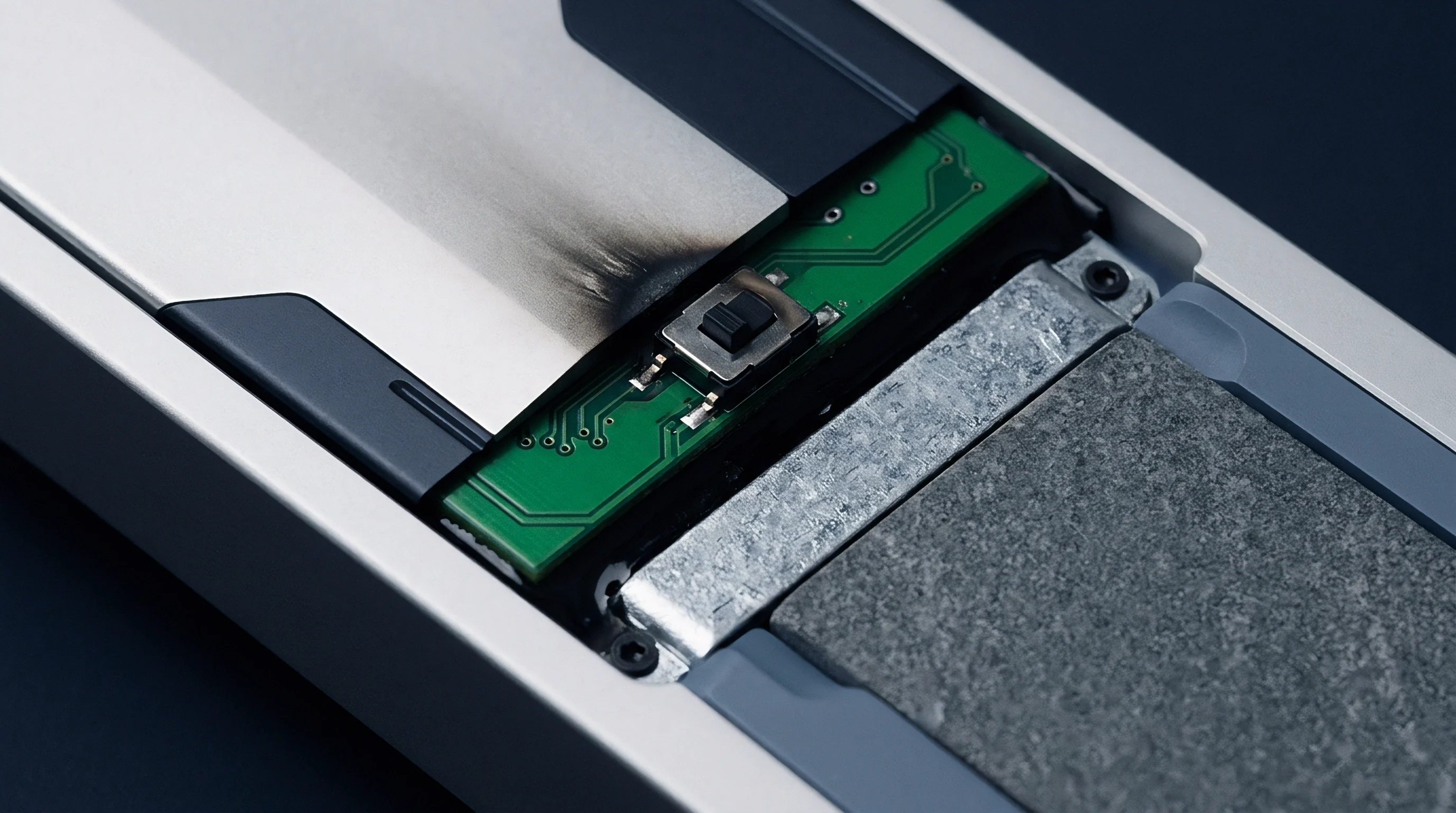
Does Active Cryptography Alter Radiated RF Spurious Levels?
High-speed encryption routines during RF transmission generate discrete broadband harmonics. Comparing emissions between idle and active security coprocessors demonstrates measurable radiation increases. When the root of trust processes continuous AES-256 block operations, spectral noise floors rise by 3 dB to 7 dB across lower digital frequencies.
These line spectrum increases cross regulatory thresholds if proper board isolation is omitted.
Chamber measurement profiles shift when cryptographic bus communication runs concurrently with radio packet bursts. Radiated spurious emissions generated by bus lines add vectorially to radio harmonic outputs. Identifying the precise origin of non-compliant emission peaks requires selective firmware controls that enable and disable security bus traffic independently during diagnostic testing.
Failure analysis relies on near-field magnetic probes to locate emission sources across the printed circuit board assembly. Scanning near-field intensities pinpoints whether radiated energy originates from the secure element clock trace, power rail decoupling loops, or the antenna feed network. Isolate ground loop issues early to avoid repeating full compliance test suites.
Suppliers frequently claim security coprocessors sleep during active radio transmission, rendering dynamic chamber testing unnecessary.


Permit
Modifying baseband authentication paths tests the boundaries of original radio modular filings. Modular radio approvals allow host manufacturers to integrate pre-certified wireless transceivers without repeating expensive full compliance test suites. Grant conditions specify strict integration limits regarding antenna types, trace layouts, and software controls.
Integrating a hardware root of trust alters system software structures and physical trace layouts, forcing a legal evaluation of filing validity.
Federal Communications Commission rules under KDB 996369 govern modular approvals and host integrations. Changes to host microstrip trace designs between the radio module and the antenna connector invalidate modular grants if the modification exceeds strict tolerance bands. If the hardware root of trust sits on the host board and routes signals over altered RF microstrip layouts, the integrator performs permissive change filings or seeks complete host-level re-certification.
Class I permissive changes cover minor software or layout modifications that do not degrade electromagnetic characteristics. Class II permissive changes require submitting formal test data to a Telecommunication Certification Body to prove continued compliance. Adding a hardware root of trust that modifies power management schemes or secure boot parameters usually requires Class II permissive filings due to potential impacts on radio frequency stability and output performance.
Host integrators assume full legal responsibility for ensuring final product assemblies comply with all applicable technical rules regardless of underlying modular approvals.

Class II Permissive Changes versus Host Re-Certification
Filing a Class II modification becomes unavoidable when host trace changes exceed specified antenna gain parameters. original equipment manufacturers evaluate whether adding hardware root of trust circuitry triggers a Class II Permissive Change or demands a fresh equipment authorization. A Class II filing preserves the original modular grant identifier while appending new test reports covering the updated host hardware environment.
European regulatory frameworks do not utilize permissive change classifications. Under the Radio Equipment Directive, host manufacturers issue a fresh EU Declaration of Conformity based on systematic risk assessments. Integrators gather existing modular test reports, perform supplementary electromagnetic compatibility and safety testing on the complete host assembly, and document compliance within the product technical documentation file.
Asian regulatory markets demand distinct filing procedures. Japan’s MIC requires technical property condition updates when host layout modifications alter original grant conditions. China’s SRRC guidelines require fresh radio type approval filings if firmware controls governing operational frequencies are altered by external root of trust architectures.
| Regulatory Jurisdiction | Filing Classification | Required Test Evidence | Documentation updates | Approval Authority |
|---|---|---|---|---|
| United States (FCC) | Class II Permissive Change | Radiated Spurious Emissions, Band Edge | Form 731, Updated Host Photos, Test Report | Telecommunication Certification Body |
| European Union (RED) | Self-Declaration Update | EN 301 489-17 EMC, EN 18031-1 Security | Technical Documentation File, Updated DoC | Internal Manufacturer Sign-Off |
| Japan (MIC) | Type Attestation Modification | Harmonic Emissions, Software Integrity | Updated Construction Type Certificate | Registered Certification Body |
| China (SRRC) | Fresh Radio Type Approval | Full Radio Frequency Sweep, CMIIT Testing | Complete Host Dossier, In-Country Samples | State Radio Monitoring Center |

Host Declarations and Marking Compliance
Affixing product labels requires precise inclusion of modular grant identifiers alongside host brand marks. Host housings must carry visible text stating that the unit contains approved radio modules, referencing specific FCC IDs and ISED certification numbers. If the root of trust alters how electronic labelling operates on integrated display screens, e-label compliance rules under FCC KDB 784748 must be strictly satisfied.
Declarations of Conformity must clearly itemize all applicable technical standards. The finished product documentation highlights compliance with radio frequency regulations, electromagnetic compatibility mandates, low-voltage safety directives, and emerging cybersecurity frameworks. Missing key standard references delays market entry during customs checks and market surveillance audits.
Risk assessments must explicitly document the security controls preventing unauthorized radio parameter modifications. Integrators archive test reports demonstrating that host root of trust routines cannot be bypassed to reconfigure radio operating frequencies or power limits beyond certified bounds.
A simple decision sequence helps integrators evaluate permissive change obligations when connecting external hardware security chips to certified modular radios.
- Trace Modification Assessment checks if physical antenna traces were altered, requiring immediate radiated testing if microstrip dimensions shifted.
- Firmware Boundary Verification determines whether root of trust software controls radio output parameters, triggering mandatory security evaluation filings.
- Power Architecture Review examines if shared voltage regulators introduce ripple, requiring supplementary EMC pre-scans to confirm margin preservation.
- Regional Filing Alignment maps required authorization routes across target markets, establishing necessary test sample quantities and laboratory bookings.
When antenna trace layouts remain identical to original modular reference designs, integrators avoid full host re-testing by filing targeted Class II Permissive Changes supported by spurious emission test data.


Tariff
Financial exposure in global radio launches originates from testing delays rather than base agency submission costs. Booking chamber time at accredited test facilities costs between $2,000 and $3,500 per day. Unplanned re-testing caused by unexpected digital bus harmonics doubles certification budgets while delaying market launch dates.
Product launch delays carry heavy revenue losses that quickly overshadow original hardware development budgets.
Multi-market compliance strategies require careful timing and sequencing. Initial filings in primary jurisdictions like the United States and the European Union establish core compliance documentation. Integrators leverage FCC test reports and EU technical files to streamline secondary submissions in Latin America, Southeast Asia, and the Middle East.
Failing to plan for regional test variations forces duplicate laboratory testing across multiple international facilities.
In-country testing mandates significantly increase market access costs. Jurisdictions like China, Brazil, and South Korea require submitting physical test samples to domestic laboratories. Customs clearance delays, local agent fees, and mandatory sample modifications add weeks to regulatory approval schedules.
Unexpected compliance test failures during final host authorization add an average of six weeks to product launch timelines.

Filing Timelines and In-Country Sample Logistics
Shipping physical test units to overseas laboratories involves complex customs clearance procedures. Test samples require custom firmware builds that enable continuous radio transmission, receiver sensitivity testing, and root of trust bus execution routines. If customs officials detain sample shipments due to incomplete import paperwork, lab bookings expire, forcing integrators to re-queue for testing slots.
In-country testing fees vary widely across international jurisdictions. Brazilian ANATEL certification demands local lab testing, local representative representation, and factory audits, pushing costs above $22,000 per radio family. China’s SRRC type approval demands localized radio parameter sweeps that require up to eight weeks of testing queue lead time.
Managing test sample availability requires careful planning. Laboratories require multiple test units: one unit configured for conductive RF testing with coaxial pigtails attached directly to the module output, and two fully assembled, un-opened commercial units for radiated emissions and immunity testing. Missing specialized conductive test samples halts laboratory progress immediately.

Budget Contingencies across Global Regulatory Jurisdictions
Unexpected regulatory re-testing consumes reserve allocations faster than initial laboratory quotes indicate. Host integration projects routinely set aside 20% to 30% financial contingencies above base certification estimates to cover potential re-scans, layout fixes, and supplementary filings. Managing regulatory lead times requires parallel submission workflows across non-dependent market regions.
The estimated $14,000 allowance for unannounced SRRC modular security audits in Beijing labs carries a variance that cannot be bound prior to agency docket assignment. Integrators protect project budgets by holding a flat $20,000 reserve contingency per product family during Chinese market filings.
| Target Market | Regulatory Body | Base Test & Filing Fee (USD) | Typical Lead Time (Weeks) | In-Country Sample Requirement |
|---|---|---|---|---|
| United States | FCC (via TCB) | $6,500 – $9,500 | 3 – 5 | No (Accepts Accredited Lab Data) |
| European Union | CE (Self-DoC + CE Mark) | $4,500 – $8,000 | 2 – 4 | No (Internal Technical File) |
| China | SRRC | $12,000 – $18,000 | 8 – 12 | Yes (Mandatory Local Lab Testing) |
| Brazil | ANATEL | $18,000 – $25,000 | 10 – 14 | Yes (Local Representative Required) |
What hidden administrative fees arise when international regulatory bodies suddenly update cybersecurity attestation mandates mid-filing?