Contractual Unbundling Strategies for Firmware Driver Code Handover and Test Fixture Custody
Unbundling firmware drivers and test fixtures requires explicit source repositories, containerized builds, physical CAD files, and audited fixture escrow.


Boundary
Turnkey module contracts often hide firmware driver source code and physical programming fixtures inside non-recurring engineering fees. When an OEM tries to port a wireless module to another microcontroller unit or take over driver maintenance internally, contracts written around complete assembly part numbers block design ownership. Unbundling firmware drivers and test hardware requires explicit contractual definition of operational handover points before releasing tooling payments.
This separation protects intellectual property assets, build tooling, and test equipment from the ongoing supply of packaged modules.

Contractual Architecture of Firmware Unbundling
Modular procurement separates silicon fabrication, substrate layout, low-level software driver development, and production test execution. Under a standard turnkey model, the vendor keeps the lower abstraction layers and delivers a pre-compiled binary image with the physical hardware. Contractual unbundling splits this scope into distinct, fee-bearing work packages.
This separates raw hardware assembly from board support packages, peripheral drivers, and factory test sequences. Each unbundled layer gets its own scope of work that explicitly details source deliverables, compiler environment limits, test fixture schematics, and licensing rights.
Hardware vendors often push back against code unbundling to keep customers from moving off proprietary drivers to lower-cost second sources. To prevent vendor lock-in, negotiators establish the boundary between vendor-owned driver IP and buyer-owned application interfaces right at the hardware abstraction layer. Above this layer, code belongs entirely to the buyer.
Below it, vendor drivers run under perpetual, royalty-free, source-accessible licenses that allow internal modifications and automated builds on third-party systems.
Decoupling Code IP from Physical Silicon Supply
Decoupling software driver access from physical volume purchasing requires explicit definition of unbundled deliverables inside the master services agreement. A standard procurement contract treating firmware as embedded software bundled into unit prices leaves the buyer vulnerable when the vendor discontinues a component or increases prices. When drivers are contractually unbundled, the buyer owns or controls the intermediate software artifacts necessary to rebuild, re-target, and re-flash the module independently of the original supplier’s engineering staff.
| Layer Name | Artifact Deliverable | Source Code Format | Ownership Status | Verification Criterion |
|---|---|---|---|---|
| Hardware Abstraction Layer | Register map bindings, pinmux definitions, low-level bus init | C source, header files, linker scripts | Perpetual royalty-free source license | Clean build with zero vendor compiler warnings |
| Peripheral Drivers | SPI, I2C, UART, DMA controller implementation files | C source code, clear API documentation | Buyer exclusive or broad field-of-use IP | Passing automated hardware unit tests |
| Protocol Stacks | Radio MAC layers, network protocol stacks, crypto drivers | ANSI C source, object libraries if IP locked | Non-exclusive source escrow release | Compliance conformance suite execution |
| Manufacturing Diagnostics | Factory programming scripts, RF calibration binaries | Python scripts, shell automation, C code | Buyer exclusive ownership | Independent execution on reference test rig |
Separating hardware purchasing from firmware source rights means specifying exact file formats and access methods during contract negotiations. Before receiving final non-recurring engineering milestone payouts, vendors must upload complete repository histories ~ including build scripts, environment containers, and register configuration maps ~ to a buyer-accessible repository.
Standard development agreements must contain explicit carve-outs that grant full source code access and modification rights for all peripheral drivers upon completion of Phase 2 engineering acceptance.
Contractual unbundling works when legal terms mirror the actual system architecture. Contracts specify that hardware unit prices cover manufacturing, raw components, scrap allowance, and factory margin, leaving software rights and fixture custody to separate legal schedules. Separating these schedules prevents suppliers from withholding software fixes during commercial unit-price negotiations.
A contract clause that changes ownership boundaries states: “Upon payment of Milestone 3, Supplier assigns to Buyer all right, title, and interest in and to the custom peripheral driver source code, including build scripts and register definition files, granting an irrevocable, perpetual, royalty-free license to modify and recompile any embedded vendor libraries utilized therein.”

Source
Low-level driver handovers fail when build steps depend on undocumented local environments or proprietary compilers. Embedded driver code needs complete context to build independently. A proper handover package contains driver C source files, header definitions, assembly initialization code, linker scripts, build container definitions, and functional test scripts.
Specifications must demand zero-binary-blob deliverables for core peripheral operations, stopping vendors from shipping pre-compiled static libraries that conceal register settings or silicon errata workarounds.
What File Package Guarantees Independently Reproducible Driver Builds?
A successful driver handover relies on a self-contained code delivery package. The source repository needs a deterministic layout where every dependency compiles inside an isolated build container. Microcontroller pin assignments, clock settings, and interrupt service routines should sit in readable C files instead of compiled static libraries.
The build framework relies on containerized toolchains, like Docker images containing exact cross-compiler releases, linker versions, and system libraries. A single build command converts raw source files into identical binary images across different host platforms. This setup prevents build drift when development teams shift between program phases.
HAL Isolation and Low-Level Register Mapping
Embedded architecture requires clear isolation between low-level hardware abstraction layers and application software. Unbundling specifically targets register map bindings and register-level macros. Because vendors often hide hardware bugs inside proprietary abstraction layers, requiring unbundled source code exposes raw memory-mapped register writes, DMA channel configurations, and power-state transition sequences.
Driver source packages need to include complete peripheral register maps matching published datasheets. When vendors update silicon revisions during production runs, having unbundled code allows in-house engineers to adjust initialization sequences, timing delays, and interrupt handler priorities without waiting on vendor support schedules.
A driver source package containing pre-compiled binary blobs yields an average of 42 additional engineering hours during secondary platform bring-up due to reverse-engineering hidden register dependencies.
Binary Blob Identification and Dependency Extraction
Suppliers frequently slip static libraries into board support packages under the pretense of protecting IP. Uncovering and removing these binary components requires auditing build scripts, linker directives, and symbol tables during code acceptance.
- Static Library Dependencies prevent compilation against updated target toolchains and mask register initialization logic required for power management optimization.
- Proprietary Header Macros obscure direct memory-mapped register accesses, creating hidden hardware lock-in across microcontroller generations.
- Undocumented Timing Loops fail when compiler optimization flags change, causing intermittent bus timeouts on production hardware.
- Hardcoded Memory Addresses restrict memory map reallocation when integrating third-party real-time operating systems into target products.
Extracting these dependencies means replacing opaque binary libraries with fully documented, open-source or buyer-owned driver equivalents. If vendor IP constraints prevent releasing full source code for complex radio protocol stacks, the contract must define a clean interface boundary. This wraps binary blobs inside documented C wrappers, separating proprietary stack functions from low-level bus drivers and board initialization routines.
The code handover package lands on the bench ready for compilation verification. Engineers run build scripts in clean environments to generate flash binaries bit-for-bit identical to vendor reference builds. Operational risks still linger, however, if a vendor driver relies on undocumented assembly snippets to patch silicon errata.

Jig
Physical test fixtures represent the single largest operational single point of failure during contract manufacturing transfers. Automated test equipment, bed-of-nails programming jigs, functional test racks, and RF shielding enclosures validate module quality before shipment. When moving production from a primary design house to a secondary contract manufacturer, custody disputes over fixtures can stall production lines for months.
Unbundling test fixtures from generic factory tooling charges requires explicit physical inventories, CAD file ownership transfers, calibration parameter custody, and pogo-pin maintenance documentation.

Physical Architecture of Test Fixtures and Bed-of-Nails ATE
Production test jigs combine mechanical, electrical, and software components into an integrated validation platform. A standard bed-of-nails fixture uses custom-machined acrylic or G10 plates holding spring-loaded pogo pins aligned with test points on the target board assembly. The fixture interfaces with signal switching matrices, multimeters, spectrum analyzers, power supplies, and automated programming units.
Unbundling contracts establish clear ownership of the fixture frame, pogo-pin receiver interface, interposer boards, and custom wiring harnesses.
Custody Transfers and Manufacturing Documentation Packages
Physical custody transfers require a complete engineering documentation package alongside the hardware shipment. A physical jig without full schematics and wiring diagrams is practically useless at a secondary factory. Because of this, the unbundling agreement mandates delivery of a complete manufacturing test dossier prior to final fixture acceptance.
- Verify physical fixture serial numbers against the master inventory list and inspect frame structural integrity.
- Obtain native CAD assembly files, drill files, and pogo-pin wire list maps in IPC-2581 or Gerber formats.
- Extract test executive software source code, flash programming binary files, and configuration scripts from local test station computers.
- Audit calibration verification data against known golden unit reference standards under thermal equilibrium.
- Package the physical fixture in shock-isolated crates with moisture indicators and calibrated shock monitors for transit.
Fixture transfer packages lacking pogo-pin wiring diagrams require an average of three weeks to reverse-engineer at new factory sites.
| Fixture Element | Physical Hardware Asset | CAD/CAM File Format | Acceptance Standard | Escrow Release Criteria |
|---|---|---|---|---|
| Bed-of-Nails Base | Machined acrylic top/bottom plates, guide pins | SolidWorks assembly, DXF drill maps | Pin alignment tolerance within +/- 0.05 mm | Physical delivery to designated warehouse |
| Test Interposer PCB | Signal routing PCB, switching relays, loads | Altium Designer native schematics, Gerber X2 | Continuity and isolation test clearance | Full Gerber and fabrication package sign-off |
| Pogo-Pin Harness | Spring pins, wiring looms, mass interconnect connectors | Wire list CSV, harness schematic PDF | Contact resistance under 50 milliohms per pin | Documented wire map delivery |
| Measurement Instruments | Custom load boards, RF attenuator blocks, DAQ cards | Schematics, bill of materials, calibration logs | NIST-traceable calibration certificates | Verification of instrument serial logs |
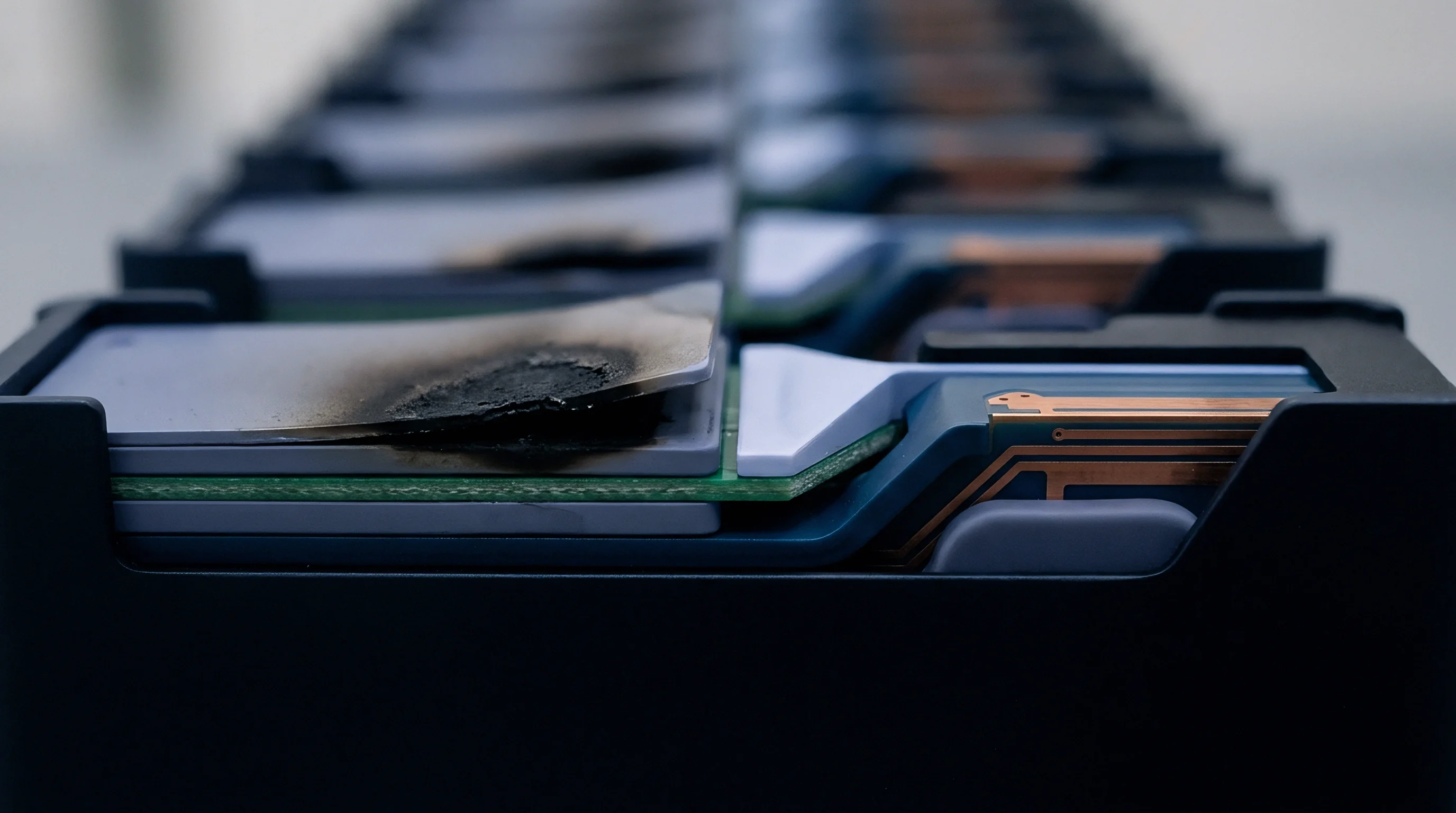
Calibration Records and Pogo Pin Wear Metrics
Test fixture accuracy degrades over high-volume production runs. Spring-loaded pogo pins suffer mechanical wear, surface oxidation, and solder flux contamination, leading to false failures and erratic contact resistance. Most pogo pins show contact degradation after 50,000 to 100,000 actuations, depending on plating material and factory cleanroom conditions.
Physical test fixtures require mandatory contact resistance logging per pogo pin to detect plating wear before false failure rates exceed zero point two percent of production volume.
Unbundling contracts specify fixture maintenance protocols, including maximum allowable pin actuations, replacement part numbers, and mandatory recalibration schedules. Suppliers must store digital actuation logs inside fixture EEPROMs or local test executive software. Upon transfer of custody, suppliers hand over all historical maintenance records, replacement pin inventories, and golden unit verification sets.
Contract negotiations frequently encounter supplier pushback regarding fixture hardware delivery. A common supplier excuse sounds like: “The test fixture contains proprietary factory test routines and measurement circuitry integrated into our bench infrastructure, making physical separation impossible without destroying the test platform.”
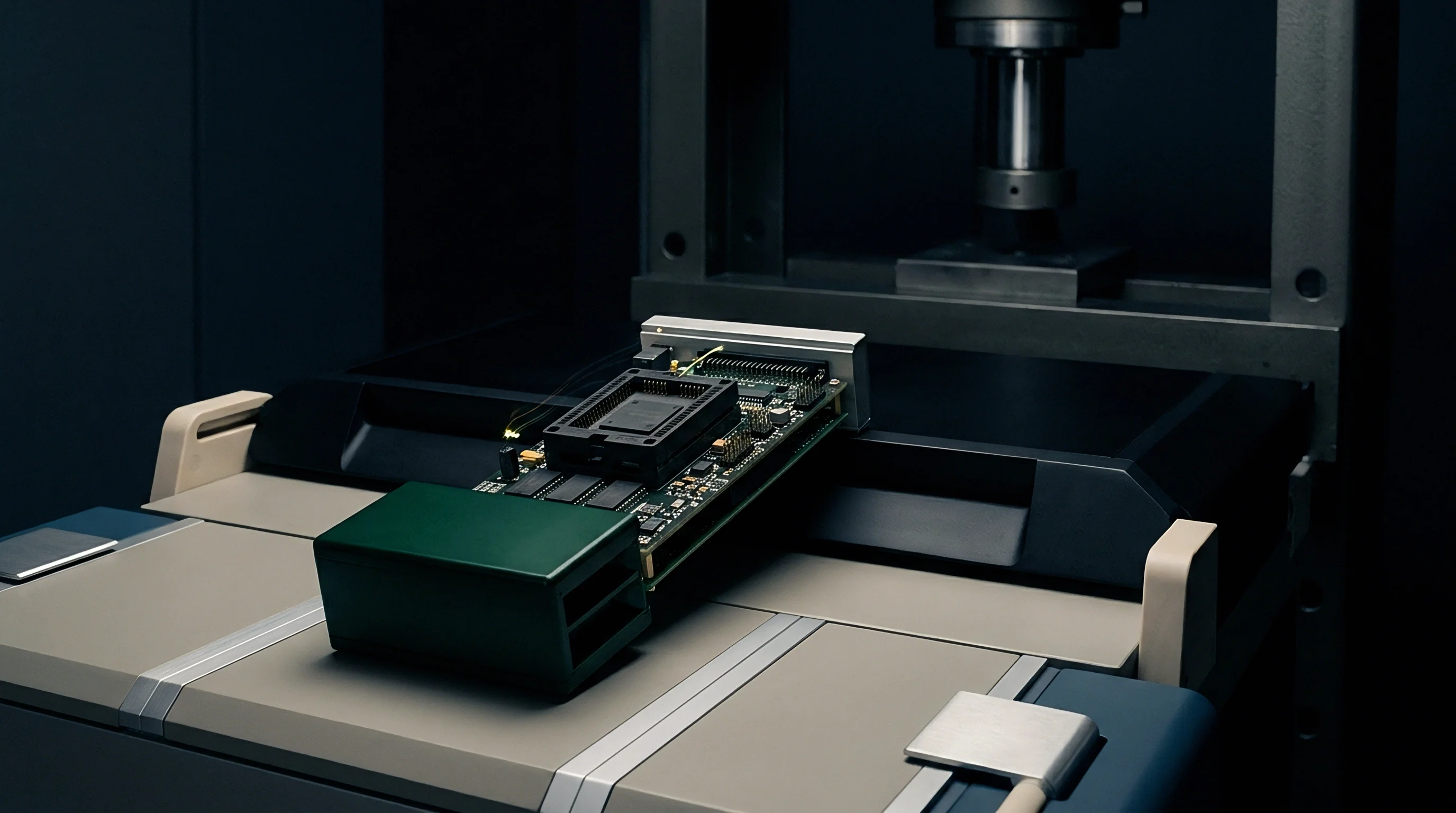
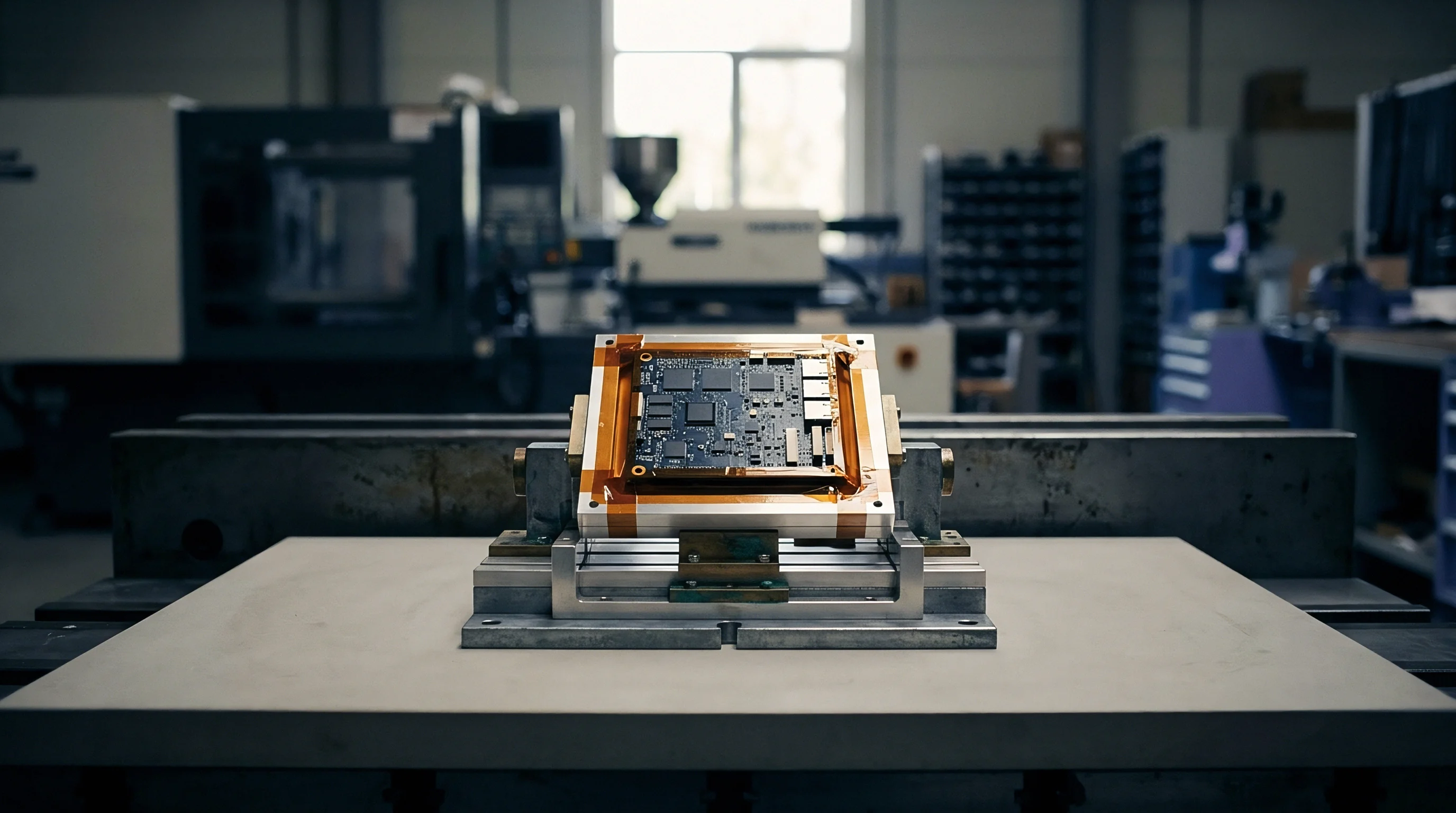
Qualification
Handover verification confirms that unbundled firmware builds independently and that test fixtures accurately evaluate hardware functionality. Qualification requires a protocol executed on neutral ground to prove that transferred source files and physical jigs perform identically to original factory setups. This prevents vendors from handing over incomplete code repositories or worn test fixtures that fail incoming line audits.

Deterministic Toolchain Verification and Hermetic Environments
Deterministic driver compilation requires a hermetic build environment where network access is disabled and all build inputs are explicitly declared. Handover qualification mandates compiling unbundled source code inside isolated containers using specified compiler binaries, flags, and linker scripts. The resulting hex or binary file must match the target checksum exactly.
Any discrepancy between compiled binaries and deployed factory binaries points to hidden compiler flags, uncommitted code edits, or external static library dependencies. Qualification protocols reject build packages displaying binary variance, requiring vendor fixes before signing off on milestone payments.

Golden Unit Benchmarking and Signal Integrity Audits
Fixture qualification involves testing a standardized set of golden, nominal, and known-bad hardware units on the transferred jig. Golden units are known-good modules with parametric performance right at the center of production tolerances. Known-bad units contain intentional defects like open solder joints, shorted power rails, out-of-spec clock frequencies, or degraded RF output power.
- Golden Unit Repeatability Test executes 100 consecutive test cycles on a single reference module to verify measurement standard deviation remains within 5 percent of allowable limits.
- Fault Detection Audit verifies that the transferred test jig reliably identifies all deliberate defects on known-bad unit samples without false passes.
- Cross-Fixture Correlation Analysis compares measurement data between vendor original jigs and buyer target jigs, establishing measurement offset limits.
- Pogo-Pin Resistance Audit measures loop resistance across every test point path, flagging any pin exceeding 100 milliohms total resistance.
Executing cross-fixture correlation requires strict environmental controls. Ambient temperature shifts alter RF path losses and analog measurement thresholds on bed-of-nails fixtures. Qualification protocols mandate testing within a controlled window of 20 to 24 degrees Celsius, using calibrated RF cables and torque wrenches for coaxial connections.
Qualification relies on a clear decision framework during incoming handover audits.
- Build Hash Equivalence confirms that the hex file compiled from transferred source code matches factory module binary hashes bit-for-bit.
- Hermetic Container Execution validates that the compilation pipeline completes with network interfaces disabled and zero local host toolchain calls.
- Schematic-to-Fixture Verification matches physical fixture interconnect wiring pin-for-pin against delivered Altium PCB schematics and CAD files.
- Golden Unit Yield Verification mandates 100 percent pass rate across 50 consecutive runs of golden unit samples on the unbundled test rig.
- Fault Isolation Clearance confirms test fixture scripts flag forced short-circuit and open-circuit conditions at specific test nodes without script crashes.
A reliable rule of thumb for engineering transfers is that driver compilation and fixture repeatability must be demonstrated independently on buyer hardware before signing physical asset receipt certificates.
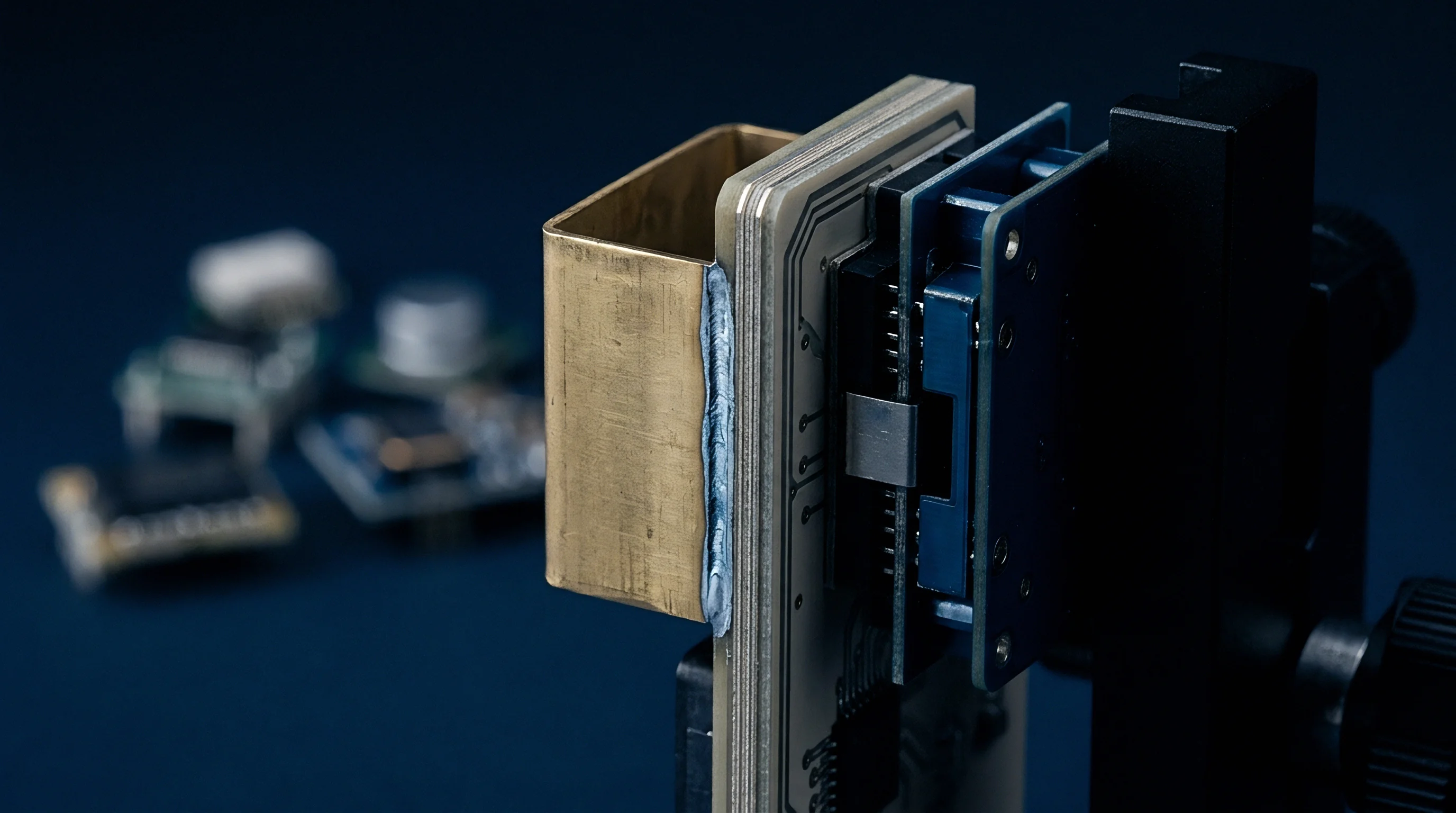

Deposit
Escrow mechanisms protect buyer investments when source code and fixture custody cannot transfer immediately at project kickoff. Source code and test fixture designs are placed in secure physical and digital escrow accounts governed by clear release conditions. This prevents operational paralysis if a module supplier faces insolvency, acquisition by a competitor, or a material breach of contract.
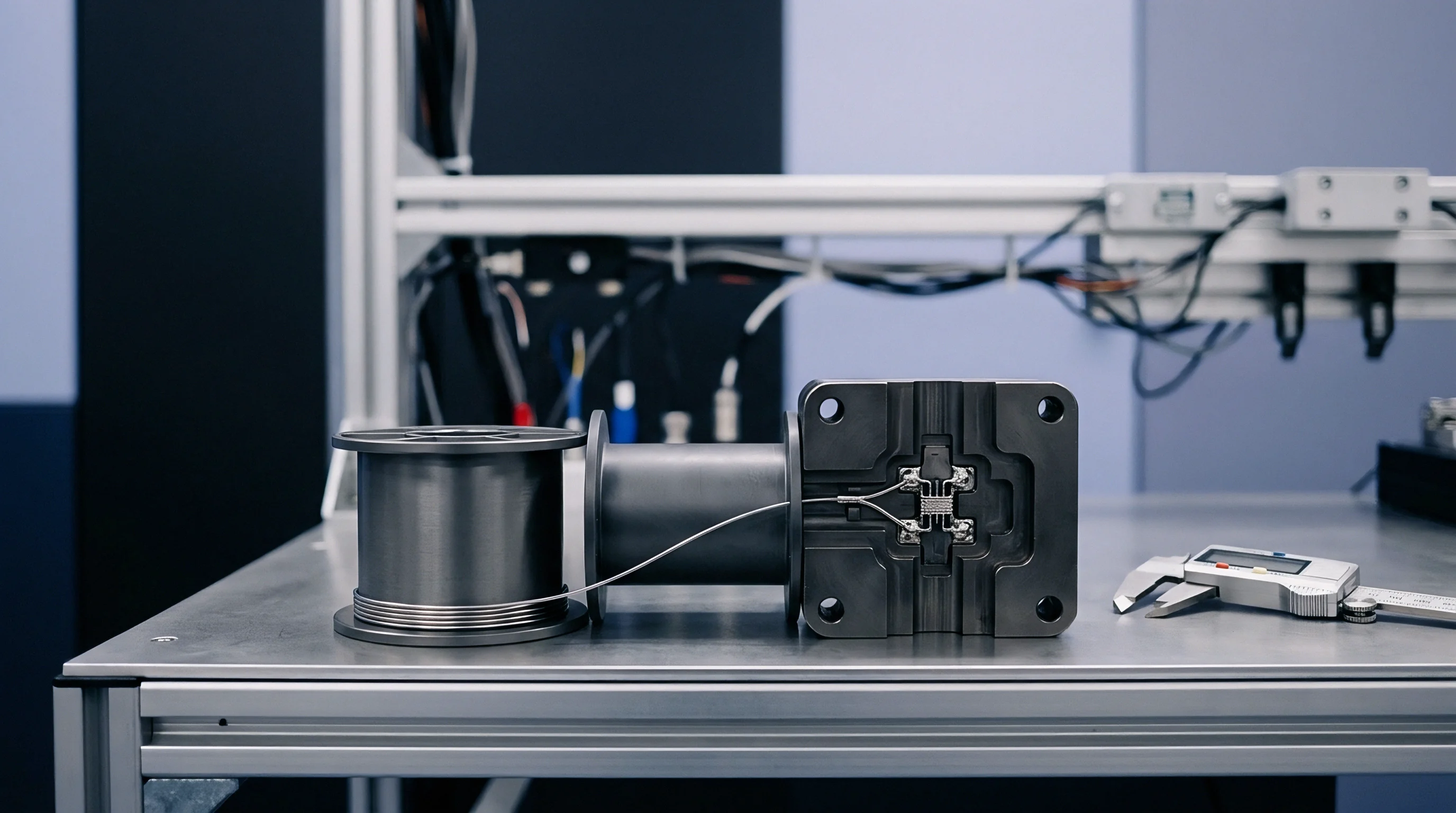
Source Code Escrow and Physical Fixture Staging
Digital escrow holds complete firmware repositories, container build definitions, register maps, and factory test executive source code. Third-party agents manage these assets and run automated quarterly compilation audits to verify repository completeness. Physical escrow holds duplicate test fixtures, bed-of-nails interposer PCBs, and programming hardware in climate-controlled storage facilities.
Escrow release clauses need objective, trigger-based terms. Trigger events include bankruptcy filings, failure to supply modules within agreed lead times for 60 consecutive days, or formal termination of module production without a 12-month last-time buy window. Once a trigger is verified, the escrow agent releases source code access keys and fixture shipping documents to the buyer.

NRE Unbundling and Unit Price Recalibration
Unbundling firmware drivers and test hardware changes commercial terms across the module lifecycle. Traditional bundled pricing rolls engineering costs into higher hardware unit prices, whereas unbundled pricing separates non-recurring engineering fees, software licensing, fixture fabrication, and raw manufacturing charges.
| Integration Scope | Initial NRE Cost Delta | Unit Price Impact | Transfer Delay Risk | Warranty Expiry Trigger |
|---|---|---|---|---|
| Turnkey Bundled | Baseline reference pricing | Includes amortized software IP & fixture costs | High (6 to 12 months vendor lock-in) | Standard 12 months post-shipment |
| Semi-Custom Unbundled | +15% to +25% upfront NRE fee | Direct bill-of-materials plus factory margin | Medium (2 to 4 months transfer time) | Transfer of driver source verification |
| Fully Unbundled IP | +40% to +60% upfront NRE fee | Lowest unit price (raw manufacturing cost) | Low (Under 3 weeks transition time) | Milestone sign-off and escrow deposit |
Unbundling increases initial NRE expenses up front while lowering unit volume costs. By paying for explicit ownership rights and fixture assets early on, the buyer secures lower per-unit manufacturing costs and eliminates exit friction when shifting production to alternative contract manufacturers.
Unbundling firmware source code and test fixture custody increases initial NRE expenses by approximately 30 percent while decreasing long-term module volume pricing by 12 to 18 percent.
Recalibrating unit prices requires a line-item bill of materials audit. Once driver source code and test fixtures are fully paid for and unbundled, module unit prices reflect only component costs, PCB fabrication, surface-mount assembly labor, scrap allowance, and contract manufacturing margin. The buyer retains the legal and technical ability to move production to any qualified assembly line worldwide.
Failing to secure unbundled firmware driver source code and test fixture custody prior to volume production leaves the buyer exposed to unilateral supplier price hikes, unresolvable supply bottlenecks, and severe program delays during manufacturer migrations.