
Evaluating Class Two Permissive Change Triggers for Encapsulated Modules
Class Two Permissive Changes are triggered when physical, antenna, or firmware modifications alter RF emissions or RF exposure without exceeding original grant limits.
Class Two Permissive Changes are triggered when physical, antenna, or firmware modifications alter RF emissions or RF exposure without exceeding original grant limits.

Modular radio updates split into minor Class I file updates and major Class II filings based on measured shifts in radiated power, emissions, and frequency bands.

Dynamic near-field reconstruction requires real-time dielectric telemetry to prevent false spatial peak absorption errors during regulatory SAR certification scans.

Dense transceiver enclosures generate common-mode currents and dynamic intermodulation across metal seams, requiring early near-field scanning to prevent costly compliance retests.

Structure foreign radio registrations through independent representatives or direct applicant codes to prevent commercial distributors from holding regulatory lockouts.

Resolving border clearance failures requires deterministic test firmware defaults and complete outer packaging mark compliance before import shipping.
Encapsulating dual band antennas requires pre-tuning trace geometry to offset lower band and upper band dielectric loading shifts before molding.

Customs clearance holds triggered by modular grant scope mismatches resolve through power table realignment, permissive filings, or amended import paperwork.

Host integrators holding third-party radio modules assume transmitter regulatory liability through trace compliance, filing maintenance, and localized testing.

Cross-border white-label radio sourcing requires contractually binding Class II Permissive Change filing rights and strict regulatory indemnity provisions.

Resolving multi-radio intermodulation spur failures requires board-level filtering, 20 dB antenna isolation, and verified Class II permissive change filings.

Substrate dielectric drift at 77 GHz alters antenna phase and EIRP, requiring strict raw material controls to prevent regulatory non-compliance and re-filings.

Modular approval requires eight statutory hardware conditions; host integrators must perform spot checking and unintentional radiator evaluation before market entry.

Host enclosure modifications invalidating embedded radio grants require fresh host-level testing and updated labeling prior to customs clearance.

Off-grid electronic label hardware root of trust selection balances microamp sleep currents, factory key injection speed, and radio modular approval limits.

Resolving host-integrated radiated spurious discrepancies requires systematic decoupling, strict ground continuity, and precise co-location testing.

Modular approvals shorten filing lead times when host layouts preserve trace geometry, enforce shielding limits, and observe strict permissive change boundaries.

Modular radio approvals transfer strict radiated compliance obligations to host builders, requiring rigorous change classification and trace stackup control.
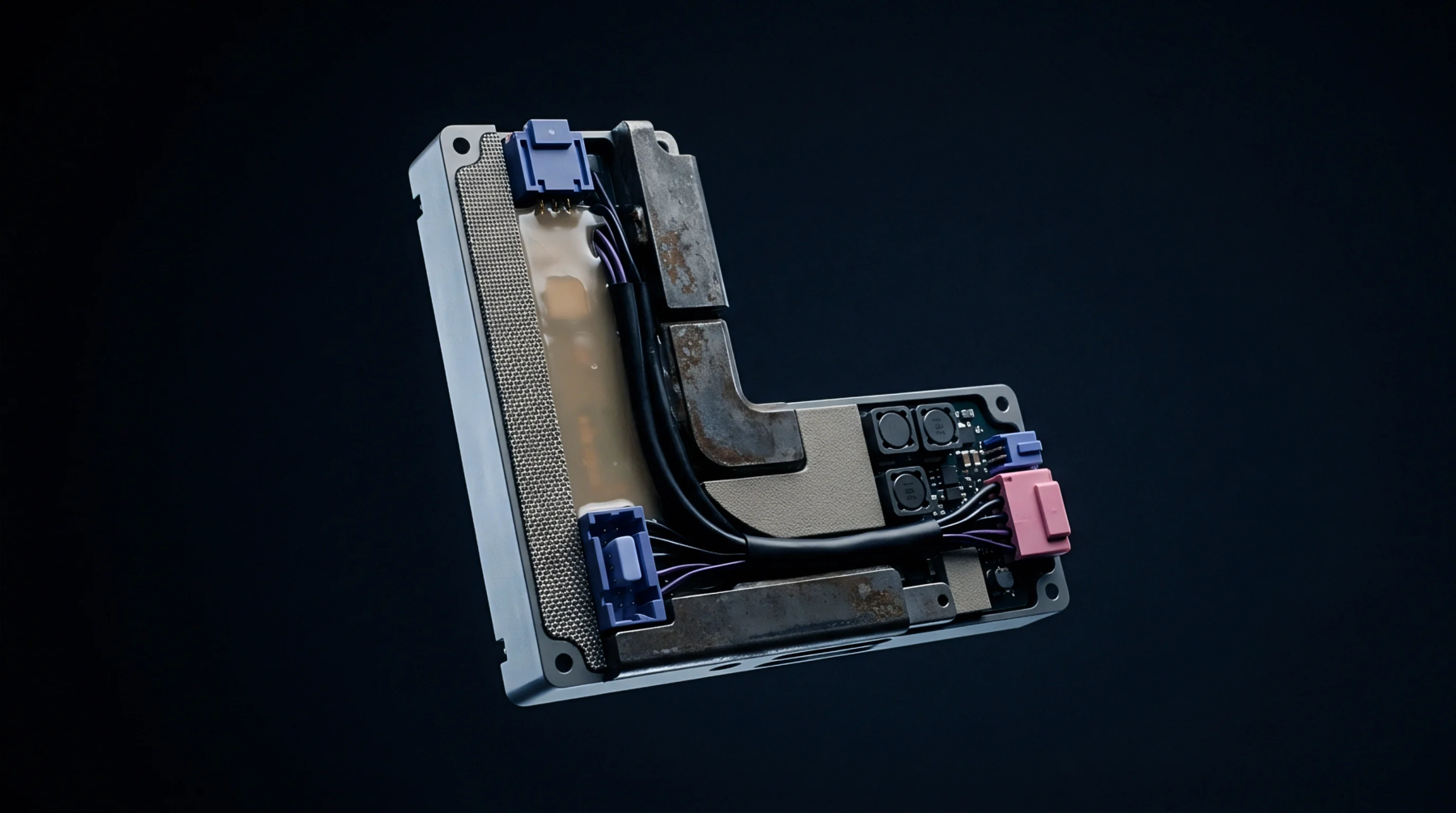
Potting encapsulation shifts multi-band antenna resonance via dielectric loading, requiring precise trace tuning and Class II Permissive Change filings.
Managing Change in ID filings requires an authentic Grantee Authorization Letter, verbatim documentation alignment, and strict host design compliance.

Modular radio approvals cover baseline standalone performance, requiring host radiated spot checks to prevent spurious emission failures upon enclosure integration.

Installing a certified radio module inside a metal enclosure alters RF radiation patterns, requiring host-level radiated spurious emission retesting and potential permissive change filings.
Expertise is a utility, not a secret. sentiention™ publishes its working knowledge as open reference: intelligence layer covering the materials it sources, the markets it enters, and the reference that serves both.