Modular Radio Frequency Exposure Regulatory Compliance Principles
Modular RF exposure compliance depends on maintaining certified antenna separation distances, aggregate power limits, and mandatory host permissive filings.
Dosimetry
Field strength assessments near human tissue govern whether a radio module functions within legal exposure boundaries or demands complete SAR evaluation. Regulatory authorities divide human exposure into two primary operational zones based on physical distance from the radiating structure. Devices operating further than 20 centimeters from the body fall under Maximum Permissible Exposure rules, where spatial power density dictates compliance.
Products positioned within 20 centimeters of human skin enter the Specific Absorption Rate regime, measuring mass-normalized power deposition in watts per kilogram.
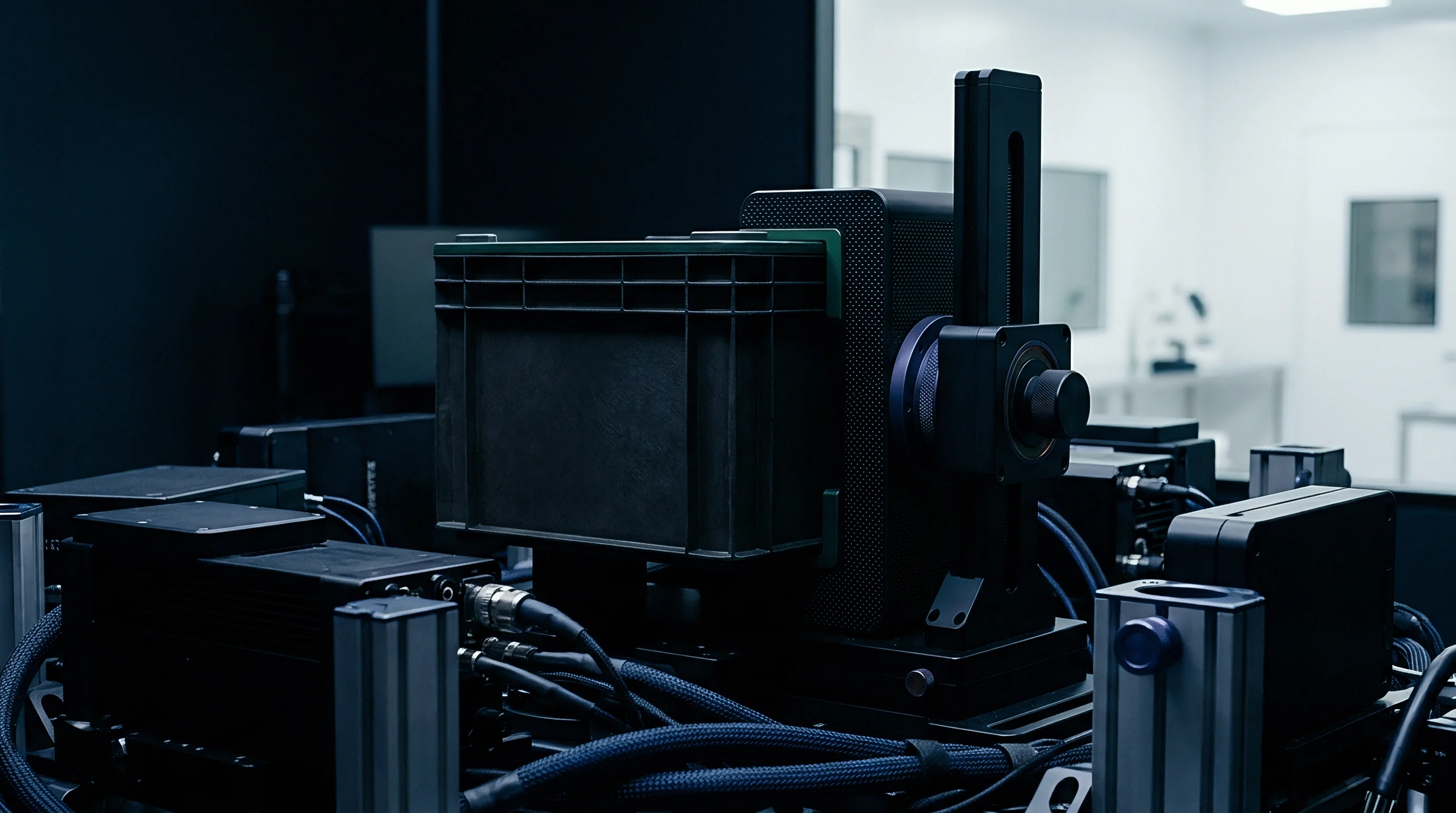
At distances below 20 centimeters, electromagnetic near-field interactions alter power distribution unpredictably, meaning calculated far-field free-space path loss equations cannot predict localized energy deposition. Direct SAR testing requires liquid-filled phantom human torsos and calibrated electric field probes mounted to multi-axis robotic arms. The probe sweeps through the fluid along three spatial axes, identifying localized peak energy absorption points inside the simulated tissue medium.
| Jurisdiction | Applicable Standard | Exposure Boundary | Localized SAR Limit | Averaging Tissue Mass |
|---|---|---|---|---|
| United States (FCC) | KDB 447498 D01 / IEEE 1528 | Under 20 cm | 1.6 W/kg | 1 gram |
| European Union (CE) | EN 50566 / EN 62209-2 | Under 20 cm | 2.0 W/kg | 10 grams |
| Canada (ISED) | RSS-102 Issue 6 | Under 20 cm | 1.6 W/kg | 1 gram |
| Japan (Giteki) | MIC Notice No. 88 Annex 79 | Under 20 cm | 2.0 W/kg | 10 grams |
The Federal Communications Commission enforces a localized peak SAR cap of 1.6 W/kg averaged over one gram of cube-shaped tissue for general population exposure. European standards enforced under the Radio Equipment Directive apply a 2.0 W/kg threshold averaged across ten grams of contiguous tissue. This distinction creates a technical divergence during global product launches: a transmitter passing European ten-gram exposure boundaries can fail United States one-gram evaluation without modified transmit power tables in firmware.
Transmitters operating in sub-1 GHz bands penetrate deeper into muscular tissue, generating broad spatial SAR profiles. Higher frequency transmissions around 5 GHz dissipate energy rapidly near the epidermis, producing sharp, highly concentrated absorption spikes. SAR probe step sizes must tighten during 5 GHz scans to catch localized peaks that coarse sweeps miss.
At 5200 MHz, a 10 mm separation distance reduces peak spatial SAR below the 1.6 W/kg threshold for 100 milliwatt conducted power.
SAR test exclusion formulas provide a mathematical alternative for low-power modules. FCC guidelines establish a power-to-distance ratio threshold based on channel frequency. If maximum conducted output power falls below the calculated exclusion threshold at a given distance, laboratory phantom testing is skipped entirely.
Integrators frequently throttle software power settings by fraction-of-a-milliwatt steps specifically to clear these exclusion thresholds and eliminate chamber testing fees.
The boundary between sub-6 GHz SAR rules and millimeter-wave power density limits remains unsettled as sub-THz commercial modules reach testing laboratories.
Proximity
Distance between the emitting radiator and the human body establishes the baseline test path. When an end-user holds a host chassis against their head or lap, localized fields increase exponentially as separation shrinks toward zero millimeters. Module manufacturers obtain modular grants under specific spacing conditions, typically assuming a fixed 10 mm or 15 mm buffer.
Integrating that same module into a compact handheld housing where the internal antenna sits two millimeters from the outer enclosure invalidates the supplier’s initial grant data.
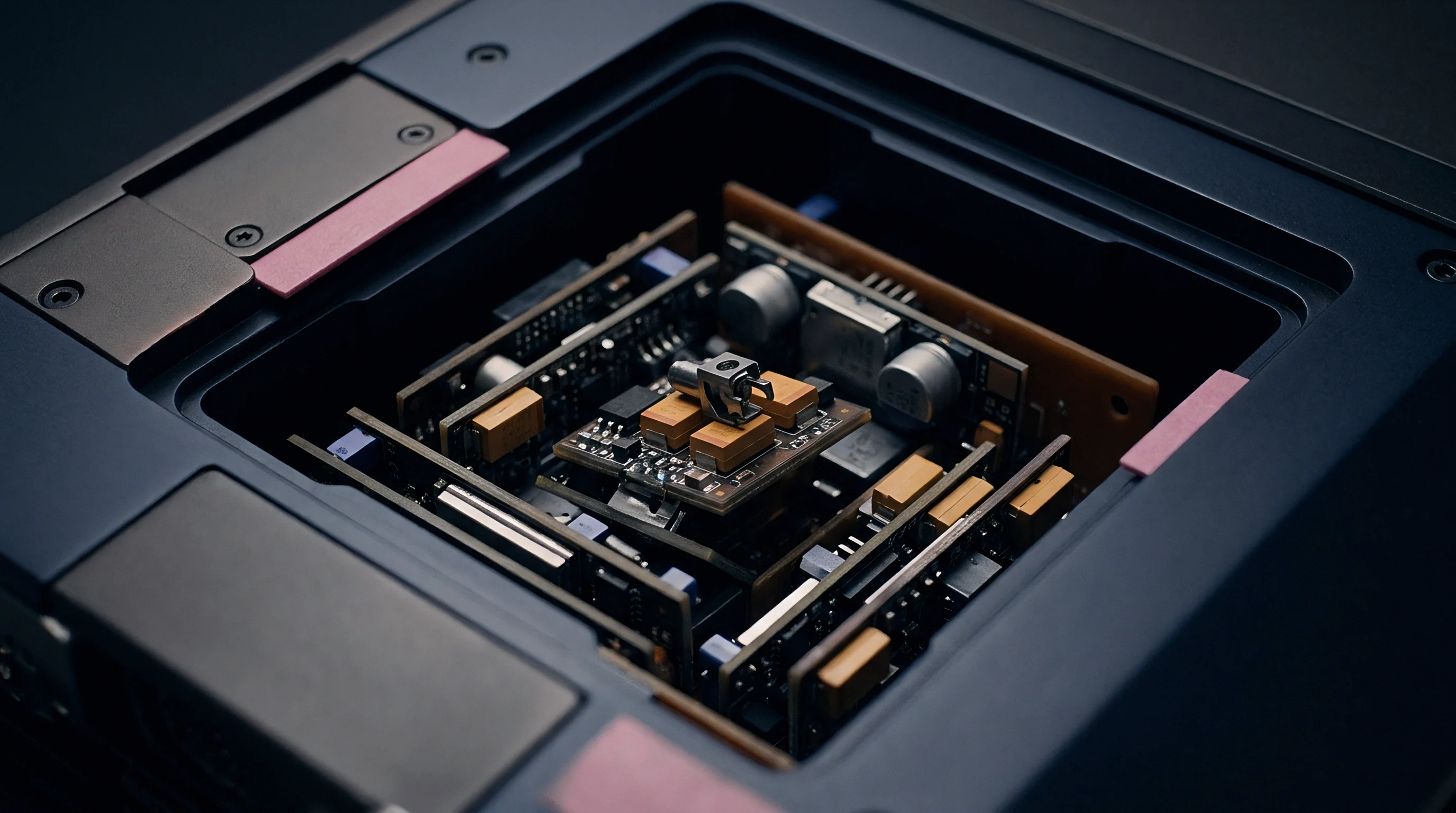
Host Integration Limits for Portable RF Devices
Chassis materials alter radio field geometry. Metallic backplates, glass covers, and internal battery casings bend radiated fields, refocusing energy back toward the user. A module tested in free space on an evaluation board delivers linear field distributions, but that identical module installed inside a dense metal-and-glass host housing experiences near-field distortion that elevates localized SAR readings.
Sourcing teams assuming plug-and-play modular compliance often discover too late that enclosure modifications forced a complete SAR re-test, locking up inventory while re-certification proceeds.
Failure modes multiply when physical host dimensions shrink. Common host integration breakdowns trace back to physical design oversights during chassis layout:
- Antenna Placement Shift Moving the radiator three millimeters closer to the outer chassis wall increases localized power absorption past regulatory limits.
- Enclosure Dielectric Change Substituting plastic resins alters near-field electromagnetic distribution and elevates SAR readings during probe sweeps.
- Co-located Transmitter Coupling Placing a Bluetooth antenna adjacent to a Wi-Fi module creates unmodeled field overlaps that exceed exposure bounds.
- Firmware Power Table Overrides Loading host firmware that un-caps transmitter output power voids the module manufacturer’s initial test data.

Where Does Modular Grant Scope Expire inside Host Enclosures?
Modular grants state explicit host installation restrictions directly on the certificate face. A grant designated for mobile operational conditions strictly bounds any device used closer than 20 centimeters to a person. Installing a mobile-certified module into a wearable host creates an illegal regulatory state.
Customs officials and marketplace compliance bots routinely audit product documentation against grant conditions, revoking listing privileges when separation distance mismatches surface.
ETSI EN 50665 mandates re-assessment whenever host housing modifications shift the antenna location relative to the user plane.
Altering antenna trace paths on the host printed circuit board presents another common compliance trap. Modifying trace geometry or changing board substrate materials alters antenna tuning, impedance matching, and peak spatial SAR values. The host integrator then assumes complete legal liability for re-establishing exposure compliance through formal permissive change filings.
Failure to detect host housing dielectric shifts prior to final tooling results in scraped plastic molds, three-month re-certification delays, and customs detention of non-compliant inventory shipments.

Shield
Internal metallic barriers and grounding planes modify localized field structures within small host housings. Radiated energy reflects off internal shielding cans, concentrating electromagnetic fields toward plastic housing surfaces facing the user. Antenna designers balance physical ground plane dimensions against radiation efficiency to pass near-field exposure checks without destroying over-the-air link performance.

Simultaneous Transmission Analysis in Multi-Radio Systems
Modern host electronics house multiple active radio modules operating concurrently. A cellular module, a dual-band Wi-Fi module, and a Bluetooth radio operating inside one host housing generate overlapping near-field exposure profiles. Regulatory frameworks manage multi-transmitter risk through simultaneous transmission evaluation rules.
Laboratories calculate the ratio of measured SAR to the legal limit for each individual radio, summing the normalized values to verify that total combined absorption remains equal to or less than 1.0.
Consider a portable medical display carrying an LTE cellular module and a 2.4 GHz Wi-Fi radio at a 5-millimeter separation distance from the rear housing face. The LTE module delivers a standalone peak SAR of 0.95 W/kg against the 1.6 W/kg FCC limit, yielding a normalized SAR ratio of 0.594. The Wi-Fi module delivers a standalone peak SAR of 0.52 W/kg against the same 1.6 W/kg limit, yielding a normalized SAR ratio of 0.325.
| Transmitter Combination | Frequency Band | Standalone SAR (W/kg) | Regulatory Limit (W/kg) | Normalized SAR Ratio | Summed SAR Ratio | Compliance Status |
|---|---|---|---|---|---|---|
| Radio A: LTE Module | 835 MHz | 0.95 | 1.6 | 0.594 | — | Standalone Pass |
| Radio B: Wi-Fi (Base) | 2412 MHz | 0.52 | 1.6 | 0.325 | 0.919 | Exclusion Pass (Sum <= 1.0) |
| Radio B: Wi-Fi (Boosted) | 2412 MHz | 0.74 | 1.6 | 0.463 | 1.057 | Exclusion Fail (Triggers SAR Test) |
Summing these values produces an aggregate exposure ratio of 0.919. Because 0.919 remains below the 1.0 threshold, the dual-radio system qualifies for simultaneous transmission SAR exclusion, saving the integrator weeks of chamber time. If trace line losses force software engineers to boost Wi-Fi output power by 1.5 dB, raising standalone Wi-Fi SAR to 0.74 W/kg, the Wi-Fi normalized ratio increases to 0.463, pushing the combined sum to 1.057.
Exceeding 1.0 revokes SAR exclusion status. The host integrator must then submit the complete device to an accredited test laboratory for physical multi-transmitter SAR probing inside a volumetric liquid phantom.
Antennas spaced further than twenty millimeters apart in sub-6 GHz hosts rarely trigger simultaneous SAR evaluation cross-coupling.
Physical isolation between internal antennas mitigates simultaneous exposure accumulation. Spacing antennas past specific physical distance limits suppresses near-field cross-coupling. Antenna separation distance divided by individual SAR values establishes whether secondary SAR probe sweeps are required during formal qualification scans.
Placing high-power radiators on opposite edges of a host enclosure keeps aggregate energy ratios below unity under standard operating conditions.
Grant
Regulatory documentation handed down by module vendors establishes strict boundary conditions for downstream integrations. A modular approval certificate lists the precise grant conditions under which test evidence remains valid. Grant notes explicitly state authorized antenna types, maximum permissible antenna gains, minimum user separation distances, and firmware power limits.
Deviating from any listed parameter breaks the chain of compliance, transforming an approved modular integration into an uncertified radio system.
Modular Approval Classification and Integrator Obligations
Full Modular Approval grants allow broad host integration flexibility provided all documented conditions are preserved. Limited Modular Approval certificates signal that the module vendor failed specific regulatory requirements during modular qualification, such as onboard power supply regulation or integrated metallic shielding. A limited grant restricts usage to specific host configurations controlled directly by the module manufacturer or demands full host-level certification re-testing.
Final host manufacturers assume legal accountability for overall regulatory compliance when combining modules into finished commercial goods, as unapproved modifications invalidate the underlying grant.
- Review original modular regulatory certificates to extract documented separation distances and maximum authorized antenna gains.
- Calculate physical spacing between all embedded antennas and potential points of human contact on the host device housing.
- Perform pre-scan field measurements inside an anechoic chamber to evaluate real-world radiated output against certified power levels.
- Submit Class II Permissive Change documentation to the certification body when host modifications alter exposure profiles.
Permissive changes classify host modification severities. A Class I Permissive Change handles minor circuit modifications that do not degrade RF exposure or radiated emissions performance, requiring internal engineering documentation without formal regulatory filings. A Class II Permissive Change covers host changes that alter SAR profiles or add portable exposure conditions, requiring test data submission to a Telecommunications Certification Body before shipping commercial units.
A limited modular grant transfers the full SAR compliance burden back to the final host integrator.
The host housing outer surface must display clear text stating that the finished product contains the certified module’s unique identification codes. FCC e-labeling provisions permit digital screens to show these identifiers inside system menus, provided access instructions appear in user manuals and require no specialized software keys.
Contractual risk shifts when purchase orders incorporate compliance clauses: “Supplier warrants that module RF exposure grant conditions cover 5 mm portable host integration without requiring Class II Permissive Change filings or additional SAR chamber evaluations.”

Outlay
Commercial budgets for market entry expand rapidly when unexpected SAR chamber re-testing becomes necessary late in development. Booking an accredited SAR test chamber costs between $2,500 and $4,000 per operational day. A complete portable SAR evaluation campaign covering multi-band radios, multiple physical orientations, and simultaneous transmission configurations consumes three to five test days, excluding sample setup and report write-up time.
Global Certification Costs and Lead Time Realities
Filing fees add direct financial weight. Telecommunications Certification Bodies charge fixed document review fees for processing grants and permissive changes. Local in-country representation services, mandatory translation fees, and regional regulatory administrative charges accumulate across target export markets.
| Target Market | Primary Approval Route | Typical SAR Chamber Time | Average Laboratory Fee | TCB / Agency Review Fee | Regulatory Lead Time |
|---|---|---|---|---|---|
| United States | FCC Part 2.1093 / TCB | 3 to 5 Days | $8,500 – $14,000 | $1,500 – $2,500 | 2 to 4 Weeks |
| European Union | RED Annex III / Notified Body | 2 to 4 Days | $7,000 – $12,000 | $1,200 – $2,000 | 2 to 3 Weeks |
| Japan | Giteki / Registered Certification Body | 3 to 5 Days | $9,000 – $15,000 | $2,000 – $3,500 | 3 to 5 Weeks |
| Brazil | ANATEL Local Testing / OCD | 4 to 6 Days | $12,000 – $18,000 | $3,000 – $5,000 | 6 to 10 Weeks |
Certain markets reject foreign accredited test reports, forcing physical sample shipments to domestic laboratories for redundant testing. Brazil and South Korea enforce strict in-country testing mandates for portable radio exposure compliance, expanding lead times by months.
Sourcing teams use structured audits before freezing hardware design layouts to prevent budget overruns:
- Host Body Separation Clearance Verify that physical chassis dimensions preserve minimum distance thresholds specified in the modular documentation.
- Antenna Gain Tolerance Audit Confirm that chosen host antenna peak gains remain below maximum values listed on regulatory certificates.
- Simultaneous Transmission Summation Check Compute aggregate SAR ratios for all co-located transmitters before committing to final board layouts.
- Regional Frequency Band Mapping Align module operating bands with local exposure rules across targeted geographic destinations.
Lowering transmit power in software saves hardware redesign costs and chamber fees, but reduces wireless link budget and user throughput.
Pre-certified radio hardware is often assumed to eliminate host compliance costs, but host housing geometry and antenna placement still trigger mandatory host-level SAR evaluations.