Dynamic Exposure Averaging Validation across Regional Type Approval Filing Packages
Dynamic exposure averaging demands continuous conducted power and spatial field validation to secure regional type approvals across divergent regulatory windows.


Rig
Radio transceivers operating near human tissue deploy dynamic exposure averaging to balance link budget against localized specific absorption rate constraints. Silicon vendors implement these algorithms directly in modem baseband firmware, continually calculating running absorption ratios over regulatory time windows. The operational consequence is immediate: an unvalidated averaging algorithm freezes market release across every target jurisdiction.
Regulatory agencies treat transmit power averaging firmware as active radio frequency exposure mitigation rather than passive equipment performance. When a modem dynamically raises transmit power during weak cell coverage and drops power during sustained transmission, laboratory test stations record the transition curves using continuous conducted power splitters coupled to fast sampling peak power sensors.
Dynamic exposure algorithms track radiated energy expenditure through discrete mathematical integration steps. Qualcomm Smart Transmit, MediaTek TAS, and proprietary modem implementations maintain internal energy credit accumulators. The accumulator deducts exposure points when instantaneous conducted output exceeds the time-averaged threshold, known as P-limit.
When the credit ledger depletes, the baseband pulls power down to P-reserve, preventing the running total from breaching compliance thresholds. A mismatch between physical radiated performance and firmware calculation corrupts the safety model. If an antenna matching network shifts impedance under hand grip, the conducted power read by the internal coupler no longer reflects actual absorbed energy in tissue.
A six-decibel power step driven by baseband firmware demands sub-millisecond settling to keep instantaneous tissue absorption inside the regulatory envelope.
Chamber measurement evaluates whether the device stays within calculated absorption boundaries across abrupt cellular handovers, band transitions, and antenna switching events. Technicians mount the device on a low-permittivity plastic fixture directly above an automated robot arm equipped with an electric field probe. High-speed vector probes track instantaneous field strength within a tissue-simulating liquid tub while simultaneous directional couplers sample conducted radio frequency ports on the motherboard.
The validation routine applies artificial network attenuation steps through base station simulators, forcing the radio to request maximum transmit power before abruptly dropping path loss. Validation confirms that the firmware tracks real physical emission across rapid state shifts.
Power control loops run on distinct internal clocks that can drift relative to external measurement systems. Baseband algorithms sample power sensors at intervals between one and ten milliseconds, whereas laboratory reference meters aggregate power over broader acquisition blocks. Misalignment between these acquisition intervals introduces phantom compliance breaches into raw laboratory plots, generating false failures during third-party audit sweeps.
Laboratory personnel calibrate trigger lines between the radio interface test port and the power analyzer chassis to synchronize data capture windows down to microsecond intervals.
P-limit and P-reserve settings govern the operating boundaries of every supported transmission mode. Radio frequency engineers establish these values during early prototyping by measuring static absorption rates across every channel, modulation, and antenna configuration. When static rates run high, P-limit falls, constraining maximum instantaneous radio reach.
A single antenna element yielding unfavorable localized hot spots forces baseband firmware to throttle overall transmission capability, directly penalizing throughput figures in production hardware.
Algorithm validation succeeds when test instruments demonstrate that energy accumulation curves track regulatory thresholds without mathematical divergence under extreme thermal or operational stress.

Partition
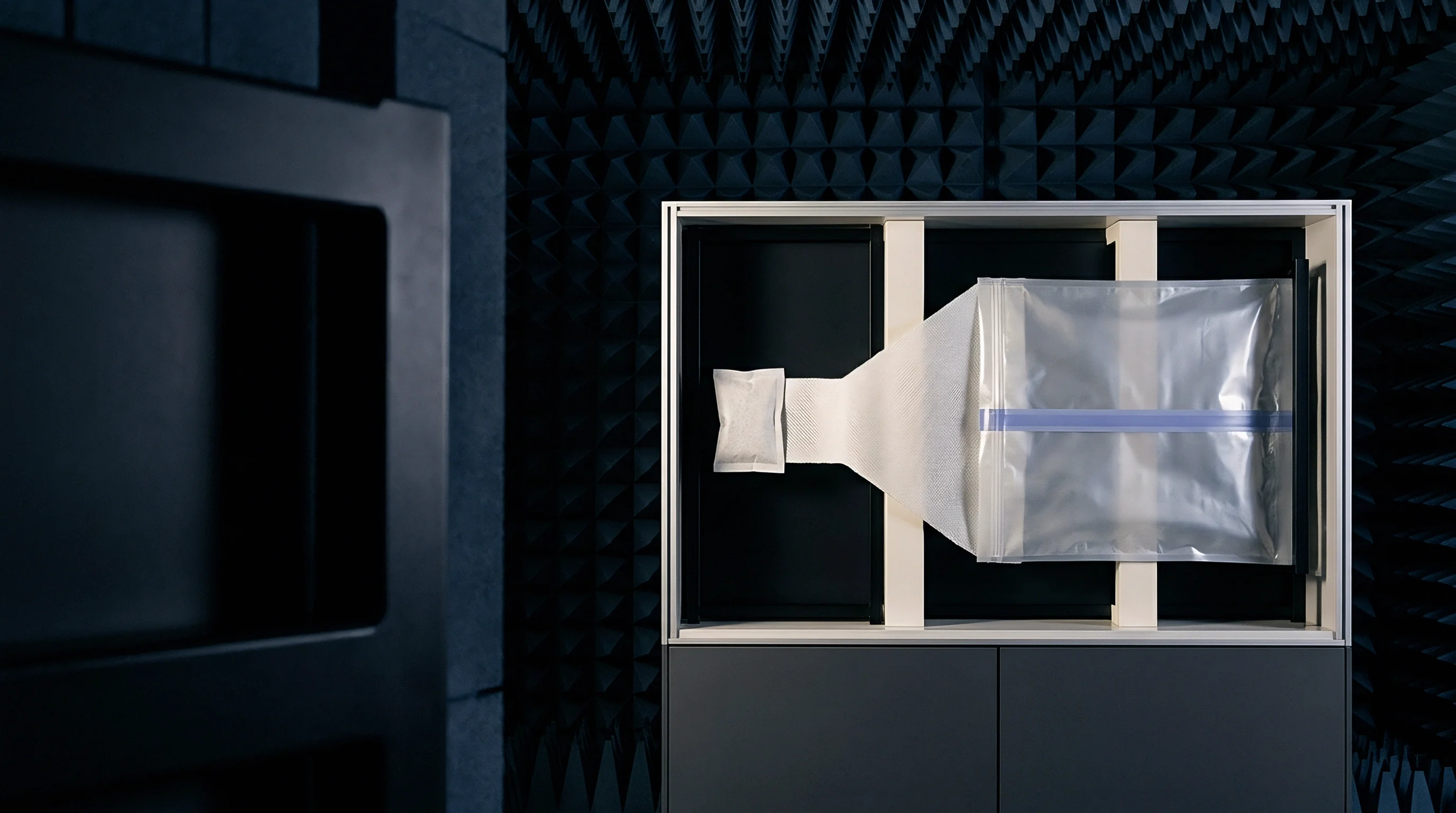
Filing packages split sharply along geopolitical borders because national regulators mandate distinct exposure metrics, measurement standards, and time-averaging evaluation windows. The Federal Communications Commission evaluates localized absorption using a 100-second window for frequencies below three gigahertz and a 60-second window between three and six gigahertz, governed by Title 47 of the Code of Federal Regulations. Innovation, Science and Economic Development Canada applies comparable time windows under RSS-102 Issue 6, yet demands independent field validation reports generated inside Canadian recognized laboratories.
European notified bodies operating under Directive 2014/53/EU reference CENELEC EN 50665 and IEC/IEEE 62209-1528, which treat moving averages under generalized exposure assessment frameworks without granting unilateral acceptance of American test sequences.

How Do Regional Time Windows Alter Power Budgets?
Averaging durations determine how long a handheld terminal transmits at elevated power before the control loop clamps output to baseline. Under American rules, a ten-second burst of high power draws down an exposure budget calculated across one hundred seconds. In contrast, jurisdictions that evaluate compliance against instantaneous thresholds or shorter sliding windows restrict the duration of such bursts.
Shorter observation periods force firmware developers to configure tighter P-limit margins, restricting maximum power spikes to prevent short-interval limit exceedances. The consequence falls on user throughput in fringe coverage areas, where sustained burst transmission drops prematurely into fallback power states.
| Regulatory Body | Primary Standard | Evaluation Window Below 3 GHz | Evaluation Window 3 GHz to 6 GHz | Time-Average Validation Status |
|---|---|---|---|---|
| FCC (United States) | KDB 447498 D04 / Part 2.1093 | 100 seconds | 60 seconds | Mandatory PAG Inquiry Required |
| ISED (Canada) | RSS-102 Issue 6 / SPR-004 | 100 seconds | 60 seconds | Specific Test Report Annex |
| RED (European Union) | EN 50665 / EN 62209-1528 | Reference to IEC 62232 | 6 minutes (thermal basis) | Notified Body Technical Opinion |
| MIC (Japan) | Radio Act Ordinance 88 | 6 minutes | 6 minutes | Laboratory Test Sequence Verification |
| MSIT (South Korea) | MSIT Notice 2023-44 | 6 minutes | 6 minutes | Local In-Country Re-Test Required |
Navigating these divergent boundaries demands modular filing packages that address each regulatory nuance without invalidating the core underlying laboratory data. An engineering team generates a foundational validation report demonstrating baseband algorithm compliance against standard callbox scenarios. That master report serves as the technical backbone for North American submissions, but Asian market entry requires substantial adaptations.
Japan and South Korea base tissue heating limits on traditional six-minute thermal integration windows derived from early safety guidelines. When filing in Seoul, test houses do not accept sliding one-hundred-second algorithmic logs without extensive local bench re-evaluation.
FCC Pre-Approval Guidance tracking item PAG 447498 freezes formal equipment grants until federal staff review the specific firmware algorithm test report.
Modular approvals introduce severe regulatory friction into exposure averaging implementations. An original equipment manufacturer purchasing a certified cellular modem module cannot simply inherit the modular grant when dynamic exposure averaging is active. The algorithm relies entirely on enclosure proximity, host trace losses, and custom antenna radiation patterns unknown to the module maker.
Federal regulators classify dynamic exposure averaging as a host-dependent feature. The finished product manufacturer files a Class II Permissive Change or an entirely independent certification file carrying custom SAR data tied to that specific industrial design.
Filing packages prepared without explicit clause alignment trigger immediate administrative rejections at foreign certification desks. Under Canadian SPR-004 Section 3.2, failure to document conducted power sensor accuracy across operational temperature swings invalidates the entire time-averaging submission.

Bench
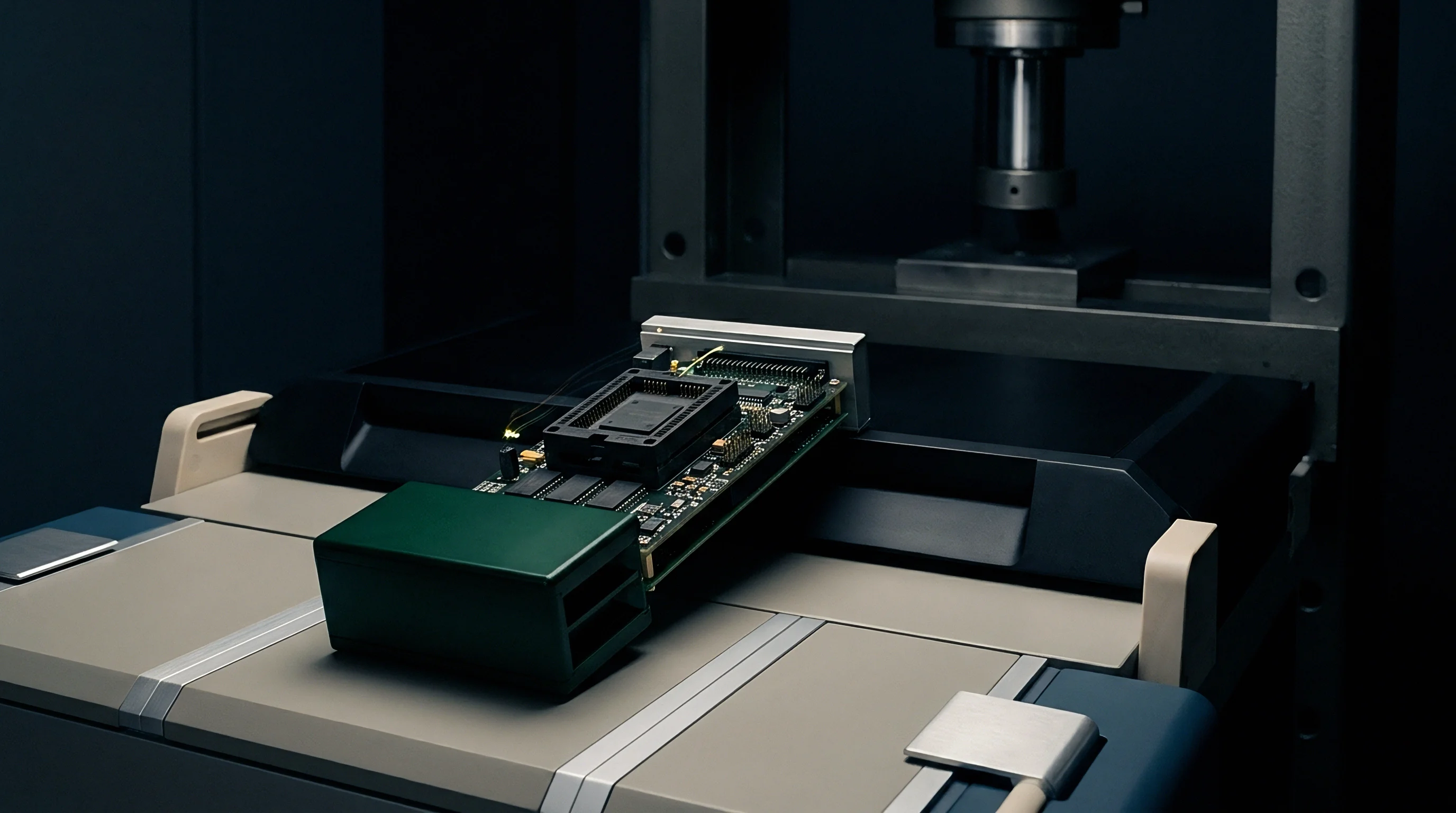
Physical measurement of dynamic averaging algorithms requires specialized instrumentation setups capable of tracking instantaneous power, electric fields, and baseband state machines concurrently. Technicians connect the device under test to an automated call box, routing radio ports through precision RF directional couplers to multichannel power meters. Power meters record conducted power at high sampling rates while the device transmits inside an anechoic environment.
Test software drives the call box to execute scheduled sequence steps, including drop-out recovery, handover between frequency bands, and multi-radio transmission scenarios where cellular and Wi-Fi modems radiate simultaneously.

Are Conducted Power Sensors Sufficient during State Transitions?
Conducted power measurements reveal modem baseband decisions, but spatial field probes confirm actual absorption in human tissue. During handover sequences, conducted power may drop while local radiation efficiency shifts upward due to antenna aperture tuning, altering the spatial peak specific absorption rate. Modern validation facilities utilize fast SAR scanning systems featuring fixed probe arrays embedded in anatomical phantoms.
These sensor arrays scan planar energy distribution in sub-second intervals, providing real-time verification that physical absorbed fields track the baseband’s calculated exposure trajectory.
- Conducted power trace measurement captures instantaneous output at the antenna feed points across rapid cellular base station power-control commands.
- Tissue absorption peak scanning traces spatial energy deposition inside physiological phantoms using calibrated robotic vector field probes.
- Callbox power sweep sequencing forces the internal algorithm between minimum transmission power and saturated reserve limits across distinct cellular bands.
- Sub-array antenna switching checks verify that directional phase shifts do not breach exposure targets during spatial beam steering.
Engineering teams frequently confront discrepancies between simulated energy balance accounts and bench meter readouts. Baseband firmware calculates radiated energy based on factory-calibrated table offsets stored in non-volatile memory. If the production calibration routine incurs a two-decibel variance, the running calculation underestimates real-world exposure, allowing the hardware to radiate beyond statutory limits.
Calibration verification is therefore mandatory across temperature extremes. Technicians place the complete device in an environmental chamber, running validation sweeps from minus ten to positive fifty-five degrees Celsius while logging algorithm stability.
A two-decibel drift in directional coupler calibration doubles the instantaneous physical exposure rate relative to the baseband’s internal balance sheet.
Validation logs generate massive time-series datasets that must be translated into standardized reporting tables for certification packaging. Each supported technology combination requires dedicated run logs documenting the start time, instantaneous conducted power, calculated exposure credit, measured absorption, and normalized exposure ratio. An engineer evaluates the normalized exposure ratio: a dimensionless metric calculated by dividing instantaneous exposure by the statutory limit.
If the running sum of normalized exposure ratios across all active transmitters exceeds unity at any point along the validation timeline, the test fails immediately.
Omitting real-time multi-radio correlation logs forces laboratory retesting cycles that delay commercial product launches by eight to twelve weeks while chamber availability is re-booked.

Drift
System components degrade, recalibrate, and shift over operational lifetimes, introducing serious compliance risks for hardware reliant on dynamic exposure averaging. Aging power amplifiers, thermal swelling of printed circuit board laminates, and antenna detuning alter the ratio between conducted power and tissue absorption. When an end user grips a smartphone or mobile terminal, dielectric loading shifts antenna resonant frequencies, altering impedance match and radiation efficiency.
Fixed baseband look-up tables assume static antenna gain values established during pristine chamber testing. If dielectric loading detunes the antenna, near-field capacitive coupling to human tissue intensifies even as conducted power readouts remain nominal.
Modern devices deploy capacitive touch sensors, inductive proximity detectors, and impedance sensors around the antenna structure to mitigate detuning. These proximity sensors feed real-time positional data to the modem exposure algorithm. When human flesh enters a five-millimeter zone, the firmware switches lookup tables, reducing both P-limit and P-reserve to protect the user.
However, proximity sensors suffer from calibration drift, baseline contamination from sweat or grease, and mechanical housing deformation. An erratic sensor can report false clearances, keeping the modem at high power states while pressed against a user’s body.
Failure mechanisms during third-party agency testing generally trace back to software state machine errors rather than physical component destruction. Complex firmware builds contain hundreds of operational branches. An edge-case condition, such as receiving an incoming call while transitioning between five-gigahertz Wi-Fi and a cellular millimeter-wave beam, can cause the exposure accounting loop to miss an execution frame.
When the averaging thread skips an update, the power control loop assumes reserve credits remain available, sustaining maximum output long past the permissible window boundary.
| Observed Failure Mode | Root Physical Cause | Measurement Signature | Engineering Remediation |
|---|---|---|---|
| Normalized Ratio Runaway | Algorithm accumulator thread execution delay | Conducted power stays at P-limit beyond window boundary | Assign high-priority thread interrupt to exposure tracking engine |
| Antenna Coupling Overshoot | User hand dielectric loading shifts radiation pattern | Peak SAR spikes while conducted power matches target | Incorporate dynamic impedance tracking into power limiting tables |
| Thermal Compensation Error | Thermistor trace non-linearity at high ambient heat | P-limit drifts upward by 1.5 dB above 45 degrees Celsius | Re-characterize power amplifier look-up tables inside thermal chambers |
| Multi-Radio Ledger Desync | Inter-chipset communication latency over PCIe or UART | Combined cellular and Wi-Fi exposure ratio breaches unity | Implement synchronized hardware GPIO strobe lines between modems |
Component tolerance stacking presents another stubborn obstacle during volume production. Passive surface mount capacitors in antenna matching networks exhibit five percent manufacturing tolerances. A five percent shift in a high-Q matching circuit alters the phase and magnitude of current distribution across the radiating element.
Devices exiting the production line with edge-of-tolerance components exhibit spatial SAR profiles that diverge significantly from the gold-standard sample certified in the laboratory. Quality assurance protocols must incorporate conducted power limit verification at final factory test stations.
Reference firmware is designed to handle antenna proximity shifts without host-level sensor inputs, though empirical testing reveals persistent exposure ratio breaches under hand loading.

Toll
Securing regulatory grants for dynamic exposure averaging hardware imposes heavy penalties on project schedules, test budgets, and engineering bandwidth. The validation campaign alone demands hundreds of chamber hours, custom test fixtures, and dedicated base station emulation assets. For the American market, equipment certifications involving time-averaged exposure algorithms fall under the Federal Communications Commission Pre-Approval Guidance framework.
Telecommunication Certification Bodies cannot issue a grant autonomously. The certification body submits the complete technical dossier to federal authorities for direct inquiry review. This administrative hold adds four to six weeks to the authorization timeline, during which finished goods sit in distribution hubs unable to clear customs.
Budgeting for multi-region certification requires rigorous financial modeling that accounts for redundant testing and local representation fees. Laboratories charge premium rates for dynamic SAR evaluations due to the complexity of callbox programming and automated probe sequencing. A full validation test package covering four cellular bands and dual-band Wi-Fi averages forty thousand to seventy thousand dollars in North American test houses.
When extending approval into South Korea, Japan, and Taiwan, local regulations demand physical samples submitted to in-country testing laboratories, duplicating instrumentation setups and doubling compliance expenditures.
Host product manufacturers must structure their supplier contracts to allocate commercial responsibility for validation failures. If a module vendor provides firmware containing flawed power-averaging code, the host integrator absorbs the cost of chamber re-testing, filing delays, and potential airfreight surcharges for missing market launch windows. Sourcing contracts should explicitly demand vendor indemnification against firmware-induced regulatory holds, along with guaranteed engineering support hours to resolve inquiries raised by certification bodies.
Hardware changes late in development compound these regulatory tolls. Modifying an enclosure material, relocating an internal heat spreader, or adjusting an antenna flex cable shifts near-field electromagnetic distributions. Such physical modifications immediately invalidate previously gathered time-averaged SAR datasets.
The project enters a mandatory change process, requiring regression testing, supplementary validation reports, and secondary administrative filings that disrupt production ramps and inflate landed unit costs.