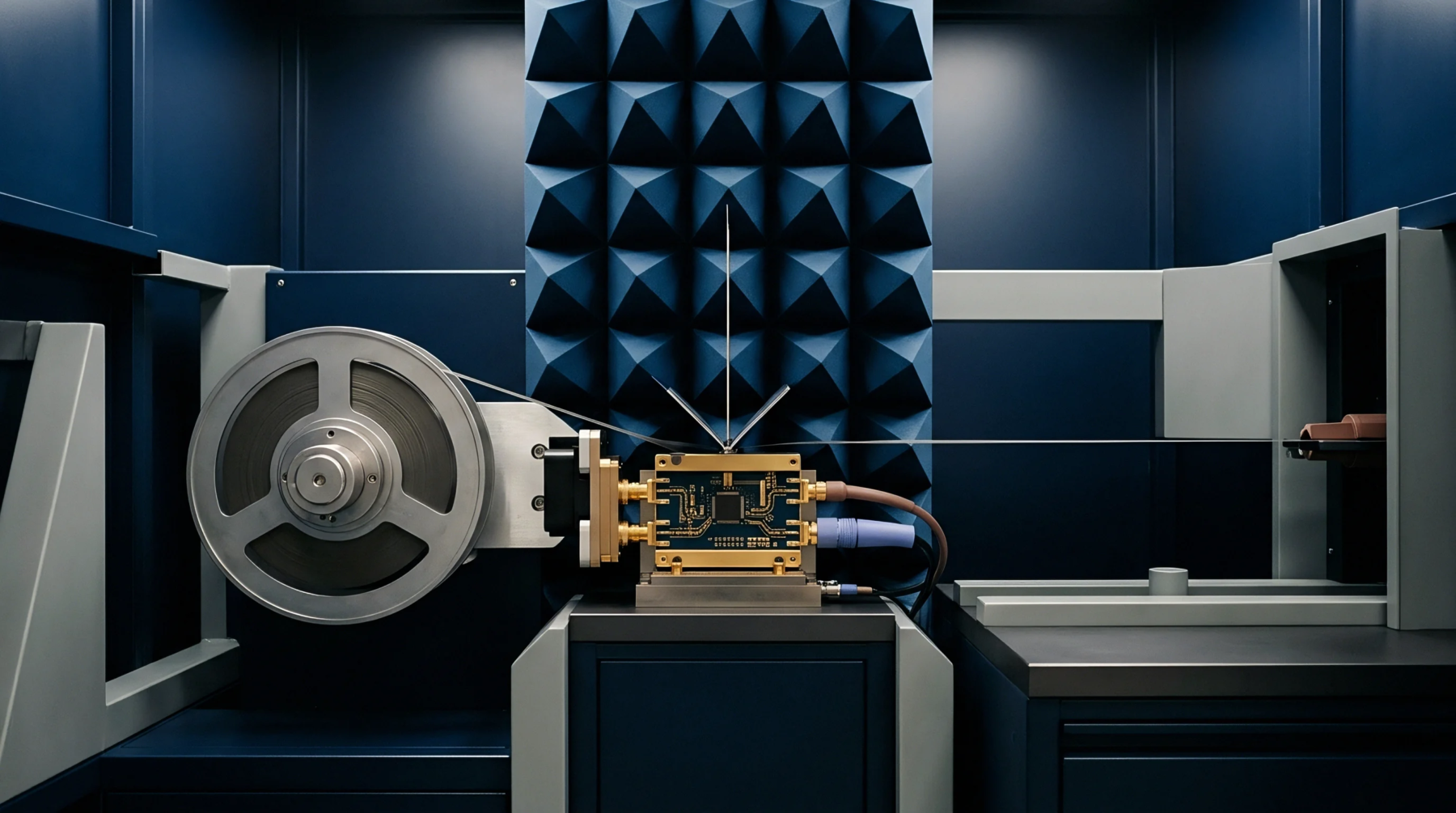
Phased Array Radiation Field Mapping under Proximity Loading
Proximity loading detunes phased arrays and distorts beam shapes, requiring near-field spatial power density mapping to maintain regulatory exposure limits.
Proximity loading detunes phased arrays and distorts beam shapes, requiring near-field spatial power density mapping to maintain regulatory exposure limits.

Antenna detuning shifts transmitter power amplifier load impedance away from nominal conjugate match, slashing power added efficiency and draining battery reserves.

Encapsulating transmitters alters dielectric loading, detuning antennas and shifting RF exposure boundaries, demanding re-evaluation of emissions and SAR compliance.

Unshielded multi-radio integration induces enclosure cavity resonances that amplify harmonic spurs, requiring Class II Permissive Changes and RF damping.
Carrier conformance testing demands strict optimization of radiated performance and protocol signaling to prevent costly hardware re-qualification delays.

Encapsulating dual band antennas requires pre-tuning trace geometry to offset lower band and upper band dielectric loading shifts before molding.

Host integrators assume full regulatory liability for non-compliant RF exposure and spurious emissions whenever physical host enclosure coupling, antenna substitutions, or co-located radios deviate from original modular grant conditions.
Multi-radio handheld exposure compliance requires summing normalized SAR values across concurrent transmitters to verify the total exposure ratio stays below unity.
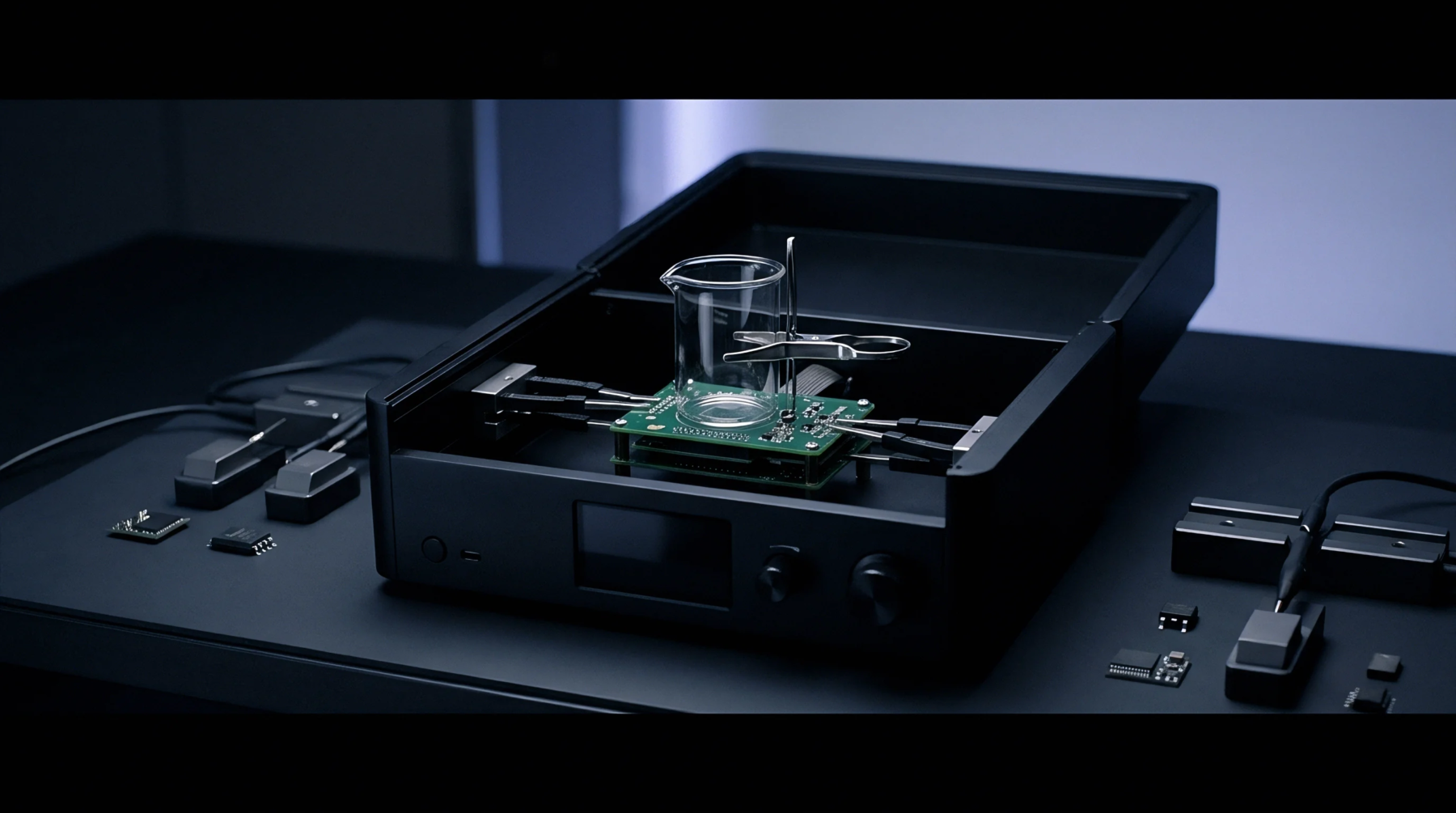
Early co-simulation of enclosure dielectric loading and counterpoise geometry prevents costly mold tooling revisions and regulatory recertification delays.
Resolving cellular hardware radiated margin loss requires isolating internal digital board noise and stabilizing multi-band antenna matching under real deployment conditions.

Dynamic array field reconstruction must dynamically compensate for near field dielectric detuning to preserve link margin while verifying spatial exposure compliance.

Modular radio grants only protect host products when integration documentation, antenna parameters, and Class II permissive change filings match final hardware.

Zigbee mesh commissioning hides heavy battery current spikes and technician labor costs behind oversimplified radio datasheet duration claims.
Expertise is a utility, not a secret. sentiention™ publishes its working knowledge as open reference: intelligence layer covering the materials it sources, the markets it enters, and the reference that serves both.