Contractual Allocation Mechanics for Firmware Drivers and Board Support Packages
Define driver scope by file manifest enforce reproducible build toolchains and assign errata patching costs prior to contract execution

Stack
System software boundaries in embedded hardware integration frequently break down where peripheral setup meets hardware abstraction layers. When buying semi-custom embedded modules or commissioning custom system-on-chip board designs, explicit software boundary definitions prevent expensive friction after handover. Hardware integration contracts often state that the vendor supplies a functional Board Support Package without defining which peripheral drivers, power management sequencing routines, or kernel-space interfaces are included.
Silicon vendors supply reference software targeting demonstration boards, but production hardware demands adapted pin multiplexing, custom power management integrated circuit timing, and targeted peripheral initialization.
Low-level peripheral initialization demands exact coordination between register maps and operating system abstractions, as drivers rely on precise hardware state synchronization. Silicon vendors modify base trees continuously. When a buyer assumes a module vendor provides production-ready drivers for off-board peripherals like MIPI displays or PCIe storage controllers, disputes emerge over where the module hardware abstraction layer ends and the application software begins.

Layered Software Boundaries and Scope Creep
Embedded Linux software stacks divide low-level hardware control across distinct architectural boundaries. The bootloader configures fundamental clock trees, DDR memory timing, and early pin muxing before handing execution to the operating system kernel. Within kernel space, device drivers translate register reads and writes into standardized subsystem APIs like V4L2 for video processing or IIO for industrial sensors.
Peripheral initialization code must account for board-level trace delays, decoupling configurations, and GPIO-driven reset lines that differ from silicon demonstration boards.
Because uncompiled code easily conceals missing headers, a complete driver delivery includes header files, pin configuration structures, and power domain linkages. Contractual allocation mechanics specify whether driver development covers bare hardware register access alone or full integration into operating system power management frameworks. If power suspend and resume routines are excluded, the application layer experiences peripheral lockups during thermal or low-power state transitions.
| Integration Level | Silicon Vendor Code Base | Module Integrator Driver Scope | Buyer Application Scope | Primary Failure Mode |
|---|---|---|---|---|
| Turnkey | Base SoC Reference Tree | Full peripheral drivers, PMIC sequencing, custom devicetree, system startup scripts | User-space application code, high-level business logic | Inflexible driver abstractions delaying custom application feature updates |
| Semi-Custom | Base SoC Reference Tree | Modified devicetree, core bus drivers (I2C, SPI, PCIe), power rail initialization | Custom peripheral drivers, sensor HAL adaptation, OS image build recipes | Unassigned ownership for third-party peripheral initialization routines |
| Reference Design | Unmodified Vendor Evaluation BSP | Pin muxing scripts, schematics, hardware design guidelines | Complete driver development, kernel backporting, devicetree creation | Buyer underestimating low-level driver engineering hours needed for boot |
| White-Label | Proprietary Pre-Compiled Stack | Fixed binary drivers, locked bootloader configuration, proprietary API access | Application layer calling vendor binary interface libraries | Inability to update kernel versions due to closed binary blob locks |
| Responsibilities defined by statement of work allocation clauses for ARM64 and RISC-V application processor integrations. | ||||

Integration Levels and Software Boundaries
Contractual arrangements determine whether low-level peripheral drivers arrive complete or as unmodified silicon vendor demonstration code. Sourcing teams must evaluate driver allocation against the chosen hardware integration model. Turnkey contracts shift low-level driver stabilization to the vendor, whereas reference design licensing leaves peripheral bring-up entirely to the buyer.
- Devicetree Configuration mapping every hardware address, interrupt line, and clock source to kernel abstraction structures.
- Power Rail Sequencing routines controlling regulator wake-up delays and low-power suspend states across peripheral buses.
- Peripheral Bus Initialization routines handling clock pre-scalers, register timing parameters, and DMA channel assignments.
- Hardware Abstraction Shims exposing unified user-space APIs for proprietary on-chip processing blocks and secure enclaves.
Schedule A of the standard system integration contract explicitly restricts driver scope to the vendor evaluation tree, shifting peripheral adaptation, timing adjustments, and power management sequencing entirely into the buyer engineering statement of work.

Repository
Source control structures for embedded target builds determine whether a hardware buyer can rebuild target binaries independently. A vendor delivering firmware drivers as raw C source files without build environment infrastructure leaves the buyer locked out of future operating system updates. Long-term maintainability demands complete repository access, including version control histories, cross-compilation toolchains, and build system recipes.
Because toolchains dictate build outputs, custom setups easily introduce execution drift. A reproducible build environment requires exact compiler versions, linker flags, system library header matching, and automated build orchestration scripts. Sourcing agreements must explicitly list deliverable assets beyond compiled binary files.

Source Trees and Build Toolchains
Firmware execution environments rely heavily on explicit compiler host configurations, glibc versions, and target architecture flags. Build systems like Yocto Project or Buildroot use layer configurations and BitBake recipes to assemble kernel binaries, device tree blobs, and root file systems. When a vendor delivers driver code outside structured build layers, integrating those drivers into production builds requires tedious manually engineered patches.
A complete BSP transfer package includes bitbake recipes and patch sets capable of producing bit-for-bit identical binary images across independent build hosts.
While build logs document compiler versions, upstream changes frequently break custom drivers over time. When clean source repositories are omitted from contract deliverables, subtle compiler optimization differences between vendor and buyer build systems introduce race conditions in hardware drivers.
- Source Code Repositories containing complete Git histories, commit messages, feature branches, and tag references for custom driver modifications.
- Yocto BitBake Layers supplying recipe files, hardware configuration files, and append patches for system image compilation.
- Toolchain Specifications detailing compiler build IDs, glibc versions, host OS requirements, and sysroot header definitions.
- Devicetree Source Files including all hardware description files, header files, and board-level override files.
Missing build scripts are often defended on the grounds that vendor toolchains contain proprietary compilation scripts that cannot enter external repositories without violating third-party silicon agreements.
Maintenance
Long-term operational stability relies on structured updating procedures for device drivers and system kernel trees. Embedded software components deteriorate as underlying operating systems evolve and security vulnerabilities appear. Sourcing contracts must explicitly define patch delivery obligations, vulnerability response times, and kernel migration pathways over the hardware lifecycle.
While patches fix broken registers, unassigned maintenance schedules leave system vulnerabilities unaddressed. When underlying silicon vendors issue errata fixes or security advisories, software drivers must undergo modification and regression testing to maintain system stability.
Who Pays for Unscheduled Silicon Errata Driver Patches?
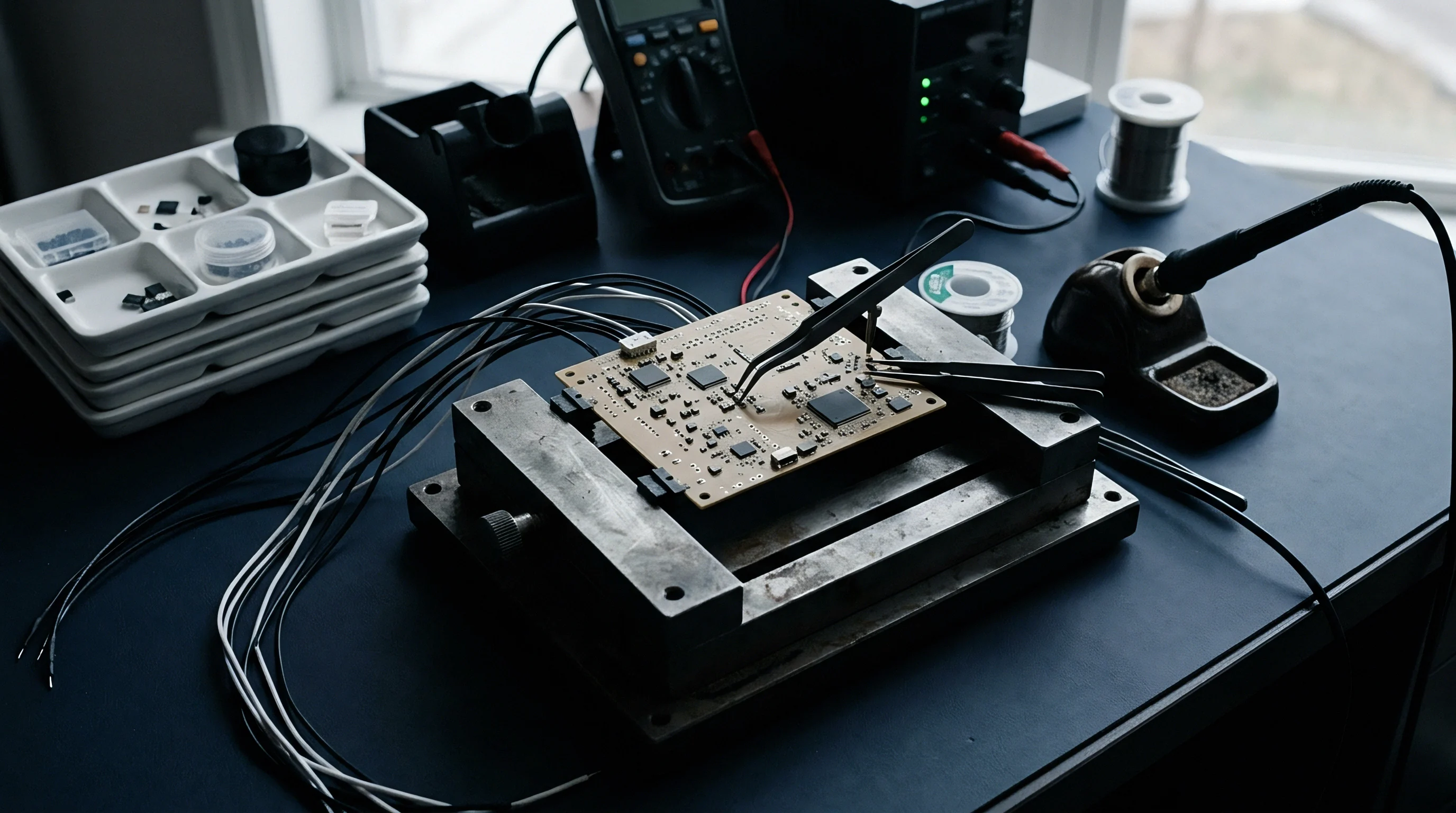
Unforeseen silicon anomalies discovered post-production force architectural modifications inside low-level driver state machines. Silicon manufacturers issue Errata sheets documenting hardware bugs, such as register corruption during concurrent DMA transfers or timing violations on SPI buses under elevated temperature. Fixing these bugs demands custom software workarounds inside peripheral driver loops.
Failure to stipulate CVE backport SLA timelines under ISO 26262 functional safety mandates transfers all post-sale remediation liability to the product OEM.
Contract allocation clauses must divide errata patch costs based on whether the anomaly originates from silicon design faults or module-level manufacturing defects. If contracts omit errata remediation pricing, buyers bear engineering hourly fees for emergency patch development.
- Identification of public Common Vulnerabilities and Exposures or silicon errata notices affecting target kernel components.
- Isolation of affected software driver functions and devicetree nodes within local repository branches.
- Implementation of software state workarounds or register isolation patches inside driver source files.
- Execution of regression test suites on automated hardware-in-the-loop test benches.
- Upstreaming or backporting validated patches into production system build recipes.
Leaving driver patching responsibilities unassigned in supply agreements results in unpatched memory leaks, kernel panic loops, and expensive field recalls when operating system updates invalidate legacy binary drivers.

Licensing
Intellectual property distribution terms govern who owns modified driver source code and who retains commercial rights over system startup sequences. Software components contained in a Board Support Package carry contrasting software license types, ranging from copyleft licenses like GPLv2 to permissive licenses like BSD or MIT, along with proprietary closed-source binary blobs.
Although licensing audits inspect dependency trees and static analysis flags memory leaks, combining open-source kernel frameworks with proprietary vendor drivers creates legal risks if binary linkages cross kernel space boundaries.

Copyleft Risks and Intellectual Property Ownership
Open source software licenses attached to kernel frameworks create strict redistribution obligations when custom driver code links directly into GPL components. Device drivers executing within Linux kernel space operate as kernel modules, making them subject to GPLv2 terms. If a vendor embeds proprietary IP inside a kernel-space driver, distributing that module without source code violates open-source licenses and exposes the buyer to copyright enforcement action.
| Software Component | Dominant License Model | Ownership Allocation | Source Code Transfer Status | Redistribution Rights |
|---|---|---|---|---|
| Bootloader (U-Boot) | GPLv2 with exception | Silicon Vendor / Open Source Community | Full Source Code Delivered | Public redistribution mandatory upon device delivery |
| Linux Kernel Drivers | GPLv2 | Buyer owned if NRE paid; otherwise Vendor licensed | Full Source Code Delivered | Source code available to end users under GPL terms |
| Hardware Abstraction Layer (HAL) | BSD / Apache 2.0 / Proprietary | Module Integrator / Silicon Vendor | Source or Header Files Delivered | Royalty-free perpetual runtime binary distribution |
| Proprietary PHY Blobs | Closed Source / Proprietary NDA | Silicon Vendor | Compiled Binary Blob Only | Restricted to specified MAC addresses or serial ranges |
NRE payment structures must define whether custom software engineering work yields work-for-hire intellectual property owned outright by the buyer. In the absence of explicit work-for-hire clauses, payment of engineering fees grants only a non-exclusive license to run compiled binaries on the purchased hardware.
Firmware drivers that link directly into Linux kernel space automatically inherit GPL copyleft disclosure obligations.
- Work For Hire IP Clauses granting full ownership of modified driver C source files and devicetree files upon final NRE payment.
- Binary Blob SLA Guarantees forcing vendors to update closed-source binaries when underlying operating system APIs change.
- Indemnity Provisions protecting buyers against third-party copyright claims resulting from copyleft license breaches.
- Escrow Deposit Requirements mandating driver source code placement into neutral escrow for release if the vendor defaults.
The legal boundary between proprietary kernel abstraction layers and copyleft driver modules remains subject to interpretation across international courts when binary shims run inside kernel memory space.

Acceptance
Formal delivery verification mandates objective hardware testing across all operating temperature ranges and processor load states. Software driver validation requires strict, measurable acceptance criteria rather than basic boot-to-prompt demonstrations, ensuring unsigned binaries fail secure boot as expected and clean commits establish code provenance.
Because cold resets verify boot stability and latency spikes break real-time targets, driver acceptance test protocols use hardware test benches to enforce compliance, validating system execution under stress conditions, power cycling, and peripheral load saturation.
Hardware in the Loop Test Frameworks
Automated test benches execute real-time performance evaluation by stressing peripheral buses while monitoring signal integrity and system response limits. Real-time operating system applications require precise interrupt response times and low latency spikes under heavy network or disk I/O load. Driver verification mandates running profiling tools like cyclictest under RT-PREEMPT kernel configurations over extended durations.
Boot-time measurement starts at power-on reset assertion and ends when the host application receives its first valid sensor telemetry packet.
Memory leakage audits execute using dynamic analysis tools like KASAN or Valgrind during continuous peripheral data streaming. Drivers passing initial boot checks often exhibit slow memory exhaustion over days of operational load. Automated continuous integration hardware benches must execute power cycling tests, triggering thousands of cold resets while verifying that file systems remain uncorrupted and drivers initialize predictably.
Acceptance protocols mandate sign-off documents linked directly to verifiable hardware-in-the-loop log outputs. When acceptance criteria rely on subjective manual spot checks, field failures inevitably surface under severe operating conditions.
Never sign off on a driver handover until the target board boots cold from flash memory under full peripheral load without throwing kernel warnings or unhandled register interrupts.