Resolving Long Term Software Driver Maintenance and Silicon Errata Liabilities in Transferred Firmware Repositories
Maintaining transferred firmware repositories requires containerized build environments, physical testing rigs, and explicit SLAs to allocate silicon errata costs.

Rig
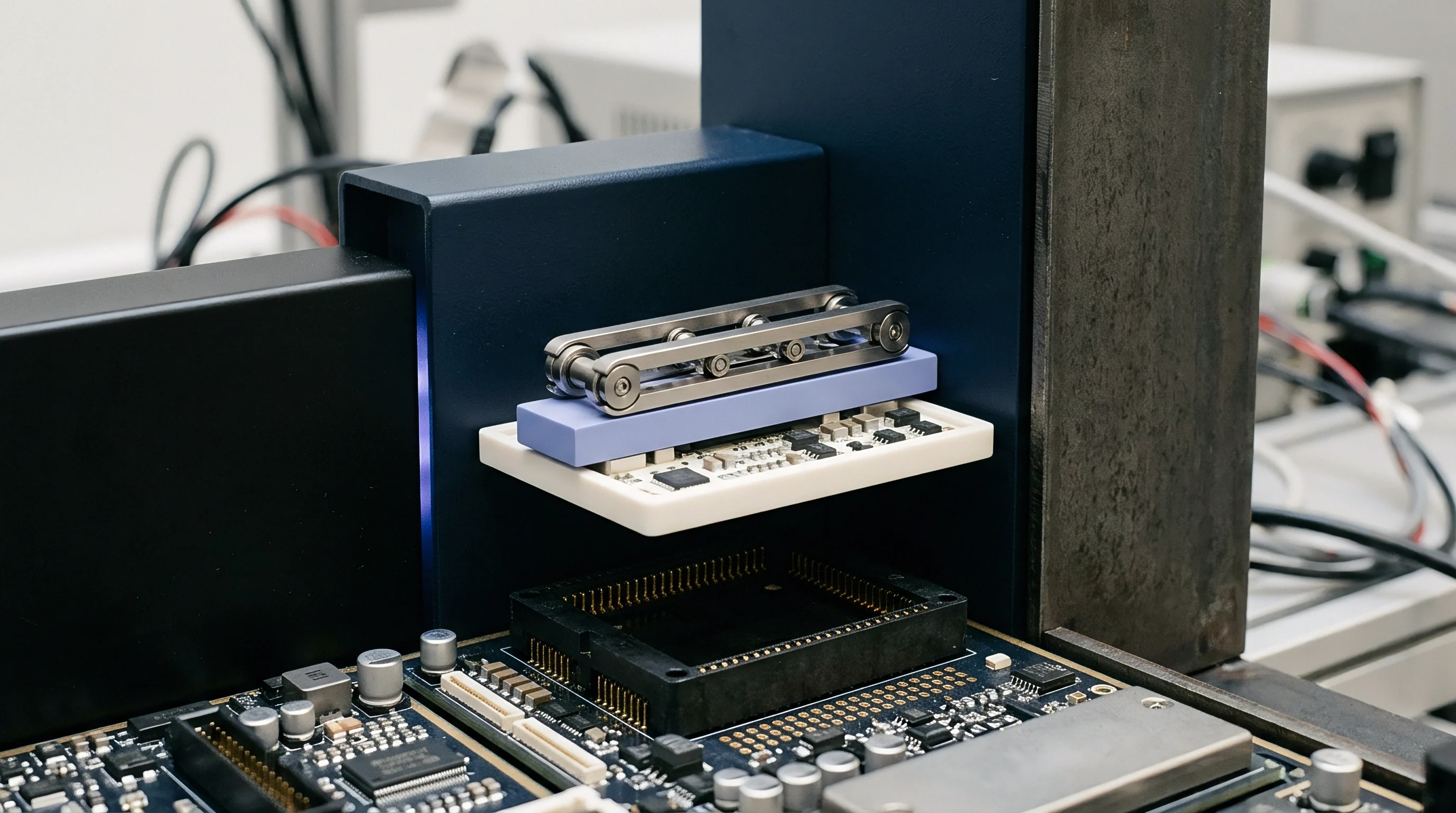
Automated hardware testing benches uncover latent timing vulnerabilities in inherited software drivers before a repository changes hands. Engineering teams acquiring or transferring firmware repos frequently accept board support packages from silicon vendors or third-party design houses without testing how that code handles hardware anomalies. Vendor BSPs are built to show off features under nominal lab conditions.
Production systems, on the other hand, run into voltage ripples, electromagnetic interference, temperature extremes, and multi-core bus contention. These real-world conditions trigger silicon errata that vendor code often hides behind undocumented register writes, arbitrary delay loops, or overly restrictive bus timing. Taking over a repository without verifying these low-level drivers creates a perpetual maintenance burden.
Hardware abstractions mask underlying silicon flaws. Low-level drivers sit right above memory-mapped registers, handling peripheral initialization, interrupt service routines, and direct memory access channels. Silicon vendors issue chip revisions ~ tracked by mask set or stepping numbers ~ to correct defects found during production, but early silicon steppings circulate in supply chains for years.
Transferred firmware codebases often retain drivers written explicitly around defects in those early steppings. If a recipient team deploys that firmware onto newer silicon, or tries to update driver logic while sticking with legacy chips, unexplained system crashes, peripheral lockups, and silent data corruption follow.
Evaluating hardware abstraction layers requires testing register access latencies under full bus saturation. Inherited drivers routinely use software delay loops to meet peripheral setup times. For instance, a vendor driver might insert ten assembly NOP instructions between enabling a peripheral clock and writing to its control register.
That delay works on a specific microcontroller running at a fixed clock frequency with instruction caching turned off. But once the repository is integrated into a system with different compiler optimizations, dynamic CPU clock scaling, or active flash prefetch buffers, that delay shrinks past the physical timing threshold of the peripheral logic. The register write then fails silently, leaving the peripheral completely uninitialized.

Hardware Abstraction Layers and Vendor BSP Assumptions
Vendor board support packages carry implicit architectural assumptions that work against long-term maintenance. Chip manufacturers write reference code to simplify initial evaluation rather than ensure execution safety. As a result, reference drivers frequently disable interrupt nesting, skip status flag checks, and clear hardware errata flags globally instead of checking microcode version registers first.
Direct memory access controllers are a frequent source of failure in handed-off firmware. DMA channels offload data transfers from the main core, running independently across internal bus matrices. Errata sheets routinely note DMA race conditions ~ like buffer pointer corruption when a transfer finishes at the exact instant a peripheral interrupt arrives.
Vendor BSPs often work around this by disabling DMA transfers during register updates, introducing latencies that defeat the entire purpose of offloading memory operations to hardware.
Engineering teams taking over firmware repositories need to audit driver initialization blocks line by line against silicon revision manuals. Drivers ought to query peripheral revision registers at boot to apply silicon-specific patches dynamically. Hardcoding register overrides across every hardware revision causes instability when newer silicon resolves the defect, leading legacy workarounds to write invalid bit masks into revised register layouts.
System stability suffers when transferred firmware relies on vendor-proprietary APIs instead of standardized hardware access layers. Vendor wrappers hide register operations behind layers of function pointers and dynamic allocations. This extra abstraction hinders static code analysis, prevents automated checking tools from finding unsafe pointer arithmetic, and conceals access ordering bugs that trigger errata under heavy system load.

Automated Regression Hardware Setup for Errata Triggering
Validating driver stability across silicon revisions takes physical test beds capable of applying controlled electrical and timing stress. Automated rigs mount target microcontrollers alongside programmable power supplies, digital-to-analog signal generators, environmental chambers, and logic analyzers. These setups run test suites designed to push peripheral drivers to their operational limits.
These test benches inject power supply noise, shift bus clock frequencies, and generate dense interrupt streams while monitoring bus responses. Regression suites have to hit every peripheral state transition mentioned in vendor errata. If an erratum notes a system lockup when an Inter-Integrated Circuit peripheral gets a clock-stretching signal while dropping into a low-power sleep state, the bench uses a programmable signal generator to trigger clock stretching right as that transition occurs.
CI pipelines tied directly to hardware test benches run test suites on every commit to inherited repositories. Pure software simulation misses hardware errata because instruction-set simulators seldom model peripheral bus contention, flash wait-state anomalies, or register timing margins. Testing on physical silicon ensures driver cleanups or toolchain upgrades do not accidentally break errata mitigations or reintroduce old workarounds.
Hardware-in-the-loop test benches running continuous bus stress tests expose silicon errata triggers within forty-eight hours of automated execution.
Automated test setups must log detailed diagnostics, reading internal register states over Joint Test Action Group or Serial Wire Debug interfaces the moment a test fails. When the harness detects a driver hang or bus lockup, it dumps CPU core registers, peripheral status flags, direct memory access buffer descriptors, and call stacks before resetting the target chip. These snapshots give maintainers the context needed to reproduce and fix low-level driver bugs.
Building and maintaining physical test rigs takes ongoing engineering effort. Test fixtures need regular calibration, relay switches wear out over millions of cycles, and cabling must be routed carefully to minimize stray capacitance on high-speed lines. Even with those operational costs, physical hardware verification is still the only reliable way to confirm driver stability across transferred repositories.
Common driver integration vulnerabilities identified during repository transfers include:
- Unchecked Peripheral Status Flags occurs when drivers assume hardware register updates take effect immediately without reading back peripheral ready status flags.
- Compiler Optimization Sensitivity arises when delay loops built using unadorned integer iterations get removed by optimizing compilers, triggering peripheral initialization failures.
- Global Interrupt Disabling causes real-time processing deadlines to be missed because driver workarounds disable global interrupts for extended register configuration sequences.
- Hardcoded Register Mask Overrides forces legacy silicon errata workarounds onto revised silicon steppings where register bit fields have been reassigned or removed.
- Direct Memory Access Alignment Violations triggers bus fault exceptions when drivers pass unaligned RAM buffer addresses to direct memory access controllers lacking unaligned access support.
Critical driver updates frequently trigger field failures across legacy units when patches are verified only on current evaluation boards rather than legacy silicon steppings running in customer deployments.

Fault
Silicon revisions frequently introduce functional defects that software maintainers have to address through costly workarounds. Errata sheets document these gaps between actual physical operation and published datasheets, detailing hardware bugs that range from benign register readout anomalies to full system lockups triggered by specific interrupt timing. When firmware repositories change hands, the job of finding, documenting, and patching these errata lands entirely on the receiving team.
Applying vendor software workarounds for DMA controller errata on revision A silicon drops maximum throughput by 14 percent. These software fixes always come with a performance tax. When silicon fails to handle a function in hardware, software has to step in, consuming CPU cycles, growing memory footprints, raising power draw, and adding jitter to real-time applications.
A driver that originally ran Serial Peripheral Interface transfers over hardware DMA might be reduced to manual byte-by-byte transfer loops to dodge a silicon bug that corrupts memory whenever transfers cross 64-kilobyte boundaries.
Transferred codebases often hold layers of undocumented workarounds built up over years of development. Original developers frequently put fixes right into application logic or deep inside driver routines without linking them to silicon errata numbers. When new maintainers refactor the code to clean up legacy functions or improve efficiency, they can easily strip out these critical fixes.
The system then fails sporadically in the field under specific environmental conditions, triggering debugging hunts that waste weeks of engineering time.

Silicon Errata Classification across Microcontroller Revisions
Categorizing silicon errata requires analyzing physical failure mechanisms, system exposure, and software mitigation costs. Hardware errata generally drop into three categories: timing and race conditions, functional peripheral defects, and power management state anomalies.
Timing and race condition errata happen when internal clock domains desynchronize at specific frequency ratios or voltages. For example, reading a timer register when the timer clock runs at a different frequency than the system bus clock can return corrupt data if the read hits on the exact cycle the timer counter increments. Drivers fix this with double-read logic, querying the register twice in sequence until consecutive values match.
Functional peripheral defects stem from logic errors inside peripheral blocks. Examples include UART peripherals generating spurious start-bit interrupts upon waking from low-power modes, or ADCs returning corrupted samples if conversion finishes during a flash write. Driver software has to run complex state machines to clear those spurious interrupt flags or pause analog sampling whenever flash programming is active.
Power management state anomalies are often the most dangerous class of errata. Microcontrollers moving between high-performance run modes and low-power sleep experience transient voltage drops and clock switching instabilities. A silicon defect can wake the core before peripheral clock trees settle, triggering instruction fetch failures or execution of garbage opcodes.
Maintainers have to insert explicit sequencing ~ like pre-wake delay timers or strict peripheral shutdown orders ~ to keep the core from crashing during power state shifts.

Software Driver Workarounds and Performance Tax Arithmetic
Quantifying the software performance tax of silicon workarounds is vital for firmware maintenance planning. Adding a software fix changes resource allocation, CPU headroom, and interrupt response times. Engineering teams need to calculate these overheads to confirm the host microcontroller still has enough room for core application tasks.
Consider a dual-core microcontroller where Core 0 handles high-speed network communication and Core 1 executes real-time control loops. A silicon erratum in the inter-processor communication hardware corrupts message buffers if both cores hit shared memory at the same time. The vendor’s software workaround replaces hardware semaphore registers with a software Peterson lock in RAM, requiring multiple memory barriers on every access.
Because unpatched errata trigger catastrophic field failures, evaluating the exact performance impact of software workarounds across silicon revisions requires analyzing comparative benchmark data:
| Silicon Erratum | Hardware Root Cause | Software Workaround Mechanism | Performance Tax / Overhead | Liability Owner |
|---|---|---|---|---|
| ERR-DMA-0104 | DMA bus arbitration deadlocks during concurrent SPI and UART transfers. | Disable DMA for SPI; switch to interrupt-driven byte transfer mode in driver. | Increases CPU utilization by 18% during active SPI bus transfers. | Firmware Maintainer |
| ERR-ADC-0211 | ADC output registers drop least significant bits when flash prefetch is active. | Disable flash prefetch buffer before triggering conversion; re-enable post-read. | Adds 4.2 microseconds latency per ADC sample cycle. | Firmware Maintainer |
| ERR-PWR-0089 | Deep-sleep wakeup corrupted if external clock crystal stabilization exceeds 2ms. | Insert 5ms busy-wait software loop in wake handler before restoring CPU clock. | Increases sleep wakeup energy consumption by 32 microjoules per cycle. | System Integrator |
| ERR-I2C-0305 | I2C hardware master fails to generate STOP condition if clock stretching occurs. | Reconfigure I2C pins to general-purpose I/O; manually bit-bang STOP sequence. | Extends I2C transaction times by 125 microseconds; disrupts timing. | Firmware Maintainer |
| ERR-CAN-0144 | CAN controller message filtering passes discarded frames during high bus load. | Implement secondary software frame filtering within the CAN interrupt routine. | Consumes 1.4 kilobytes additional flash memory and 8% CPU cycle budget. | Firmware Maintainer |
The arithmetic of software workarounds shows how directly hardware bugs erode performance margins. These fixes eat up execution budgets originally reserved for features or security overhead. When firmware repositories transfer to a new maintenance team, these performance taxes have to be factored into capacity planning.
Interrupt Handling and Peripheral Bus Contention Modes
Interrupt handling routines are the primary interface where hardware errata threaten software stability. Nested vector interrupt controllers handle priority levels, preemption, and tail-chaining execution. Silicon errata within these controllers cause sporadic, elusive bugs that break firmware under high interrupt loads.
A classic interrupt controller erratum involves tail-chaining race conditions. Tail-chaining lets a controller service a pending lower-priority interrupt immediately after completing a higher-priority one without restoring and resaving CPU registers. On certain silicon revisions, if a new high-priority interrupt arrives during the final clock cycle of that transition, the controller miscalculates the stack frame offset and corrupts the CPU stack pointer.
Mitigating this defect in software forces driver maintainers to insert memory barrier instructions or adjust interrupt vector priority structures manually. Drivers must enforce strict priority rules: while lowering priority or adding dummy register reads inside critical ISRs avoids hardware race conditions, it inflates worst-case interrupt latency across the system.
System designers also need to audit peripheral bus contention modes in transferred firmware. Modern microcontrollers use Advanced High-performance Bus or Advanced Peripheral Bus matrices to link CPU cores, DMA engines, memory blocks, and peripherals. When multiple bus masters attempt simultaneous access to a single memory bank or peripheral bus, arbitration logic steps in.
Errata in that arbitration logic can cause deadlocks, where both masters freeze indefinitely waiting for bus release signals.
Resolving bus deadlocks in software requires timeout mechanisms and reset procedures inside the driver. Rather than waiting indefinitely for a transfer-complete flag, the driver arms a hardware timer. If the transfer stalls past the designated window, the timer fires an interrupt that aborts the transaction, resets the stuck peripheral, restores bus matrix configuration registers, and reports an error to the application.
This defensive pattern prevents lockups, but adds substantial complexity to basic driver routines.
Whether chip fabricators will standardize machine-readable errata manifests for automated static analysis remains an open question for long-lifecycle industrial platforms.
Branch
Software repository structure directly dictates how much effort it takes to merge vendor security patches into production firmware trees. When taking over firmware repositories, maintenance teams often inherit complex branching, out-of-tree driver modifications, and disconnected commit histories. Silicon vendors release updated Board Support Packages (BSPs) periodically to deliver security patches, compiler updates, and new errata workarounds.
If the transferred repository dumped vendor driver source files directly into a flat application directory without version control boundaries, merging upstream BSP releases becomes a manual, error-prone mess.
Structuring repository branches cleanly isolates vendor board support packages from custom application code. A well-architected firmware repository cleanly separates hardware abstraction code, vendor BSP releases, third-party libraries, and proprietary application logic. Keeping vendor code on dedicated, unmodified vendor branches allows teams to use automated git merge tools for upstream patches while preserving custom driver modifications on separate application branches.
Failing to maintain a clean git branching topology leads to vendor tree drift. Under deadline pressure, developers frequently edit vendor source files directly to fix local bugs or squeeze out performance. Over years, hundreds of undocumented tweaks pile up across vendor drivers.
When a critical vulnerability forces a vendor BSP update, developers find the upstream patch cannot be applied cleanly. Sorting through merge conflicts across thousands of modified lines takes weeks of manual inspection and risks accidentally deleting historic errata fixes.

When Does a Vendor BSP Patch Break Field Stability?
Field instability often follows vendor driver updates when patch integration skips baseline verification. Chip manufacturers release BSP updates to patch security bugs or add support for new hardware revisions. However, vendors work on strict release schedules and rarely test new software against legacy hardware configurations or custom application codebases.
Vendor BSP updates frequently alter internal data structures, register configuration sequences, or default interrupt priorities. For instance, a vendor patch aimed at USB protocol performance might expand memory buffer sizes inside static driver pools. On a system running near RAM capacity, this unexpected expansion can overlap thread stack allocations, causing sporadic stack overflow crashes during peak operation.
Vendor patches can also unintentionally strip out historical errata workarounds. Software engineers at silicon vendors sometimes mark older silicon revisions as end-of-life and refactor BSP code to optimize for current chip steppings. If an organization relies on legacy silicon in fielded units, applying the latest BSP update can remove the low-level protections that keep legacy hardware from locking up.
Driver teams have to audit every upstream commit against their specific hardware bill of materials before approving patches for deployment.

Repository Topology and Long Term Upstream Synchronization
Long-term maintenance of transferred firmware repositories requires deterministic topologies and clear upstream sync workflows. The repository structure needs to isolate hardware-dependent code from portable business logic, establishing clear interface boundaries that compiler tools can enforce.
Build environments should enforce strict separation using submodules or external package managers. Custom hardware abstraction drivers ought to live in isolated repositories or independent subdirectories, treating vendor BSPs as read-only upstream dependencies. This layout keeps developers from committing local changes directly into third-party code, forcing all customizations into dedicated abstraction wrappers or override layers.
Integrating upstream vendor BSP patches into transferred firmware repositories follows a defined sequence:
- Import the unmodified upstream vendor Board Support Package update into a dedicated vendor release tracking branch within the version control system.
- Run automated static analysis tools against the updated vendor branch to identify API changes, deprecated register macros, and altered data structure definitions.
- Execute an automated diff script comparing the new vendor release against the historical vendor baseline to map modified low-level driver initialization routines.
- Cross-reference all modified driver lines against the internal silicon errata matrix to ensure legacy hardware workarounds remain intact within the new code.
- Rebase custom application abstraction layers onto the updated vendor release branch within an isolated continuous integration environment.
- Compile target binaries using deterministic containerized toolchains, verifying that memory map layouts and section alignments match expected system constraints.
- Flash the target binary to automated hardware testing benches representing all active silicon steppings deployed in customer installations.
- Execute full regression test suites, including interrupt latency profiling, peripheral stress tests, and power state transition verifications, before signing off on the patch deployment.
Toolchain pin management is another critical aspect of repository topology. Microcontroller firmware depends heavily on specific toolchain setups ~ compiler binaries, linkers, standard C libraries, and assembler flags. Updating a compiler version can alter code generation, shift instruction alignment, or reorder register pushes and pops in interrupt functions.
Moving from GCC 9 to GCC 12, for example, might optimize away memory-mapped register reads that lacked explicit volatile qualifiers in legacy code.
To eliminate toolchain drift, transferred repositories must include containerized build definitions. Dockerfiles or Nix manifests committed directly to the repository root establish the exact OS, compiler binaries, utilities, and environment variables needed for reproducible builds. Any developer or CI server checking out the repo can produce bit-for-bit identical firmware binaries without installing local build tools.
Because vendor trees drift quickly, maintenance teams should establish periodic upstream sync cycles rather than waiting for field failures to trigger emergency updates. Running quarterly syncs keeps code divergence manageable, cutting the long-term cost and friction of software upkeep.
Maintaining an out-of-tree driver branch against upstream Linux kernel releases adds an average of sixty engineering hours per major release upgrade.
Isolating custom register configurations in standalone abstraction layers keeps vendor BSP upgrades from breaking production system stability.
Tenure
Legal agreements governing engineering handovers assign financial responsibility for unpatched microcode defects discovered after project completion. Technology transfers, module acquisitions, and contract design handovers rely on contracts that define software ownership, defect liability, and support periods. Without explicit language addressing long-term driver updates and silicon errata mitigations, the acquiring entity assumes full technical and financial responsibility for underlying code flaws.
Software transfers often run into ambiguous warranty clauses. Standard commercial contracts typically offer ninety-day or one-year limited warranties covering functional bugs against written specifications. But silicon errata and low-level timing defects rarely show up within those brief windows.
A hardware erratum might trigger only after 10,000 operational hours or under environmental combinations unique to mass deployment. Once the warranty expires, design houses and module vendors routinely refuse to develop software workarounds without new Non-Recurring Engineering (NRE) funding.
Contractual scope dictates financial liability. Acquiring organizations need to structure transfer agreements to explicitly separate maintenance liabilities from standard functional warranties. Service-level agreements (SLAs) should explicitly cover silicon errata monitoring, vendor patch backporting, toolchain upkeep, and security patching over the product’s full commercial lifespan.
Contractual Allocation of Silicon and Driver Defect Repair
Structuring contracts for transferred firmware requires clear categorization of deliverables, IP rights, and ongoing maintenance duties. Contracts must spell out what counts as a software bug versus an upstream silicon erratum, setting clear financial boundaries for fix development.
If a product failure stems from an unpatched vendor erratum documented before the transfer, the contract should define whether the seller pays to deliver updated firmware. Conversely, if fabricators disclose a new silicon erratum years later, maintenance SLAs determine whether patch development happens under fixed-fee retainers or hourly rates.
Part-Change Notification (PCN) clauses are a vital legal tool for managing hardware-software dependencies. Silicon manufacturers issue PCNs when modifying chip masks, shifting fabrication facilities, or updating microcode. Contracts should require suppliers and design partners to forward PCNs immediately to the maintenance team, providing enough lead time to test and adapt drivers before modified hardware reaches production lines.
Transfer agreements structure deliverables and long-term liabilities using the matrix below:
| Deliverable Package | Mandatory Deliverable Format | Ownership Status | Errata Maintenance Responsibility | SLA Duration |
|---|---|---|---|---|
| Low-Level Driver Source Code | Fully commented C source files, clean abstraction layers, build scripts. | Full IP Transfer to Buyer | Buyer assumes post-handover; Vendor provides 90-day defect warranty. | 90 Days Included; Extended SLA Optional |
| Vendor Board Support Package | Unmodified vendor source trees, patch manifests, license manifests. | Third-Party License (Vendor) | Vendor provides upstream patches; Buyer backports to custom branches. | Aligned with Vendor Chip Lifecycle |
| Automated Test Harness & Scripts | Python / Robot Framework test suites, HIL hardware pinout diagrams. | Full IP Transfer to Buyer | Buyer maintains test scripts; Seller guarantees initial benchmark pass. | Handover Acceptance Milestone |
| Containerized Toolchain & Build Environment | Dockerfiles, pinned GCC/LLVM toolchain binaries, linker scripts. | Joint Ownership / Open Tools | Buyer maintains containers; Seller guarantees bit-exact build output. | 5 Years Minimum Archive Guarantee |
| Silicon Errata Triage Dossier | Cross-reference matrix linking hardware steppings to active driver workarounds. | Full IP Transfer to Buyer | Seller verifies known errata at handover; Buyer owns future triage. | Handover Acceptance Milestone |
Transfer packages must include everything needed to compile, flash, debug, and maintain the software independently. Receiving raw source files without matching build environments, test harnesses, and errata documentation leaves the acquiring team facing immediate technical debt.

Licensing Audits and Third Party Library Governance
Transferred firmware repositories routinely bundle open-source libraries, real-time operating systems (RTOS), and vendor stacks. Engineering acquisitions need thorough software bill of materials (SBOM) audits to verify license compliance and spot security vulnerabilities hidden in third-party dependencies.
Open-source licenses split into two broad categories: permissive (such as BSD, MIT, and Apache 2.0) and copyleft (such as GPL v2, GPL v3, and LGPL). Mixing copyleft code into low-level driver repositories can force an acquiring company to disclose proprietary application source code upon distribution. For example, statically linking proprietary driver modules with a GPL-licensed kernel driver exposes the entire codebase to copyleft disclosure mandates.
Third-party components also carry their own lifecycle maintenance. Real-time operating systems like FreeRTOS, Zephyr, or ThreadX issue frequent security updates and architectural revisions. If an inherited repository relies on an abandoned or heavily customized fork of a third-party RTOS, backporting security patches becomes extremely difficult.
Engineering scope strategists evaluate the following checklist before accepting transferred firmware repositories:
- Source Code Completeness Verification validates that all source files, header files, linker scripts, and assembly startup files compile without referencing missing local files or external network locations.
- Deterministic Build Hash Matching ensures that compiling the transferred source code inside the provided containerized toolchain generates binary files matching the exact cryptographic hash of firmware running in fielded hardware.
- Open Source License Compliance Scanning scans every repository file using automated license compliance tools to identify copyleft code contamination and license header mismatches.
- Static Code Analysis Baseline Audit executes static analyzer tools across the codebase to document existing compiler warnings, buffer overflow risks, and uninitialized variable accesses prior to sign-off.
- Silicon Errata Cross-Reference Audit checks every low-level peripheral driver file against the current silicon errata publication to verify that required software workarounds are explicitly documented and implemented.
- Third-Party Software Dependency Inventory cataloging all external libraries, RTOS kernels, and vendor stacks along with their specific version numbers, license types, and upstream security support statuses.
True code ownership requires complete source files. Acquiring entities must enforce contractual rights to audit repository source code independently before final settlement. Discovering licensing violations or missing build artifacts after the deal closes severely limits legal recourse and forces expensive cleanup projects.
Firmware repositories transferred without reproducible build containers transfer build environment technical debt alongside source code.
Incorporating Section 8.3 of the standard technology transfer agreement shifts ongoing vulnerability patch development to the buyer ninety days post-acceptance.

Outlay
Financial expenditures for legacy firmware accumulate steadily as microcode dependencies and target board layouts age. Long-term driver maintenance requires ongoing capital long after initial product development finishes. Organizations that fail to quantify full lifecycle costs frequently underestimate maintenance budgets, leaving engineering teams underfunded and driver upkeep deferred.
Annual driver maintenance costs are calculated by multiplying expected vendor silicon patch releases by historical qualification hours. Budgeting for long-term firmware support requires dividing expenditures into two main categories: fixed operational maintenance and variable engineering remediation. Fixed costs cover CI infrastructure, automated hardware test benches, static analysis tool licenses, and build container hosting.
Variable costs represent the engineering hours needed to analyze errata, backport vendor driver patches, update toolchains, and re-qualify builds after hardware component shifts.
Because toolchain updates frequently break legacy binaries, the engineering labor spent maintaining driver stability over a ten-year product lifespan often exceeds the original Non-Recurring Engineering (NRE) cost of developing the firmware. As microcontrollers reach end-of-life, teams have to refactor drivers for replacement silicon, re-verify peripheral timing, and run complete regression test cycles across every fielded variant.

Engineering Hour Calculations for Long Lifecycle Driver Support
Estimating the total cost of ownership for transferred firmware requires modeling engineering hour commitments across routine maintenance tasks. Long-lifecycle products deployed in industrial, aerospace, automotive, or medical environments often stay in production for fifteen to twenty years, far outlasting the typical support window of commercial silicon vendors.
Consider a typical industrial control module built around a 32-bit ARM Cortex-M4 microcontroller running an RTOS and custom peripheral drivers. Historical data illustrates the projected engineering hour allocation required to maintain the software driver repository over a five-year post-transfer window:
Initial Repository Onboarding and Toolchain Containerization requires 120 engineering hours. This one-time investment covers setting up deterministic Docker build environments, establishing continuous integration pipelines, auditing third-party licenses, and running baseline static code analysis across the inherited codebase.
Ongoing Vendor BSP Patch Evaluation and Upstream Backporting consumes 80 engineering hours annually. Silicon vendors release two to four BSP patches per year containing security fixes and microcode workarounds. Analyzing these patches, resolving merge conflicts, and backporting changes to production branches takes ten to twenty hours per release cycle.
Silicon Errata Triage and Software Workaround Implementation requires 140 engineering hours annually. As chip fabricators publish updated errata sheets or field failures expose undocumented hardware defects, maintainers must analyze physical failure modes, design software workarounds, modify low-level drivers, and verify peripheral behavior under stress.
Toolchain and Library Upgrade Qualification demands 60 engineering hours annually. Upgrading compilers, linkers, and third-party RTOS libraries prevents technical debt, but requires re-verifying code generation, checking memory section alignments, and re-running performance benchmarks.
Automated Hardware Test Bench Maintenance and Calibration consumes 90 engineering hours annually. Physical test rigs require regular repairs, relay replacements, signal integrity checks, and test script updates to keep continuous integration testing reliable.
Summing these requirements reveals an annual commitment of 370 engineering hours following initial onboarding. At a fully burdened engineering rate of $150 per hour, routine firmware maintenance costs $55,500 annually per product platform, excluding major hardware redesigns or feature additions. Over a ten-year period, cumulative routine maintenance expenditure reaches $555,000.

Amortisation of Automated Test Fixtures and Toolchains
Capital investment in automated hardware testing fixtures is a major up-front cost for long-term maintenance. However, amortizing fixture costs across multiple product lines or extended production runs significantly lowers the per-unit software maintenance burden on landed product costs.
Building a high-fidelity hardware-in-the-loop (HIL) regression test fixture requires custom breakout boards, programmable power supplies, digital signal switching matrices, logic analyzer capture cards, and dedicated test runner servers. Construction costs for a single high-performance fixture average $25,000 in hardware components, plus 160 engineering hours ($24,000) for test script development and assembly, totaling $49,000 per fixture.
If an organization manufactures 50,000 module units over a five-year production run, amortizing the $49,000 test fixture cost yields a baseline cost of $0.98 per manufactured unit. Adding annual maintenance labor costs ($55,500 5 years = $277,500) brings total five-year software maintenance costs to $326,500. Divided across 50,000 units, the true software maintenance landed cost equals $6.53 per unit shipped.
Failing to account for this $6.53 per-unit maintenance tax during initial product pricing models destroys gross profit margins. Product management teams must factor software maintenance amortization directly into module pricing structures alongside bill of materials (BOM) hardware costs, assembly labor, and freight logistics.
Legacy toolchain containerization expenses must also be factored into long-term financial planning. When silicon vendors deprecate proprietary integrated development environments (IDEs) or compiler suites, maintaining legacy virtual machines or containerized build servers incurs ongoing IT storage, security monitoring, and license renewal fees. Containerization isolates legacy build systems from host OS upgrades, preventing compiler environment rot that can otherwise trigger emergency rebuilds costing tens of thousands of dollars.
Neglecting toolchain containerization during repository transfer forces organizations to pay legacy developer rates to debug build environment failures five years later.