Microcontroller Register Masking Drivers for Silicon Errata Isolation
Masking drivers isolate microcontroller silicon errata by enforcing atomic shadow register writes, protecting firmware across untracked foundry stepping changes.

Trap
Silicon dies routinely depart from published semiconductor datasheets during unexpected high-frequency peripheral bus transactions. When integrated microcontrollers enter volume manufacturing, internal race conditions between internal bus fabrics and peripheral state machines manifest as corrupted bitfields, unasserted interrupt flags, or persistent bus stalls. Reference board demonstration firmware conceals these silicon defects by avoiding specific peripheral combinations or by executing slow polling loops that mask underlying timing violations.
Production firmware architectures operate under rigid latency constraints and cannot afford the non-deterministic timing delays embedded within vendor reference software packages.
Silicon bugs leak into field hardware. Integrating complex connectivity modules containing mixed-signal microcontrollers exposes firmware to undocumented silicon anomalies. Microcontroller manufacturers publish errata sheets detailing silicon anomalies, often recommending software workarounds that alter memory-mapped register interaction.
These workarounds frequently break standard hardware abstraction layers, requiring direct register masking drivers to isolate defective silicon logic from application tasks.
Defective Bitfield Behaviors during Bus Transactions
Memory-mapped input-output hardware logic blocks contain undocumented internal timing races between clock domains. A standard read-modify-write instruction sequence targeting a control register can clear adjacent status bits inadvertently if the silicon revision contains a write-buffer synchronization flaw. On common ARM Cortex-M and RISC-V microcontrollers, writes to peripheral registers travel across asynchronous bridges separating the high-speed system bus from low-speed peripheral buses.
If the peripheral logic latches incoming data before write addresses fully settle, adjacent bits invert.
Bus stalls corrupt serial data streams. When high-priority direct memory access channels contend with central processing unit instructions for the same peripheral register bank, silicon errata can latch erroneous wait-states onto the peripheral interconnect. The central processing unit stalls indefinitely, waiting for a bus acknowledgment signal that the peripheral state machine dropped during an internal clock glitch.
Isolating these hardware defects demands specialized register masking drivers that intercept direct pointer writes, apply bitwise protection patterns, and enforce explicit memory barrier instructions.
- Read-Modify-Write Register Glitching triggers accidental clearing of hardware interrupt status flags when application code attempts to modify adjacent peripheral configuration fields during active peripheral clock cycles.
- Write Buffer Desynchronization leaves peripheral control logic in an undefined intermediate state when CPU execution resumes before posted bus writes complete their physical transit across the peripheral bridge.
- Reserved Bit Inversion corrupts internal analog trim settings or power control state machines when vendor-reserved bits flip states following a non-atomic bitwise logical operation.
- Spurious Interrupt Latching occurs when peripheral status registers fail to drop assertion lines following a standard software acknowledge write, triggering interrupt storms that exhaust CPU execution budgets.

Asynchronous Glitches in Shared Peripherals
Read-modify-write sequences executed against system timers generate transient electrical spikes across internal silicon multiplexers. In complex microcontrollers containing integrated radio basebands, shared peripheral buses multiplex radio configuration registers alongside universal asynchronous receivers, serial peripheral interfaces, and inter-integrated circuit controllers. A register write targeting a communication clock divider can glitch the clock tree of an adjacent hardware timer if the silicon erratum involves shared internal clock distribution gates.
The mask driver clears reserved bits. Peripheral isolation drivers intercept raw register access through sanitized bitmasks, ensuring software never modifies silicon-reserved bit positions that trigger undocumented analog states. The isolation driver presents a sanitized logical register interface to application layers while executing precise hardware sequences that protect the core silicon against asynchronous bus hazards.
| Erratum Classification | Physical Hardware Mechanism | Register Failure Signature | Isolation Masking Strategy |
|---|---|---|---|
| Bridge Race Hazard | Asynchronous clock domain crossing between system bus and peripheral crossbar | Stale read data latched during consecutive write cycles | Enforce read-back barrier verification through dummy pointer access |
| Status Flag Autoclear | Internal latch edge detector fires on adjacent bitfield modification | Interrupt flag drops without CPU servicing handler | Bitwise shadow register isolation with atomic bitfield masking |
| Reserved Bit Drift | Floating internal pull-down gates on unbonded silicon test lines | Reserved bit flips high under thermal stress, halting peripheral | Constant zero-forcing logic mask on every outbound register write |
| FIFO Counter Glitch | Gray-code pointer desynchronization under high-frequency direct memory access | Hardware pointer skips increment step, dropping payload bytes | Atomic hardware register lock wrapping single-byte write bursts |
Omitting explicit register isolation at the driver layer leaves downstream production lots vulnerable to catastrophic bus lockups during ambient thermal swings.
Shim
Software isolation wrappers create a defensive abstraction barrier around compromised microcontroller silicon peripherals. Instead of permitting higher-level application firmware or commercial hardware abstraction packages to execute direct pointer assignments against memory-mapped registers, the system channels all hardware access through an isolation shim. This software shim implements deterministic register masking, shadow memory buffers, and architectural memory barriers that encapsulate vendor-documented errata workarounds.
The shadow register absorbs the write. Direct writes to peripheral hardware registers introduce severe stability risks when multiple software components share hardware modules. In high-reliability connectivity modules, the register masking driver maintains an internal in-memory mirror of the peripheral control block.
All configuration routines update this RAM-based shadow structure, allowing driver routines to apply complex bitmasking rules and sanity constraints before committing the sanitized configuration state to raw physical hardware registers.
A driver that modifies unverified control bits turns an undocumented silicon defect into a permanent system failure.
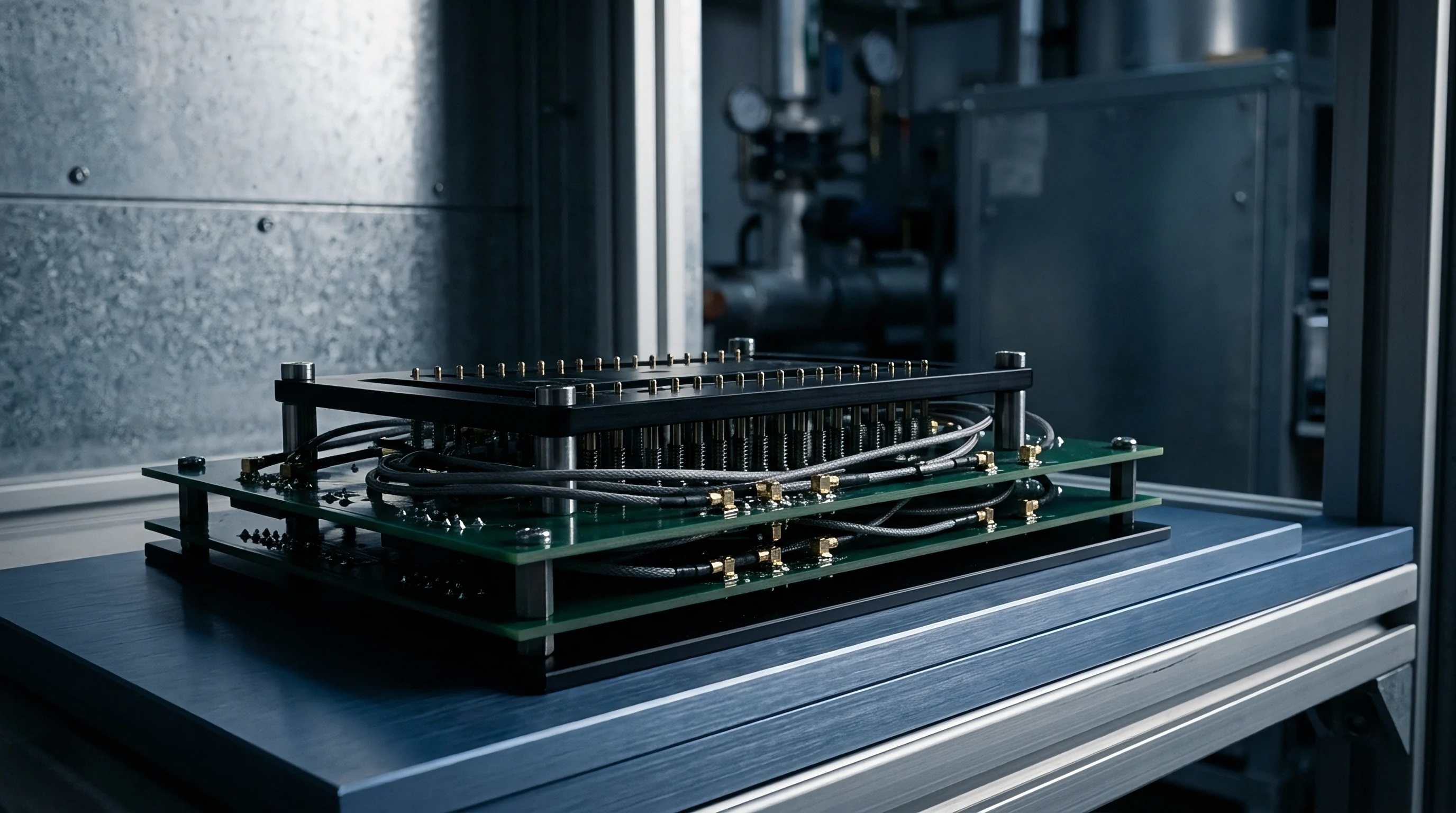
What Hardware Glitch Dictates Register Masking?
Silicon errata documentation from major semiconductor foundries catalogs hundreds of operational flaws in production microcontrollers. A prevalent hardware flaw involves peripheral control registers where specific bit combinations place internal analog phase-locked loops or radio frequency synthesizers into invalid configurations. For example, simultaneously enabling a peripheral clock while configuring its internal prescaler register can trigger a silicon latch-up condition that freezes the peripheral bus until a system power-on reset occurs.
Register masking drivers decouple the software interface from physical silicon peculiarities by interposing logical accessors. When an application developer requests a change to peripheral operational speed, the isolation driver analyzes the active state, applies bitwise exclusion masks to prevent restricted bit combinations, and commands the peripheral using the exact sequence mandated by the manufacturer errata notice.
Direct peripheral register access bypasses every safety mechanism built into modern microcontroller silicon compilers.

Architectural Masking Patterns for Fault Isolation
Engineers deploy defensive driver structures to sanitize peripheral access before instruction cycles execute. Several concrete architectural patterns solve specific classes of silicon anomalies at the hardware-software boundary:
- Atomic Bit-Banding Interception maps peripheral control bits into alias memory regions, transforming read-modify-write hazards into atomic bus operations executed directly by system hardware.
- Shadow Register Mirroring retains valid bitfield states inside dedicated RAM structures, isolating physical silicon registers from partial updates and allowing pre-commit sanitization masks.
- Sanitized Inline Accessors strip reserved and defective bitfield positions using compile-time constants, preventing software applications from writing forbidden register patterns.
Implementing shadow registers introduces slight execution overhead, typically adding two to four assembly instructions per register write. That cycle expenditure guarantees deterministic behavior across hardware steppings. When the system updates a peripheral, the isolation driver applies a bitwise logical AND operation with an isolation mask to zero out volatile erratum bits, followed by a bitwise logical OR operation containing certified configuration parameters.
Hardware that conceals silicon flaws behind software masks transfers permanent timing debt to every future firmware iteration.
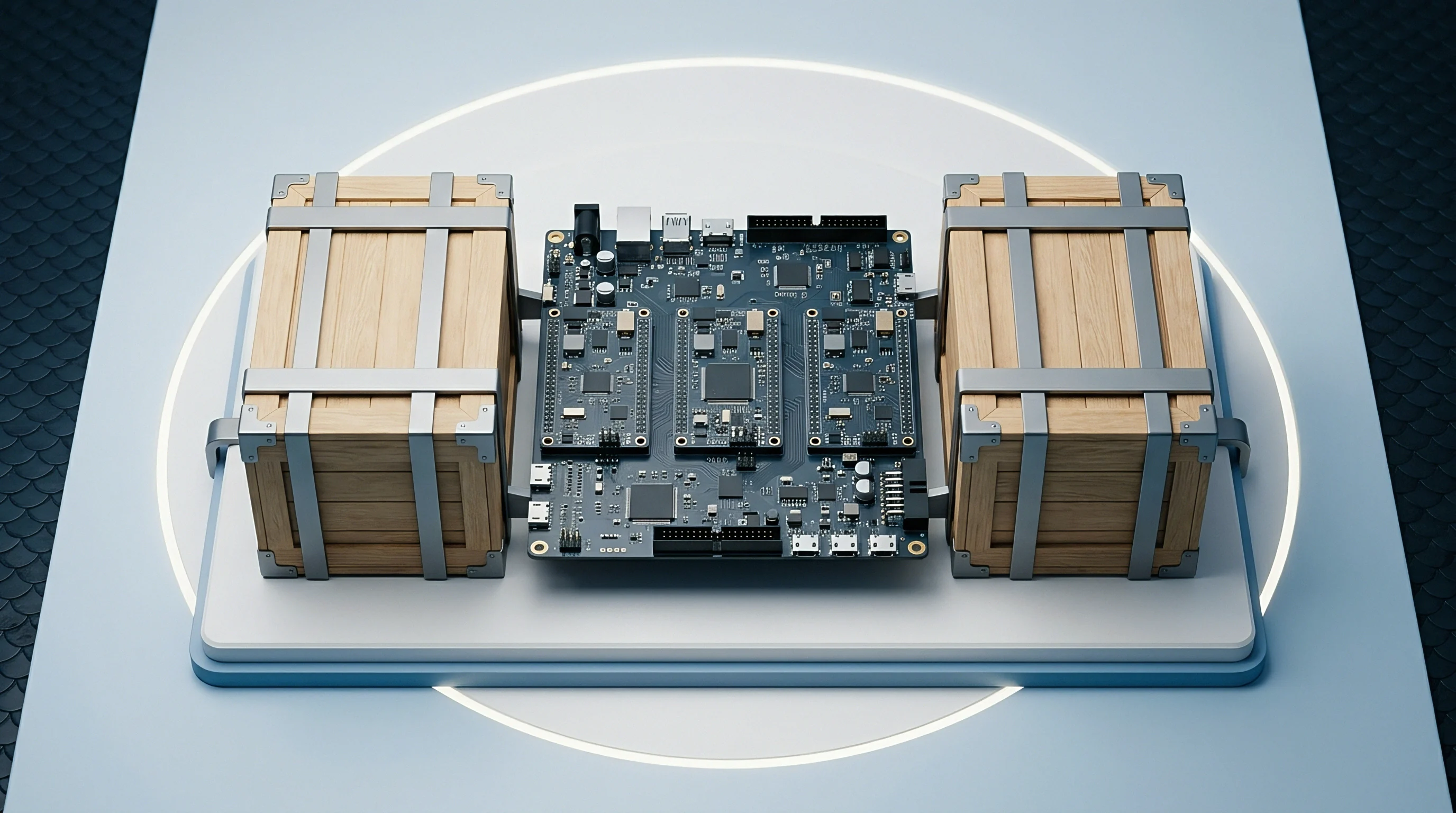

Bench
Physical qualification fixtures validate whether software driver patches successfully protect hardware against silicon flaws. Laboratory evaluation cannot rely on vendor development boards, which use hand-picked, golden silicon samples operating under benign laboratory conditions. Sourcing teams subject production modules to hardware-in-the-loop stress benches where microcontrollers operate under extremes of supply voltage, radio frequency transmission power, and ambient temperature while executing millions of consecutive register update cycles.
Automated instrumentation monitors physical register behavior via non-intrusive trace interfaces, capturing peripheral register bus cycles in real time. If a register masking driver fails to prevent an erratum condition, the automated bench detects bus protocol violations, unexpected interrupt assertions, or corrupted peripheral output patterns immediately.
A 64-MHz Cortex-M4 microcontroller incurs exactly 18 additional clock cycles during peripheral register updates when executing atomic shadow masking under nested interrupt conditions.
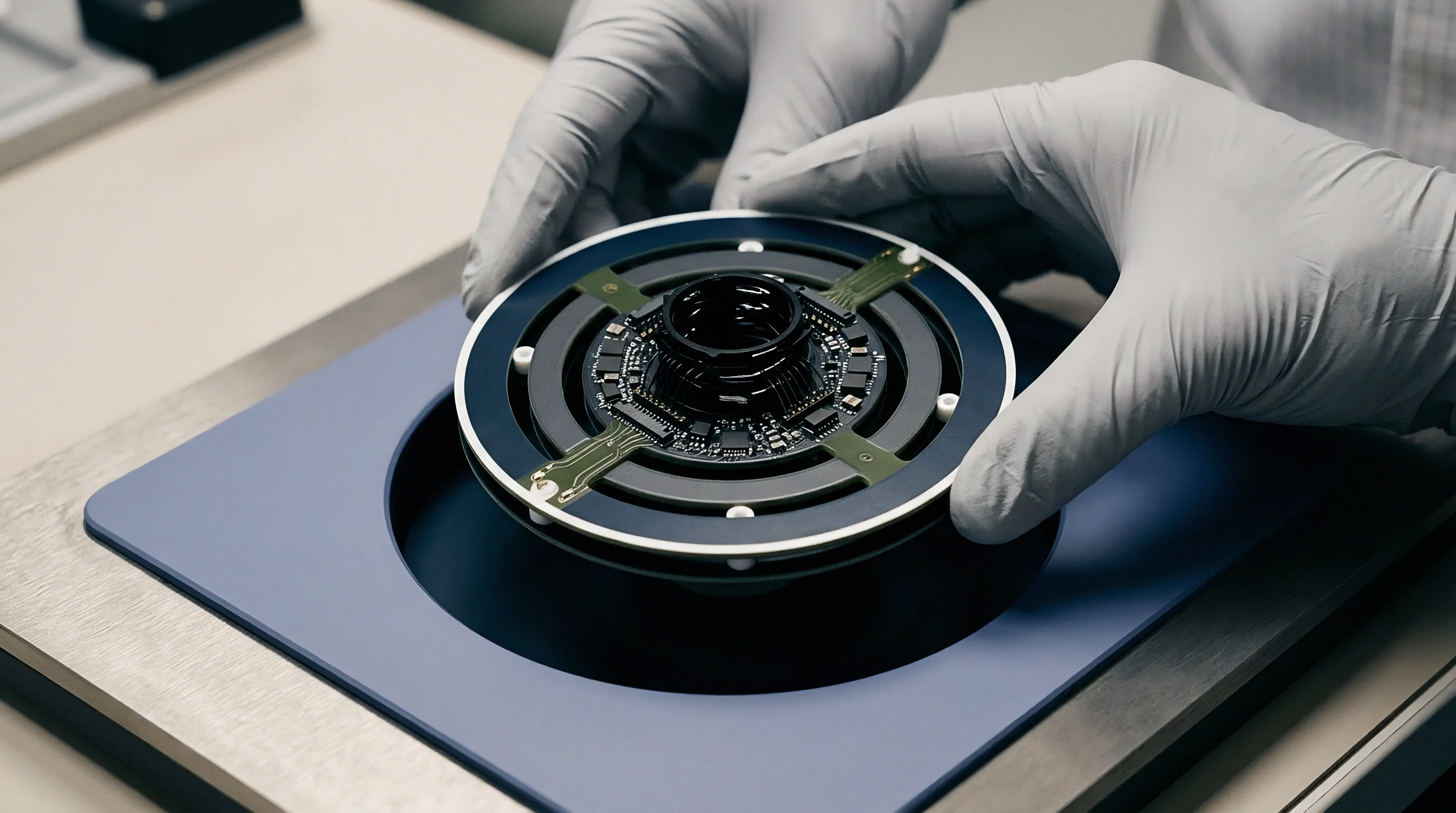
Does Shadow Register Allocation Incur Unacceptable Overhead?
Executing masked read-modify-write routines introduces quantifiable cycle penalties into high-speed interrupt service routines. In time-sensitive connectivity applications such as industrial Ethernet or precision wireless motor control, every CPU cycle spent manipulating shadow bitfields degrades real-time responsiveness. Engineering teams measure this trade-off directly on the test bench, comparing raw register manipulation against masked driver implementations.
The test bench quantifies execution cycles, memory consumption, and interrupt latency across competing driver architectures. Bare register pointer manipulation executes in single-cycle operations but leaves the hardware exposed to silicon errata. Full shadow register isolation consumes additional static RAM and requires multiple bus cycles, yet completely eliminates errata-induced hardware crashes.
| Driver Architecture Pattern | Flash Footprint Delta (Bytes) | Static RAM Consumption (Bytes) | Cycle Latency Per Access (Cycles) | Bus Stall Mitigation Success Rate |
|---|---|---|---|---|
| Direct Pointer Assignment | +0 | +0 | 2 | 0.0% |
| Sanitized Inline Masking Macro | +184 | +0 | 5 | 76.4% |
| Atomic Bit-Banding Driver | +420 | +0 | 4 | 91.2% |
| Full RAM Shadow Register Layer | +1,240 | +256 | 18 | 100.0% |
| Synchronized Barrier Isolation Wrapper | +1,860 | +256 | 24 | 100.0% |
| Bench metrics captured on 64-MHz ARM Cortex-M4 microcontroller executing 1,000,000 continuous SPI and UART register transactions under supply voltage modulation between 1.8V and 3.6V. | ||||

Deterministic Fault Injection on Hardware Testbeds
Automated test equipment simulates edge-case silicon defects by forcing transient voltage drops across microcontroller supply rails. By timing these power rail perturbations to coincide with direct memory access transfers and high-frequency peripheral register writes, the test bench intentionally induces race conditions inside the microcontroller peripheral bridges.
The register diff catches corrupt bits. High-speed logic analyzers tap peripheral buses to capture transient anomalies that escape standard software diagnostics. When unmasked vendor drivers execute under electrical stress, internal peripheral registers drop configuration states, causing serial communication interfaces to enter infinite timeout loops.
The masking driver intercepts these corrupted transactions, preventing the internal bus lockups that disable field devices.
Engineers still dispute whether automated register diffing can capture asynchronous bus contention across unsynchronized clock domains without physical probe intrusion.
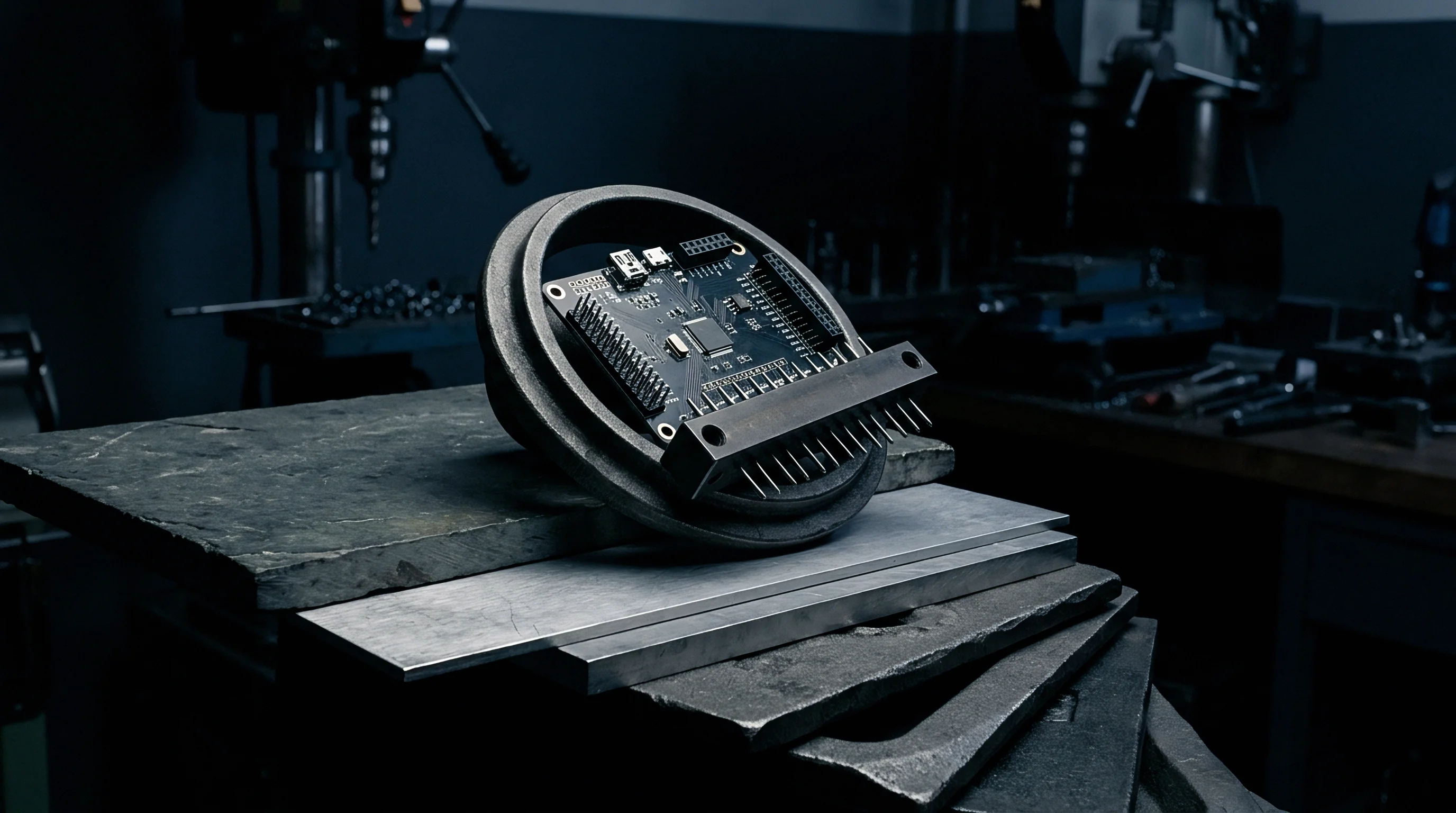

Intake
Transitioning a wireless connectivity module into volume manufacturing exposes hidden firmware dependencies on unverified silicon steppings. Semiconductor manufacturers continuously revise silicon dies to improve wafer yields, eliminate manufacturing defects, or shrink lithography nodes. These revisions, designated as silicon steppings, arrive without changes to external package markings or orderable part numbers.
A firmware build that operates reliably on stepping revision A often fails catastrophically on stepping revision B because foundry engineers altered internal logic paths without updating external documentation.
Sourcing engineers qualifying semi-custom or turnkey modules must verify who owns the errata isolation layer within the firmware delivery package. When a module vendor delivers an integrated software binary without source code, the buyer cannot adjust register masking drivers when new silicon steppings enter the supply pipeline.
Under JEDEC standard JESD46D, a semiconductor manufacturer issues a formal notification ninety days before shipping revised silicon steppings that alter peripheral register behavior.

Silicon Stepping Variations and Firmware Continuity
Semiconductor foundries alter internal photomasks between production wafer runs without modifying external package part numbers. When a foundry fixes a hardware erratum in stepping C, a software workaround developed for stepping A can inadvertently induce a brand-new failure mode. For instance, if an existing driver applies an artificial delay loop and a bitwise clearing mask to bypass a defective interrupt latch, corrected silicon in stepping C might interpret that sequence as an illegal command state, disabling peripheral communications entirely.
Foundry errata sheets arrive months late. Hardware sourcing agreements require explicit change notification protocols to protect downstream production. The incoming inspection process for embedded modules includes rigorous firmware compatibility audits to ensure register masking drivers match the physical silicon installed on incoming printed circuit board assemblies.
- Verify silicon identification registers during boot initialization to detect unexpected silicon stepping revisions before peripheral initialization drivers execute.
- Compare active driver bitmasks against updated manufacturer errata documents to confirm that obsolete software workarounds do not execute on corrected hardware steppings.
- Execute automated regression tests on incoming printed circuit board assemblies using physical test fixtures that validate peripheral bus timing under thermal extremes.
- Archive board support packages, toolchains, and driver source code in escrow repositories to maintain dual-sourcing manufacturing capabilities if the primary module vendor alters silicon sourcing.
The silicon erratum operates within published timing limits, rendering a dedicated driver patch commercially redundant.

Outlay
Engineering expenditure for register isolation drivers depends heavily on who maintains long-term responsibility for module software. Turnkey integration options appear cost-effective initially because the module supplier bundles binary board support packages without charging explicit non-recurring engineering fees. That economic advantage evaporates when an undocumented silicon erratum triggers field failures, forcing the buyer to pay premium emergency engineering rates to diagnose and patch closed-source vendor binaries.
Commissioning semi-custom or fully custom driver architectures requires upfront capital commitment. Engineering teams dedicate hundreds of hours to disassembling vendor drivers, identifying race conditions, and developing deterministic register masking shims. That upfront investment establishes absolute ownership of the firmware codebase, insulating the buyer against unexpected silicon stepping obsolescence.
Commercial Boundary Allocation in Turnkey Contracts
Original equipment manufacturers specifying pre-certified wireless modules face steep non-recurring engineering invoices when firmware repairs shift back to domestic engineering teams. Statements of work for module development specify precise deliverables for firmware maintenance, source code custody, and errata isolation support. If the contract fails to assign ownership of register-level drivers, the factory treats errata patches as billable scope changes rather than standard warranty remediation.
Sourcing contracts define whether the module supplier or the system integrator absorbs the labor cost of qualifying new silicon steppings. Buyers protect their margins by demanding full access to driver source code, register masking header files, and automated hardware-in-the-loop test benches as formal milestone deliverables.
| Integration Level | Non-Recurring Engineering Upfront (Hours) | Unit Firmware Royalty Premium | Driver Source Code Ownership | Silicon Errata Liability Boundary |
|---|---|---|---|---|
| Turnkey Reference Package | 0 to 40 | Embedded in BOM cost | Vendor maintains closed proprietary binary | Buyer absorbs all line-down risks and patch delays |
| Semi-Custom Modified HAL | 120 to 250 | $0.15 to $0.45 per unit | Shared source repository with restrictive license | Vendor patches documented errata; buyer patches custom logic |
| Full Custom Isolation Driver | 400 to 750 | $0.00 (Zero unit royalty) | Complete unencumbered source code transfer | Buyer controls patch schedule, stepping qualification, and IP |

Warranty Boundaries and Silicon Liability Clauses
Purchase agreements for electronic modules routinely disclaim financial responsibility for silicon-level manufacturing defects discovered post-deployment. Semiconductor vendors view errata documentation as legally binding disclosures that absolve them of component-level warranty claims. When an erratum causes intermittent field lockups, the financial burden of developing, testing, and flashing driver-level isolation patches falls directly on the brand owner.
Sourcing professionals structure development contracts with definitive acceptance testing gates. Production lots remain unaccepted until the factory demonstrates that installed firmware drivers isolate all known silicon anomalies through certified register masking logic.
Paragraph 8.2 of the standard design transfer agreement assigns all remediation labor costs to the module integrator whenever undocumented silicon revisions alter register bitfield behavior.