Resolving Unharmonized Global Tissue Absorption Boundaries in Miniaturized Wearable Host Platform Architectures
Harmonizing wearable tissue absorption limits demands mapping lowest local SAR exclusions, validating capacitive proximity backoff, and staging regional filings.
Phantom

Tissue Equivalents and Liquid Permittivity Boundaries
Electromagnetic exposure measurements for body-worn radio devices depend on physical tissue models filled with calibrated dielectric fluids. Test standards such as IEC/IEEE 62209-1528 define target permittivity and conductivity values across radio frequencies ranging from 4 MHz to 10 GHz. Because liquid temperature alters this permittivity, standard head and torso phantoms rely on shell thicknesses of two millimeters with strict tolerances of plus or minus 0.2 millimeters across the scanning area.
Miniaturized host platforms, including smart rings, wrist-mounted monitors, and skin-adhered sensors, operate directly against human skin without air gaps. Testing these form factors at zero millimeter separation exposes severe physical limitations in standard liquid-filled shells.
Robotic Specific Absorption Rate measurement systems navigate miniature isotropic electric-field probes inside liquid phantoms to map energy absorption. The distance between the probe sensor center and the physical tip introduces an offset, typically between 0.5 millimeters and 1.5 millimeters. When a wearable transmitter sits against the outer phantom surface, the high field gradients produced by micro-strip antennas decay exponentially within the first three millimeters of the tissue boundary.
Boundary effects corrupt spatial peak readings, and standard extrapolation algorithms fail when the field gradient fluctuates faster than the probe grid step size along the normal axis of the phantom surface.
Boundary effects within three millimeters of the phantom shell distort spatial peak localized SAR values through probe-dipole coupling.
Vector probe array systems speed up evaluations by substituting single-probe robotic scans with stationary diode-detector arrays under a flat phantom. Measurement accuracy in vector arrays relies on reconstruction algorithms that assume smooth field distributions. Extremely localized near-field hotspots, typical of sub-gigahertz loops or 5 GHz patch antennas mounted in five-millimeter wearable frames, challenge reconstruction fidelity.
At zero separation, custom mounts become necessary to preserve antenna clearance, while sub-millimeter grid steps are needed to capture steep electric field decay before probe checks and compounding test-run tolerances skew the scan.

Field Gradient Distortions at Zero Separation
Evaluating extreme proximity exposure forces test laboratories to address structural interactions between the host chassis and phantom shells. Standard flat phantoms represent large body regions, yet human wrists, fingers, and pinnae feature small radiuses of curvature. Wrapping a flexible wearable host around a flat phantom flattens the mechanical chassis, shifting the internal antenna position relative to the tissue boundary.
This artificial deformation alters the coupling impedance and return loss of the radiator.
Because host ground planes shift return loss and electric-field probes couple directly with nearby tissue, uncertainty budgets expand rapidly at millimeter gaps. Standard SAR test software applies spatial peak averaging over one-gram or ten-gram mass cubes shaped as continuous volumes. A miniaturized host platform emitting a highly concentrated field near a metallic enclosure edge forces the peak spatial average to depend entirely on the initial boundary reconstruction point.
Laboratories operating without specialized small-tissue phantoms or calibrated flat-bottom thin-shell enclosures generate measurement variances exceeding 30 percent between identical test cycles. Committing a design to production based on uncorrected zero-distance phantom scans leads to unexpected compliance rejections during market audit re-testing.
Divergence
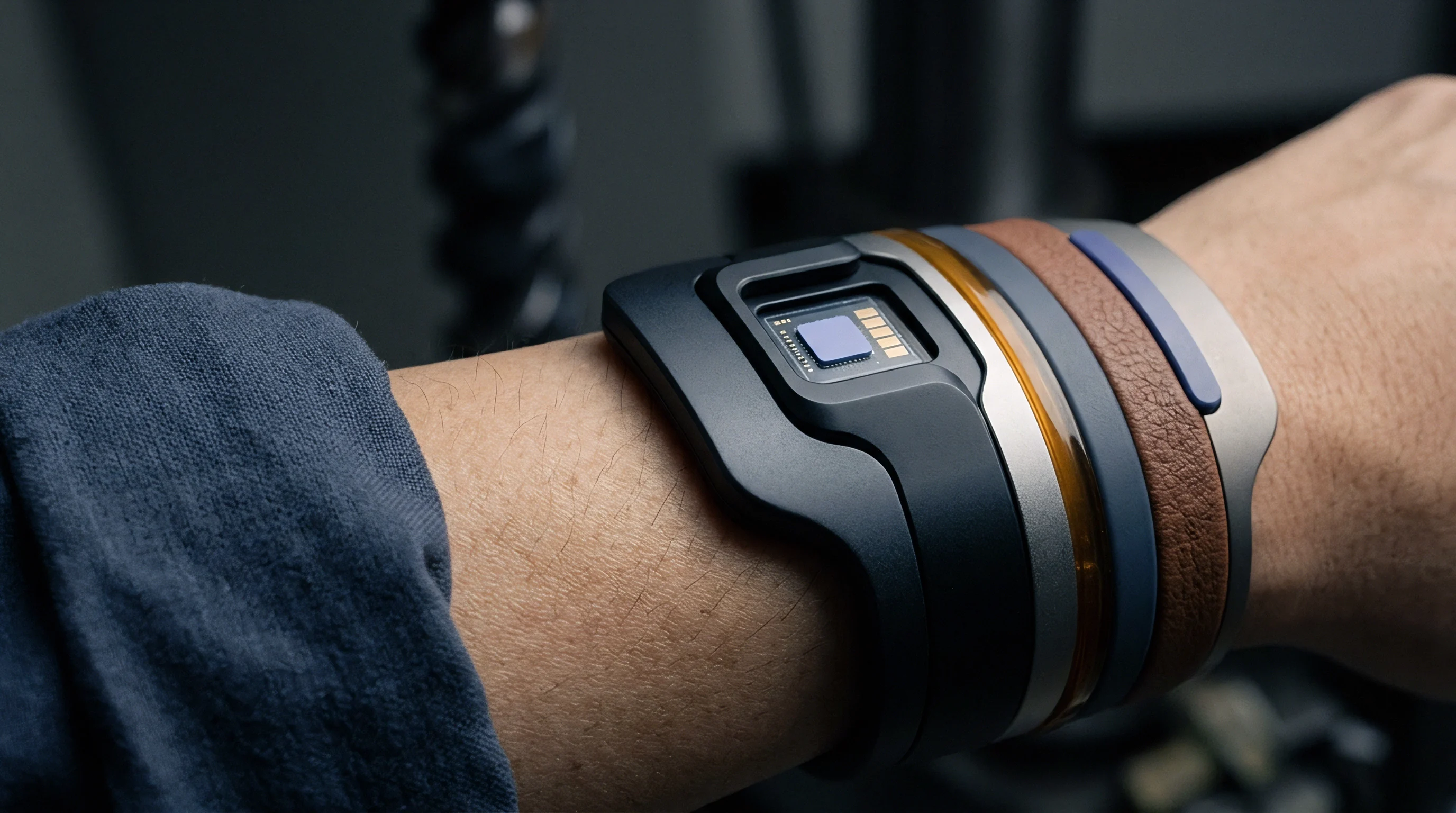
Jurisdictional Specific Absorption Rate Limits
Regional regulatory bodies enforce conflicting exposure thresholds and spatial averaging masses for localized radio frequency radiation. The United States Federal Communications Commission and Innovation, Science and Economic Development Canada mandate a localized Specific Absorption Rate limit of 1.6 W/kg averaged over one gram of tissue for the head, neck, and trunk. European markets under the Radio Equipment Directive, governed by CENELEC EN 50566 and EN 62209-2, apply a limit of 2.0 W/kg averaged over ten grams of tissue for head and trunk exposure.
For extremity exposure, including wrists, ankles, and hands, the limit increases to 4.0 W/kg averaged over ten grams across both North American and European frameworks.
Disparities extend beyond the numerical limits into exposure exemption criteria and power thresholds. Devices emitting below specific RF power limits bypass formal SAR chamber testing, relying instead on mathematical power thresholds linked to separation distance and operating frequency. The formulas defining these boundaries remain unharmonized across global certification bodies.
| Jurisdiction | Applicable Standard | Head/Trunk Localized Limit | Extremity Localized Limit | Zero-Distance SAR Exclusion Threshold (2.4 GHz) |
|---|---|---|---|---|
| United States (FCC) | KDB 447498 D04 | 1.6 W/kg (1g cube) | 4.0 W/kg (10g cube) | 3 mW (1-g limit formula) |
| European Union (CE) | EN 50566 / EN 62209-2 | 2.0 W/kg (10g cube) | 4.0 W/kg (10g cube) | 13 mW (10-g limit formula) |
| Canada (ISED) | RSS-102 Issue 6 | 1.6 W/kg (1g cube) | 4.0 W/kg (10g cube) | 1.0 mW (1-g localized limit) |
| Japan (MIC / Giteki) | Radio Regulatory Law | 2.0 W/kg (10g cube) | 4.0 W/kg (10g cube) | 20 mW (General exclusion) |
| China (SRRC) | GB 21288-2022 | 2.0 W/kg (10g cube) | 4.0 W/kg (10g cube) | 10 mW (General exclusion) |

How Do SAR Exclusion Thresholds Differ between FCC and CE for Sub-5 Millimeter Wearable Devices?
Navigating the boundary between exclusion and mandatory chamber testing demands mapping conducted output power against jurisdictional formulas at minimum physical separation distances. For a sub-5 millimeter wearable device, the FCC applies KDB 447498 D04, using a power threshold derived from a state-based exponential formula tied to test separation distance and frequency. At zero to five millimeter gaps and 2.4 GHz, the 1-gram head/trunk SAR exclusion threshold drops to approximately 3 mW conducted power.
The European Union applies EN 62479 and EN 50663, setting a general low-power exclusion threshold of 20 mW for localized 10-gram SAR, or specific calculated levels under EN 62209-2 that allow up to 13 mW at 2.4 GHz for 10-gram body SAR.
A host platform operating with a maximum conducted power of 8 mW clears European exposure exemptions without chamber testing for 10-gram body exposure. That same platform exceeds the 3 mW FCC threshold, forcing full 1-gram SAR testing in an accredited laboratory. A multi-region rollout plan must follow a precise sequence to avoid unexpected filing rejections.
- Power mapping establishes the maximum conducted peak and frame-averaged RF output power across all supported modulation modes and channel frequencies.
- Distance verification checks mechanical enclosure tolerances to determine the absolute minimum separation distance between the radiating element and the outer housing skin.
- Exclusion calculation applies local jurisdictional equations (FCC KDB 447498 D04, ISED RSS-102, EN 50663) using maximum tune-up power tolerances.
- Chamber evaluation triggers when conducted power exceeds the lowest regional exemption boundary among target launch markets.
- Dossier compilation isolates region-specific test reports, separating 1-gram North American datasets from 10-gram European and Asian datasets.
A transmitter operating at 2.4 GHz clears European 10-gram SAR exclusions at 13 milliwatts conducted power but triggers mandatory US 1-gram chamber evaluation above 3 milliwatts at zero millimeter separation.
FCC KDB 447498 D04 Section 4.3.1 dictates that when a device form factor prevents standard positioning or separation distance determination, SAR measurement is mandatory regardless of output power unless a formal Pre-Approval Guidance inquiry approves an alternative assessment route.

Attenuation

Proximity Sensing and Dynamic Power Reduction
Miniaturized host platforms maintain maximum permissible output power during free-space operation while reducing power upon human contact. To maintain wireless link budget while passing SAR tests, platforms integrate capacitive proximity sensors or optical detection arrays directly into the antenna layout. When the sensor detects human tissue within a defined threshold, typically 0 to 10 millimeters, the system triggers a firmware-driven conducted power backoff.
Sensors introduce complex operational dependencies. Capacitive sensors detect changes in dielectric constant, but liquid ingress, human sweat, or proximity to external metallic surfaces cause false triggers. A false trigger reduces transmitter power unnecessarily, dropping cellular or Wi-Fi link quality.
Conversely, a failure to trigger when placed against tissue exposes the user to RF energy above regulatory limits, invalidating certification filings when regulators encounter unvalidated trigger algorithms.
| Operating Mode | Frequency Band | Free-Space Power (Un-triggered) | Sensor Trigger Distance | Attenuated Conducted Power | Resulting 1g SAR (0mm) |
|---|---|---|---|---|---|
| Wi-Fi 6E (802.11ax) | 5.850 – 7.125 GHz | 15.0 dBm (31.6 mW) | 3.0 mm | 7.0 dBm (5.0 mW) | 1.18 W/kg |
| Bluetooth LE 5.3 | 2.402 – 2.480 GHz | 10.0 dBm (10.0 mW) | 1.5 mm | 4.0 dBm (2.5 mW) | 0.42 W/kg |
| LTE Band 13 | 777 – 787 MHz | 23.0 dBm (200.0 mW) | 5.0 mm | 16.0 dBm (39.8 mW) | 1.35 W/kg |
| 5G NR FR1 n77 | 3.300 – 4.200 GHz | 20.0 dBm (100.0 mW) | 4.0 mm | 11.0 dBm (12.6 mW) | 1.41 W/kg |

Capacitive Sensor Trigger Distances and Power Backoff Matrices
Demonstrating compliance for dynamic power reduction architectures requires physical validation in the test chamber. Testing laboratories evaluate sensor operation by moving a tissue-equivalent phantom toward the device at controlled speeds while monitoring conducted power via direct RF cable access or calibrated air-coupling probes.
- Hysteresis failure occurs when the sensor fails to maintain power attenuation during minor physical movements within the proximity threshold.
- Coverage dead-zones emerge when the capacitive sensor electrode coverage area fails to match the entire reactive near-field region of the antenna.
- State lock latency occurs when firmware delays power reduction execution past the maximum allowable frame window during rapid tissue contact.
- Thermal drift disruption arises when internal host heating alters baseline capacitive readings, locking the radio into continuous attenuated mode.
EN 50566 Section 6.1.1 invalidates test data if sensor power backoff mechanisms operate without locked state logs in the chamber report.
Embedded proximity engines are frequently positioned as drop-in compliance solutions across wearable enclosures, yet housing geometry, trace routing, outer-casing dielectric constants, and ground-plane length alter baseline capacitance enough to render pre-certified reference designs ineffective without host-level recalibration.
Dossier

Modular Approvals versus Host Integrated Compliance
Modular radio certifications grant explicit operating boundaries that vanish once an integrated module sits against human tissue. Antenna Grant conditions for modular radio approvals typically mandate a minimum separation distance of 20 centimeters from the human body, defining the radio as a mobile platform. Placing an approved module inside a wearable host platform changes its classification to a portable device operating under zero-distance tissue exposure rules.
Reclassifying a radio from mobile to portable invalidates the original modular SAR exemption. The host manufacturer becomes responsible for fresh SAR measurements, Permissive Change filings, or full technical file submissions. Under FCC rules, altering the transmitter power through host firmware or changing the antenna layout relative to the original grant module demands a Class II Permissive Change (C2PC).
Under ISED Canada rules, a Class 4 Permissive Change (C4PC) applies. In the European Union, the technical documentation supporting the CE Declaration of Conformity must incorporate updated EN 50566 SAR test reports for the final physical assembly.
Host platforms altering antenna geometry or ground plane length void modular SAR exemptions regardless of original radio certification status.
Pre-Approval Guidance and KDB Escalation Pathways
When miniaturized wearable designs use non-standard SAR reduction mechanisms, such as custom time-averaged SAR (TAS) algorithms or specialized non-flat phantoms, standard lab test procedures are insufficient. The laboratory must submit a Pre-Approval Guidance (PAG) inquiry to the FCC or relevant Telecommunications Certification Body (TCB) before issuing a final grant.
- Establish the complete test plan identifying non-standard tissue models, sensor trigger distances, and dynamic power backoff limits.
- Submit a formal inquiry via the FCC Office of Engineering and Technology KDB system citing applicable guidance publications for wearable radio exposure.
- Provide numerical electromagnetic simulation data mapping near-field energy distribution alongside initial bench validation measurements.
- Perform physical laboratory scans under explicit written direction from the regulatory authority following KDB inquiry response clearance.
- Attach the approved KDB inquiry response document directly inside the final TCB certification grant file.
What technical evidence clears a dynamic time-averaged SAR algorithm when real-time transmit power varies across sub-second frames during movement?

Yield

Laboratory Schedule Economics and Sample Preparation
Commercial release timelines split when market filings face disparate laboratory schedules and sample preparation demands. Preparing a wearable host platform for global radio certification demands specialized test hardware configurations. Testing requires at least two fully functional host units modified with temporary coaxial cables for conducted RF power measurements across all operating channels, plus at least two sealed final-production units for radiated SAR scanning.
Firmwares must include specialized test modes that force continuous transmission on individual modulation channels at maximum power without relying on standard network connection handshakes.
Laboratory chamber availability introduces severe schedule risks. Full multi-band SAR assessments for a dual-mode platform (such as LTE-M plus Bluetooth LE) require between 30 and 60 hours of direct chamber turntable time. Retests caused by uncalibrated sensor backoff algorithms add weeks of delay and direct laboratory re-test fees.
| Target Market | Mandatory Certification Mark | In-Country Testing Required | Sample Units Required (Conducted + Radiated) | Average Lab & Filing Lead Time | Estimated Direct Filing & Test Fees (USD) |
|---|---|---|---|---|---|
| United States | FCC ID | No (Accredited lab anywhere) | 2 Conducted + 2 Radiated | 3 to 5 Weeks | $12,000 – $18,000 |
| European Union | CE Mark | No (Self-declaration or Notified Body) | 1 Conducted + 1 Radiated | 2 to 4 Weeks | $8,000 – $14,000 |
| Canada | ISED / IC ID | No (Accredited lab anywhere) | 2 Conducted + 2 Radiated | 2 to 4 Weeks | $4,000 – $7,000 |
| Japan | Giteki / MIC | No (Recognized CAB acceptable) | 1 Conducted + 2 Radiated | 4 to 6 Weeks | $10,000 – $15,000 |
| China | SRRC | Yes (Mandatory state laboratory) | 3 Full Production Units | 6 to 10 Weeks | $15,000 – $22,000 |
| Brazil | ANATEL | Yes (In-country OCD evaluation) | 2 Full Production Units | 8 to 12 Weeks | $14,000 – $20,000 |
Sequential Market Filing Strategies
Staging regulatory submissions mitigates initial capital risk and preserves market launch targets. Obtaining an FCC Grant and European CE RED test report first creates a baseline technical file accepted by secondary markets across South America, Southeast Asia, and the Middle East. Attempting simultaneous global filings across markets demanding in-country testing, such as China and Brazil, exhausts sample inventories and creates parallel testing delays if a SAR threshold failure forces a hardware redesign.
A successful global launch strategy anchors initial filings in jurisdictions allowing accredited cross-border test data, using those certified baseline results to fund subsequent local-agent applications in high-friction markets.