Host Enclosure Electromagnetic Compatibility Audits across Border Ports of Entry
Port customs EMC audits evaluate physical host enclosure integrity and radiated emissions to halt non-compliant imported hardware before entry.


Seam
Conductive contact along physical panel interfaces governs how effectively metallic enclosures attenuate electromagnetic energy. When industrial host equipment moves through containerized ocean freight or long-haul road transit, mechanical vibration shifts panel alignment, relaxes fastener tension, and breaks micro-scale electrical contact along chassis boundaries. Border customs authorities conducting port-of-entry electromagnetic compatibility audits target these mechanical junctions first.
A spectrum analyzer connected to a localized magnetic field probe detects narrow-band radiation leaking from chassis joints before an importer unloads a single container pallet onto the distributor floor.

Joint Impedance and Surface Conductance
Contact resistance between mating chassis edges dictates RF current continuity across structural panels. Metal bends under mechanical load. Standard anodized aluminum, passivated stainless steel, or powder-coated sheet metal structural elements require bare conductive surfaces at every mating surface to maintain a low-impedance path.
Paint breaks electrical bonding. When factory assembly processes apply protective non-conductive coatings across chassis flanges without complete masking, current induced by internal switching power supplies or high-speed digital clocks cannot flow across the seam. The resulting potential difference forces RF energy to radiate outward through the interface gap.
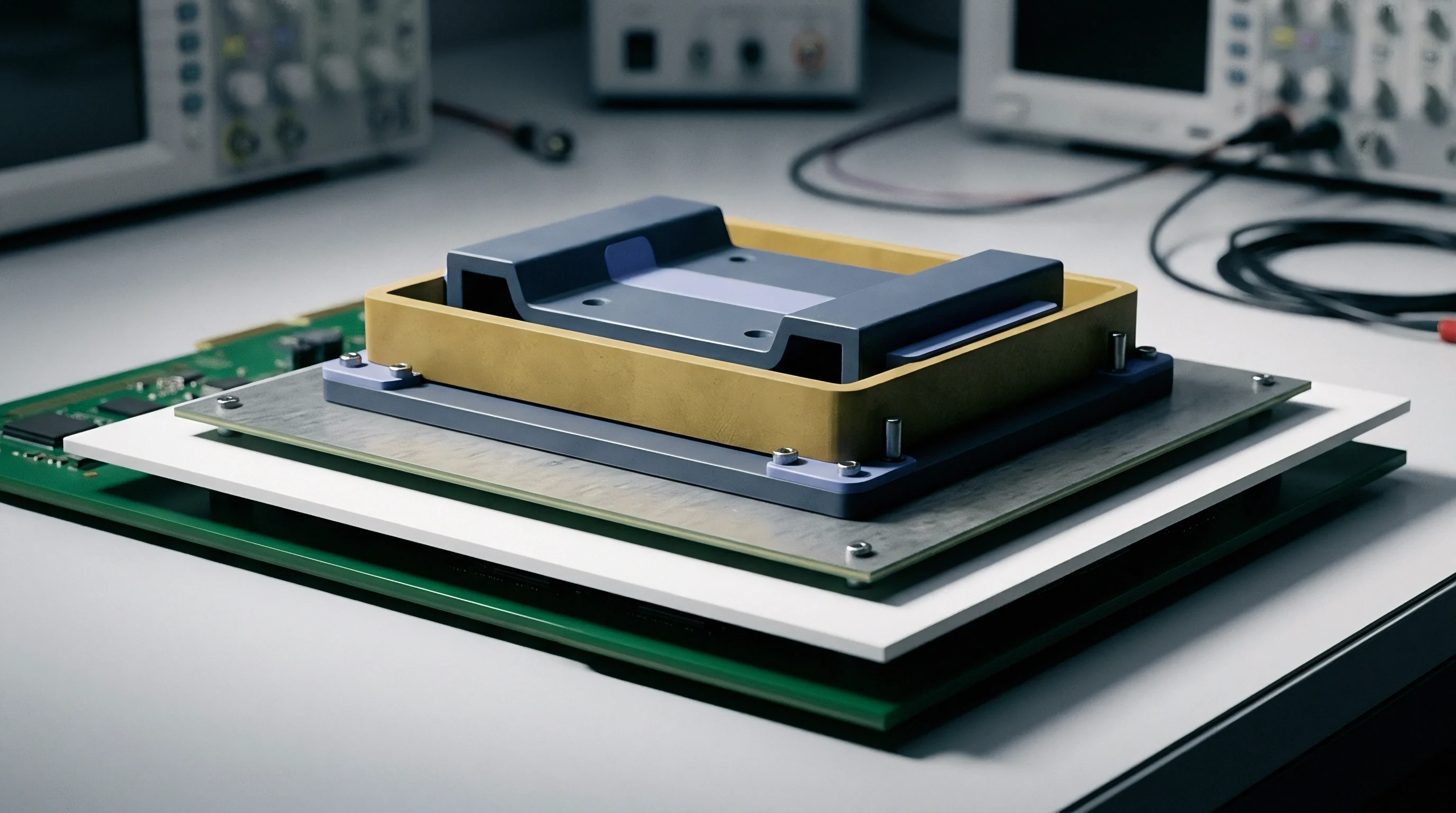
Conductive gaskets bridged across metal joints maintain low transfer impedance across broad frequency bands. Material selection determines long-term shielding performance. Beryllium-copper fingerstock offers high mechanical resilience and low contact resistance, whereas conductive silicone gaskets filled with nickel-coated graphite particles provide environmental sealing combined with electromagnetic attenuation.
If the compression force applied by chassis fasteners falls below the gasket manufacturer’s specified threshold, transfer impedance spikes at frequencies above three hundred megahertz. Gaps compromise enclosure attenuation. Laboratory evaluation under CISPR 32 testing conditions confirms that a surface transfer impedance exceeding ten milliohms per meter along a fifty-centimeter cabinet seam yields radiated emissions that exceed Class A limits by up to six decibels.
A continuous mechanical fast-fastener pattern maintains conductive gasket compression where panel flexure would otherwise create parasitic slot antennas.
Fastener spacing along structural metal joints dictates the maximum frequency attenuated by the enclosure. Spacing chassis screws twenty centimeters apart leaves uncompressed gaps that behave as resonant slot structures. Transit vibration loosens chassis hardware.
When screw torque degrades during ocean transport, localized contact pressure drops, effectively lengthening the unbonded physical seam and lowering its resonant frequency into the frequency bands monitored by border inspection agencies.
Mechanical Flexure during Containerized Freight
Transit loads impose dynamic stresses across cabinet joints during ocean and road transport. Structural deflections as small as zero point three millimeters create intermittent contact along perimeter gaskets. When host enclosures experience multi-axis shock profiles exceeding three gravities during intermodal transfer, structural panels flex relative to the internal frame.
This flexure permanently deforms thin metal flanges, leaving permanent physical gaps upon arrival at the port customs inspection hall.
Surface treatments applied to host enclosure panels exhibit varying degrees of resistance to oxidation and mechanical wear during transit. Unpassivated aluminum flanges develop thin oxide layers within days of exposure to humid marine environments, increasing surface contact impedance. Electroless nickel plating maintains stable surface conductivity across high-humidity transit legs, preserving low transfer impedance across panel joints.
| Panel Plating Finish | Initial Contact Resistance (mΩ) | Post-Transit Resistance (mΩ) | Attenuation at 1 GHz (dB) | Customs Audit Status |
|---|---|---|---|---|
| Bare Chromate Conversion (MIL-DTL-5541) | 1.2 | 8.5 | 42 | Conditional Hold |
| Electroless Nickel Plated (ISO 4527) | 0.4 | 0.6 | 58 | Pass |
| Anodized Aluminum with Milled Pads | 2.1 | 14.2 | 35 | Failure |
| Galvanized Steel with Conductive Gasket | 0.8 | 1.1 | 52 | Pass |
Failure mechanisms during physical customs audits stem directly from compromised structural joints. The following checklist details primary structural failure modes identified during port-of-entry non-destructive field audits:
- Chromate conversion failure leaves micro-oxide layers on mating panel edges that elevate RF transfer impedance above acceptable milliohm limits.
- Unshielded fastener penetrations act as quarter-wave resonant monopoles when local thread contact lacks conductive washer backing.
- Gasket over-compression fractures conductive elastomer matrices, turning resilient perimeter seals into non-conductive gaps.
- Oversprayed powder coating isolates ground pads on structural bulkheads, breaking internal shielding continuity across sub-assemblies.
Maintaining uniform mechanical pressure across metallic mating joints prevents parasitic slot radiation long before an enclosure faces high-frequency spectrum analysis.

Aperture
Unshielded openings in structural metal cabinets serve as primary egress paths for high-frequency internal noise. Ventilation louvers, display cutouts, cable access ports, and indicator light holes disturb the uniform RF current distribution flowing over the interior enclosure walls. When internal clock frequencies reach gigahertz levels, small physical openings function as efficient slot antennas.
Border customs authorities inspect cutout geometries and physical opening dimensions using calibrated visual tools and near-field probe arrays during import verification checks.

Slot Length Mechanics and Cutout Geometry
Physical slot length determines the maximum electromagnetic frequency that escapes through housing penetrations. Radiated emissions escape efficiently when the longest dimension of an unshielded opening equals or exceeds one-twentieth of the operational wavelength. A five-centimeter slot permits significant RF leakage at three gigahertz, matching common internal memory buses and high-speed processor harmonics.
Dividing broad physical cutouts into series of smaller perforations maintains structural airflow while restricting high-frequency leakage.
Radiated emissions exceed field thresholds. Circular holes arranged in a honeycomb pattern provide high electromagnetic attenuation while allowing required cooling airflow. The attenuation provided by a circular aperture operating below its cutoff frequency depends directly on the ratio of its depth to its diameter.
Maintaining a depth-to-diameter ratio of at least three to one delivers over sixty decibels of RF attenuation up to ten gigahertz, preventing internal digital clock harmonics from leaking into port measurement receivers.
A single five-centimeter slit in a metallic housing degrades enclosure attenuation by twenty-four decibels at two gigahertz.
Display panels mounted flush against host enclosure front walls demand specialized conductive treatments. Unshielded glass or plastic screens permit direct radiation from internal power supplies and processing boards. Installing indium-tin-oxide coated transparent conductive films or embedded wire mesh screens over display cutouts grounds RF noise to the main chassis frame.
Omitting conductive grounding clips around the perimeter of a display bezel creates narrow perimeter gaps that breach Class A radiated disturbance thresholds during port audit scans.

Ventilation Mesh and Honeycomb Filter Performance
Airflow grilles require perforated metallic sheets or cellular waveguides to preserve enclosure attenuation. Standard punched sheet metal vents featuring rectangular slots allow significant polarization-dependent field leakage. Wavelength matching dictates that rectangular vents aligned parallel to internal RF magnetic field lines suffer severe attenuation drops.
| Aperture Configuration | Max Slot Length (mm) | Cutoff Frequency (GHz) | Attenuation at 2.4 GHz (dB) | Port Scan Limit Margin |
|---|---|---|---|---|
| Punched Rectangular Slots (50×5 mm) | 50.0 | 3.0 | 12 | Fail (+4.2 dB Limit) |
| Perforated Round Holes (4 mm dia) | 4.0 | 37.5 | 38 | Pass (-6.1 dB Limit) |
| Honeycomb Waveguide Array (3:1 depth) | 3.2 | 46.8 | 68 | Pass (-18.4 dB Limit) |
| Unshielded Acrylic Window (100×80 mm) | 100.0 | 1.5 | 4 | Fail (+11.8 dB Limit) |
Cable penetrations through enclosure walls introduce severe high-frequency leakage paths if shield termination lacks three-hundred-and-sixty-degree conductive grounding. Pigtail ground wire connections act as inductors at elevated frequencies, rendering cable shields ineffective and allowing internal noise to couple onto external wiring harnesses. Employing conductive cable glands that clamp around the entire braided cable perimeter grounds the shield directly to the enclosure frame before conductors enter the cabinet interior.
Neglecting cutouts and display seam integrity during host assembly forces port inspectors to place non-compliant shipments under customs detention, accumulating bonded storage charges while engineers apply emergency conductive tape.
Audit
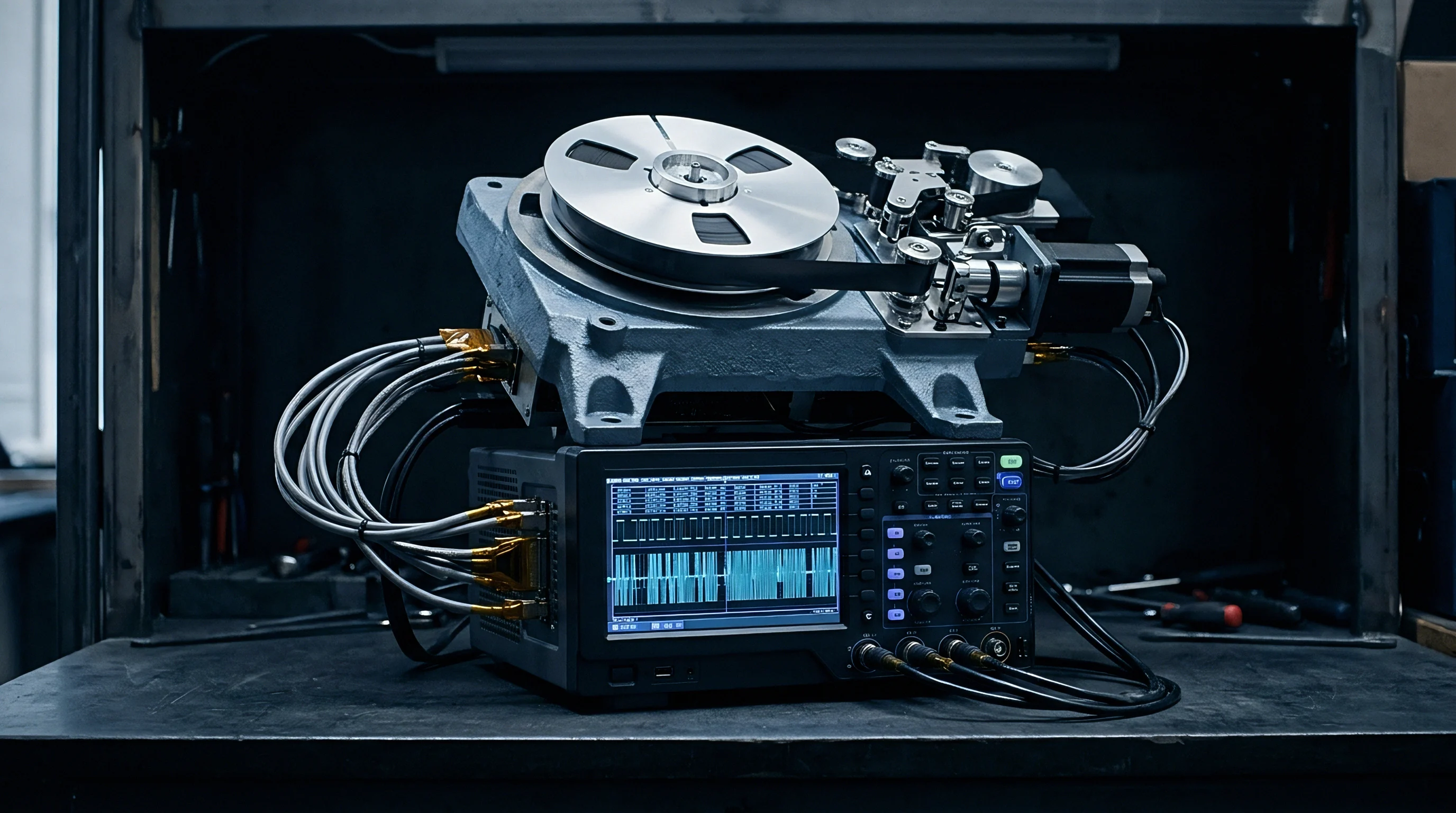
Border technical agencies deploy field spectrum measurement rigs directly inside freight inspection halls to verify compliance. Physical customs inspections no longer rely solely on visual paperwork checks; automated scanning rigs and portable spectrum analyzers verify host enclosure integrity against certified technical construction files. When imported hardware arrives at primary ports of entry, customs officers perform non-destructive radiated emission spot-checks on selected units from each production lot.

Port Station Measurement Instrumentation
Calibrated loop antennas paired with portable signal analyzers isolate localized chassis leakage without unpacking whole pallets. Field inspectors sweep sniffer probes along host enclosure seams, ventilation grilles, and cable entry glands while the device under test executes operational firmware routines. Peaks appearing on analyzer screens are compared directly against the emission signatures documented in the manufacturer’s accredited test report.
Discrepancies exceeding three decibels trigger secondary testing inside bonded semi-anechoic chambers located at regional port laboratories.
Seals degrade under thermal stress. Field audit stations utilize calibrated double-ridged guide horn antennas positioned three meters from host enclosures inside temporary shielded enclosures at port inspection terminals. Ambient electromagnetic noise inside freight terminals requires port inspectors to use pre-scan baseline subtractions to differentiate local port interference from host enclosure emissions.
Automated measurement software maps peak emissions against CISPR 32 Class A and Class B limit lines across frequency bands spanning thirty megahertz to six gigahertz.

Should Port Inspectors Reject Warped Modular Enclosures?
Customs officers face immediate technical decisions when physical cabinet frame deflections exceed half a millimeter. Structural twisting caused by improper pallet strapping deforms cabinet seams, creating unexpected RF leakage paths. If near-field probe sweeps reveal localized emission peaks exceeding limit lines, port authorities issue a formal notice of technical hold, stopping shipment movement through the entry port.
Audit procedures at major border ports follow a standardized, multi-stage physical inspection workflow to verify hardware compliance:
- Inspect the external physical shell for visible seam separation, missing chassis screws, or damaged perimeter gaskets.
- Compare housing model numbers and physical dimensions directly against the certified technical construction file accompanying the customs entry.
- Position a calibrated near-field loop probe two centimeters above panel joints while powering the host in its maximum operational duty cycle.
- Record spectrum analyzer traces across prescribed frequencies, referencing CISPR 32 Class A radiated limit curves.
- Issue an immediate port clearance release or order secondary three-meter semi-anechoic chamber verification upon identifying threshold breaches.
Customs holds stall dock delivery. Retesting incurs bonded storage fees. Port authority technical specialists rely on strict measurement thresholds to determine whether hardware meets regulatory import requirements or requires portside remediation.
Invoking clause 6.2 of CISPR 16-2-3 empowers port technical staff to reject host equipment based on near-field magnetic emissions exceeding mapped benchmark baselines, shifting the re-inspection expense entirely to the importer.

Discrepancy
Variations between laboratory qualification samples and mass-production shipments trigger immediate compliance flags during import checks. Factory golden units submitted for initial regulatory approval often feature hand-fitted conductive gaskets, meticulously torqued chassis fasteners, and premium surface plating. Mass production lines, however, introduce tolerance stack-ups, automated fastener torque variations, and alternate raw material suppliers.
When port customs authorities test random production units pulled from shipping containers, structural discrepancies between baseline test filings and physical inventory become instantly visible.
Production Drift versus Laboratory Baseline
Factory assembly lines frequently substitute mechanical fasteners or surface treatment chemicals without revising technical construction files. Substituting zinc-plated steel screws for stainless steel hardware reduces clamping force consistency across long cabinet seams. Uncertified modifications void port entry.
Minor alterations in conductive gasket material formulation, such as reducing silver particle loading in silicone matrices to cut unit production costs, drop shielding attenuation by up to fifteen decibels at gigahertz frequencies.
Internal cable routing changes within the host cabinet alter internal field distributions. When production workers zip-tie internal high-speed bus harnesses directly along metal housing panels rather than routing them through central shielded channels, high-frequency noise couples capacitively onto the enclosure wall. This unexpected coupling drives RF currents directly through chassis seams, causing sudden radiated emission failures during port audits even when the host logic boards remain unchanged.
Subpart B of FCC Part 15 voids host modular compliance when enclosure physical modifications compromise radiated emission boundaries recorded in the original grant filing.
RF leakage breaks limit lines. Non-compliant shipments held in bonded border warehouses accrue substantial daily financial penalties while waiting for corrective engineering actions.

Worked Cost Comparison of Port Retrofits
Remediating non-compliant host enclosures at a port-of-entry warehouse requires substantial capital outlay and labor time compared to controlled factory assembly. Evaluating a representative import scenario illustrates the financial impact of port-level compliance holds.
Assume an import lot of 500 industrial host cabinets held at a primary seaport container terminal following a failed CISPR 32 spot-check scan. Port inspectors identified a 6 dB emission overshoot at 868 MHz across 12 percent of audited units due to loose chassis ground screws and paint overspray on interior structural bulkheads. Remediating the shipment requires manual disassembly, surface paint scraping at contact nodes, installation of conductive gasket strips, screw retorquing, and formal re-auditing by accredited port lab technicians.
| Cost Component | Calculation Basis | Time Impact | Total Cost (USD) |
|---|---|---|---|
| Bonded Warehouse Storage | 20 Pallets @ $150/day x 10 Days Detention | 10 Business Days | $30,000 |
| On-Site Technician Labor | 2 Technicians @ $180/hr x 80 Total Hours | 5 Working Days | $14,400 |
| Remediation Material Kits | 500 Gasket Strips & Washers @ $25/Unit | Immediate Stock | $12,500 |
| Secondary Port Lab Audit | Accredited 3m Chamber Retest & Report | 1 Business Day | $4,500 |
| Customs Administrative Hold Fee | Flat Technical Hold Processing Penalty | N/A | $2,200 |
| Total Remediation Expenses | Full Lot Retrofit and Clearance | 10 Days Total Delay | $63,600 |
Preventing production drift requires formal change control mechanisms embedded in manufacturing workflows. The decision list below outlines essential verification checks for maintaining host enclosure compliance across production batches:
- Chamber trace mapping verifies baseline radiated profiles for every structural cabinet variant prior to bill-of-lading issuance.
- Gasket torque verification confirms all structural fasteners meet mechanical compression tolerances across transit packaging.
- Surface finish masking prevents non-conductive topcoats from covering grounding bosses and chassis ground contact tabs.
- Technical dossier binding pairs accredited test certificates with physical explosion drawings in the primary shipping manifest.
Discrepancies generate customs detention orders. Identifying mechanical defects at the factory prevents costly logistics bottlenecks at border entry terminals.
Overseas vendors often argue that minor surface paint changes or simplified cabinet latching hardware do not impact electromagnetic performance, yet border scanners measure the resulting slot emissions immediately.

Clearance
Resolving technical entry holds requires structured remediation plans executed under strict customs supervision. Importers cannot simply remove non-compliant hardware from port terminals to perform off-site repairs without posting substantial customs bonds. Technical remediation performed inside designated free trade zone repair stations or bonded logistics centers represents the only legal pathway to fix defective host enclosures and secure port entry release.

Corrective Action Workflows in Bonded Customs Zones
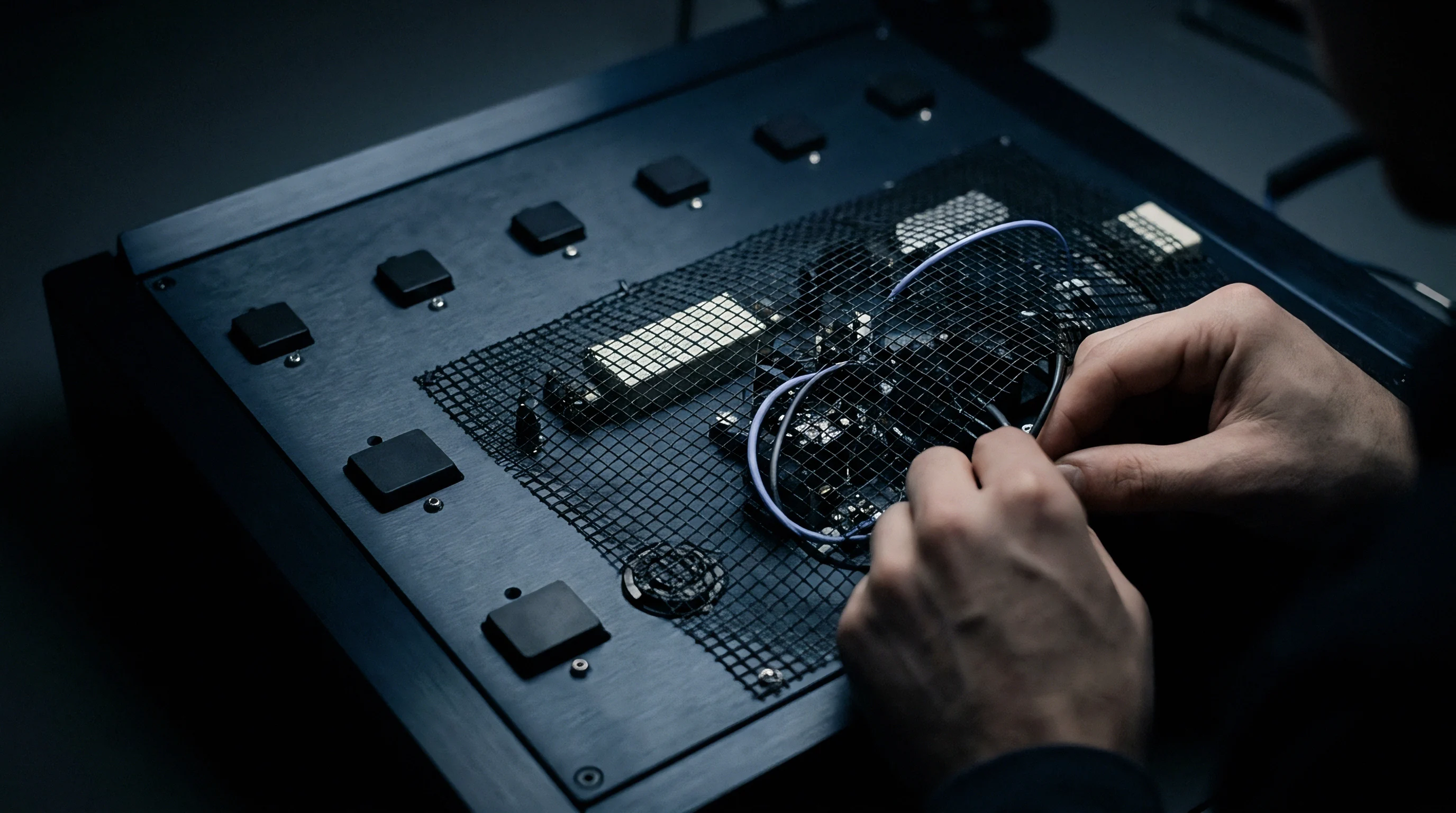
On-site modification protocols require accredited laboratory technicians to execute repairs within designated port facilities. Remediating panel joint leakage often involves retrofitting supplementary conductive gasket strips, installing external ferrite clamps on unshielded power cables, or applying conductive copper foil tape over internal seam gaps. Once remediation steps finish, port technical staff conduct a mandatory follow-up scan using calibrated near-field loops and three-meter antenna measurements.
Shielding fails at panel joints. When port re-scans confirm that radiated disturbance levels fall cleanly below Class A or Class B threshold curves with at least a four-decibel safety margin, the border technical agency issues a official compliance clearance certificate. This document attaches directly to the customs import entry declaration, allowing official release of cargo for domestic inland transport.
Dossier Alignment for Rapid Port Release
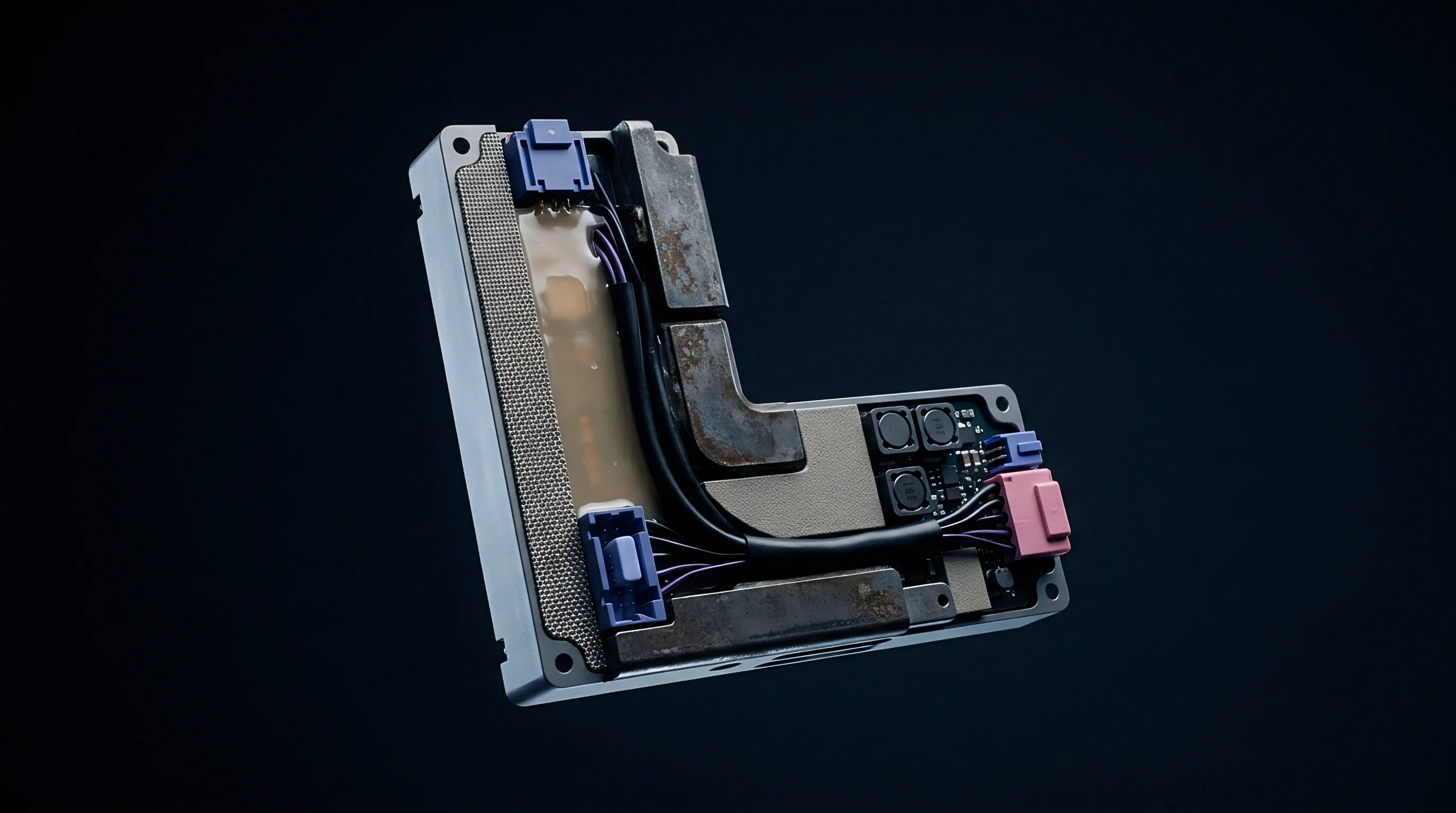
Matching physical housing geometry against test certificates prevents regulatory holds before cargo vessels arrive. Technical construction files accompanying host enclosure shipments must contain detailed mechanical drawings showing ground contact locations, aperture dimensions, gasket part numbers, and fastener torque specifications. Discrepancies between physical hardware dimensions and documentation filed in regulatory databases generate immediate red flags during customs data audits.
Border customs laboratories operate calibrated portable receivers that detect millimeter-scale seam gaps in seconds.
Updating technical documentation via permissive change filings ensures full legal alignment between physical inventory and regulatory grants. When host enclosure structural dimensions change during production runs, submitting Class I or Class II permissive changes with supporting test data maintains regulatory coverage, preventing port customs officers from seizing cargo for unauthorized hardware variations.
Whether international trade regulators will eventually harmonize real-time port RF scan methodologies across global borders remains an open debate among customs authorities and regulatory agencies.