SRRC Filing Timelines for a Product Entering China
SRRC radio type approval in China takes 8 to 16 weeks, requiring local agent representation, strict customs sample clearing, and accredited domestic lab scans.


Shield
Radio Frequency Chamber Execution
Testing an unapproved radio transmitter in a Chinese state-accredited facility exposes every flaw in the design within thirty minutes. State Radio Monitoring Center Testing Center facilities and regional accredited bodies measure radio frequency parameters against strict technical requirements defined by the Ministry of Industry and Information Technology. Engineers must submit physical hardware configured with dedicated test software that locks the transmitter into specific channels, modulation schemes, and maximum continuous output power states.
The laboratory environment leaves no room for unstable board behavior or thermal drift during radiated emission sweeps.
Measurements begin on a calibrated turntable inside an anechoic chamber. As the turntable rotates through three hundred and sixty degrees, automated receivers record radiated spurious emissions from thirty megahertz up to the tenth harmonic of the highest operational frequency. Transmitting hardware operating in the two-point-four gigahertz and five gigahertz industrial, scientific, and medical bands encounters stringent power spectral density caps and equivalent isotropically radiated power limits.
Radiated spurious emissions outside the designated operational band frequently hit ambient noise ceilings, yet any narrow spurious spike crossing the absolute threshold of minus thirty dBm triggers an immediate failure note on the test sheet.
| Frequency Band | Primary Test Vector | Operational Parameters | Standard Allocation Window |
|---|---|---|---|
| 2.4 GHz Wi-Fi / Bluetooth | Equivalent Isotropically Radiated Power and Occupied Bandwidth | Continuous transmit, fixed channels 1, 6, 11 at maximum power | 4 to 6 business days |
| 5.1 GHz / 5.8 GHz Wi-Fi | Dynamic Frequency Selection and Power Spectral Density | Master and slave pulse injection, channel availability check | 6 to 8 business days |
| Cellular LTE / 5G NR | Transmitter Spurious Emissions and Conducted Output Power | Full resource block allocation, multi-band sweep across 3GPP channels | 8 to 12 business days |
| Sub-1 GHz Short Range Devices | Frequency Tolerance and Occupied Bandwidth Mask | Unmodulated carrier sweep, voltage variation from minus 15 to plus 15 percent | 3 to 5 business days |
Conducted RF testing runs parallel to chamber work on a dedicated RF bench. Technicians connect coaxial cables directly to U.FL or SMA test ports on the board, bypassing the antenna to measure raw transmitter output. An early internet-of-things gateway build lost forty-two calendar days because the test firmware lacked an automated command to toggle between continuous wave mode and packetized data streams.
Direct cable connections allow precise measurement of occupied bandwidth, frequency tolerance across operating temperatures from minus twenty to plus fifty-five degrees Celsius, and adjacent channel leakage ratios.
Continuous transmission pre-scans at five gigahertz lower chamber failure rates when output power sits within half a decibel of the regulatory limit.
Pre-Scanning Strategy and Failure Prevention
Running preliminary measurements at a local domestic facility before shipping test units into mainland China protects both schedule and budget. Accredited Chinese laboratories operate under strict administrative mandates: an official test failure becomes part of the public filing record and requires a complete application resubmission along with fresh laboratory queue fees. Catching non-compliant harmonics, poor board grounding, or firmware control errors before formal submittal lets teams adjust layouts or recalibrate power tables quietly on the developer’s bench.
Antenna pattern behavior frequently introduces unexpected radiated spurious emissions during turntable rotation. When an integrated trace antenna interacts with nearby metallic structural components inside the housing, passive radiation patterns distort and concentrate radiated energy into narrow spatial lobes that breach maximum power spectral density rules. Adding a five-dB attenuator setting inside the engineering test software provides a temporary safety buffer during preliminary scans, helping product teams determine whether high emissions stem from raw RF engine performance or unexpected structural resonances within the host chassis.
Unresolved ground loop currents between power supply switching regulators and the radio frontend frequently generate harmonic spikes on the spectrum analyzer. Whether a revised PCB shield placement or a secondary ferrite bead on the internal ribbon cable resolves these spurious peaks remains an open technical question that product teams must answer before committing to the official state test schedule.

Customs

Physical Importation of Test Units
Transporting uncertified radio hardware across the Chinese border requires tight logistics execution and exact regulatory paperwork. Border control authorities and the General Administration of Customs inspect incoming cargo for radio-emitting equipment lacking a valid Radio Transmission Equipment Type Approval certificate, commonly identified as a CMIIT ID. Importation for the explicit purpose of laboratory testing relies on specific regulatory waivers and temporary import declarations that bind the shipment directly to an accredited domestic testing institution.
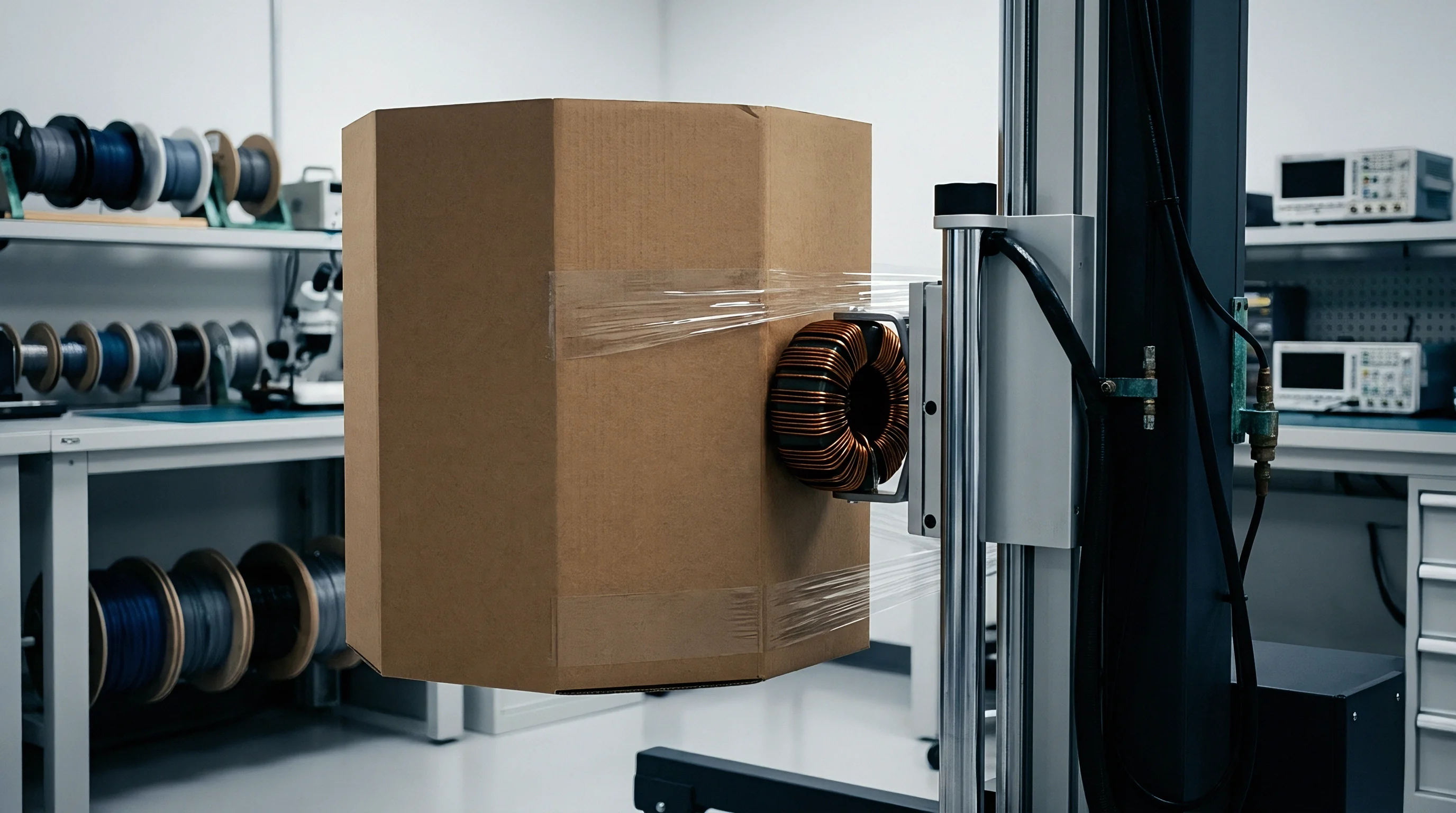
Shipping logistics break down when sample packages lack formal laboratory intake letters or carry mismatched serial numbers. Customs officials cross-reference the physical device label, the packing invoice, and the official laboratory appointment documentation submitted by the local Chinese representative. Any discrepancy between the internal radio IC model string on the invoice and the silk-screened markings on the board leads to immediate parcel detention at the port of entry, triggering storage fees and administrative holds that extend total project schedules by weeks.
Hardware Allocation and Border Clearance Traps
Securing clean customs clearance demands strict control over sample build configurations dispatched to the destination laboratory. Laboratories mandate two distinct hardware builds: fully assembled final host units for radiated chamber scans, and modified board-level samples fitted with dedicated coaxial RF cables for direct conducted measurements. Preparing these physical samples with clear, durable labeling prevents operational confusion during customs inspection and subsequent laboratory intake.
- Mismatched Serial Identifiers cause immediate customs impoundment when physical silk-screen labels on prototype boards differ from the commercial invoice listing.
- Omitted Radio Test Firmware prevents laboratory technicians from locking the hardware into continuous transmission modes, requiring fresh software flashing or sample replacement.
- Missing Laboratory Approval Letters halt customs clearance at major entry hubs because port authorities demand verified proof of an assigned laboratory testing slot.
- Inadequate RF Test Interfaces force laboratories to solder coax cables directly onto fine-pitch board traces, risking thermal damage to prototype hardware.
- Unregistered Peripheral Accessories like custom power adapters or interface cables trigger unexpected product safety holds under entry inspection protocols.
The local Chinese agent or applicant handles the administrative burden of generating the official sample import letter. This document certifies to customs authorities that the incoming hardware is non-commercial, destined solely for state-sanctioned compliance testing, and subject to return or destruction upon completion of the certification process. Delivery delays at border entry points ripple directly into laboratory scheduling, as missed testing slots are reassigned to other applicants on the state chamber waiting list.
Customs cleared wireless prototypes in two days flat, but the shipment sat in an unheated airport warehouse for three weeks awaiting local agent authorization.
Bureau
Administrative Submittal and Local Agency Rules
Filing for Chinese radio type approval mandates an in-country corporate entity to act as the legal applicant of record. Overseas product manufacturers without a registered subsidiary inside mainland China must execute a formal power of attorney assigning an authorized local agent to manage the application process through the Ministry of Industry and Information Technology online platform. The local applicant carries full regulatory responsibility for the administrative accuracy of the filing dossier, including corporate business licenses, technical documentation translations, and official guarantee letters.
Documentation requirements demand detailed engineering disclosures that go beyond standard European or North American filing packets. Applicants must submit comprehensive schematic diagrams, internal and external high-resolution hardware photographs, block diagrams, operational circuit descriptions, and official user manuals translated into simplified Chinese. Technical specifications must clearly delineate output power ratings, operating frequency ranges, modulation types, occupied bandwidth metrics, and antenna specifications, including peak gain values and directional radiation patterns.
The administrative workflow follows a rigid sequential path once the application enters the official portal. Initial documentation validation by ministry staff takes between five and ten business days, after which the file receives a formal administrative processing number and authorization to deliver physical hardware to the designated test lab. Upon successful completion of laboratory testing, the test center submits the technical evaluation report directly to the ministry, initiating the final regulatory review and approval phase.
| Filing Stage | Responsible Party | Standard Window | Delay Risk Factors |
|---|---|---|---|
| Local Agent Documentation Audit | In-Country Representative | 3 to 5 business days | Incorrect business license scope, translation discrepancies |
| State Portal Submission & Acceptance | MIIT Administrative Office | 5 to 10 business days | Incomplete technical schematics, mismatched model names |
| Laboratory Sample Intake & Testing | Accredited Test Center | 15 to 25 business days | Test mode firmware crashes, spurious emission re-tests |
| Technical Report Approval | MIIT Engineering Panel | 10 to 15 business days | Data inconsistencies between report and portal entries |
| CMIIT ID Assignment & Registration | MIIT State Office | 5 to 10 business days | Public database synchronization backlogs |
Mandatory local applicant assignment clauses shift regulatory legal responsibility to the Chinese subsidiary without granting commercial distribution rights.

What Triggers Administrative Rejection during Initial Filing?
Administrative rejections occur early when submitted documentation shows internal discrepancies across hardware descriptions. Application software forms listing a peak transmitter power of twenty dBm fail instantly if the accompanying schematic drawings show a power amplifier circuit rated for twenty-three dBm without explaining line attenuation losses. Consistency across every page of the engineering package remains mandatory for administrative acceptance.
Model name nomenclature rules in China enforce strict family naming conventions. Submitting a single filing to cover multiple product variants requires establishing that all listed models share identical RF circuitry, layout geometries, output power settings, and enclosure materials around the antenna assembly. If a secondary model variant includes a minor layout change or an alternative plastic housing density that alters internal RF reflections, the ministry auditor rejects the family filing request, requiring separate application streams and distinct testing budgets for each variant.
Following technical report approval, the ministry issues a formal grant certificate carrying a unique CMIIT ID number, valid for five years. This grant record details approved device parameters, factory production addresses, and certificate holder identity, while registering the hardware in the public state radio database. Article 14 of the Radio Regulation of the People’s Republic of China explicitly states that any modification to the operating frequency, output power, or internal radio frequency circuitry invalidates the existing approval, rendering subsequent product shipments subject to administrative seizure.


Integration
Modular Certifications versus Host End-Product Approvals
Relying on a pre-certified wireless module simplifies host-level design but does not automatically grant host products immediate market entry in China. The regulatory framework distinguishes between standalone full modular approval, limited modular approval, and non-modular embedded design integration. Integrating a pre-approved CMIIT ID module inside a host device requires reviewing the original module grant conditions to confirm whether host-level re-testing is mandatory.
Host devices containing certified modules must ensure that the integrated module remains unaltered in operating power, firmware configuration, and antenna type. If the host product incorporates a higher-gain antenna than the antenna certified with the original module, the overall equivalent isotropically radiated power exceeds the approved boundary, rendering the original modular certification void for that specific integration. Under these conditions, the end-product manufacturer must execute a complete host-level type approval filing, submitting the complete host unit for full chamber testing.
Host-level integration evaluation follows a defined verification structure to confirm regulatory compliance before market entry:
- Review the original modular approval certificate and technical annex to confirm approved antenna types, peak gain limits, and trace layout parameters.
- Verify that host micro-controller firmware locks the integrated radio module within certified output power tables without user-accessible overrides.
- Inspect host housing enclosure materials for metallic coatings or structural components that sit within the reactive near-field region of the integrated antenna assembly.
- Execute host-level radiated spurious emission pre-scans to verify that host digital electronics do not raise ambient noise levels above regulatory ceilings.
- Affix the required regulatory marking on the host product external housing, referencing either the host CMIIT ID or the contained module CMIIT ID as governed by ministry labeling rules.
Altering an integrated antenna’s trace geometry by more than one millimeter turns a minor permissive update into a full type-approval filing.

Host Integration Hazards and Factory Production Audits
Combining multiple pre-certified radio modules inside a single host housing introduces complex co-location compliance challenges. A host device containing both a certified Wi-Fi module and a certified cellular module cannot rely solely on the individual module certificates. Simultaneous transmission sweeps become mandatory to measure intermodulation products and ensure total combined radiated field strength remains within safety and regulatory limits.
Co-located radio systems frequently generate unwanted intermodulation spurs that fail radiated emission limits during full turntable chamber sweeps.
Factory quality management systems must also align with state radio requirements. Certificate holders are subject to random market surveillance and factory production audits conducted by state regulators to verify that mass-produced units match the exact construction of the sample evaluated in the approval laboratory. Discrepancies in internal component sourcing, such as swapping passive RF filter suppliers or altering microstrip trace substrate materials on the production line, compromise certification validity and expose the manufacturer to recall orders.
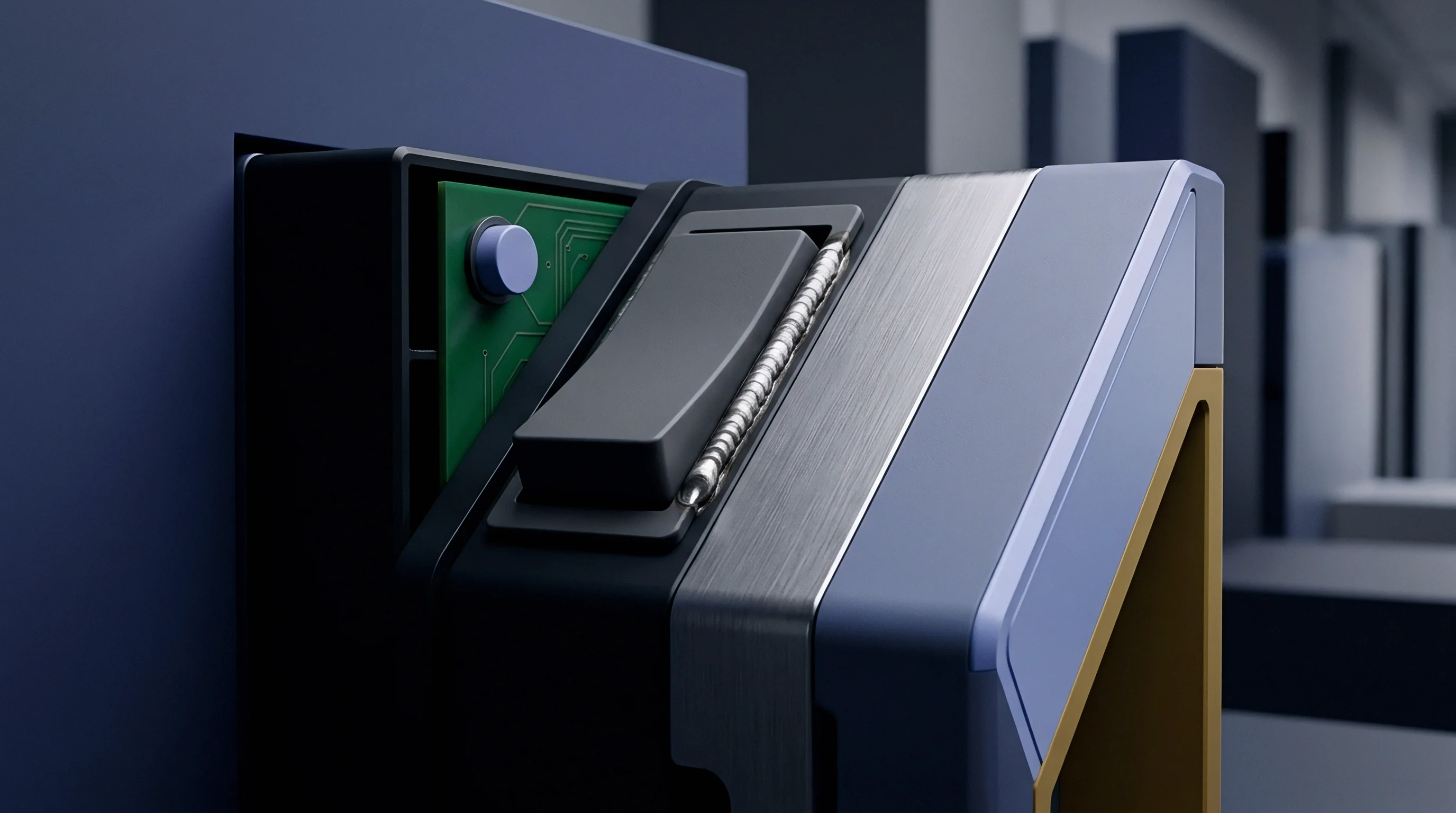
Integrating a pre-certified radio module into an industrial host chassis preserves the original grant validity only when the host layout strictly matches the original reference design guidelines.

Margin

Lead Time Arithmetic and Schedule Buffers
Planning a product launch in China requires translating regulatory workflows into concrete schedule buffers and capital allocations. The theoretical minimum timeline of six to eight weeks for SRRC certification reflects an ideal path with zero sample delays, perfect documentation, immediate lab availability, and first-pass chamber passes. Experienced operational teams build ten to sixteen week buffers into master launch schedules to absorb predictable administrative and technical friction points.
Schedule risk concentrates heavily around national holidays and seasonal laboratory surges. Laboratory testing queues expand dramatically ahead of major domestic holiday windows, such as Golden Week in October and the Spring Festival in January or February. Submitting physical samples four weeks prior to these holiday periods regularly results in samples sitting idle on laboratory shelves while testing facilities close, effectively adding three to four non-productive weeks to the total project timeline.
| Project Component | Standard Fee Range (USD) | Contingency Reserve | Schedule Impact |
|---|---|---|---|
| Local Agent Filing Services | $2,500 to $4,500 | 10 percent | Fixed 1 to 2 weeks |
| Single-Band RF Laboratory Testing | $4,500 to $7,000 | 25 percent re-test buffer | 3 to 5 weeks |
| Dual-Band / Multi-Protocol Testing | $8,000 to $14,000 | 35 percent re-test buffer | 5 to 8 weeks |
| Customs Clearance & Logistics Bond | $1,000 to $2,500 | 15 percent storage buffer | 1 to 3 weeks variable |
| Documentation Translation & Legalization | $800 to $1,500 | 5 percent | 1 week |
- Lock engineering test firmware three weeks prior to customs dispatch to verify stable operational command control on bench setups.
- Execute pre-scan radiated emissions testing at a local accredited facility to catch harmonic spikes before shipping official state samples.
- Audit all technical documentation, model names, and schematic drawings against local agent templates to ensure complete administrative alignment.
- Dispatch dual sample sets via specialized courier services with full laboratory intake authorization letters attached to outer shipping crates.
- Track state portal progress weekly through the local representative to address administrative inquiries immediately upon receipt.
Market entry delays in consumer hardware erode wholesale margins faster than any administrative testing fee.

Capital Allocation and Commercial Exposure
Financial risk management extends beyond primary testing fees to encompass potential re-test penalties and landed inventory costs. Experiencing a test failure halfway through a laboratory campaign incurs both the immediate cost of lab re-test fees and the continuing capital expense of holding finished inventory in bonded warehouses while engineering teams resolve board-level issues. If a host design fails radiated spurious emissions at five gigahertz, rectifying the issue requires engineering redesign, fresh sample production, customs clearance, and full laboratory re-testing.
A manufacturer absorbed a nine-week delay and twenty-three thousand dollars in unexpected warehousing fees when a minor component substitution on an assembly line caused a batch of smart meters to fail random market surveillance sweeps. Managing financial margin requires treating regulatory compliance as a core hardware development milestone rather than a final administrative sign-off step. Allocating capital reserves early for pre-scans and dual-track lab bookings protects product launch dates and guards wholesale margins against unexpected regulatory delays.