Contractual Liability Allocation for Modular Radio Frequency Exposure Noncompliance in Landed Commercial Host Hardware
Modular grant pass-through rights terminate when host enclosure proximity or antenna modifications alter tested RF safety separation boundaries.


Spacing
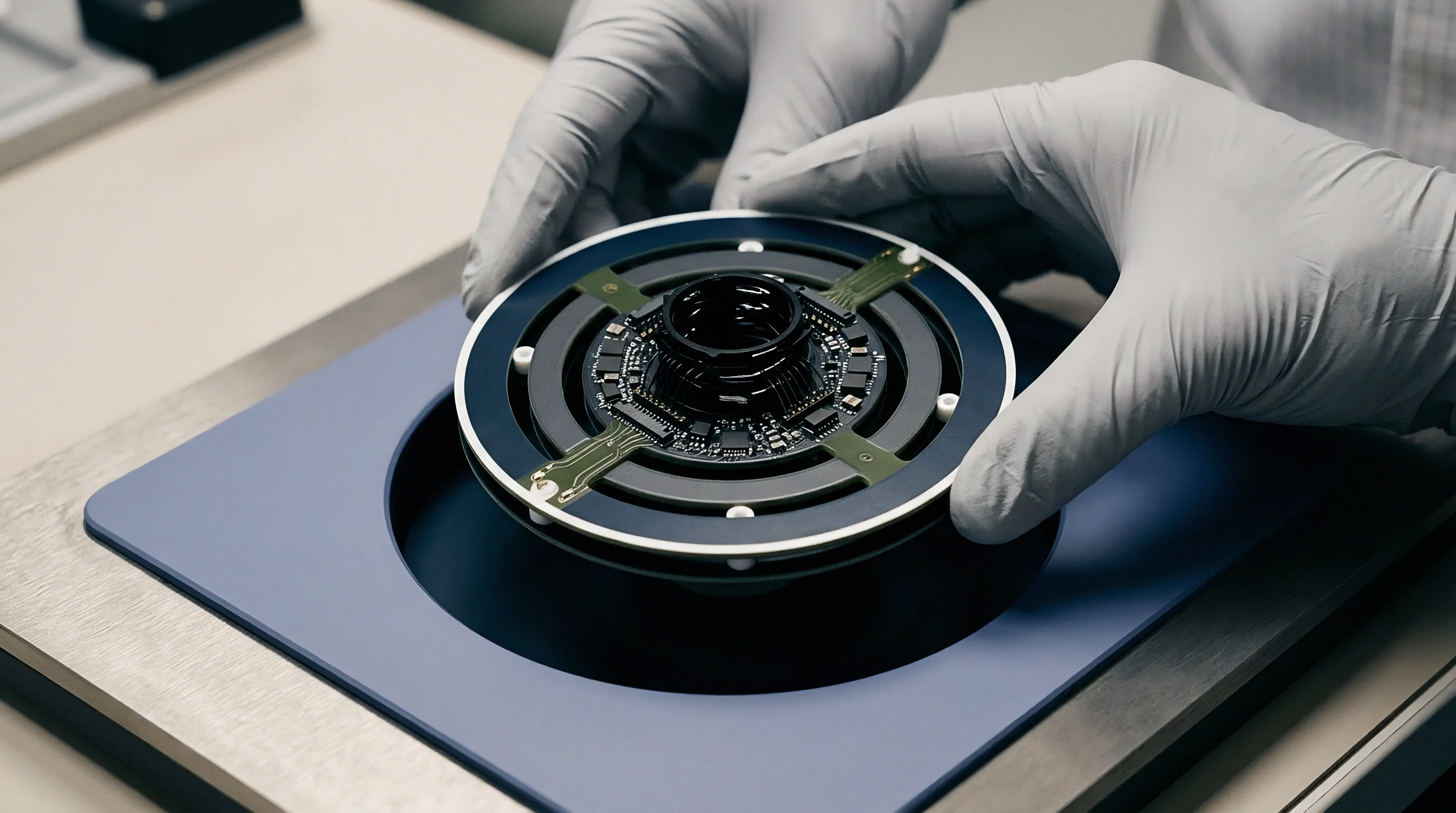
Physical Boundaries of Modular Compliance
Modular radio frequency certifications rely on strictly defined physical operational boundaries that lose validity when integrated into host enclosures. A transmitter certified as a standalone module under FCC Part 15.247 or ETSI EN 300 328 carries testing evaluations based on open-air reference setups or standard evaluation boards. These evaluations assume specific separation distances between the radiating antenna structure and human skin, typically twenty centimeters for Mobile Maximum Permissible Exposure evaluations.
Placing that module into a commercial host device such as a portable handheld terminal, medical diagnostic enclosure, or point-of-sale terminal reduces the physical gap below the threshold where standard power-density equations apply.
Specific Absorption Rate evaluations become compulsory whenever a radio transmitter operates within twenty centimeters of the human torso or head. The modular grant obtained by a radio component supplier rarely includes Specific Absorption Rate compliance at distances below five millimeters unless explicit SAR evaluations were conducted on specific reference host structures during the original filing. Integrators often assume that purchasing a pre-certified Wi-Fi or cellular module absolves the host hardware from further radio frequency safety testing.
That assumption breaks the moment the housing geometry places the modular antenna closer to an end user than the distance specified in the original grant conditions.

Regulatory Distance Rules and Evaluation Thresholds
Jurisdictional regulatory authorities impose differing quantitative limits for calculated radio frequency field safety and localized energy absorption. Under United States Federal Communications Commission rules governed by KDB 447498 D04, local field limits transition from power density calculations to Specific Absorption Rate requirements based on operating frequency, output power, and duty cycle. Innovation, Science and Economic Development Canada applies RSS-102 Issue 5 guidelines, enforcing strict SAR exclusion limits based on distance and power levels.
In the European Union, harmonized standards EN 50663 and EN 62209-15 govern the radio equipment safety assessments mandated under Article 3.1a of the Radio Equipment Directive 2014/53/EU.
| Regulatory Jurisdiction | Applicable Safety Standard | Separation Threshold for MPE | Portable SAR Evaluation Trigger | Co-Location Assessment Rule |
|---|---|---|---|---|
| United States (FCC) | 47 CFR 1.1310 / KDB 447498 D04 | 20 cm or greater | Power dependent at < 20 cm | Summation of exposure ratios |
| Canada (ISED) | RSS-102 Issue 5 / IEC 62209 | 20 cm or greater | Table-based power threshold | Combined field evaluation |
| European Union (CE) | EN 50663 / EN 62209-15 | 20 cm for general public | 20 mW power threshold at < 20 cm | Total exposure ratio calculation |
| Japan (MIC / Giteki) | Radio Regulatory Radio Law Art 14-2 | 20 cm nominal | Mandatory at < 20 cm for mobile | Field summation method |
Antenna selection inside the host enclosure alters transmitter energy distribution. Standard modular grants specify allowable peak antenna gains for patch, inverted-F, or dipole antennas. Integrating an antenna with higher gain than the value recorded in the module grant invalidates the underlying certification.
A host device containing a custom printed-circuit-board trace antenna that creates localized magnetic field peaking fails SAR compliance even when total conducted output power remains within original modular factory tolerances.
Co-located radio systems introduce additive radiation risks. When a commercial host incorporates multiple wireless radios, such as a Bluetooth module operating alongside a 5 GHz Wi-Fi transmitter and a 4G LTE modem, simultaneous transmission conditions apply. The Federal Communications Commission requires a Total Exposure Ratio calculation to verify that combined radio frequency output does not exceed unified public safety limits.
Suppliers of individual modules test their radios in isolation, leaving the host integrator liable for uncalculated simultaneous field interactions that emerge once the final host product is assembled.
Sourcing departments frequently accept vendor claims that a pre-approved module covers all radio safety obligations without verifying the host chassis dimensions. Module vendors routinely insist that their regulatory filing covers all downstream product configurations as long as internal factory firmware remains unmodified.


Integration

Mechanical Constraints and Field Distortion
Enclosure material selection alters electromagnetic field distribution surrounding an internal modular radio. Metallic chassis elements, internal grounding planes, battery packs, and dense display assemblies bend, reflect, and concentrate radio frequency fields, turning isotropic modular radiation patterns into highly localized hot spots. A module that passed power-density assessments in free space creates intense localized Specific Absorption Rate spikes when pressed against a copper heat sink or internal battery shielding inside a compact host enclosure.
Plastic host housings introduce dielectric loading that shifts antenna resonant frequencies. When an internal trace or flexible printed circuit antenna detunes due to proximity to host plastic resins, the modular radio driver compensates by increasing current draw or operating at elevated power levels to maintain connection quality. This automatic output adjustment pushes local energy absorption past safe human exposure thresholds.
Testing host hardware in a fully populated state represents the sole method to capture these host-induced field modifications.
Peak localized SAR values increase dramatically when internal metallic components rest within six millimeters of a modular trace antenna.
Duty cycle assumptions recorded in modular test reports frequently fail to reflect final product software operational modes. A cellular module vendor may secure approval based on a frame-based time-averaged duty cycle of twelve point five percent for voice data transmission. The host product engineer might configure that exact module to transfer continuous telemetry data or bulk video files, elevating the effective operational duty cycle to ninety percent.
This software change multiplies the time-averaged energy emitted into surrounding human tissue, invalidating the modular test report and creating regulatory noncompliance for the landed hardware.

Host Electromagnetic Failure Modes
Radio frequency safety violations manifest through distinct physical and administrative failure mechanisms during commercial host product qualification.
- Antenna Detuning Hotspots occur when host plastic enclosure materials alter antenna impedance, shifting radio peak radiation into close proximity with user touch points.
- Simultaneous Transmission Spikes happen when overlapping transmit slots from independent Bluetooth and Wi-Fi modules exceed cumulative exposure limits.
- Chassis Resonance Amplification arises when internal structural metal framing re-radiates radio frequency energy toward external host surfaces.
- Firmware Power Table Overrides develop when host software loads unverified power settings that exceed the granted modular factory settings.
- Thermal Dissipation Drift occurs when rising operational temperatures shift internal amplifier output stages into non-linear, high-power operating states.
Modular grants usually dictate strict installation instructions, including minimum physical spacing, maximum trace lengths, and specific ground plane dimensions. Deviating from the grant installation manual transforms the host manufacturer into the primary transmitter manufacturer under legal regulatory definitions. In the United States, departing from modular grant instructions voids the authorization, making the host device an uncertified intentional radiator subject to customs detention and administrative enforcement actions.
A host product housing that reduces the physical separation distance between the antenna and the external case wall requires physical re-evaluation inside an accredited SAR chamber. Measuring electric field distributions across liquid tissue phantom models isolates host-level radiation hot spots before mass production tooling locks in physical geometry. Modifying host plastics after initial compliance testing demands a full engineering review to ensure dielectric changes do not shift localized peak absorption points.
A module operating inside a tight host enclosure requires host-level assessment whenever physical geometry differs from the modular grant evaluation board setup.


Exposure

Jurisdictional Sanctions and Noncompliance Impact
Commercial hardware arriving at international ports faces immediate seizure when radio frequency safety documentation fails local regulatory cross-examination. Customs authorities across North America, the European Union, and East Asia routinely cross-reference host device product listings against underlying modular grants. Discovering an invalid modular pass-through triggers mandatory quarantine of incoming shipments, creating supply chain disruptions and expensive warehouse storage fees.
Market surveillance authorities perform periodic testing on commercial hardware pulled directly from retail channels. In the European Union, national spectrum regulators such as France’s ANFR conduct systematic SAR compliance sweeps on landed hardware. When an imported commercial host device exceeds localized SAR safety thresholds, regulators issue public product recalls, mandate immediate sales bans, and force hardware makers to deploy over-the-air firmware modifications that reduce transmit power, crippling original product performance specs.
| Jurisdiction | Enforcement Agency | Primary Administrative Action | Financial Penalty Range | Market Remediation Requirement |
|---|---|---|---|---|
| United States | FCC Enforcement Bureau | Notice of Apparent Liability | Up to 150,000 USD per violation day | Forced product recall or stop-sale |
| European Union | National Market Surveillance (e.g. ANFR) | Article 40 RED Non-compliance Notice | Varies by member state (up to 50,000 EUR) | Public recall or power-capping update |
| Canada | ISED Spectrum Management | Stop Sale / Customs Detention | Up to 25,000 CAD per offense | Mandatory hardware modification |
| Japan | Ministry of Internal Affairs (MIC) | Giteki Mark Revocation | Criminal fines up to 1,000,000 JPY | Immediate withdrawal from retail channels |
Administrative fines for noncompliant commercial radio importations accumulate rapidly across multi-region distribution networks. Financial exposure extends beyond regulatory penalties to include commercial line-item liabilities such as marketplace de-listing, enterprise client contract cancellations, and accelerated debt calls from trade financiers. Hardware brand owners bear absolute legal responsibility for landed compliance regardless of underlying module vendor indemnities.
Remediation Protocol Sequence
Resolving host-level radio exposure failures demands an immediate operational response to limit commercial exposure and regain regulatory access.
- Halt all international logistics shipments and quarantine host hardware held in regional distribution hubs.
- Extract operational firmware from affected production units to verify real-world transmitter power output tables.
- Submit fully assembled host units to an accredited testing laboratory for SAR and radiated power measurement.
- Evaluate physical modification options including internal RF shielding, antenna repositioning, or power back-off algorithms.
- File updated certification paperwork with Telecommunications Certification Bodies or execute Permissive Change documentation.
- Deploy verified firmware updates across active field assets to enforce regulatory power limits.
Noncompliance under Radio Equipment Directive Article 3.1a triggers mandatory market withdrawal notices across all twenty-seven European Union member states simultaneously.
Quantifying financial risk requires evaluating host hardware rework costs against regulatory fine structures. Reducing radio output power via firmware fixes resolves safety breaches but degrades wireless link range, potentially violating end-user service level agreements. Physical hardware re-engineering demands tooling modifications, fresh chamber testing campaigns, and delayed product release schedules that jeopardize market window opportunities.
Shipping uncertified commercial hardware into regulated markets exposes host importers to immediate customs forfeiture and irreversible brand degradation.


Warranty

Limits of Pass-Through Modular Grants
Standard commercial supply agreements frequently contain standard warranty language guaranteeing that supplied components comply with all applicable laws and regulations. When purchasing a radio module, buyers interpret this clause as a complete guarantee of end-product regulatory compliance. Module suppliers carefully craft their standard terms to state that the radio component complies with applicable standards only under the exact operating conditions detailed in the module installation manual.
Integration of the module into a commercial host housing voids standard modular compliance warranties if the host integration alters antenna separation distance, chassis grounding, or transmit duty cycle. Supply agreements typically disclaim all implied warranties of merchantability and fitness for a particular purpose. Integrators relying on informal vendor assurances find that the written master purchase agreement shields the module manufacturer from host-level RF safety failures.
Modular grant certificates list specific conditions, including maximum allowable antenna gains and minimum separation distances. The grant acts as a conditional license rather than a universal seal of compliance. Placing the module into a host device where human exposure occurs at closer distances converts the host manufacturer into the legal entity responsible for proving hardware compliance.

When Does a Modular Grant Expire during Integration?
A modular grant loses legal force the moment the host hardware integration breaks any explicit grant restriction. The expiration of compliance coverage happens instantly upon mechanical assembly into a host device operating within twenty centimeters of the human body, unless the original grant specifically evaluated portable SAR conditions. The table below outlines standard permissive change classes used to restore legal regulatory coverage under United States and Canadian rules.
| Permissive Change Class | Triggering Host Integration Condition | Laboratory Testing Requirement | Filing and Approval Route |
|---|---|---|---|
| Class I Permissive Change (C1PC) | Minor component changes, no impact on RF limits | Internal verification testing | No formal regulatory filing required |
| Class II Permissive Change (C2PC) | Antenna change, minor enclosure proximity changes | Spurious emissions and SAR spot checks | TCB review and formal grant update |
| Class III Permissive Change (C3PC) | Software Defined Radio power changes | Software security and exposure evaluation | Formal regulatory filing and approval |
| New Equipment Authorization | Co-located radios, reduced distance under 5 mm | Full host SAR and EMC chamber testing | New FCC ID / ISED certification filing |
Contractual representations regarding modular pass-through rights must specify which party retains legal duty for Permissive Change filings. If a host design requires a Class II Permissive Change to cover reduced antenna separation, the purchase agreement must define who pays for chamber evaluation time and TCB filing fees. Omitting these details leaves the host manufacturer fully funded for unexpected compliance expenditures.
Standard regulatory compliance warranties in component purchase orders offer zero protection against host-level SAR failures caused by mechanical enclosure proximity.
A modular radio grant functions as a conditional component license that expires the moment host integration alters the tested physical boundary conditions.
Master supply agreements require explicit language defining regulatory failure triggers. A robust purchase contract includes exact specifications covering allowable antenna types, maximum peak transmit power, and mandatory supplier co-operation during host-level certification filings. The following standard contract clause establishes direct supplier accountability for regulatory filing costs arising from modular grant limitations:
Supplier shall defend, indemnify, and hold harmless Buyer against all regulatory fines, recall expenses, and chamber re-testing costs arising from any RF exposure noncompliance caused by Supplier modular firmware defects, undisclosed transmit power tolerances, or invalid modular grant conditions.


Indemnity

Commercial Liability Allocation Models
Contractual risk allocation for radio frequency noncompliance requires balanced indemnification structures between module vendors and host integrators. Standard indemnity terms in electronics manufacturing prioritize basic product liability and intellectual property infringement, while failing to address regulatory market access blockages. When landed commercial host hardware faces import detention due to invalid modular grants, financial losses encompass stranded freight, inventory write-downs, and contractual client non-delivery penalties.
Vendor liability limits commonly cap financial remedies at the purchase price of the specific radio modules delivered under the immediate purchase order. This limitation creates severe risk exposure for the host manufacturer, as the financial loss associated with a global host product recall can outstrip the module purchase value by two orders of magnitude. Effective commercial contracts establish separate, un-capped indemnity allocations or distinct liability sub-caps specifically designated for regulatory compliance breaches and market access failures.
Limiting supplier liability to the purchase value of the radio module leaves ninety-eight percent of host product recall costs completely unbacked.
Determining fault in host RF safety noncompliance demands rigorous forensic technical analysis. Module suppliers argue that host physical enclosure design, unapproved antenna placement, and incorrect software integration caused the safety breach. Host manufacturers assert that undocumented module firmware behaviors, drift in factory transmitter power calibration, or inadequate modular grant conditions created the regulatory violation.
Establishing clear contract definitions for causation determines which party pays for administrative remediation.

Indemnity Trigger Decision Checklist
Structuring enforceable contractual protection against landed host regulatory failure requires clear operational decision criteria.
- Firmware Power Variance Clauses trigger supplier indemnity when internal module firmware emits transmit power exceeding the stated factory calibration specs.
- Grant Misrepresentation Triggers activate financial recourse if the supplier modular grant carries un-disclosed restrictions that invalidate host integration.
- Customs Seizure Cost Allocation assigns immediate demurrage, port storage, and regulatory inspection fees directly to the component vendor upon shipping holds.
- Recall Expenses Coverage obligates the module vendor to reimburse hardware recall logistics, retail vendor processing fees, and end-user notification costs.
- Chamber Engineering Subsidies mandate vendor payment for external accredited test laboratory hours required to execute Class II Permissive Changes.
The matrix below outlines financial exposure categories and typical cost-allocation splits negotiated between commercial hardware integrators and modular radio suppliers.
| Cost Exposure Category | Typical Financial Magnitude | Standard Vendor Term Position | Negotiated Integrator Protection Term |
|---|---|---|---|
| Customs Detention & Demurrage | 1,000 to 5,000 USD per day | Fully disclaimed by vendor | Full vendor liability upon grant error |
| Accredited Chamber Testing Fees | 15,000 to 45,000 USD per run | Integrator responsibility | Split cost based on root cause audit |
| Product Recall Logistics | 100,000 to 2,000,000+ USD | Capped at module purchase price | Carve-out from liability cap |
| Marketplace De-Listing Fines | 50,000 to 250,000 USD | Disclaimed as consequential loss | Direct damages allocation clause |
What remaining contractual remedies exist when a modular vendor abruptly discontinues product support or files for bankruptcy mid-way through a global host product recall campaign?


Covenant

Pre-Landed Verification and Governance
Procurement practices must establish rigorous verification procedures that govern modular radio sourcing long before commercial shipments hit destination customs ports. Relying on paper regulatory certificates without validating underlying test laboratory accreditation, test report setups, and grant conditions exposes the host manufacturer to immediate regulatory failure. Establishing a pre-shipment compliance gate requires receiving full accredited test reports, raw SAR plot files, and factory firmware power matrix documentation directly from the module vendor.
Quality assurance contracts must mandate batch-level transmitter output verification during module production. Transmit power tolerances in high-volume radio manufacturing vary across production lots, driven by component value variations in power amplifier stages and RF front-end filtering networks. A module lot that drifts two decibels above nominal factory output power will push a marginal host housing straight into SAR noncompliance.
Enforcing tight factory output power acceptance limits prevents noncompliant hardware from entering final product assembly streams.
Host manufacturers must implement change notification covenants that bind module vendors to inform the buyer prior to introducing any hardware, silicon, or firmware modification. Module vendors frequently update internal radio integrated circuits or flash updated driver software to improve production yields or address component shortages. These internal modifications alter harmonic radiation profiles and output power characteristics, rendering host-level compliance assessments invalid without the host integrator’s knowledge.
Executing pre-landed physical spot-checks inside an accredited test chamber provides definitive proof of regulatory compliance before mass distribution begins. Extracting finished production hardware from early manufacturing runs and subjecting units to full SAR and radiated spurious emissions sweeps isolates host integration issues prior to international custom clearance filings. Establishing these technical, legal, and operational controls secures landed commercial host hardware against regulatory exposure, protecting both financial investment and brand reputation across global target markets.