Implementing Dynamic Power Reduction Algorithms for Multi-Frequency Wearable Radio Access
Dynamic power reduction algorithms maintain wearable SAR compliance by matching conducted transmitter output to real-time tissue proximity across multi-radio links.

Absorption
SAR scans on a 1.2-millimeter tissue phantom show sharp local peaks when cellular transceivers and dual-band Wi-Fi transmit simultaneously inside a wearable enclosure. The spatial distribution of radiofrequency energy shifts within fractions of a millimeter as the device settles against human skin. Wrist-worn terminals create strict boundary conditions because the chassis holds antennas less than five millimeters from dermal layers.
Regulatory thresholds under FCC Part 2.1093 enforce a localized Specific Absorption Rate limit of 4.0 W/kg averaged over 10 grams of extremity tissue, while general population head and trunk exposure drops to 1.6 W/kg over 1 gram. The European Union Radio Equipment Directive aligns with IEC/IEEE 62209-1528, setting the extremity limit at 4.0 W/kg and trunk exposure at 2.0 W/kg over 10 grams.
FCC Part 2.1093 restricts localized extremity absorption to 4.0 W/kg averaged across 10 grams of tissue when evaluated against a phantom spacer of zero millimeters.
Simultaneous transmission algorithms require continuous tracking of aggregate energy deposition. When an LTE Cat-M1 transceiver operates on Band 13 alongside a 2.4 GHz Bluetooth link and a 5 GHz Wi-Fi transmitter, the total exposure ratio combines the normalized values of every active antenna. Summing these ratios must not yield a total greater than unity.
If an unmanaged terminal radiates at nominal class power on all bands at once, the cumulative ratio regularly climbs past 1.8 in laboratory phantom scans. Adaptive power back-off algorithms resolve this breach by scaling conducted amplifier output based on tissue proximity and the active radio duty cycle.

Specific Absorption Rate Thresholds across Wearable Enclosures
Conducted power scaling relies on deterministic lookup tables stored in device baseband non-volatile memory. Modern baseband chipsets use algorithmic governors like Qualcomm Smart Transmit or Samsung Time-Averaged SAR to balance transmission bursts against running exposure windows. The regulatory evaluation interval spans 100 seconds for sub-3 GHz frequencies and 60 seconds for higher microwave frequencies.
The allocation algorithm calculates energy delivery over moving time windows, adjusting instantaneous transmitter decibels millisecond by millisecond. When an application initiates a large data payload transfer, the algorithm permits a brief power surge at nominal output, followed immediately by calculated step-downs as the rolling time average approaches the compliance margin.
| Radio Technology | Frequency Band | Nominal Power (dBm) | Extremity Back-Off (dBm) | Body Proximity Back-Off (dBm) | Standalone 10g SAR (W/kg) |
|---|---|---|---|---|---|
| LTE Cat-M1 | Band 13 (782 MHz) | 23.0 | 20.5 | 14.0 | 1.18 |
| LTE Cat-1bis | Band 7 (2500 MHz) | 23.0 | 18.0 | 11.5 | 1.42 |
| Wi-Fi 802.11n | 2.4 GHz Band | 17.0 | 14.0 | 8.5 | 0.74 |
| Wi-Fi 802.11ac | U-NII-2C (5.5 GHz) | 14.0 | 11.0 | 6.0 | 0.89 |
| Bluetooth LE | 2.4 GHz ISM | 8.0 | 8.0 | 4.0 | 0.12 |
Multi-radio balancing becomes mathematically punitive when high cellular uplink speeds coincide with local data transfers. The table shows how nominal conducted ratings drop when proximity sensors report non-extremity positioning. The back-off values represent the maximum allowable conducted power levels that keep simultaneous exposure ratios within regulatory boundaries.
A 3 dB reduction cuts conducted transmission energy in half, degrading link budgets and forcing edge-of-cell modulation schemes down to lower spectral efficiency orders.

Time-Averaged Power Allocation across Active Radios
Time-domain power averaging depends on deterministic state switching. Transmit energy must stay within safety limits across any rolling sub-window without dropping baseband connections. Radio frequency front-end controllers communicate over MIPI RFFE interfaces to command power amplifier gain stages and integrated antenna tuners.
If the algorithm throttles cellular output to maintain thermal limits during multi-frequency transmission, Wi-Fi throughput absorbs the latency overhead. Test houses run conducted time-sweep assessments using vector signal analyzers synchronized to baseband call boxes. Automated robot arms perform continuous 360-degree scans in the lab while the algorithm adjusts power in real time.
Section 4.2 of FCC KDB 447498 D04 changes compliance filings by disallowing generic static modular exposure ratings whenever active power scaling governs host enclosure compliance.


Sensor
Capacitive copper pads printed on the inner surface of the rear casing detect impedance fluctuations from adjacent human tissue. The raw dielectric value of human muscle and skin layers produces a distinct capacitance shift compared to open air. Integrated analog front-end controllers sample these touch nodes at 50 Hz to 200 Hz to generate threshold interrupt signals for the baseband processor.
Rapid detection keeps energy spikes from exceeding regulatory density ceilings when a wearer moves the device against their torso.
A reliable proximity algorithm maintains independent detection thresholds for high-permittivity muscular tissue and low-permittivity dry leather surfaces.
Mechanical integration details govern sensor signal stability. Ground planes placed directly beneath sensing electrodes introduce parasitic capacitance that compresses the dynamic range of the measurement circuit. Active guard rings around detection traces counter this parasitic load by driving shields with an identical voltage phase to neutralize capacitive bleed.
The proximity controller monitors baseline capacitance drift caused by ambient temperature swings, separating fast touch transitions from slow thermal creep.

Why Do Capacitive Triggers Fail against Perspiration?
Saline fluids combine high electrical conductivity with elevated dielectric permittivity, mimicking the physical behavior of solid tissue. Perspiration pooling inside small chassis gaps creates conductive bridges across grounding screws and sensor rings. The controller often misinterprets this surface puddle as continuous skin contact, locking power amplifiers into permanent back-off mode even after the device is taken off the wrist.
Conversely, high-impedance salt crusts can desensitize electrodes, causing the algorithm to miss transitions when moving from free space to torso contact.
- Liquid Bridge Formation spans the gap between active sensor traces and chassis ground screws, triggering persistent false presence states that prevent the radio from returning to full conducted power.
- Dielectric Loading Drift occurs when clothing fabrics with varying moisture levels contact the housing exterior, generating intermediate capacitance values that confuse simple dual-state comparator logic.
- Capacitive Shielding Saturation develops when dense metallic objects, such as stainless steel tables or metal desk surfaces, present an overwhelming capacitive load that mimics biological tissue profiles.
- Temperature Coefficient Mismatch shifts internal reference ladder voltages during rapid thermal transitions, distorting raw ADC readings before the baseline tracking algorithm can update its zero-point reference.

Motion Classification and Optical Proximity Coupling
Relying solely on capacitive plates creates unacceptable packet loss profiles. Modern wearables resolve detection ambiguity by combining capacitive inputs with optical photoplethysmography assemblies and micro-electromechanical motion sensors. An integrated algorithm checks heart-rate pulse signals and skin reflectance metrics before confirming human presence.
Accelerometer data provides kinematic context: if the device is resting stationary on a table, optical signals are classified as inanimate reflections rather than biological contact. Combining these data streams prevents unnecessary power cuts during weak cellular connections.
Unexpected conducted power drops during field audits often stem from arbitrary test orientations and operator handling that trigger undocumented boundary-state protections inside sensor firmware.

Wrist
Extremity form factors compress the ground plane to dimensions under one tenth of an LTE Band 20 wavelength. This space constraint degrades radiation efficiency and increases counterpoise currents flowing through the chassis. Antenna structures operating below 1 GHz rely on the entire printed circuit board assembly to act as the primary radiating element.
When this mass rests against human tissue, the body absorbs up to 80 percent of the emitted electromagnetic energy through near-field reactive coupling. Matching circuits suffer sharp impedance detuning, pushing voltage standing wave ratios past 4:1 and cutting front-end efficiency.

Thermal Dissipation Ceilings in Compact Enclosures
Power back-off algorithms are bound to thermal dissipation limits as tightly as exposure regulations. A modern multi-radio wearable packages the application processor, display driver, power management IC, and multiple front-end modules within a sealed volume that rarely exceeds 15 cubic centimeters. Dissipating three watts of continuous electrical power across a forty-millimeter casing raises external surface temperatures quickly.
IEC 62368-1 sets touch temperature limits for wearable consumer products at 43°C for prolonged skin contact.
Annex B of IEC 62368-1 establishes that external wearable touch surfaces held against skin cannot exceed 43°C during continuous operation under maximum ambient operating ratings.
Operating a cellular transmitter at nominal 23 dBm output consumes roughly 1.8 watts of electrical power from the battery, assuming a power amplifier efficiency of 35 percent. If the radio frequency path suffers severe impedance mismatch from wrist proximity, the power amplifier draws extra current to maintain target radiated power, turning that excess energy directly into heat. The algorithm must continuously weigh Specific Absorption Rate cutbacks against thermal shutdown limits.
Conducted Power Back-Off and Antenna Mismatch
When antenna tuners cannot correct mismatch caused by limb placement, back-off algorithms drop transmit power to protect both the user and front-end components. The execution sequence follows strict rules to preserve connection states while shedding power.
- Impedance Assessment Phase measures forward and reflected power across directional couplers to determine how heavily biological tissue is loading the antenna aperture.
- Closed-Loop Tuning Phase adjusts aperture switches and variable capacitor arrays to shift antenna resonance back toward the target operating band, stabilizing the load presented to the power amplifier.
- Throttling Execution Phase lowers the baseband digital gain register and steps down transceiver output if matching circuits fail to pull radiation efficiency above compliance thresholds.
When a user tightens a watch strap, the distance between internal antenna traces and dermal tissue shrinks toward zero, driving reactive near-field absorption upward. Algorithms without precise closed-loop adjustments default to conservative power back-off settings that sacrifice link stability for safety margins. Designing antenna clearance without factoring in biological dielectric loading leads directly to dropped wireless links in weak coverage areas.

Audit
Type approval authorities scrutinize autonomous mitigation software because unverified firmware could allow continuous transmission above regulatory radiation limits. A manufacturer cannot rely on static modular grants when deploying adaptive power reduction routines inside a host wearable. The FCC, European notified bodies, and Asian regulatory agencies mandate full product-level testing to validate that power stepping functions reliably across all operating configurations.
If a product contains an approved modular radio, implementing host-controlled power attenuation invalidates the original grant conditions, leaving the host integrator responsible for filing a Class II Permissive Change.

Should Host Integrators Rely on Static Classifications?
Static modular certificates presume fixed radiated boundaries and predictable antenna characteristics. Wearable integration alters the physical parameters of the radio system entirely, whereas the grant lists static conducted figures. When an algorithm modifies conducted power based on dynamic external variables, test laboratories must capture hundreds of distinct power states using specialized instrumentation.
| Jurisdiction | Regulatory Reference | Mandatory Validation Mechanism | Filing Route | Retest Burden |
|---|---|---|---|---|
| United States (FCC) | KDB 447498 D04 / KDB 616217 | Automated power level verification, time-averaged power logging, sensor trigger verification | Class II Permissive Change / Full New FCC ID | High: Full SAR scans at 0mm, multi-radio aggregate exposure |
| European Union | RED 2014/53/EU / EN 50566:2017 | Notified body technical file assessment, vector probe SAR array compliance, EN 62209-2 | EU Type Examination Certificate | Moderate: Technical dossier with sensor operational proof |
| Canada (ISED) | RSS-102 Issue 6 / SPR-002 | Time-averaging validation, extremity and limb simulation, conducted step sweeps | Class 4 Permissive Change | High: Dedicated nerve stimulation and SAR verification |
| Japan (MIC) | Radio Act Article 38-24 / Giteki | Conducted power validation across all trigger modes, fixed phantom measurements | Technical Regulations Conformity Certification | Moderate: Test house verification of firmware lock parameters |
| South Korea (MSIT) | RRA Notice on SAR (KN 62209-3) | Fast vector array verification, extremity SAR validation at zero distance | KC Radio Equipment Certification | High: In-country lab testing mandatory on retail-grade units |
Each jurisdiction reviews algorithmic power control through a different procedural lens. The FCC demands explicit proof that end users cannot disable, alter, or bypass the power reduction algorithm through software tweaking or diagnostic commands. Baseband binary images must be secured using cryptographic code signing, and all lookup tables governing power reduction must reside in protected memory inaccessible to standard operating system processes.

Permissive Change Filings for Adaptive Algorithms
Filing a Class II Permissive Change for a device with active power management requires a rigorous test campaign. Engineers must submit an operational description outlining internal algorithm mechanics without exposing proprietary source code in public records. Test agencies demand detailed step-response traces showing how fast the system curtails power once a sensor triggers.
Transition times that extend past regulatory windows result in non-compliance findings.
- Position the wearable host against an automated SAR phantom bench fitted with high-speed isotropic electric field probes.
- Establish an active baseband call link to a radio communication tester running full-rate data loops on the lowest channel.
- Displace the device relative to the phantom in single-millimeter increments to map the exact sensor trigger envelope.
- Capture digital conducted output using a high-speed vector signal analyzer to verify that power stepping executes within target millisecond limits.
- Repeat the evaluation across all mid and high operating frequencies with simultaneous secondary transmitters broadcasting at peak rates.
Omitting any step in this verification sequence can trigger regulatory audit failures, leading market surveillance authorities to pull inventory from retail channels and mandate consumer recalls.

Outlay
Test budgets expand rapidly once automated phantom validation replaces single-point evaluations. Standard modular integration approvals generally require modest bench testing to confirm radiated spurious emissions and basic band-edge compliance. Introducing an adaptive power attenuation system shifts certification into full-product SAR qualification territory, adding weeks to the launch timeline.
Validation schedules expand by two weeks for every additional cellular band requiring sensor-triggered SAR attenuation profiling.
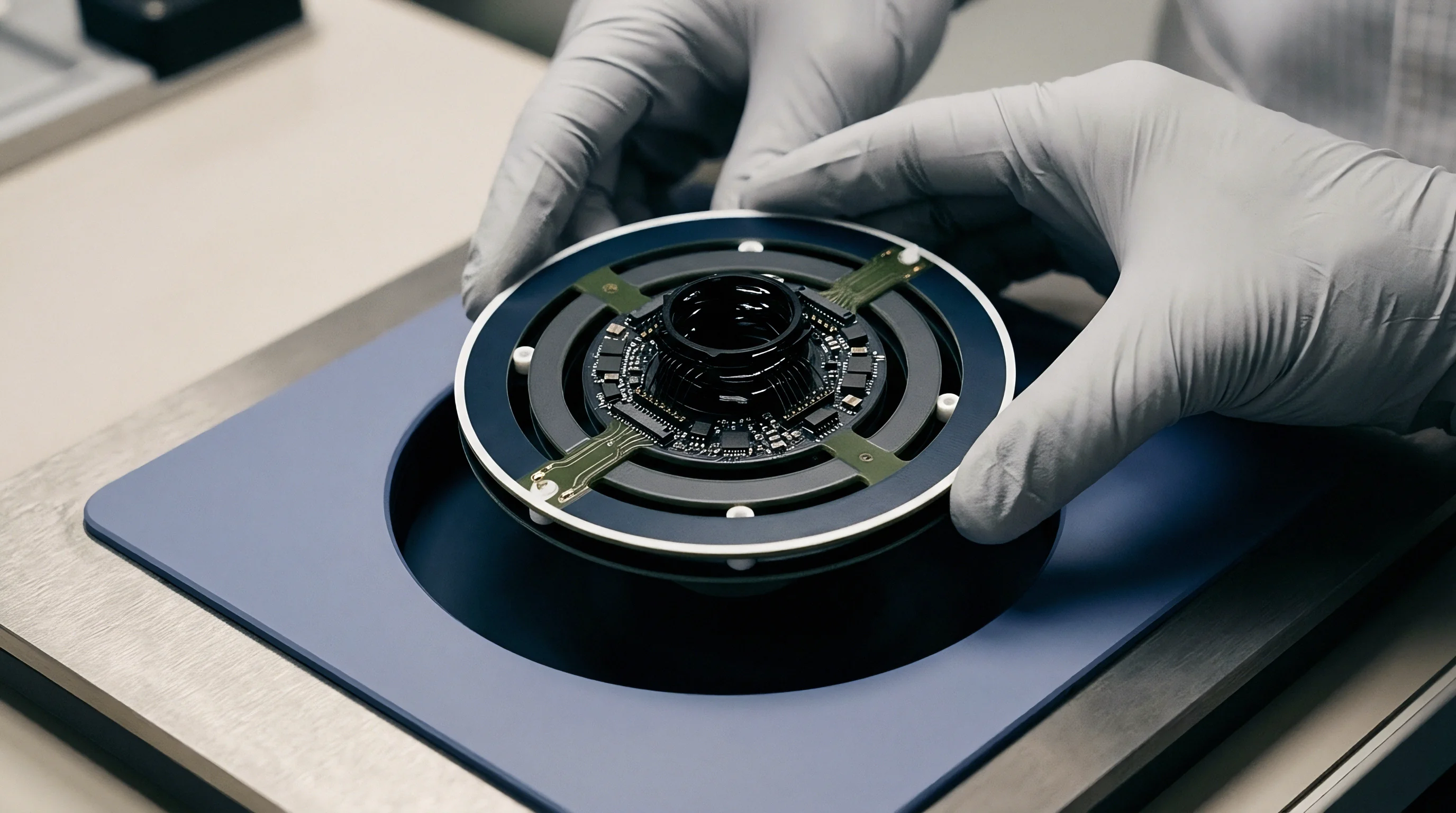
Chamber scheduling is a major bottleneck in bringing multi-frequency products to market. A modern wearable supporting four LTE bands, two Wi-Fi bands, and Bluetooth requires dozens of distinct test configurations. When the device integrates three proximity thresholds across two physical contact states, the total number of SAR spatial scans exceeds 150 individual sweeps.
Specialized fast-SAR vector probe arrays accelerate testing, but final confirmation reports frequently require legacy robot-arm single-probe liquid baths to satisfy conservative certification bodies.
Chamber Queue Allocation and Commercial Validation Schedules
Securing chamber access requires planning months ahead of the target engineering build freeze. Test facilities running specific absorption rate chambers charge between $2,500 and $4,500 per eight-hour shift. A complete multi-frequency wearable campaign spanning cellular, Wi-Fi, and auxiliary links demands 80 to 120 chamber hours.
If an unexpected firmware glitch causes algorithm hunting during conducted stepping checks, the laboratory halts testing while engineers debug baseband code. Daily idle fees for an unreleased chamber slot accumulate regardless of whether the device is radiating.

Firmware Freezes and Secondary Market Filing Fees
Locking the firmware build for market certification introduces operational friction across global supply chains. A change to a single antenna-tuning register or power step coefficient after laboratory sign-off invalidates the compliance report. If software teams modify baseband parameters to improve battery endurance late in the pre-production cycle, the device must return to the chamber for full delta evaluations.
Secondary market authorizations escalate total project costs through mandatory in-country testing and administrative fees. While the European Union accepts self-declaration supported by an accredited laboratory technical file, markets like South Korea, Taiwan, and Brazil require retail-packaged units to undergo local evaluation inside authorized regional testing centers. Between agent representation, technical dossier translation, customs clearance bonds, and filing tariffs, qualifying an adaptive-power wearable across five major trading zones calls for an unbudgeted reserve exceeding $85,000 above standard radio testing costs.
Whether future international standards will unify vector probe testing tolerances with dynamic algorithm validation metrics remains uncertain for manufacturers racing to deploy ultra-compact multi-gigahertz hardware.