Global Type Approval Lead Time Variations across Emerging Southeast Asian Telecommunication Regulatory Frameworks
Southeast Asian telecommunication type approvals require up to 24 weeks due to local testing mandates, sample customs holds, and rigid agent representation laws.

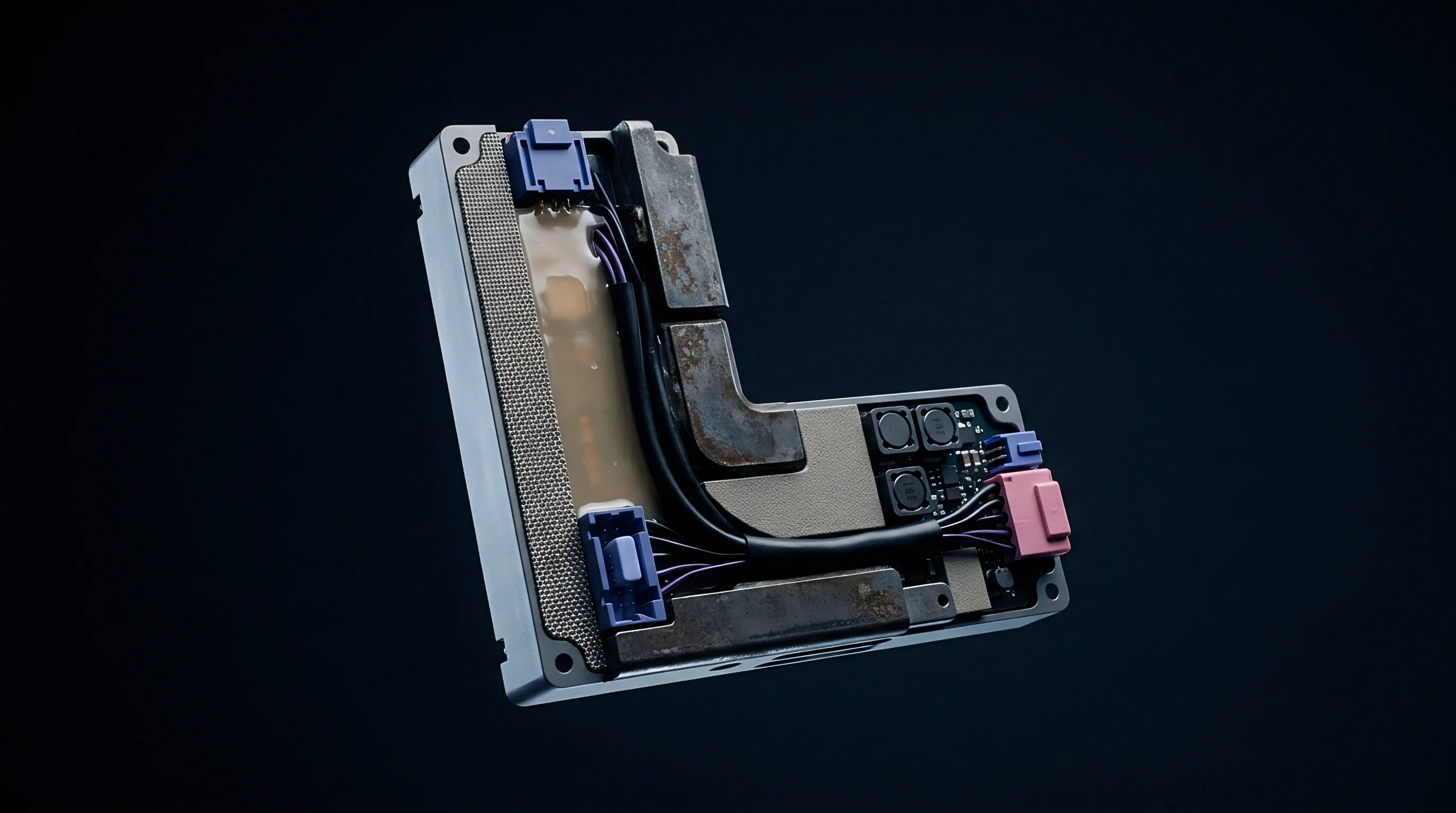
Queue
Standard compliance schedules rarely account for the in-country testing queues common across emerging Southeast Asian telecommunications markets. Hardware bound for Indonesia, Vietnam, Thailand, Malaysia, and the Philippines faces lead times ranging from two weeks for simple paperwork recognition to twenty-four weeks for mandatory in-country testing. Sourcing teams often order long-lead radio ICs before checking local lab capacity, leaving physical stock stranded on assembly lines or held at customs.
Many budget approvals against ETSI CE reports or FCC grant timelines, assuming regional regulators will simply accept existing test dossiers. On the ground in Jakarta, Hanoi, and Bangkok, those assumptions collapse against local testing mandates, scarce accredited chamber space, sample import bottlenecks, and administrative backlogs.
The clock never starts when an application hits an online portal. Official lead time begins only when an accredited domestic laboratory physically receives the calibrated test samples, verifies host software control routines, and logs the hardware into its intake queue. In Indonesia, the Directorate General of Resources and Equipment Standards for Postal and Information Technology (SDPPI) enforces mandatory local testing for nearly all commercial RF equipment under Ministerial Regulation Number 16.
Importers routing Wi-Fi 6E, Bluetooth Low Energy, or sub-6 GHz Cellular hardware into Jakarta run into this bottleneck immediately; if SDPPI labs are backlogged, test slots stretch from the official target of fourteen business days to well over twelve weeks.
Regulatory authorities in Jakarta enforce physical sample verification within certified domestic chambers before granting certificate issuance for commercial radio imports.
Vietnam presents similar complications under the Ministry of Information and Communications (MIC). While MIC technically allows international test reports for certain radio classes under Mutual Recognition Agreements, practical execution is far less straightforward. Devices featuring high-bandwidth cellular modules or modified frequency masks require in-country testing at MIC-designated facilities like the Telecommunication Quality Verification Center.
Vietnamese labs operate under narrow accreditation scopes. If a new radio standard or modified band lacks an in-country test bench calibrated directly to Vietnam Technical Regulations, the filing stalls until local instruments receive formal domestic calibration ~ a delay that can add four months to a schedule.
The Philippines and Malaysia follow different models. The National Telecommunications Commission in the Philippines relies primarily on document reviews for pre-certified modular hardware, so lead times depend on administrative bandwidth rather than bench space. Filings submitted through local licensed importers can clear in three weeks, though agency staffing reassignments or missing corporate paperwork can drag the process out to three months.
Malaysia, overseen by SIRIM under the Malaysian Communications and Multimedia Commission, operates a hybrid model. SIRIM accepts modular test reports for standard short-range devices, but calls for physical testing or host audit units whenever products incorporate custom antennas or operate outside standard national spectrum allocations.
| Market | Regulatory Agency | Mandatory Local Testing | Typical Lead Time Range | Primary Lead Time Bottleneck |
|---|---|---|---|---|
| Indonesia | SDPPI | Yes | 8 to 16 Weeks | Domestic laboratory chamber queue and customs clearance of test samples |
| Vietnam | MIC / VNTA | Yes | 6 to 14 Weeks | Domestic standard mapping and localized QCVN laboratory availability |
| Thailand | NBTC | Partial | 3 to 8 Weeks | Class approval sample checks and local representative documentation audits |
| Malaysia | SIRIM / MCMC | Partial | 4 to 10 Weeks | Modular host integration reviews and local agent account authorization |
| Philippines | NTC | No | 3 to 9 Weeks | Administrative docket queue and local corporate license verification |
Sample import logistics drive much of this unpredictability. Moving functional radio prototypes into these countries requires specific customs clearance documentation. SDPPI in Indonesia requires a temporary import permit or non-commercial clearance before hardware arrives at Soekarno-Hatta International Airport.
Without the local agent’s import paperwork in hand, customs agents seize the test units. Samples then sit in bonded storage for weeks, racking up daily demurrage while scheduled lab slots lapse. In one instance, three identical test fixtures sat stranded at Jakarta customs long enough for the laboratory to give its open chamber slot to a local manufacturer.
Managing these lead times requires identifying where the procedural roadblocks sit in each jurisdiction. Engineering and project leads have to evaluate target countries against hardware architecture, operating bands, and local administrative requirements:
- SDPPI Local Laboratory Allocation requires applicants to reserve physical test slots before shipping hardware samples from final assembly lines.
- MIC QCVN Standard Alignment requires engineering teams to verify that Vietnamese labs hold active accreditation for the exact radio standard revisions being used.
- NBTC Class Conformity Assessment requires importers to check whether devices fall under Class A, Class B, or SDoC rules in Thailand to confirm if physical samples are required.
- SIRIM eComM Profile Registration requires manufacturers to set up active, verified local representative accounts before submitting paperwork.
- NTC Type Acceptance Documentation requires continuous tracking of administrative dockets to keep inactive filings from being dismissed.
Mid-campaign engineering revisions compound lead times across every market on the roadmap. Changing an RF front-end component invalidates existing international test reports. While the EU allows manufacturers to document modifications through self-declaration in technical construction files, Southeast Asian regulators treat altered component layouts as entirely new products.
SDPPI and MIC mandate a complete re-submission, dropping the device back to the end of the lab queue. Teams revising hardware during a rollout end up balancing split inventory: older certified units clearing customs while the revised version sits waiting for chamber time.
Customs inspectors throughout the region cross-reference shipping manifests against type approval certificates character for character. Any mismatch between model numbers on packaging, laser etchings on module shielding, or designations on SDPPI or NBTC certificates prompts an immediate hold. A single stray suffix on an outer carton label can stall an active approval at port of entry.
Resolving minor labeling discrepancies with local regulators requires submitting formal amendment filings, adding four to six weeks of holding time at air freight hubs or maritime container terminals.
These backlogs frequently trace back to regulators revising online portals while operating with skeleton crews during regional holidays.

Gate
How national authorities evaluate foreign compliance records varies considerably across Southeast Asia. An FCC grant or a CE Declaration of Conformity referencing ETSI EN 300 328 suites provides no guaranteed market entry. Regulatory bodies examine whether overseas test data satisfies local statutory limits or whether domestic law mandates testing within national borders.
Managing these gates requires pinpointing where paperwork acceptance ends and mandatory physical evaluation begins.
Thailand’s National Telecommunications Commission (NBTC) filters imports using a classification system tied to equipment risk. Class A equipment ~ such as high-power base stations and specialized telecommunications infrastructure ~ requires complete technical dossiers backed by physical in-country sample verification. Class B products, including standard cellular handsets and consumer transceivers, can use international test reports from accredited laboratories with recognized ISO/IEC 17025 scopes.
Common short-range transceivers on standard Wi-Fi and Bluetooth frequencies qualify for the Supplier’s Declaration of Conformity (SDoC) route, although SDoC filings still require a Thai-registered corporate entity to assume legal responsibility through the NBTC portal.
Vietnam’s MIC gates enforce domestic QCVN technical regulations. A European test report confirming compliance with ETSI standards does not satisfy local requirements; MIC demands explicit verification against equivalent QCVN metrics. For example, QCVN 54/2020/TTBTTT governs 2.4 GHz spectrum emissions, and QCVN 65/2021/TTBTTT applies to 5 GHz equipment.
If an overseas report omits power spectral density or extreme operational temperature data specified in these QCVN standards, MIC rejects the dossier. The applicant must then ship physical units to Hanoi or Ho Chi Minh City for supplemental testing.
Contractual agreements must assign explicit financial liability to local representatives for submission delays resulting from administrative portal filing errors.
Host modular integration rules introduce further hurdles. Sourcing teams frequently specify pre-certified radio modules assuming this will eliminate local lab evaluations. That logic works across FCC and CE jurisdictions, but Southeast Asian authorities enforce strict constraints on host systems.
SDPPI in Indonesia does not allow full-system modular pass-through. Installing an SDPPI-certified Wi-Fi module into an uncertified industrial host invalidates the module’s certification for that integration; the combined system is classified as a new device requiring full SDPPI bench testing. In Indonesian commercial deployments, pre-certified modules yield zero testing shortcuts.

Which Regulatory Routes Permit Overseas Modular Test Acceptance?
Acceptance of foreign test reports hinges on specific Mutual Recognition Arrangements (MRAs) and domestic policy. Malaysia and Thailand offer clear pathways for modular data, provided the testing comes from labs maintaining recognized ISO/IEC 17025 accreditation across applicable RF scopes. Through its eComM portal, SIRIM accepts overseas test dossiers for short-range hardware aligned with Malaysian frequency allocations.
To be accepted, reports must be less than five years old, reflect the production silicon revision, and provide raw radiated spurious emission scans rather than summarized pass statements.
Indonesia and Vietnam take a far more restrictive stance. SDPPI accepts international test reports only from foreign facilities covered under bilateral MRAs, and those arrangements apply to narrow device categories while requiring foreign labs to register directly with SDPPI. Test reports from overseas labs missing from SDPPI’s recognized registry carry no weight in Jakarta.
Sourcing engineers who conduct compliance testing at unlisted European or American test houses risk flat rejection, forcing full re-testing within Indonesian chambers.
Local in-country representation is compulsory under every telecommunications framework in the region. Foreign entities cannot hold type approval certificates directly in Indonesia, Thailand, Vietnam, Malaysia, or the Philippines; domestic corporate entities must hold them. This requirement carries substantial commercial implications: whichever company holds the SDPPI, NBTC, or MIC certificate effectively controls domestic distribution for that product line.
Reassigning an approval to a new local agent requires formal written relinquishment from the existing certificate holder. If a commercial disagreement arises between an equipment manufacturer and its Vietnamese distributor, the distributor can refuse to transfer or surrender the MIC certificate. The manufacturer is then blocked from clearing imports of its own products through Vietnamese customs.
Breaking that deadlock requires starting the approval process from scratch: filing a new application under a replacement domestic entity, dispatching fresh test units, waiting out lab queues, and paying full statutory fees a second time.
To prevent such disputes, supply chain contracts must define the legal structure of local representation from the outset. Engaging freight forwarders, specialized compliance agencies, or wholly-owned local subsidiaries as legal certificate holders isolates compliance assets from commercial sales channels. Maintaining direct control over the certificate holder prevents local distributors from leveraging regulatory approvals during commercial negotiations.
Clause 14.2 of the standard regional distributor compliance agreement explicitly dictates that all regulatory filings, type approval certificates, and technical submission files remain the exclusive intellectual property of the foreign manufacturer, requiring immediate uncompensated legal transfer upon notice of contract termination.

Rig
Measurement conditions in Southeast Asian radio laboratories present distinct technical complications. Operating environments in domestic test houses often diverge from the strictly controlled facilities found in tier-one European or North American operations. Variations in semi-anechoic chamber calibration, ambient electromagnetic noise, power amplifier linearity, and climate regulation introduce meaningful measurement uncertainty.
Hardware that cleared compliance pre-scans comfortably in Taiwan or Germany can readily fail evaluation on local benches in Jakarta or Hanoi.
Tropical ambient conditions frequently complicate radiated emission sweeps. Standard EMC test methodologies under CISPR and ETSI protocols require tight environmental baselines, generally 20 to 25 degrees Celsius and 30 to 60 percent relative humidity. When laboratory HVAC systems cannot cope with tropical heat and external humidity, indoor chamber levels can exceed 75 percent relative humidity.
Atmospheric moisture shifts RF attenuation, degrades coaxial cable performance, and alters parasitic impedances across host fixtures. These physical variations alter radiated spurious emission profiles, pushing marginal harmonics beyond allowable thresholds.
Spurious emission evaluations also contend with ambient electromagnetic interference. Laboratories situated in dense industrial zones across Ho Chi Minh City or Greater Jakarta often experience ambient RF ingress through compromised shielding. When chamber shielding degrades, external cellular, broadcast, and industrial emissions register on spectrum analyzer sweeps during active device testing.
Technicians facing strict testing quotas may attribute those external spikes directly to the unit under test. Engineering teams need to review raw spectrum analyzer traces to determine whether failing frequencies correlate with external ambient transmitters.
| Market / Agency | Test Bench Facility Location | Primary Technical Test Standard | Common Technical Failure Point | Chamber Measurement Uncertainty |
|---|---|---|---|---|
| Indonesia (SDPPI) | Cinquere / Depok | Ministerial Regulation No. 16 | In-band power density and harmonic emissions | Up to +/- 4.2 dB in radiated sweeps |
| Vietnam (MIC) | Hanoi / Ho Chi Minh City | QCVN 54 / QCVN 65 / QCVN 117 | Adjacent channel selectivity and extreme thermal limits | Up to +/- 3.8 dB across 1-18 GHz |
| Malaysia (SIRIM) | Shah Alam | SKMM WTS / ETSI Equivalents | Spurious emissions under host exercise routines | Up to +/- 2.9 dB across standard bands |
| Thailand (NBTC) | Bangkok Designated Facilities | NBTC TS Standards / CISPR 32 | Conducted RF output power accuracy | Up to +/- 2.5 dB in conducted paths |
Custom host exercise software represents another frequent point of failure. Compliance sweeps demand test routines that fix transceivers in continuous transmit mode, peak output power, defined modulations, and continuous reception across low, mid, and high channels. Southeast Asian test houses rely on varied automation environments.
When overseas engineering teams provide undocumented or niche command-line scripts developed for specialized operating systems, local technicians struggle to bring up the hardware. The prototype sits unexercised while allocated chamber time expires. In one case, an engineering team had to send a technician directly to a local chamber to re-flash firmware on six units after local lab staff accidentally erased the internal calibration tables.
Regional spectrum allocations introduce additional hardware considerations. Wi-Fi 6E relies on the 6 GHz spectrum, yet band availability remains inconsistent across Southeast Asia. Thailand and Malaysia have opened segments of the lower 6 GHz band (5925 to 6425 MHz) for low-power indoor use.
Conversely, Indonesia and Vietnam reserve those frequencies for fixed satellite links and point-to-point microwave services. Submitting a device configured for unified 6 GHz operation to an SDPPI laboratory in Indonesia results in immediate rejection if the firmware allows transmission on unallocated channels. Hardware targeting these markets requires geo-fenced control firmware that constrains frequency synthesizers strictly to local allocations.
Achieving reliable results in local test chambers requires rigorous sample preparation. Engineering teams need to prepare comprehensive test packages prior to dispatching hardware:
- Pre-load radio hardware with persistent test firmware that boots directly into required RF exercise modes without needing external serial command controls.
- Supply complete test kits with pre-calibrated low-loss RF cables, custom power supplies, and detailed written setup guides translated into local languages.
- Run full radiated and conducted pre-scans across extreme temperature and voltage ranges in an accredited home lab to identify marginal emission peaks beforehand.
- Include redundant hardware samples ~ at least four functional units per filing ~ to offset damage during thermal or over-voltage test cycles.
- Confirm that frequency generation circuitry permanently locks out non-compliant channels based on local spectrum allocation tables.
Dynamic Frequency Selection (DFS) evaluation under tropical conditions introduces further bench risk. Standard 5 GHz Wi-Fi radios must detect radar activity and vacate shared channels without delay. Facilities in Vietnam and Malaysia utilize specialized pulse generators to simulate military and meteorological radar patterns.
If the signal generation equipment introduces phase noise or timing jitter, the transceiver may fail to register the radar pulse within mandatory millisecond limits. The laboratory logs a DFS failure, barring the hardware from legal outdoor 5 GHz deployment.
Border inspection practices compound physical risks to test hardware. Customs agents regularly open prototype shipments, inspect circuit assemblies, or connect uncalibrated power supplies and insulation testers during routine entry checks. Units subjected to electrostatic discharge or physical handling arrive at test facilities in degraded condition.
When technicians place compromised hardware on chamber turntables, erratic RF output or dead transceivers generate official failure notices that halt the approval process.
What diagnostic protocol resolves a dispute when a domestic laboratory’s uncalibrated test receiver returns a passing harmonic emission signal as an out-of-spec failure?
Expense
The true expense of telecommunications approval delays in Southeast Asia extends far beyond statutory agency charges. Working capital tied up in stalled inventory, missed distribution commitments, ongoing legal retainers, port storage, and expedited air shipments accumulate rapidly. Sourcing managers who model compliance budgets solely on published fee structures routinely underestimate actual landed regulatory costs, leaving programs exposed to major budget overruns.
Official fees collected by regional telecommunications authorities remain modest compared to European notified body or North American TCB pricing. SDPPI application and certification fees in Indonesia fall between $2,000 and $4,000 depending on device classification. Thailand’s NBTC charges minimal fees for SDoC processing, while MIC filings in Vietnam require between $1,500 and $3,000 in official payments.
Yet these statutory fees constitute only a minor share of the overall expenditure required to secure commercial market access.
Launch delays represent the primary source of financial loss. Electronics manufacturing depends on fixed production volumes and narrow delivery commitments. When lab queues push SDPPI certification in Indonesia out by sixteen weeks, completed inventory sits idle in factories or bonded warehouses.
Warehousing high-value products generates recurring storage costs, product depreciation, and financing expense. On a production run of 50,000 industrial gateways valued at $100 per unit, a four-month delay traps $5 million in working capital and incurs tens of thousands of dollars in carrying costs alone.
| Market | Official Statutory Fees (USD) | In-Country Testing Costs (USD) | Local Representation Fees (USD/Yr) | Financial Risk of 8-Week Delay |
|---|---|---|---|---|
| Indonesia (SDPPI) | $2,500 – $4,500 | $3,000 – $8,000 | $2,000 – $5,000 | Severe: Long warehouse holding times and expired channel sales agreements |
| Vietnam (MIC) | $1,500 – $3,500 | $2,500 – $6,000 | $1,800 – $4,000 | High: Domestic market access lockout and distributor contract disputes |
| Thailand (NBTC) | $500 – $2,000 | $1,000 – $3,500 | $1,500 – $3,500 | Moderate: Re-labeling costs and customs clearance delays |
| Malaysia (SIRIM) | $1,000 – $3,000 | $1,500 – $4,500 | $1,200 – $3,000 | Moderate: Supply chain staging interruptions and host integration holds |
| Philippines (NTC) | $500 – $1,500 | $0 (Paper Review) | $1,000 – $2,500 | Low to Moderate: Administrative docket holds and delayed retail placement |
Maintaining local representation generates continuous overhead. Because overseas corporations cannot hold licenses directly in these jurisdictions, manufacturers must retain local legal representatives. Retainers range from $1,200 to $5,000 annually per country.
When a product portfolio contains multiple radio SKUs, representation fees compound across five jurisdictions. Representatives also charge administrative fees for hardware revisions, packaging updates, and certificate renewals, adding recurring cost to the program.
Chamber failures introduce sudden financial risk. If a product fails a single radiated spurious emission parameter in a Vietnamese MIC laboratory, the applicant bears the full expense of diagnostic analysis, sample return freight, hardware re-engineering, and subsequent lab fees. Local facilities bill standard rates for each re-test cycle.
Moreover, a failed test forfeits the active chamber booking, pushing the hardware back into the testing queue for another six to ten weeks while storage costs continue.
Demurrage fees at customs checkpoints present another major risk. If shipments reach air terminals or seaports in Jakarta, Manila, or Ho Chi Minh City before type approval certificates are finalized, customs authorities refuse entry. Port operators allow brief grace periods ~ typically three to five days ~ before assessing daily storage and demurrage penalties.
These rates compound quickly; an air freight pallet held for twenty days can rack up thousands of dollars in port fees, at times rivaling the commercial value of the cargo.
Mitigating these liabilities requires embedding clear regulatory milestones directly into supply agreements. Sourcing contracts should incorporate enforceable accountability terms:
- Regulatory Milestone Payments tie vendor disbursements to the delivery of final, verified local type approval certificates rather than initial filings.
- Local Agent Assignment Penalties enforce financial deductions if a local representative fails to file administrative updates within agreed business-day windows.
- Sample Redundancy Budgeting sets aside funds to ship dual prototype lots simultaneously, avoiding delays if first-lot samples are damaged in customs.
- Pre-Clearance Certificate Audits require local importers to verify matching label graphics and certificate details before volume shipments leave the factory floor.
Total landed compliance expense has a direct bearing on operating margins. Attempting to bypass domestic testing through unverified modular exemptions frequently triggers customs impoundments, emergency testing expenses, and distributor conflicts. A grounded compliance strategy budgets for lab backlogs, prototype loss, representative fees, and administrative reviews.
Treating regulatory clearance as an operational logistics project rather than administrative paperwork preserves margin targets and prevents inventory bottlenecks across Southeast Asian sales networks.
Compliance budgets should allocate a twenty-five percent financial contingency above baseline statutory fees to cover sample freight, customs holds, and local agent re-filing expenses.