Establishing Reproducible Toolchain Containers for Secondary Contract Manufacturing Transfers
Pinned toolchain containers eliminate host environment drift, delivering bit-for-bit binary reproducible firmware builds for secondary contract manufacturing transfers.

Image
A secondary contract manufacturer given a firmware source repository often cannot produce binary-identical executable code, even with identical build instructions in hand. The discrepancy comes down to host machine dependencies hidden in the build system: GCC dynamically linking against host C libraries, differing environment defaults, shell aliases, hardcoded path strings, and unpinned system headers. During line bring-up, even a minor compiler version bump shifts register allocation, structure padding, and inlining decisions.
Those shifts break existing automated test suites, scramble flash offsets, and trigger avoidable engineering triage on the line.
Implicit Toolchain Assumptions in Secondary Factory Handovers
Firmware trees put together on developer workstations quietly depend on local glibc shared objects, system include search orders, and workstation utility versions. Once handed over to another facility, running make against local build machines introduces small, silent drifts. Distro-level patches on host toolchains alter default optimization flags, include paths, or linker scripts without issuing a warning.
Even a 0.2 percent shift in binary flash footprint can shove an interrupt vector table across a flash sector boundary, triggering bootloader verification failures right on the production line.
Handovers that rely on setup scripts or written readmes inevitably drift. The secondary site builds against host distributions receiving their own independent security patches. A routine update from GCC cross-compiler version 11.2.0 to 11.3.0, for instance, alters loop unrolling in real-time peripheral drivers, introducing timing jitter across SPI and I2C buses during automated board acceptance testing.

Toolchain Container Architecture for Embedded Firmware
Packaging the cross compiler, host utilities, headers, static libraries, and build scripts inside an Open Container Initiative image separates compilation from the underlying host. The base layer locks down the Linux userland, glibc loader versions, and environment variables like PATH, LC_ALL, and LANG. A middle layer provides the specific cross-toolchain binaries, generators like CMake or Ninja, and any required Python dependencies.
The top layer establishes fixed path aliases and mount points for source trees and build outputs.
| Transfer Mechanism | Build Environment Isolation | Secondary Site Onboarding Time | Host Dependency Risk | Binary Reproducibility Rate |
|---|---|---|---|---|
| Unconstrained Native Host | None (Host-dependent) | 14 to 21 Days | High (OS updates break build) | 62% |
| Static Sysroot Tarball | Partial (Shared kernel headers) | 5 to 7 Days | Medium (Host tool differences) | 84% |
| Pinned OCI Container Image | Complete (Isolated user space) | Less than 1 Day | Zero (Self-contained) | 100% |
Locking the toolchain into a container yields identical binaries whether the build runs at a design office in San Jose, a primary plant in Penang, or a secondary facility in Guadalajara. The container executes as an unprivileged process, walling off host tools behind an immutable filesystem. The operator simply runs a single container command, passing source directory mounts and the target hardware flags.
Missing build environment dependencies are frequently misdiagnosed as internal software defects rather than local configuration errors.
When secondary line engineers hit build mismatches, finger-pointing usually centers on whether the delivered source code is incomplete or the local environment is misconfigured. Pinned toolchain containers eliminate the ambiguity by standardizing the build environment across sites.


Parity
Binary reproducibility means generating identical output files from the same source code across separate build environments. Embedded microcontrollers depend on strict checksum checks in internal flash memory. Units built at the primary facility run binaries signed off under specific cryptographic hashes.
Secondary facilities must produce binaries that match those SHA-256 hashes bit for bit, or the flash programmer rejects the image outright.

Does Standardizing Build Containers Guarantee Bit for Bit Binary Reproducible Firmware?
A container alone will not eliminate every source of non-determinism from compiled binaries. Unless explicitly reined in, compilers write build paths, timestamps, user names, and random seeds directly into object sections. Debug symbols and DWARF entries store absolute directories, creating checksum mismatches whenever source trees live in /home/user/src on one machine and /var/build/src on another.
Achieving bit-level parity requires strict compiler flags alongside containerization.
Stripping directory prefixes keeps path differences from leaking into the output. In GCC or Clang, flags like -ffile-prefix-map=${PWD}=. rewrite absolute paths as relative references in object files and debug tables. Timestamps require clamping down on macros like __DATE__ and __TIME__, or overriding them via the standard SOURCE_DATE_EPOCH variable set to a fixed UNIX timestamp from the latest git commit.

Sources of Non Deterministic Binary Generation
Non-determinism enters through several distinct build stages. Linkers often sequence object files according to directory traversal order, which fluctuates across filesystem types or kernel versions. Parallel builds can also scatter symbol order when multi-threaded jobs write intermediate files in varying sequences.
- Timestamp Injection overrides build date and time macros in source files, swapping runtime clocks for fixed commit timestamps from version control.
- Path Formatting standardizes workspace directories across host mounts, mapping absolute paths to relative entries in ELF symbol tables.
- Linker Sorting fixes object file ordering during the link stage, using alphabetical sorting or explicit link lists rather than directory order.
- Optimization Uniformity pins floating-point routines and auto-vectorization passes so host CPU flags do not produce divergent machine code.
The SHA-256 hash of a production firmware binary compiled at a secondary contract facility must match the primary manufacturing baseline exactly.
Verifying binary equivalence comes down to checking ELF section headers, disassembly diffs, and symbol tables. Examining sections like .comment and .note.gnu.build-id highlights lingering environment strings that skew file signatures. Stripping unnecessary symbols after compilation ensures production images flashed into target microcontrollers remain bit-identical across plants.
Accepting minor binary deviations on secondary lines without risking field failures remains a persistent operational debate among sourcing teams.

Anchor
Hermetic build containers require locking every package, C library, host utility, and toolchain dependency to an explicit cryptographic hash. Relying on floating base tags like ubuntu:latest or alpine:3.18 breaks repeatability over time. Upstream maintainers update system utilities and patch dynamic libraries like glibc, musl, or libstdc++ without changing the image tag.
Digest Pinning and Hermetic Container Construction
Base images must be referenced by manifest digest hashes rather than mutable tags. A directive like FROM ubuntu:22.04@sha256:2b7412e11b5ca385d08320c328114f8232c4180eb5c201d3319ac855219e219e binds the container definition to an immutable layer. Likewise, any package installed inside the image needs an explicit version pin in package manager calls, preventing package repositories from introducing unexpected updates.
Production builds should run in air-gapped setups or isolated subnets without outbound internet access. Pulling external dependencies on the fly invites broken builds from mirror downtime, network latency, or upstream package alterations. Embedding cross-compilers, CMSIS DSP libraries, vendor HALs, and RTOS codebases directly within the container image ensures the build stands entirely on its own.
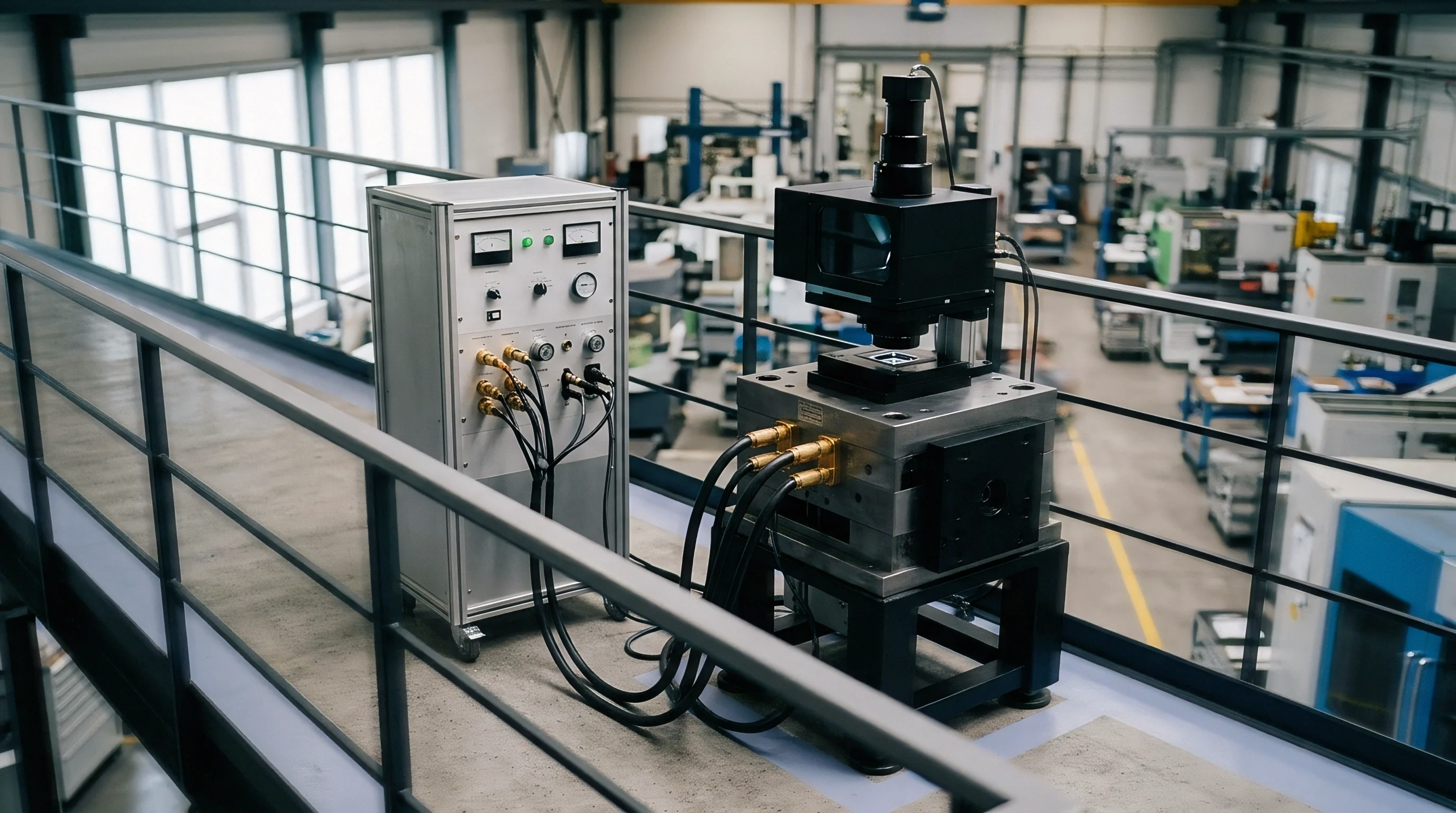
Sysroot Isolation and Base Distribution Hardening
A static sysroot keeps target C libraries, architecture headers, and vendor driver files isolated in dedicated directories. Keeping target dependencies separate from the container host OS prevents accidental header leakage. Cross-compilers should point strictly to that sysroot via explicit --sysroot flags, ensuring no host dynamic headers find their way into the embedded target binary.
- Unpinned Base Tag relies on mutable distribution tags instead of fixed SHA-256 digest strings, letting upstream maintainers change underlying libraries without warning.
- Dynamic Repository Downloads runs package manager installs without lockfiles during image construction, pulling unverified tool revisions into the build chain.
- Leaked Host Header neglects include-path boundaries, allowing the cross-compiler to ingest host system headers instead of target sysroot headers.
- Floating Toolchain Version uses loose compiler version strings that pick up minor patch updates, altering loop unrolling and register assignment.
- Unset Timestamp Environment leaves host clocks free to stamp build times into object files, spoiling binary hash parity.
A design transfer package must contain explicit container definition files, frozen image tarballs, and cryptographic hash verification logs.
Under Section 4.2 of standard ISO/IEC 19770-2 software structure provisions, firmware transfer packages must supply verified software component inventories with immutable component digests to maintain compliance during contract transfers.
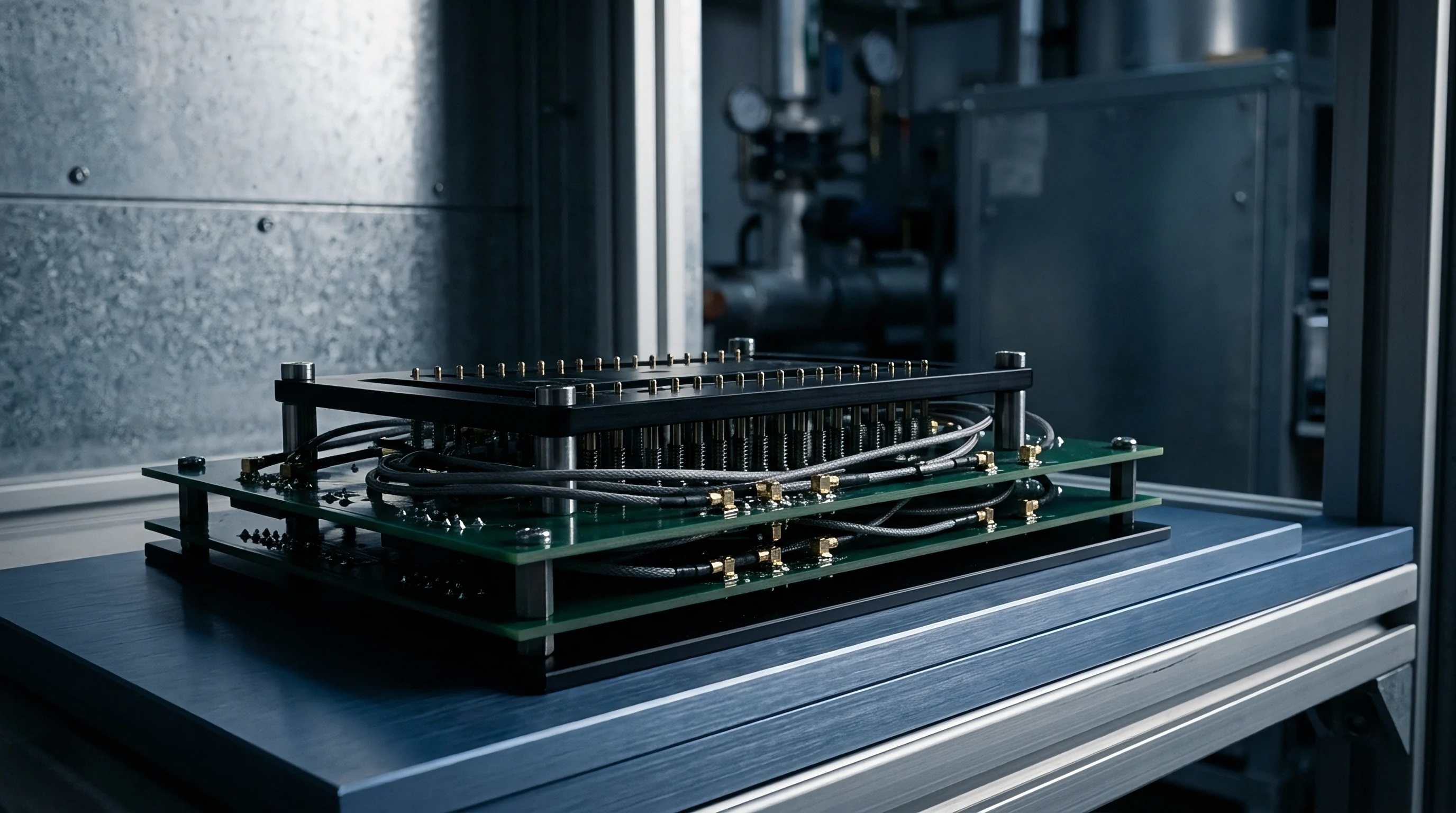

Harness
Containerized build setups require continuous validation through automated software harnesses and hardware-in-the-loop fixtures. Handing over a container image does not, by itself, make a secondary line production-ready. A proper test harness builds inside the container, flashes the generated binary to microcontrollers on automated test benches, and runs functional regression suites to confirm the code runs as expected.

Automated Hardware in the Loop Container Validation Jigs
Validation fixtures connect line build servers to test hardware equipped with target microcontrollers, logic analyzers, and power monitoring circuitry. When the container run finishes, the harness records build duration, binary size, memory section alignment, and output hashes. An automated flashing utility then loads the image onto the target MCU via SWD or JTAG.
| Test Vector Stage | Execution Point | Measured Parameter | Pass Criterion | Failure Action |
|---|---|---|---|---|
| Image Hash Audit | Post-Pull | Container Image SHA-256 | Exact Digest Match | Abort Line Bring-up |
| Binary Parity Verification | Post-Compilation | Firmware ELF Hash | 100% Bit-for-Bit Identity | Halt Flashing Pipeline |
| Flash Map Offset Check | Post-Link | Vector Table Location | Offset 0x00008000 Fixed | Flag Compiler Flags |
| Boot Sequence Timing | Post-Flash | GPIO High Signal Pulse | Less than 12.5 milliseconds | Reject Firmware Lot |
| Peripheral Bus Clock | Runtime Test | I2C Frequency Stability | 400 kHz +/- 0.5% | Quarantine Batch |
The jig measures peripheral bring-up timing, GPIO edge transitions, bus clock frequencies, and power rail switching. These runtime checks confirm that compiler optimizations mirror the primary plant’s baseline build. If bus clocks drift by more than 0.5 percent on a secondary build, the harness flags the build environment for audit.

Regression Testing across Secondary Production Lines
Verifying reproducibility means running test suites that prove the container works on secondary site hardware. Installing identical container images on local build servers lets local line engineers compile, flash, and validate production firmware without reaching back into primary site systems.
- Download the verified toolchain container tarball from the central engineering asset escrow repository.
- Import the container image into the secondary factory host container runtime environment using cryptographic digest checks.
- Execute the build automation command passing target hardware build configurations and source volume mounts.
- Verify the compiled binary output SHA-256 hash against the reference baseline cryptographic signature document.
- Flash the compiled binary to the connected hardware validation fixture and execute automated peripheral test routines.
Toolchain containers validated on test benches eliminate line bring-up delays caused by local build host variations.
Skipping hardware-level validation of containerized toolchains at the secondary plant risks corrupted flash allocations, bootloader handshake failures, and stalled manufacturing during volume production handoffs.


Escrow
Moving production to a secondary manufacturer introduces both commercial and IP risks. Compiler settings, toolchain environments, build scripts, and test benches constitute core engineering assets. An escrow structure safeguards the brand owner while giving the secondary plant the full set of assets needed to produce independent builds.

Commercial Boundaries and Build Responsibility Allocation
Engineering scope agreements delineate responsibilities between the buyer, the primary manufacturer, and the secondary partner. Handovers often encounter friction over whether build system configurations reveal proprietary factory optimizations or belong to the product baseline. A structured escrow agreement ties the release of non-recurring engineering payments directly to the deposit of containerized environments, compiler setups, and full source trees into a secure repository.
Consider a secondary manufacturing transfer for an industrial IoT wireless module program. The buyer pays $45,000 in transfer non-recurring engineering costs to the secondary contract facility. Without containerized toolchain escrows, secondary line bring-up requires 120 engineering hours at $150 per hour to debug host compiler differences, resolve broken header links, and verify clock drift issue causes.
The process delays line qualification by six weeks, costing $18,000 in unbudgeted engineering labor and $120,000 in lost market volume. With a pre-validated, containerized escrow package, line bring-up completes in 8 engineering hours, costing $1,200 and reaching full volume production within 48 hours of asset receipt.

Toolchain Licensing and Intellectual Property Custody
Cross-compilers and build utilities often bundle proprietary components with open-source software. Silicon vendors routinely supply proprietary DSP libraries, crypto binaries, and commercial compiler licenses that restrict redistribution. Escrow contracts must define licensing terms clearly, granting the secondary facility explicit rights to execute and build the firmware strictly for the buyer’s production runs.
- Container Base Files including complete Dockerfiles, Containerfiles, and immutable image archives locked by digest hashes.
- Cross Compiler Toolchains covering tool binaries, sysroot libraries, target headers, and vendor hardware extensions.
- Build Control Scripts spanning CMake files, Makefiles, linker scripts, flash layout definitions, and prefix-mapping arguments.
- Hardware Test Suites containing unit tests, automated flashing scripts, bench test vectors, and baseline timing data.
- Licensing Endorsements granting the secondary manufacturer explicit legal authority to use proprietary build tools on the buyer’s production runs.
A design transfer package must contain explicit container definition files, frozen image tarballs, and cryptographic hash verification logs.
Contractual transfer provisions must specify that non-recurring engineering milestones unlock only when secondary factory compilation output matches primary factory reference binary hashes.
Any build system requiring manual machine configuration at a secondary plant represents an incomplete design transfer.


Audit
Multi-year manufacturing agreements require disciplined change control and ongoing audits. Over extended production runs, component obsolescence, silicon revs, and security patches force firmware updates. The secondary facility must absorb these engineering change notifications through versioned toolchain containers, leaving the underlying build environment intact.

Engineering Change Notifications and Build Container Versioning
When firmware updates occur, engineering teams update source code and tag new container versions within secure container registries. Secondary factories pull updating containers based on explicit version tags tied directly to engineering change order numbers. Attempting to build updated source code within outdated container environments triggers automated error flags during CI/CD build passes, stopping invalid line configurations.
| Cost & Metric Category | Uncontainerized Build Transfer | Containerized Toolchain Transfer | Net Commercial Advantage |
|---|---|---|---|
| Secondary Line Bring-Up Labor | 120 Engineering Hours | 8 Engineering Hours | 93.3% Cost Reduction |
| Initial Binary Match Success | 62% Pass Rate | 100% Pass Rate | Zero Debug Cycles |
| Line Qualification Schedule | 42 Calendar Days | 2 Calendar Days | 40 Days Faster Market Entry |
| Unbudgeted Debug NRE Expense | $18,000 Average | $0 | $18,000 Direct Savings |
| First Pass Flashing Yield | 94.2% | 99.8% | 5.6% Yield Improvement |
Container tagging policies should follow the product lifecycle. While development builds use release candidate tags, mass-production builds lock to immutable SHA-256 digests documented in the production record. If a plant has to rebuild legacy firmware three years after production winds down, pulling the archived container image generates the correct binary without resurrecting an obsolete build server.

Long Term Line Maintenance and Compiler Deprecation Controls
Supporting hardware with five-to-ten-year lifecycles means archiving container images in cold storage. Commercial registries change retention rules, pricing tiers, or access policies over time. Backing up frozen container tarballs to local, air-gapped vaults protects against registry deprecation or vendor shutdowns.
Secondary manufacturing handovers succeed when builds stop depending on the local machine. Bundling build environments into hermetic container images delivers bit-level binary parity, cuts line bring-up times, and avoids finger-pointing between facilities. Freezing toolchains and validating binaries against automated test fixtures makes firmware handovers durable across separate manufacturing lines.