Meaning
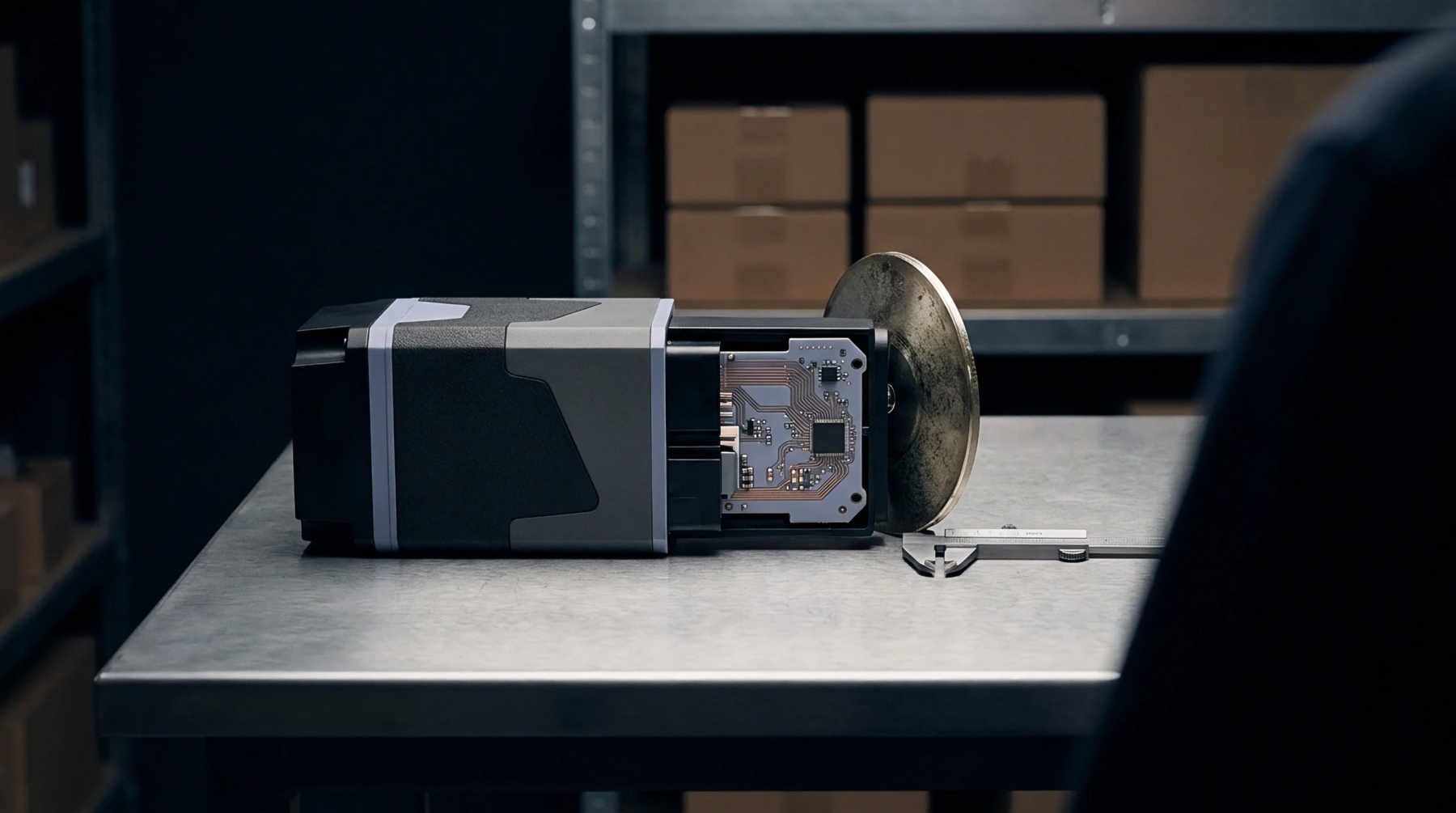
A hardware design methodology combines pre-characterized commercial silicon modules or standard cell libraries with application-specific interconnection substrates and auxiliary circuits. Rather than undertaking full-custom integrated circuit development or relying solely on off-the-shelf reference boards, semi-custom integration balances development expenditure against mechanical compactness and thermal efficiency. The approach is widely deployed in connected industrial monitors, cellular wearables, and specialized tracking equipment where space and component counts remain tightly constrained.
It ceases to apply to monolithic full-mask custom silicon fabrications or generic complete system assemblies.
Partitioning Boundaries
Architecture partitioning defines which functions inhabit pre-qualified modules and which belong on the carrier board. Standard functional blocks, such as cellular baseband processors and power management units, are retained as verified integrated packages, while sensor interfaces and custom antenna matching networks are implemented around them. Through semi-custom integration, engineering teams minimize radio frequency re-certification risks while tailoring physical outlines to proprietary enclosure boundaries.
This physical division avoids the expense of developing novel silicon masks for common wireless transceiver sections. Thermal distribution planes on the carrier printed circuit board accommodate heat dissipation tailored specifically to host enclosure material properties.
Design Validation
Board interconnect density increases as custom routing funnels high-speed traces beneath compact system-in-package parts. Micro-via technology and multi-layer stackups permit signal lines to exit fine-pitch component ball arrays cleanly. Using semi-custom integration demands rigorous board-level electromagnetic compatibility simulations to prevent high-speed clock routing from radiating into sensitive cellular antenna matching circuits.
Specialized layout rules enforce trace impedance tolerances along radio frequency lines to avoid reflection losses across module boundaries.
Production Release
Transferring an assembled hardware package to volume production requires a unified manufacturing test specification document. Engineering teams document semi-custom integration designs by consolidating standard module supplier warranties with internal testing procedures for proprietary peripheral circuits. Production fixtures incorporate automated bed-of-nails functional test contacts to verify inter-circuit trace connectivity prior to potting or final shell assembly.
The resulting manufacturing signoff confirms structural and electrical yields meet volume unit target economics.