Meaning
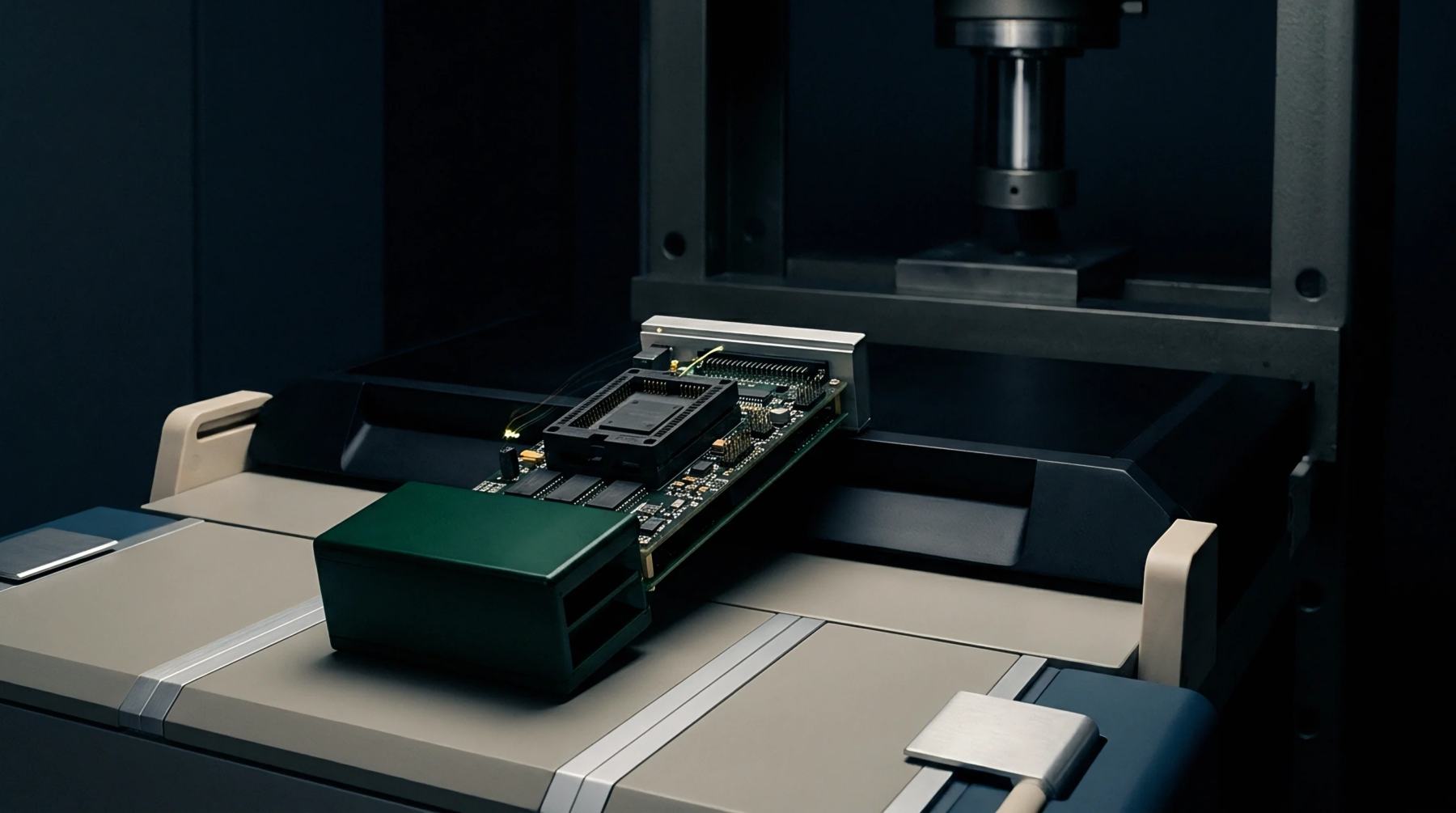
Electromechanical actuation mechanisms convert rotary motor torque into linear thrust through precision ball screw or roller screw drive trains governed by digital servo controllers. Industrial assembly presses incorporate the servo-electric ram to deliver programmable displacement and pressing force without hydraulic fluids or mechanical flywheel linkages. The mechanism controls linear position to within single micrometers while actively monitoring applied tonnage.
Extreme high-velocity stamping tasks exceeding several hundred cycles per minute generally remain the domain of traditional mechanical flywheel presses.
Motion Profile
Digital servo drives modulate acceleration and deceleration phases dynamically throughout a working stroke. Ram velocity decreases smoothly prior to tool contact, mitigating impact shock on delicate compliant pin connectors. Reversal occurs without mechanical dead stops, eliminating vibration transmission through the chassis.
Programmable motion profiles protect delicate microelectronic components from destructive peak impact forces.
Kinematic Advantage
Roller screw mechanisms offer high contact surface area, transmitting massive mechanical thrust while retaining rigid axial positioning. Eliminating hydraulic fluid reservoirs prevents oil leaks that contaminate cleanroom assembly lines and degrade circuit board solderability. Direct encoder feedback on the drive spindle provides closed-loop positioning accuracy down to sub-micron resolutions.
Energy consumption drops substantially because electric servo motors draw electrical power only during active ram displacement, operating in quiescent standby between assembly cycles. The mechanical drive delivers repeatable thrust vectors without thermal drift associated with hydraulic oil viscosity changes. Planetary roller assemblies distribute load across numerous contact points, extending operational life under continuous production schedules.
Assembly Verification
Integrated piezoelectric load cells and optical linear scales feed real-time force and position data back into manufacturing execution controllers. The servo-electric ram operates as an inline measuring instrument, evaluating dynamic press curves against defined window envelopes during every stroke. Immediate force feedback halts motion if an oversized component or misaligned pin creates premature mechanical resistance, preventing part destruction.
Calibration protocols mandate annual force cell recertification against traceable transfer standards to maintain process control integrity. The servo-electric ram provides the mechanical precision required for zero-defect electronics hardware manufacturing.