Meaning
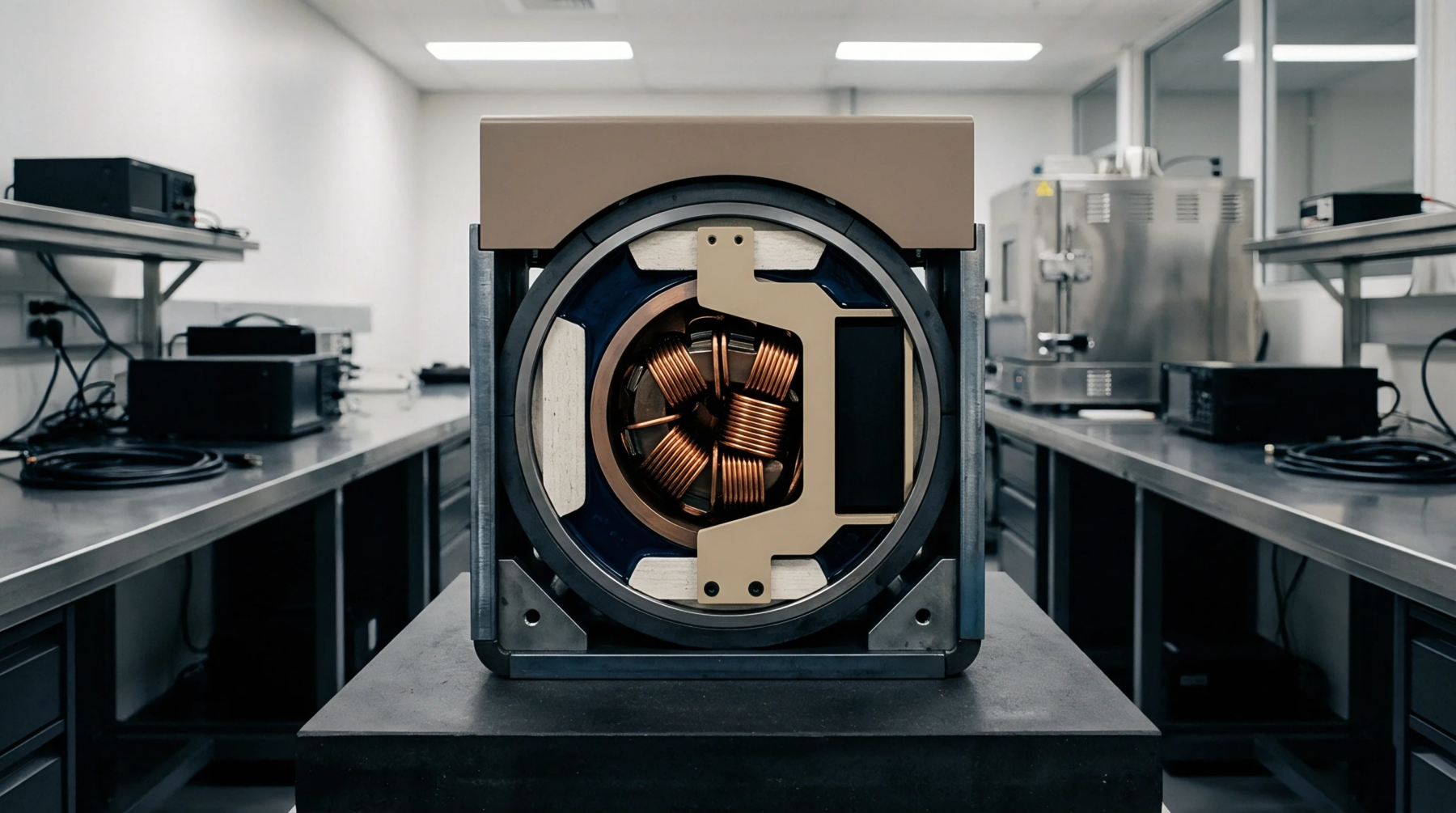
Dynamic vibration sensors detect and measure high-frequency acceleration along three orthogonal axes to assess structural health and machinery health. The triaxial accelerometer combines three independent sensing elements within a single compact housing to capture the complete spatial motion of the mounting point. This design allows engineers to monitor multi-directional vibration without needing to align three separate single axis sensors.
It is a fundamental component of predictive maintenance systems and vibration testing setups in precision manufacturing.
Sensing Mechanism
Piezoelectric elements generate an electric charge proportional to the applied acceleration force. Inside the triaxial accelerometer, three independent mass-spring systems are oriented at ninety degrees to one another to measure motion along the x, y, and z axes. This internal arrangement ensures that cross-axis sensitivity is minimized to prevent measurement errors.
The sensor output is converted to voltage signals for analysis by a data acquisition system.
Vibration Analysis
High-frequency signals are processed to identify machinery faults. The triaxial accelerometer captures the vibration signatures of rotating elements in three dimensions simultaneously. This multidirectional data enables the diagnostics software to track the exact source of mechanical imbalance.
Integration Test
Production engineers secure the sensor housing directly to the machine frame using threaded studs or magnetic mounts. The triaxial accelerometer must be rigidly coupled to the test structure to avoid damping the high-frequency vibration signals. This mounting is tested before each data collection cycle to ensure that the sensor does not introduce resonance into the measurement.
The collected acceleration values are then saved to the system test report.